
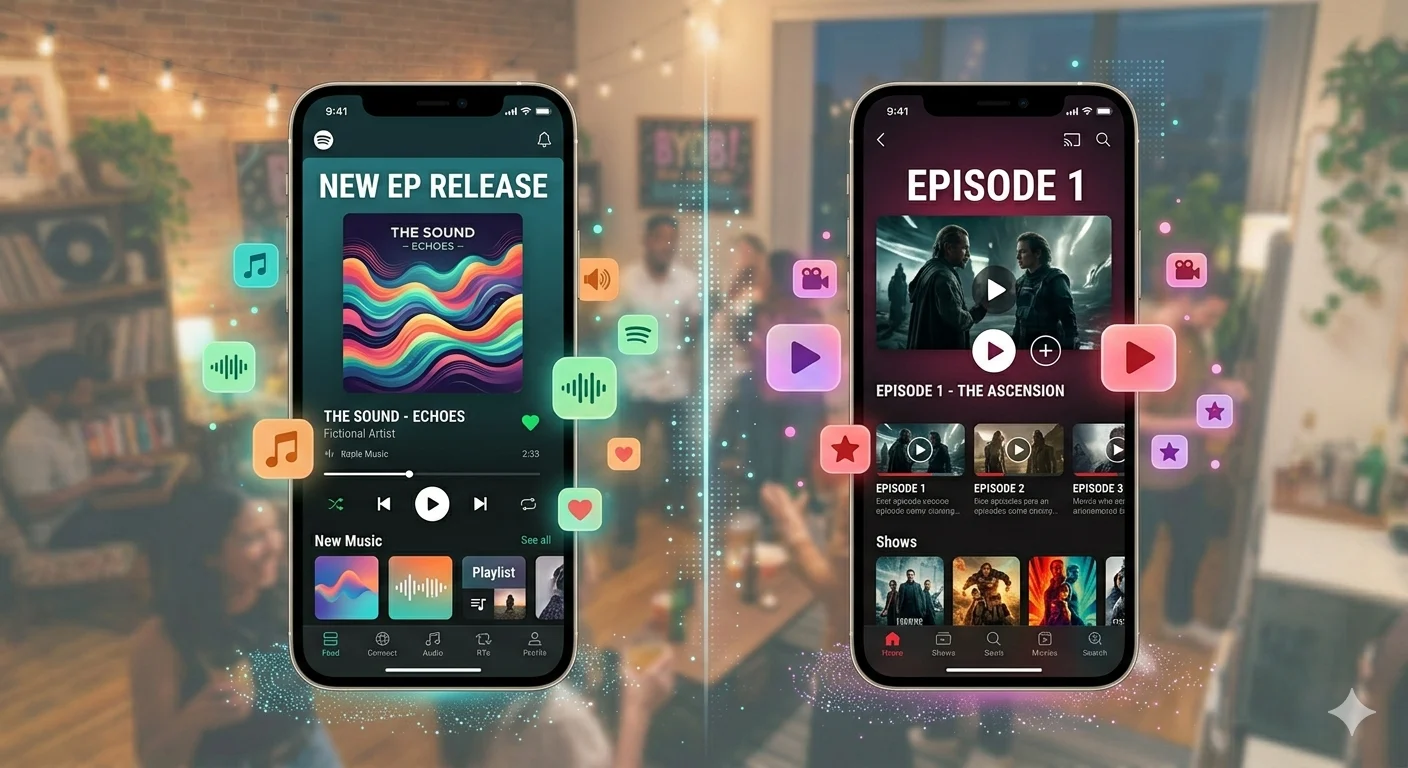
Meaning: EP usually means “Extended Play” (a short music release) or “Episode” (a part of a series).
Full Form: Extended Play / Episode
Context: Music, streaming platforms, texting, social media
Tone: Neutral and context-based
November 3, 2026
If you’ve seen the term “EP” online, in music apps, or in text messages, you might feel a bit confused about what it really means. It’s a short and simple abbreviation, but it can have different meanings depending on where you see it. Many people search for “EP meaning in text” because it appears in so many everyday situations. You might notice it while scrolling through Spotify, watching a series, or chatting with friends about the latest show.
The most interesting thing about EP is that it does not have just one fixed definition. In music, it usually stands for “Extended Play,” which is a short collection of songs. In texting and social media, it often means “episode,” referring to a part of a series or show. This dual meaning is what makes it confusing for beginners.
Understanding EP is important because it helps you follow conversations more easily, especially online. Once you learn how context changes its meaning, the term becomes simple and clear. In this article, you will learn everything about EP, including its meanings, uses, music release formats, streaming classifications, and real-life examples so you can use it correctly without any confusion.
What Does EP Mean?
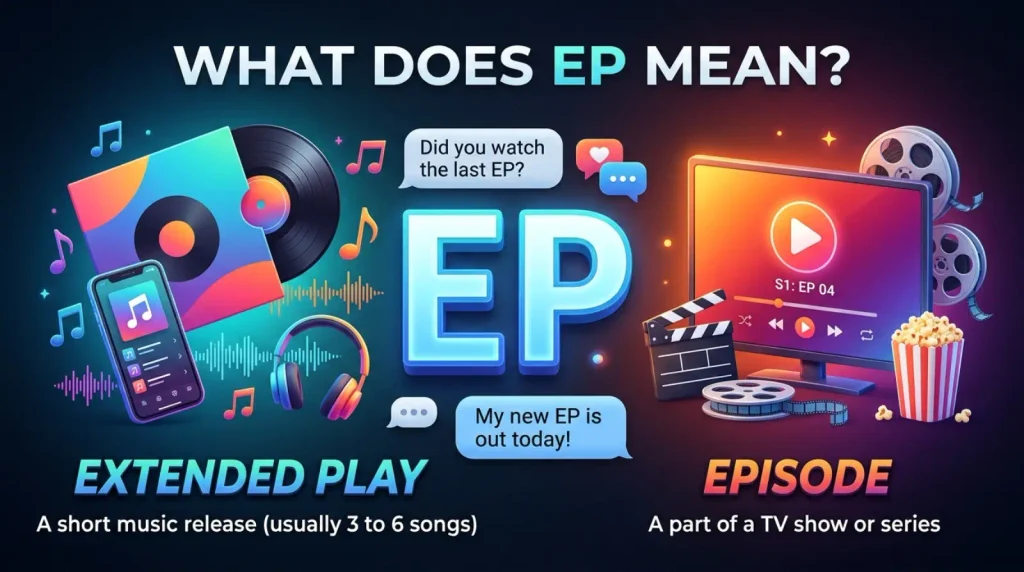
EP stands for “Extended Play.” This is the most common meaning, especially in music. An EP is a collection of songs that is longer than a single but shorter than a full album. It usually contains around 3 to 6 tracks. Artists release EPs to share new music without creating a full album.
At the same time, EP can also mean “episode.” In this case, it refers to a single part of a TV series, web series, or podcast. For example, someone might say, “Did you watch the latest EP?” meaning the latest episode.
The key point is simple. EP has more than one meaning, and the correct one depends on where and how it is used.
What Does EP Mean in Texting, Slang, and Social Media?
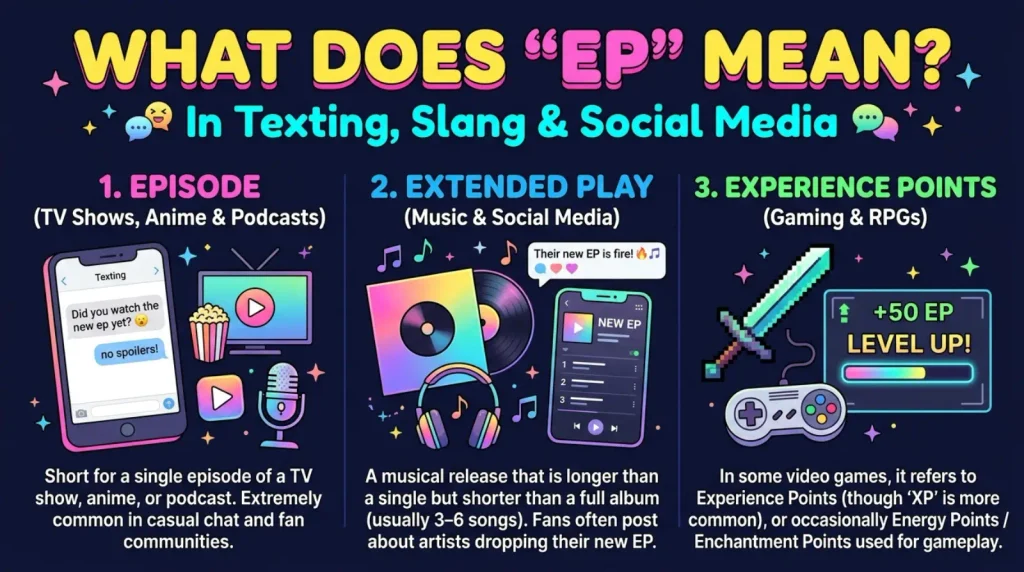
In texting and social media, EP is often used as a short form for “episode.” People use it when talking about shows, series, or online content. It saves time and makes messages shorter. For example, “That EP was amazing” clearly refers to an episode of a show.
In music-related posts, EP keeps its original meaning of “Extended Play.” You might see captions like “My new EP is out now,” which means the artist has released a short collection of songs.
Among younger users and Gen Z, EP can be understood in both contexts. The meaning becomes clear from the topic of conversation. If the discussion is about Netflix or YouTube, it likely means episode. If it is about Spotify or music, it means Extended Play.
Other Meanings of EP
EP can have several other meanings, though they are less common in everyday use. In the entertainment industry, EP can stand for “Executive Producer,” which refers to someone responsible for managing or overseeing a project. In music equipment, EP can mean “Electric Piano.”
There are also technical or business uses, but these are rare in casual conversations. For most people, the main meanings remain Extended Play and Episode.
How EP Is Used in Real Conversations
EP is used in many simple and natural ways. In music conversations, people use it to talk about releases. For example, “I just listened to her new EP” means they heard a short music collection.
In streaming and entertainment discussions, EP is used when talking about shows. Someone might say, “The last EP was so emotional,” referring to a specific episode.
It also appears in casual texting between friends. People often shorten words to save time, and EP fits perfectly into that style. Whether it is about music or shows, the usage feels natural and easy.
Examples
- “I just dropped my first EP, go check it out.”
- “That EP of the series was so intense.”
- “Have you heard his new EP yet?”
- “I missed the last EP, no spoilers please.”
- “This EP has my favorite songs.”
- “The final EP of the season was amazing.”
- “She’s working on a new EP this year.”
Tone and Intent
The tone of EP is usually neutral. It is not emotional by itself, but it takes meaning from the sentence around it. When used in music, it feels informative and professional. When used in texting, it feels casual and relaxed.
There is no positive or negative tone attached to EP. However, the message can carry emotion depending on how it is written. For example, “That EP was incredible” adds excitement, while “That EP was confusing” shows disappointment. The term itself stays neutral.
Origin or Background
The term EP comes from the music industry. It was first used to describe vinyl records that were longer than singles but shorter than full albums. This format became popular because it allowed artists to release more music without creating a full project.
Over time, the term stayed relevant even as music moved to digital platforms. Today, EP is still widely used on streaming services like Spotify and Apple Music.
The “episode” meaning developed separately as people started shortening words in digital communication. With the rise of streaming platforms and online content, EP became a quick way to refer to episodes.
Is It Rude or Inappropriate?
EP is not rude or inappropriate. It is a safe and neutral term that can be used in most casual conversations. It does not carry any offensive meaning.
However, confusion can happen if the listener does not understand the context. For example, using EP in a formal setting without explanation might make your message unclear. But in general, it is completely acceptable and widely used.
When NOT to Use It
You should avoid using EP in formal writing or professional communication unless you explain it clearly. For example, in a business report or academic paper, it is better to write “episode” or “Extended Play” instead of using the abbreviation.
It is also best to avoid using EP when speaking to someone who may not be familiar with slang or short forms. Clear communication is always more important than saving a few letters.
Similar and Related Slang Terms
There are several related terms that are often used alongside EP. In music, “LP” means “Long Play,” which refers to a full album. A “single” is a release with one main song.
In entertainment, people use “season” and “episode” to describe shows. Other abbreviations may include “S1 EP2,” which means Season 1, Episode 2. These terms help organize content and make discussions easier.
EP vs. Related Terms
EP and album are similar but not the same. An EP is shorter and usually has fewer songs, while an album is a full-length project. EP and single are also different. A single usually contains one main track, while an EP has multiple songs.
When comparing EP as “episode,” the difference is clear. Episode refers to a part of a show, not music. This is why context is very important when using the term.
Comparison Table
| Term | Meaning | Usage | Key Difference |
|---|---|---|---|
| EP | Extended Play / Episode | Music, shows, texting | Multiple meanings based on context |
| Album (LP) | Full music project | Music industry | Longer than EP |
| Single | One main song | Music releases | Shorter than EP |
| Episode | Part of a series | TV, streaming | Not related to music |
| Season | Group of episodes | TV shows | Larger unit than episode |
Common Misunderstandings
One common mistake is thinking EP always means episode. In music discussions, this is not correct. Another misunderstanding is treating an EP like a full album. While similar, they are not the same.
Some people also get confused when the term is used without context. For example, if someone just says “new EP,” it may not be clear if they mean music or a show. Understanding the situation helps avoid confusion.
How Many Songs Are in an EP?
An EP typically contains four to six songs, although the exact number can vary depending on the artist, distributor, and streaming platform. It is designed to offer more music than a single without reaching the length of a traditional full album.
For example, an artist might release a five-song EP with a total runtime of 22 minutes. This gives listeners several tracks to enjoy while allowing the artist to create a focused musical project.
However, song count alone does not always determine whether a release qualifies as an EP. Total runtime and the classification rules of the music platform can also matter.
How Long Is an EP?
Most EPs run for approximately 10 to 30 minutes. A common format includes four to six songs, with the complete project staying within a 30-minute runtime.
For example:
- 4 songs lasting 3 minutes each: 12 minutes.
- 5 songs lasting 4 minutes each: 20 minutes.
- 6 songs lasting 4 minutes each: 24 minutes.
These are examples rather than strict creative requirements. Artists can choose different song lengths depending on their musical style. Some genres feature longer tracks, so the overall listening experience can vary.
Can an EP Have 3 Songs?
Yes, an EP can have three songs in certain situations. Although four to six tracks are commonly associated with EPs, some music services may classify a release with one to three tracks as an EP if at least one track is 10 minutes or longer and the total runtime is 30 minutes or less.
Artists may also use the term EP as part of their creative release identity. However, the way a platform labels the project may depend on its distribution and metadata rules.
Can an EP Have 7 Songs?
Yes, an artist can create a seven-song project and call it an EP. There is no universal artistic rule that prevents musicians from doing so.
However, many streaming services may classify a seven-track release as an album rather than an EP. This is why artists should check their distributor’s current guidelines before submitting a project.
The important distinction is between what an artist calls a release and how a streaming platform officially categorizes it.
Is an EP Considered an Album?
An EP is a type of music release, but it is generally different from a traditional full-length album. Both formats contain recorded songs, but an EP is usually shorter and contains fewer tracks.
An EP often introduces an artist’s sound, explores a particular musical style, or shares new material between larger releases. An album usually offers a longer listening experience and may present a more developed artistic concept.
In everyday conversation, people sometimes use the word album for any collection of songs. In music distribution, however, EP and album can represent different release categories.
EP vs. LP: What’s the Difference?
EP and LP are two common terms used to describe music releases. EP stands for Extended Play, while LP stands for Long Play.
An EP is generally a shorter project with fewer songs and a runtime of around 10 to 30 minutes. An LP usually refers to a full-length album with more tracks and a longer total playing time.
| Feature | EP (Extended Play) | LP (Long Play) |
|---|---|---|
| Full form | Extended Play | Long Play |
| Typical track count | 4 to 6 songs | Usually 7 or more songs |
| Typical duration | Around 10 to 30 minutes | Often more than 30 minutes |
| Main purpose | Shorter musical project | Full-length musical project |
| Production scope | Usually smaller | Often more extensive |
| Common use | New artists and experimental releases | Major or complete musical projects |
The biggest difference is the length and scope of the release. An EP offers a shorter collection, while an LP usually provides a more complete album experience.
EP vs. Single vs. Album: What’s the Difference?
A single, EP, and album are three common ways artists release music. Each format serves a different purpose.
A single usually focuses on one main song. An EP contains a small collection of tracks, while an album provides a longer musical experience.
| Music Format | Typical Number of Tracks | Main Purpose |
|---|---|---|
| Single | 1 to 3 tracks | Promote or highlight a song |
| EP | Usually 4 to 6 tracks | Share a shorter collection of music |
| Album (LP) | Usually 7 or more tracks | Present a full-length musical project |
These are general descriptions, not universal rules. Streaming services can use additional runtime and metadata requirements when deciding how to classify a release.
EP vs. Mixtape: What’s the Difference?
An EP and a mixtape can both contain several songs, but they are not exactly the same.
An EP is generally a shorter, officially distributed music release with a defined tracklist. A mixtape is often a more flexible collection of songs that may include experimental tracks, collaborations, remixes, or different musical styles.
| Feature | EP | Mixtape |
|---|---|---|
| Meaning | Extended Play | Collection of music tracks |
| Structure | Usually a focused project | Often more flexible |
| Track selection | Typically curated and cohesive | Can include varied material |
| Distribution | Commonly released through music distributors | Can be distributed independently or officially |
| Purpose | Share a shorter musical project | Experiment, build an audience, or share music |
The two formats can overlap. Some artists release mixtapes with the length and structure of EPs, but the names describe different approaches to presenting music.
Why Do Artists Release EPs?
Artists release EPs for several creative and practical reasons. They provide a way to share new music without committing to a full-length album.
Here are some of the main benefits:
1. Lower Production Costs
Producing an EP may require less recording, mixing, and mastering work than producing a full album. This can make it a practical option for independent artists with limited budgets.
2. Introducing New Artists
New musicians can use an EP to introduce their sound, songwriting, and musical identity to listeners.
3. Experimenting With New Sounds
An EP gives artists room to explore different genres, production techniques, and creative ideas without building an entire album around them.
4. Keeping Fans Engaged
Established musicians can release EPs between full-length albums to give their audiences new material and maintain interest.
5. Building Release Momentum
A carefully planned EP campaign can help an artist promote several tracks and connect them through a single musical project.
6. Testing a New Musical Direction
Artists who want to change their sound can use an EP to introduce a different style and see how listeners respond.
Famous EPs That Made an Impact
Several well-known artists have released EPs that became important parts of their careers. These projects show that a shorter music release can still have a strong artistic identity.
Some notable examples include:
- Billie Eilish: Don’t Smile at Me (2017): An early project that helped introduce her distinctive musical style to a wider audience.
- The Weeknd: My Dear Melancholy, (2018): A six-track release featuring a darker and more emotional sound.
- Charli XCX: Vroom Vroom (2016): A four-track EP known for its experimental electronic production.
- Radiohead: My Iron Lung (1994): An important release in the band’s early musical development.
- Childish Gambino: Kauai (2014): A shorter project featuring a mix of hip-hop and melodic sounds.
These examples demonstrate that an EP does not need to be long to be memorable or influential.
How Are EPs Classified on Spotify and Apple Music?
Music streaming platforms use release metadata, track counts, and runtime to classify singles, EPs, and albums. The exact rules can differ between services.
Spotify: A common classification guideline is that releases with four to six tracks and a total runtime of 30 minutes or less may be classified as EPs. Spotify’s metadata guidance also allows certain releases to be identified according to the artist or label’s intended release type.
Apple Music: Apple’s official Style Guide identifies a release as an EP when it contains four to six songs with a total runtime of 30 minutes or less. It also includes a special rule for releases with one to three songs when at least one song is 10 minutes or longer and the total runtime is 30 minutes or less.
If a release falls outside these guidelines, it may receive a different classification.
Important: These are platform-specific distribution guidelines, not universal definitions of an EP. Always check the latest requirements provided by your distributor before submitting music.
What Is a Dynamic EP?
A dynamic EP is a release strategy in which an artist gradually adds new songs to a growing music project.
This approach is sometimes called a waterfall release strategy. Instead of releasing every track at once, an artist releases a single first and then adds more songs through later releases.
For example, an artist might release one song in January, another in February, and a third in March. The earlier songs can be included in later releases, helping create a connected promotional campaign.
This approach can help artists maintain interest in their music over time. However, the strategy requires careful planning to avoid confusing listeners with duplicate releases or inconsistent track information.
Should You Add Remixes to an EP?
Yes, remixes can be a useful addition to an EP when they fit the project’s creative direction.
A remix gives an existing song a different sound through new production, instrumentation, vocals, or arrangements. Artists can collaborate with other musicians or producers to create alternative versions of their tracks.
For example, a singer might include three original songs and two remixes on a short project. This can give listeners a different experience while highlighting the artist’s creative range.
However, remixes should serve a purpose. Adding too many versions of the same track can make a project feel repetitive rather than cohesive.
How to Release an EP as an Independent Artist
Independent musicians can release EPs without signing a contract with a major record label. A music distributor can help deliver recordings to platforms such as Spotify, Apple Music, and other digital music services.
Here are some basic steps:
1. Choose Your Best Songs
Select tracks that work well together. Your EP should have a clear musical identity rather than feeling like a random collection of recordings.
2. Plan the Tracklist
Decide the order of your songs. Consider starting with a strong track that introduces the project’s overall sound.
3. Prepare Your Recordings
Make sure your songs are properly recorded, mixed, and mastered before distribution.
4. Create Your Cover Artwork
Design artwork that represents the music and follows your distributor’s image requirements.
5. Choose a Music Distributor
Research a distributor that delivers music to your preferred streaming platforms. Compare its pricing, royalty policies, delivery options, and support.
6. Set a Release Date
Give yourself enough time to prepare promotional content and check your music metadata.
7. Promote Your EP
Share previews, announcements, short videos, and track highlights with your audience. Consistent promotion can help more people discover your project.
What Makes a Good EP?
A good EP is more than a collection of a few songs. It should offer a focused listening experience that represents the artist’s musical identity.
A strong EP generally has:
- A clear musical direction.
- Songs that work well together.
- A balanced tracklist.
- Consistent recording and production quality.
- Memorable melodies or lyrics.
- Artwork that matches the project’s identity.
- A release plan that helps listeners discover the music.
The goal is to make every track contribute something meaningful to the overall project. A shorter release can still feel complete when the songs are carefully selected and arranged.
How Much Does It Cost to Make an EP?

The cost of producing an EP depends on the artist’s recording setup, number of songs, production quality, and promotional plans.
An independent artist recording at home may spend considerably less than someone hiring a professional studio, session musicians, producers, and engineers.
Common expenses can include:
- Recording studio time.
- Music production and instrumental arrangements.
- Mixing and mastering.
- Cover artwork and design.
- Distribution fees.
- Marketing and promotion.
There is no fixed price for making an EP. Artists should create a budget based on their goals and available resources rather than assuming every project needs a large production budget.
Your EP Cover: Why Does Artwork Matter?
An EP cover is the visual identity of a music release. It helps listeners recognize the project on streaming platforms, social media, and promotional materials.
Good cover artwork should reflect the music’s mood, genre, and overall concept. For example, a soft acoustic EP might use a simple and minimal design, while an electronic music project might feature bold colors and futuristic visuals.
Before submitting artwork, check your distributor’s technical requirements. These may include image dimensions, file formats, and restrictions on promotional text or logos.
Common Misconceptions About EPs
People sometimes misunderstand the difference between EPs, singles, and full-length albums.
Here are a few common misconceptions:
Misconception 1: Every EP Must Have Exactly Five Songs.
An EP does not have one universal track count. Four to six songs are common, but platform guidelines and creative choices can vary.
Misconception 2: An EP Is the Same as an Album.
Both are music releases, but an EP is generally shorter than a full-length album.
Misconception 3: Only New Artists Release EPs.
Established musicians also release EPs between albums or when experimenting with different sounds.
Misconception 4: An EP Must Be Released on Vinyl.
EPs can be released digitally, on CDs, or on vinyl records.
Misconception 5: Every Streaming Service Uses Identical Rules.
Platforms can apply different classification and metadata requirements.
FAQ Section
What Does EP Mean in Text?
It usually means “episode,” especially when talking about TV shows, web series, or online content.
What Does EP Mean in Music?
It means “Extended Play,” a short collection of songs that is longer than a single but shorter than a full-length album.
Is EP Longer Than a Single?
Yes, an EP generally contains more music than a standard single release.
Can EP Have Multiple Meanings?
Yes, the main meanings are Extended Play and Episode. It can also stand for Executive Producer in entertainment.
Is EP Formal or Informal?
It is mostly informal when used to mean episode in texting, but it is also a standard professional music industry term.
How Do I Know Which Meaning Is Correct?
Look at the context. Music discussions usually mean Extended Play, while conversations about shows generally mean episode.
Is EP Still Used Today?
Yes, EP is commonly used in the music industry, streaming services, entertainment discussions, and online conversations.
Can EP Mean Something Else?
Yes, other meanings include Executive Producer and Electric Piano, although these are less common in everyday texting.
How Many Songs Does an EP Have?
An EP commonly contains four to six songs, although some releases may have fewer or more tracks depending on their format and classification.
How Long Is a Typical EP?
A typical EP runs for around 10 to 30 minutes, but the exact length can vary.
Can a 3-Song Release Be an EP?
Yes. Certain streaming classification rules allow a release with one to three songs to qualify as an EP when at least one song is 10 minutes or longer and the total runtime is 30 minutes or less.
Can a 7-Song Release Be an EP?
An artist can call a seven-song project an EP, but many streaming services may classify it as an album.
Is an EP the Same as a Mini Album?
The terms are closely related. An EP is often described as a mini-album because it contains fewer songs and has a shorter runtime than a full-length album.
What Does EP Stand for in a TV Show?
In a TV show, EP usually means episode. For example, S2 EP4 means Season 2, Episode 4.
What Is the Difference Between EP and LP?
EP stands for Extended Play and describes a shorter music release. LP stands for Long Play and usually refers to a full-length album.
Do Artists Make Money From EPs?
Yes, artists can earn money from EPs through streaming royalties, downloads, physical sales, and other music-related revenue sources. Earnings depend on distribution agreements, streams, sales, and rights ownership.
Can Independent Artists Release an EP?
Yes. Independent artists can record, distribute, and promote EPs through music distributors without necessarily signing with a major record label.
Conclusion
EP is a simple but flexible term with more than one meaning. It most commonly stands for “Extended Play” in music and “episode” in entertainment. The correct meaning depends on the context in which it is used. In casual conversations, texting, and social media, EP is widely understood and easy to use. By paying attention to the situation, you can quickly understand and use this term correctly without confusion.
When it comes to music, an EP offers artists a practical way to share several songs without producing a full-length album. It can introduce new musicians, help established artists experiment with different sounds, and keep listeners engaged between major releases. Whether you see EP in a text message, a TV discussion, or a Spotify music listing, understanding its context makes the abbreviation much easier to recognize.
1 thought on “EP Means in Text, Slang, Music, and Online Use”