
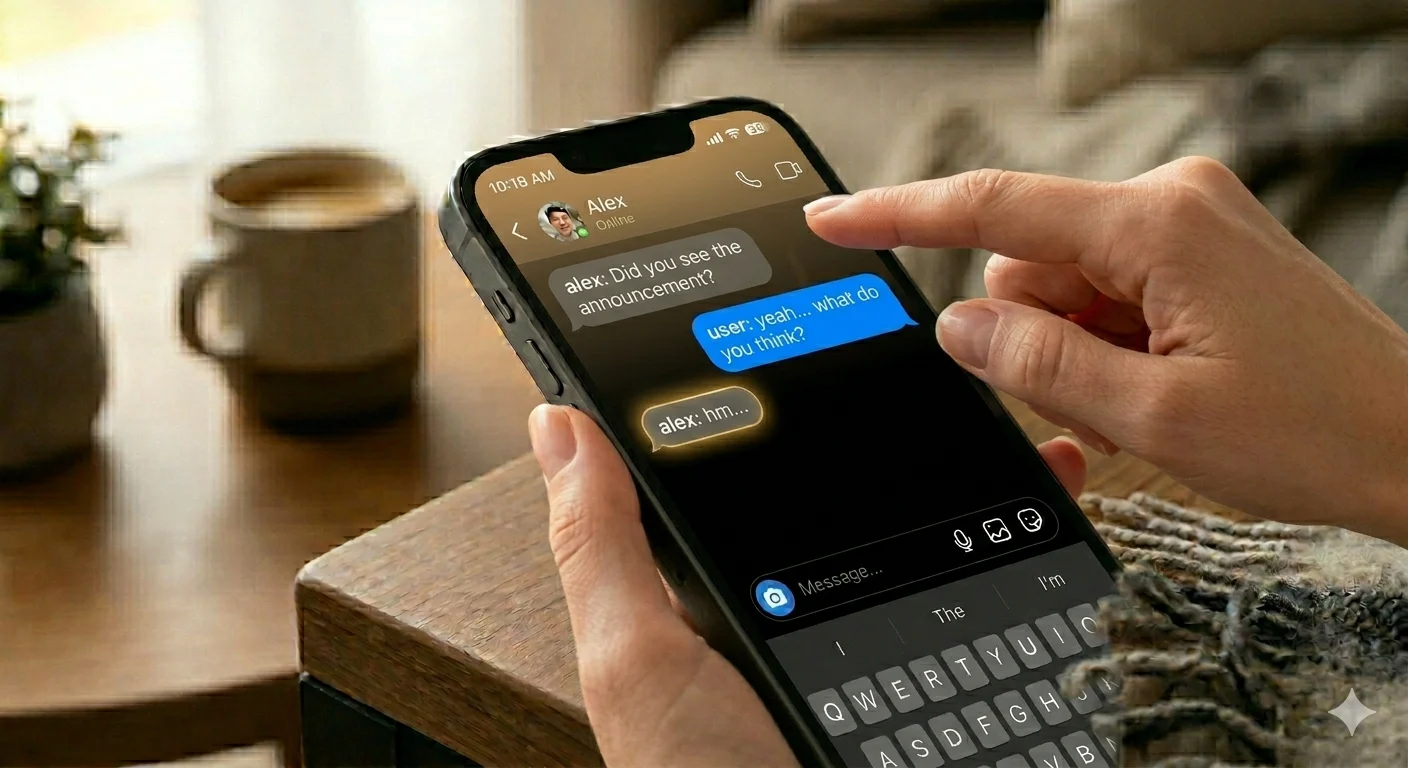
Meaning: “hm” is a thinking sound used to show doubt, curiosity, or hesitation.
Full form: No full form (it’s a sound, not an acronym).
Context: Texting, chatting, social media replies.
Tone: Neutral, thoughtful, sometimes unsure or slightly dismissive.
In today’s fast-paced digital world, short messages and quick replies have become the norm. One such common reply that often leaves people confused is “hm.” You may have seen it in WhatsApp chats, text messages, or social media conversations and wondered what it actually means. Is the person thinking? Are they unsure? Or are they simply not interested in continuing the conversation?
The truth is, “hm” is a small expression with a wide range of meanings depending on context and tone. Unlike clear responses like “yes” or “no,” it doesn’t give a direct answer. Instead, it reflects a moment of thought, hesitation, or mild reaction. This is why many people search for the “hm meaning in texting” to better understand conversations and avoid misinterpretation.
In this article, you’ll explore the real meaning of “hm,” how it is used in different situations, and what it reveals about the sender’s intent. By the end, you’ll be able to read between the lines and respond more confidently in your chats.
What does “hm” mean?
At its core, “hm” is a written version of the sound “hmm.” It’s something people naturally say when they are thinking. When typed, it carries the same idea.
It usually means the person is:
- Thinking about something
- Unsure or doubtful
- Processing information
- Slightly curious
For example, if someone tells you a surprising fact and you reply “hm,” it shows you’re considering it. It doesn’t confirm agreement or disagreement. It simply shows thought.
What does “hm” mean in texting / slang / social media?
Chat meaning
In texting, “hm” is often used as a quick reaction. Instead of typing a full sentence, people use it to show they are thinking or unsure. It can also act as a pause in conversation.
For example:
“Are you sure about this?”
“hm… not really”
Here, it shows hesitation.
Social media usage
On platforms like Instagram or Facebook, “hm” can appear in comments or replies. It may show curiosity or even mild doubt. Sometimes it can feel slightly dismissive if used alone without explanation.
Gen Z context
Among younger users, short replies are common. “hm” fits perfectly into this style. It can signal:
- Boredom
- Lack of interest
- Quiet thinking
Because Gen Z communication often relies on tone rather than long messages, “hm” can carry more emotional weight than it seems.
Other meanings of “hm”
Although “hm” is mostly a thinking sound, it can have a few rare meanings depending on context:
- It may be used as a short form in technical fields (like “HM” for “Health Management”)
- In chemistry, it can refer to units or symbols in specific cases
However, in everyday texting and slang, it almost always means a thinking or unsure reaction.
How “hm” is used in real conversations
People use “hm” in different types of conversations:
- One-on-one chats: to show thinking or hesitation
- Group chats: to react without adding much detail
- Online comments: to express doubt or curiosity
- Casual replies: when they don’t want to type a full response
It often appears when someone is not ready to give a clear answer.
Examples
Here are some natural examples to show how “hm” works in real life:
- “hm… I need to think about it.”
- “You really did that? hm.”
- “hm, that sounds interesting.”
- “hm… I’m not sure if that’s right.”
- “hm okay, I get it now.”
- “hm, maybe you’re right.”
- “hm… that’s strange.”
Each example shows a slightly different tone, but all connect to thinking or uncertainty.
Tone and intent
The tone of “hm” changes depending on context. This is important.
- Neutral: just thinking
- Curious: interested but unsure
- Doubtful: questioning something
- Dismissive: not very interested
For example, a short “hm” alone can feel cold or distant. But “hm, that’s cool” sounds more friendly.
So, the meaning is not fixed. It depends on how it’s used and what comes around it.
Origin or background
“hm” comes from the natural human sound “hmm.” People have used this sound for a long time when thinking or hesitating.
With the rise of texting and social media, this sound was shortened to “hm” for faster typing. Over time, it became a common part of online communication.
It’s not an acronym. It’s simply a written form of a natural reaction.
Is it rude or inappropriate?
“hm” is generally not rude. It’s a neutral expression. However, it can feel rude in certain situations.
For example:
- If someone shares something important and you reply only “hm,” it may seem like you don’t care
- If used repeatedly, it can feel dismissive
So while the word itself is harmless, the tone can change how it is received.
When NOT to use it
There are times when using “hm” is not appropriate:
- Formal communication: emails, job messages
- Professional settings: workplace chats
- Serious conversations: emotional or sensitive topics
In these cases, a clear and respectful response is better than a vague “hm.”
Similar and related slang terms
There are several expressions similar to “hm”:
- hmm
- oh
- okay
- idk (I don’t know)
- meh
Each has its own tone and usage.
“hm” vs related terms
“hm” is more about thinking, while other terms carry clearer meanings. For example:
- “idk” directly shows uncertainty
- “meh” shows disinterest
- “okay” shows acceptance
“hm” sits in the middle. It doesn’t fully confirm anything.
Comparison Table
| Term | Meaning | Usage | Key Difference |
|---|---|---|---|
| hm | Thinking, unsure | Casual chats | Neutral, vague |
| hmm | Deeper thinking | Conversations | Slightly more expressive |
| idk | I don’t know | Direct replies | Clear uncertainty |
| meh | Not interested | Opinions | Shows boredom |
| okay | Acceptance | General use | Confirms understanding |
Common misunderstandings
Many people misunderstand “hm” because it is so short.
- Some think it has a fixed meaning (it doesn’t)
- Others assume it’s always rude (not true)
- Some overuse it, making conversations unclear
The biggest confusion comes from tone. Without context, it’s easy to misread.
FAQ Section
1. What does “hm” mean in texting?
It means the person is thinking, unsure, or reacting quietly.
2. Is “hm” rude?
Not usually, but it can feel rude depending on context.
3. What is the difference between “hm” and “hmm”?
“hmm” feels more thoughtful, while “hm” is shorter and quicker.
4. Does “hm” mean yes or no?
No. It doesn’t confirm anything. It just shows thought.
5. Can “hm” show disinterest?
Yes, sometimes. Especially if used alone.
6. Is “hm” formal?
No. It’s informal and used in casual conversations.
7. Why do people use “hm”?
Because it’s quick and expresses thinking without a full sentence.
8. Should I reply to “hm”?
Yes, if you want clarity. You can ask what they mean.
conclusion
“hm” is a simple but flexible expression. It doesn’t have one fixed meaning. Instead, it reflects thinking, hesitation, or quiet reaction. Its tone changes based on context, which is why it can sometimes feel confusing.
The key is to look at the situation and the surrounding message. Once you understand that, “hm” becomes easy to read and use correctly in everyday conversations.
2 thoughts on “Meaning of “HM” in Texting, Slang, and Social Media Explained Clearly”