
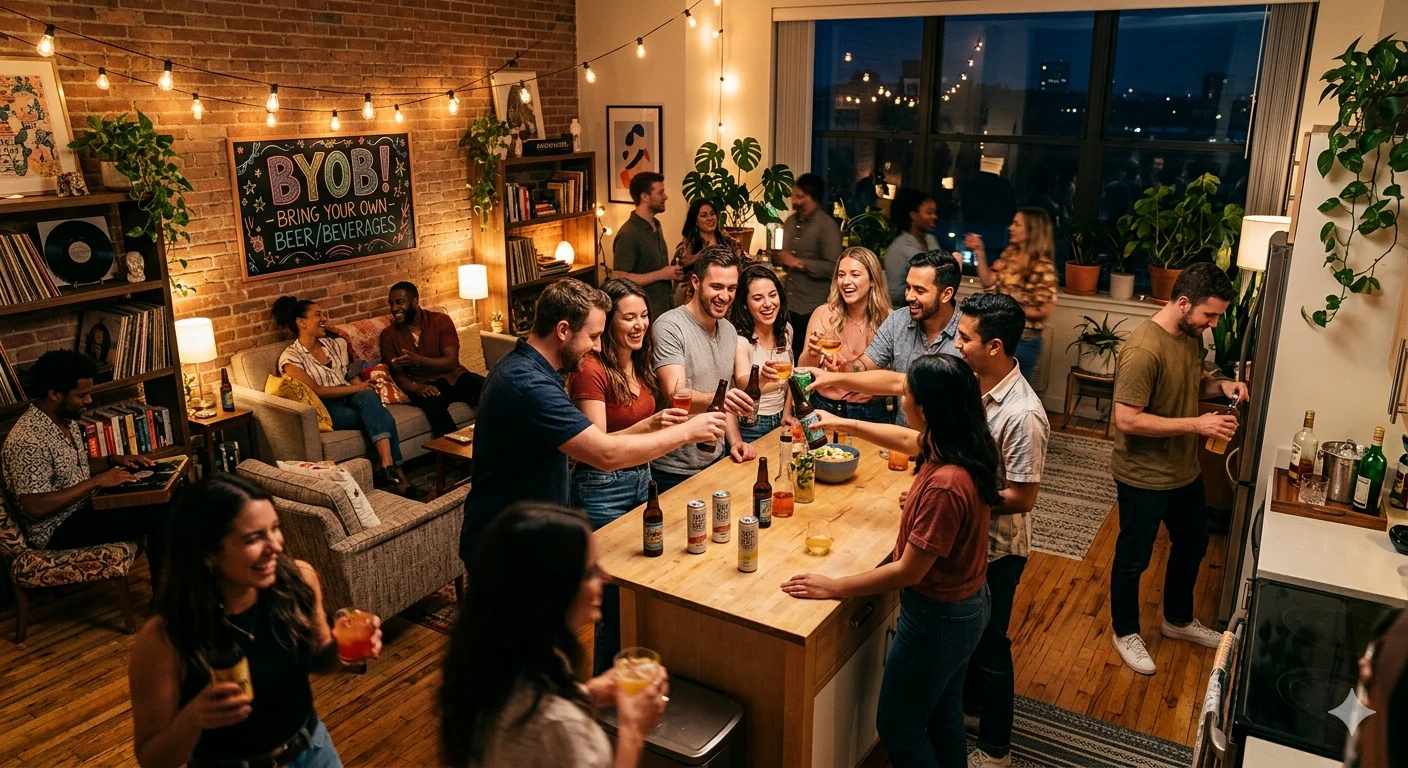
Meaning: BYOB means “bring your own bottle” or “bring your own booze.” It tells people to bring their own drinks instead of expecting the host to provide them.
Full form: Bring Your Own Bottle / Bring Your Own Booze
Context: Parties, casual gatherings, dinners, some restaurants
Tone: Informal, friendly, practical
If you have seen “BYOB” in a text message, party invite, or social media post, you might wonder what it really means. It looks simple, but the meaning can change slightly depending on where it is used. Many people first notice it when they are invited to an event and are not sure if they need to bring something. That confusion is normal. BYOB is a common slang term, especially in casual settings, and understanding it helps you avoid awkward moments.
What does BYOB mean?
BYOB stands for “bring your own bottle” or “bring your own booze.” In simple words, it means you should bring your own drinks, usually alcohol, to an event. The host is not providing drinks for everyone. Instead, each person brings what they want to drink and sometimes shares with others. It is a practical way to manage costs and preferences. For example, if someone invites you to a party and says “BYOB,” they are politely telling you to come prepared with your own drink.
What does BYOB mean in texting / slang / social media?
In texting and online chats, BYOB is used as a quick and easy way to give instructions. Instead of writing a full sentence, people just type “BYOB.” It is common in group chats when planning parties or hangouts. On social media, you may see it in event captions like “BBQ tonight, BYOB.” This makes the message short and clear. Among younger users and Gen Z, it is widely understood and used casually without much explanation. It fits the fast style of online communication where short forms are preferred.
Other meanings of BYOB
While “bring your own bottle” is the most common meaning, BYOB can have a few other interpretations depending on the situation. It can mean “bring your own beer,” which is almost the same as the main meaning but more specific. In some cases, especially in shopping or eco-friendly contexts, it can mean “bring your own bag.” There are also rare business uses, but those are not common in everyday conversation. Most of the time, if you see BYOB, it is about drinks.
How BYOB is used in real conversations
BYOB is used in many everyday situations. It is very common in party invitations where the host wants to keep things simple. For example, someone hosting a birthday party may not want to buy drinks for everyone, so they write BYOB on the invite. It is also used in casual meetups with friends, like small gatherings or game nights. Some restaurants allow customers to bring their own drinks and may advertise themselves as BYOB places. In all these cases, the meaning stays the same: you are responsible for your own drinks.
Examples
“Hey, we’re having a small party tonight, BYOB.”
“Game night at my place, BYOB and snacks if you want.”
“This restaurant is BYOB, so don’t forget your drink.”
“Beach hangout this weekend, BYOB!”
“We’re doing a BBQ, it’s BYOB so bring what you like.”
“Movie night at my house, BYOB and enjoy.”
“Chill gathering, nothing fancy, just BYOB.”
Tone and intent
The tone of BYOB is usually friendly and practical. It is not meant to be rude. Instead, it helps set clear expectations. It can feel polite because it gives people freedom to bring what they like. The tone is neutral to positive. In some cases, it can sound slightly demanding if not written nicely, but that depends on the full message. Sometimes people use it jokingly, like “BYOB if you want to survive the party,” but the meaning still stays the same.
Origin or background
BYOB started as a simple phrase used in English-speaking countries, especially in the United States. It became popular in the mid-20th century when small gatherings and informal parties became more common. Restaurants also used the term to attract customers by allowing them to bring their own drinks. Over time, the phrase was shortened to BYOB for convenience. With the rise of texting and the internet, it spread quickly and became a widely recognized slang term.
Is it rude or inappropriate?
BYOB is not rude in most casual situations. It is widely accepted and understood. However, it can feel inappropriate in formal events like weddings or official dinners where guests expect the host to provide everything. In some cultures, asking guests to bring their own drinks might feel unusual. So, it is important to consider the setting and the people involved. In informal gatherings, it is perfectly fine and even expected.
When NOT to use it
You should avoid using BYOB in formal or professional settings. For example, business meetings, formal dinners, or official events are not the right places for this term. It can also cause confusion if the audience is not familiar with slang. If you are inviting people who may not understand it, it is better to explain clearly instead of using abbreviations. Using BYOB in the wrong context can make your message seem unclear or even impolite.
Similar and related slang terms
There are several terms similar to BYOB that follow the same idea. BYOF means “bring your own food.” BYOC means “bring your own chair.” BYOD stands for “bring your own device,” often used in workplaces or schools. Another common term is “potluck,” where everyone brings a dish to share. These terms all focus on shared responsibility and contribution.
BYOB vs related terms
BYOB is specifically about drinks, while other terms focus on different items. For example, BYOF is about food, not drinks. BYOD is used in a completely different context, usually technology. Potluck is slightly different because it involves sharing food with everyone, while BYOB often focuses on personal drinks. Understanding these differences helps you use each term correctly.
Comparison Table
| Term | Meaning | Usage | Key Difference |
|---|---|---|---|
| BYOB | Bring your own bottle/booze | Parties, gatherings | Focus on drinks |
| BYOF | Bring your own food | Picnics, events | Focus on food |
| BYOC | Bring your own chair | Outdoor events | Focus on seating |
| BYOD | Bring your own device | Work, school | Tech-related |
| Potluck | Everyone brings food to share | Group meals | Shared food, not personal |
Common misunderstandings
One common misunderstanding is thinking the host will still provide drinks. In a BYOB event, you should not rely on that. Another confusion is about what to bring. Some people are unsure if they should bring alcohol or any drink. It is usually safe to bring what you personally want to drink. Some also misread the tone and think it is rude, but in most cases, it is just practical and normal.
FAQ Section
What does BYOB mean in simple words?
It means bring your own drink to an event.
Does BYOB always mean alcohol?
Usually yes, but it can also mean any drink depending on the context.
Is BYOB common in texting?
Yes, it is very common in casual messages and invites.
Can BYOB mean something else?
Yes, sometimes it means bring your own bag or beer, but that is less common.
Is it okay to use BYOB in formal invites?
No, it is better for casual situations only.
What should I bring to a BYOB party?
Bring a drink you like, and optionally extra to share.
Is BYOB polite?
Yes, in informal settings it is normal and acceptable.
Do restaurants allow BYOB?
Some do, and they usually mention it clearly.
Can I come empty-handed to a BYOB event?
It is not recommended because the host expects you to bring your own drink.
conclusion
BYOB is a simple and widely used term that means you should bring your own drinks to an event. It is common in casual settings like parties, hangouts, and informal gatherings. The tone is friendly, and the purpose is practical. Understanding this term helps you respond correctly to invitations and avoid confusion. When used in the right context, BYOB makes planning easier for everyone and keeps things relaxed and enjoyable.