
Updated: October 26, 2026
Meaning: BYOB means “bring your own bottle” or “bring your own booze.” It tells people to bring their own drinks instead of expecting the host to provide them.
Full form: Bring Your Own Bottle / Bring Your Own Booze
Context: Parties, casual gatherings, dinners, some restaurants
Tone: Informal, friendly, practical
Have you ever seen “BYOB” on a party invitation or in a text message and wondered what it means? This popular abbreviation can leave you unsure about what to bring, whether alcohol is expected, and if you should bring drinks to share.
The most common BYOB meaning is “Bring Your Own Bottle” or “Bring Your Own Booze.” However, its exact meaning can depend on the situation. Whether you spotted it in a text message, social media post, dinner invitation, or party announcement, understanding this term helps you know what to expect.
In this guide, you’ll discover what BYOB means, how people use it in everyday conversations, what to bring to a BYOB party, and the essential etiquette to follow. By the end, you’ll know how to interpret BYOB confidently and avoid awkward misunderstandings.
What Does BYOB Mean on a Party Invitation?
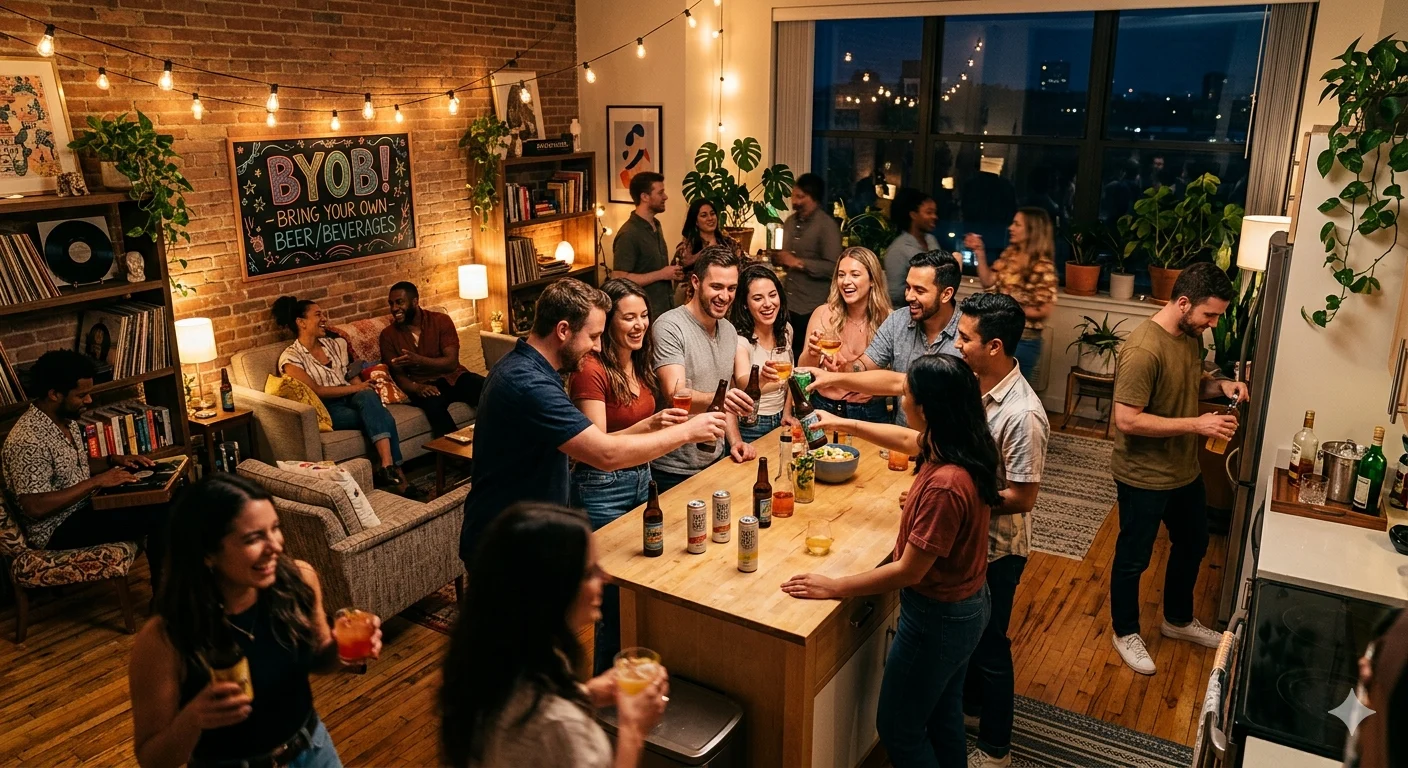
BYOB usually stands for “Bring Your Own Bottle” or “Bring Your Own Booze.” When these letters appear on a party invitation, they generally mean that guests should bring their own beverages instead of expecting the host to supply all the drinks. The phrase is commonly used for house parties, dinner gatherings, barbecues, picnics, and other social events.
The exact meaning depends on the occasion. At some parties, BYOB refers mainly to alcoholic beverages, while at others, it can include any drink you would like to have. The host may provide food, cups, ice, or other refreshments, but these arrangements are not guaranteed.
For example, if a friend invites you to dinner and writes “BYOB” on the invitation, you should plan to bring a drink you enjoy. If you are unsure whether the host expects alcoholic drinks or beverages for sharing, ask before attending.
Does BYOB Mean You Have to Bring Alcohol?
No, BYOB does not necessarily mean that you must bring alcohol. Although the abbreviation often refers to “Bring Your Own Booze,” it can also mean “Bring Your Own Bottle.” In everyday social situations, the intended meaning depends on the host, the type of gathering, and the wording of the invitation.
If you do not drink alcohol, you can bring sparkling water, soda, juice, iced tea, lemonade, or another nonalcoholic beverage. There is generally no need to change your preferences just because the invitation includes BYOB. You can also ask the host whether nonalcoholic drinks are appropriate if the invitation is unclear.
For example, if your coworkers organize a BYOB barbecue, you could bring a bottle of sparkling water or your favorite soft drink. The important thing is to understand what the host expects and bring a suitable beverage. Unless the invitation specifically states otherwise, BYOB should not automatically be interpreted as a requirement to consume alcohol.
Should You Bring Drinks Only for Yourself or Share Them?
In most situations, you should bring enough drinks for yourself. BYOB generally means that each guest is responsible for their own beverages, but it does not automatically mean that everyone must share what they bring. Whether drinks are shared depends on the host’s instructions and the group’s usual customs.
Some gatherings have a communal cooler or drink table where guests place their beverages for everyone to enjoy. At other events, people keep their drinks separate and offer them to others only if they choose. If the invitation says “bring a drink to share,” that is a clearer request to contribute something for the group rather than bringing drinks exclusively for yourself.
For example, if you attend a small dinner party, you might bring a bottle of your preferred beverage and offer some to the host. If you are attending a casual gathering where everyone brings their own drinks, bringing enough for yourself may be perfectly appropriate.
When you are uncertain, ask the host whether the drinks will be shared. This simple step helps you follow the expected party etiquette without spending more than you intended.
Does the Host Provide Food at a BYOB Party?
Not necessarily. BYOB usually refers to bringing your own beverages, not bringing your own food. A host may provide dinner, snacks, appetizers, or a full meal while asking guests to bring their own drinks. However, some gatherings are organized as potlucks, where guests are also expected to contribute food.
The invitation should provide clues about the arrangements. For example, “Dinner provided, BYOB” suggests that the host plans to serve food but expects guests to bring beverages. On the other hand, “BYOB and bring a dish to share” indicates that guests should bring both drinks and food.
If the invitation does not explain whether food will be available, contact the host before the event. You could ask, “Will food be provided, or should I bring something to eat as well?” This helps you prepare appropriately and avoids misunderstandings.
Do not assume that a BYOB invitation includes a meal, snacks, cups, or other supplies. Each host organizes gatherings differently, so checking the details is the easiest way to know what to expect.
Should You Bring Your Own Cups, Ice, or Mixers?
Whether you should bring cups, ice, or mixers depends on the type of event and what the host plans to provide. At many casual parties, the host supplies basic items such as cups and ice, while guests bring their preferred beverages. At other gatherings, guests may be expected to bring everything they need to enjoy their drinks.
Mixers are particularly relevant when the event involves cocktails or other mixed beverages. If you plan to bring a drink that requires a specific mixer, it is sensible to check whether the host will have it available rather than assuming it will be provided.
For example, if you are attending a backyard barbecue and bringing bottled soda, you may not need to bring anything else. If you are bringing a beverage that requires ice, special cups, or additional ingredients, ask the host about the arrangements beforehand.
A polite message such as “Should I bring my own cups or ice, or will those be provided?” can clear up any confusion. When in doubt, bringing any essential supplies for your own beverage is a practical way to avoid being unprepared.
How Much Should You Bring to a BYOB Party?
The right amount to bring depends on how long the event will last, what you plan to drink, and whether the beverages are intended for individual use or sharing. As a general rule, bring enough for your own expected consumption during the gathering. You do not necessarily need to provide drinks for everyone unless the host has requested a shared contribution.
For a short visit, a single serving or a small amount may be sufficient. For a longer dinner, barbecue, or evening gathering, you may want to bring more. If the host has asked everyone to contribute to a communal supply, consider bringing an amount that is reasonable for the group and your budget.
For example, if you are attending a two-hour gathering and prefer sparkling water, you could bring enough bottles to cover your needs. If everyone is contributing drinks to a shared table, you might bring an additional item to share if you are comfortable doing so.
There is no universal amount that every guest must bring to a BYOB event. The best approach is to consider the event’s length, follow the invitation’s instructions, and ask the host if you are unsure.
Is BYOB Different from “Bring a Drink to Share”?
Yes. BYOB and “bring a drink to share” are related expressions, but they do not always mean the same thing. BYOB usually tells guests to bring their own beverages. Depending on the gathering, guests may keep those drinks for themselves or choose to offer them to others.
In contrast, “bring a drink to share” clearly suggests that guests should contribute a beverage for other people to enjoy. The host might be planning a shared drinks table, a potluck-style gathering, or a party where everyone contributes refreshments for the group.
For example, if an invitation says “BYOB,” you can generally bring your preferred beverage for yourself. If it says “Please bring a drink to share,” you should plan to bring something that other guests can enjoy as well.
When an invitation uses both expressions, read the full message carefully. If you cannot tell whether drinks are meant to be shared, ask the host. Understanding this small difference helps you avoid bringing too little for a shared event or spending extra money when you are only expected to bring your own drinks.
What Is the Best Etiquette for a BYOB Party?
Good BYOB etiquette starts with following the invitation and respecting the host’s expectations. Bring your own beverages, arrive prepared, and avoid assuming that the host will provide every drink or accessory. If you are unsure whether food, cups, ice, or mixers will be available, ask before the event.
It is also helpful to understand the difference between bringing drinks for yourself and contributing to a shared supply. Do not assume that another guest’s beverage is available to everyone. Ask before taking or sharing someone else’s drink, and respect individual preferences, including the choice not to drink alcohol.
You should also be considerate of the host’s budget and arrangements. Bringing an expensive drink does not mean other guests owe you something in return, and bringing only enough for yourself is not automatically rude. The appropriate choice depends on what the invitation requests and the group’s customs.
For example, before attending a BYOB dinner, you could message the host: “I will bring my own drinks. Will food and ice be provided, and should I bring anything to share?” This question is friendly, practical, and clear.
Ultimately, the best BYOB etiquette is simple: bring what is expected, respect other people’s choices, and communicate with the host if anything is unclear. These small courtesies help everyone enjoy the gathering without unnecessary confusion.
What does BYOB mean?
BYOB stands for “bring your own bottle” or “bring your own booze.” In simple words, it means you should bring your own drinks, usually alcohol, to an event. The host is not providing drinks for everyone. Instead, each person brings what they want to drink and sometimes shares with others. It is a practical way to manage costs and preferences. For example, if someone invites you to a party and says “BYOB,” they are politely telling you to come prepared with your own drink.
What does BYOB mean in texting / slang / social media?
In texting and online chats, BYOB is used as a quick and easy way to give instructions. Instead of writing a full sentence, people just type “BYOB.” It is common in group chats when planning parties or hangouts. On social media, you may see it in event captions like “BBQ tonight, BYOB.” This makes the message short and clear. Among younger users and Gen Z, it is widely understood and used casually without much explanation. It fits the fast style of online communication where short forms are preferred.
BYOB Meaning at a Glance
| Term | Full Form or Meaning | Common Usage | Key Difference |
|---|---|---|---|
| BYOB | Bring Your Own Bottle / Booze | Parties and gatherings | Guests bring their own drinks |
| BYOF | Bring Your Own Food | Picnics and events | Guests bring food |
| BYOC | Bring Your Own Chair | Outdoor events | Guests bring seating |
| BYOD | Bring Your Own Device | Work and school | People bring their own devices |
| Potluck | Everyone brings food to share | Group meals and parties | Guests contribute food for everyone |
Other meanings of BYOB
While “bring your own bottle” is the most common meaning, BYOB can have a few other interpretations depending on the situation. It can mean “bring your own beer,” which is almost the same as the main meaning but more specific. In some cases, especially in shopping or eco-friendly contexts, it can mean “bring your own bag.” There are also rare business uses, but those are not common in everyday conversation. Most of the time, if you see BYOB, it is about drinks.
How BYOB is used in real conversations
BYOB is used in many everyday situations. It is very common in party invitations where the host wants to keep things simple. For example, someone hosting a birthday party may not want to buy drinks for everyone, so they write BYOB on the invite. It is also used in casual meetups with friends, like small gatherings or game nights. Some restaurants allow customers to bring their own drinks and may advertise themselves as BYOB places. In all these cases, the meaning stays the same: you are responsible for your own drinks.
Examples
“Hey, we’re having a small party tonight, BYOB.”
“Game night at my place, BYOB and snacks if you want.”
“This restaurant is BYOB, so don’t forget your drink.”
“Beach hangout this weekend, BYOB!”
“We’re doing a BBQ, it’s BYOB so bring what you like.”
“Movie night at my house, BYOB and enjoy.”
“Chill gathering, nothing fancy, just BYOB.”
Tone and intent
The tone of BYOB is usually friendly and practical. It is not meant to be rude. Instead, it helps set clear expectations. It can feel polite because it gives people freedom to bring what they like. The tone is neutral to positive. In some cases, it can sound slightly demanding if not written nicely, but that depends on the full message. Sometimes people use it jokingly, like “BYOB if you want to survive the party,” but the meaning still stays the same.
Origin or background
BYOB started as a simple phrase used in English-speaking countries, especially in the United States. It became popular in the mid-20th century when small gatherings and informal parties became more common. Restaurants also used the term to attract customers by allowing them to bring their own drinks. Over time, the phrase was shortened to BYOB for convenience. With the rise of texting and the internet, it spread quickly and became a widely recognized slang term.
Is it rude or inappropriate?
BYOB is not rude in most casual situations. It is widely accepted and understood. However, it can feel inappropriate in formal events like weddings or official dinners where guests expect the host to provide everything. In some cultures, asking guests to bring their own drinks might feel unusual. So, it is important to consider the setting and the people involved. In informal gatherings, it is perfectly fine and even expected.
When NOT to use it
You should avoid using BYOB in formal or professional settings. For example, business meetings, formal dinners, or official events are not the right places for this term. It can also cause confusion if the audience is not familiar with slang. If you are inviting people who may not understand it, it is better to explain clearly instead of using abbreviations. Using BYOB in the wrong context can make your message seem unclear or even impolite.
Similar and related slang terms
There are several terms similar to BYOB that follow the same idea. BYOF means “bring your own food.” BYOC means “bring your own chair.” BYOD stands for “bring your own device,” often used in workplaces or schools. Another common term is “potluck,” where everyone brings a dish to share. These terms all focus on shared responsibility and contribution.
BYOB vs related terms
BYOB is specifically about drinks, while other terms focus on different items. For example, BYOF is about food, not drinks. BYOD is used in a completely different context, usually technology. Potluck is slightly different because it involves sharing food with everyone, while BYOB often focuses on personal drinks. Understanding these differences helps you use each term correctly.
Comparison Table
| Term | Meaning | Usage | Key Difference |
|---|---|---|---|
| BYOB | Bring your own bottle/booze | Parties, gatherings | Focus on drinks |
| BYOF | Bring your own food | Picnics, events | Focus on food |
| BYOC | Bring your own chair | Outdoor events | Focus on seating |
| BYOD | Bring your own device | Work, school | Tech-related |
| Potluck | Everyone brings food to share | Group meals | Shared food, not personal |
Common misunderstandings
One common misunderstanding is thinking the host will still provide drinks. In a BYOB event, you should not rely on that. Another confusion is about what to bring. Some people are unsure if they should bring alcohol or any drink. It is usually safe to bring what you personally want to drink. Some also misread the tone and think it is rude, but in most cases, it is just practical and normal.
FAQs
1. What Does BYOB Mean in Simple Words?
BYOB means “Bring Your Own Bottle” or “Bring Your Own Booze.” In simple words, it asks guests to bring their own drinks to a party or gathering.
2. Does BYOB Always Mean Alcohol?
No. BYOB often refers to alcoholic beverages, but it can also mean bringing any drink you prefer. The exact meaning depends on the invitation and the host’s expectations.
3. Is BYOB Common in Texting?
Yes, BYOB is commonly used in text messages, group chats, and casual invitations. People use it to let guests know they should bring their own beverages to a party or social event.
4. Can BYOB Mean Something Else?
Yes, BYOB can have different meanings in specific contexts, but “Bring Your Own Bottle” and “Bring Your Own Booze” are its most common meanings on party invitations. Other interpretations depend on the situation.
5. Is It Okay to Use BYOB in Formal Invitations?
BYOB is generally more suitable for casual invitations, such as messages to friends or family. For formal events, it is clearer to write “Please bring your own beverages” or provide specific instructions.
6. What Should I Bring to a BYOB Party?
Bring a beverage you enjoy and enough for your expected needs. You can bring a nonalcoholic drink if you prefer. If the host asks guests to share drinks, consider bringing something for the group.
7. Is BYOB Polite?
Yes, BYOB is generally acceptable in casual settings when guests understand the expectations. Hosts should make the request clear, and guests should follow the invitation and bring their own beverages.
8. Do Restaurants Allow BYOB?
Some restaurants allow customers to bring their own beverages, while others prohibit outside drinks. Policies and local laws vary, and some restaurants charge a corkage fee. Check with the restaurant before bringing alcohol.
9. Can I Come Empty-Handed to a BYOB Event?
It is generally best to bring your own drink because that is what the invitation requests. If you cannot bring one or are unsure what is expected, contact the host beforehand to explain or ask about the arrangements.
Conclusion
BYOB is a simple and widely used term that means you should bring your own drinks to an event. It is common in casual settings like parties, hangouts, dinner gatherings, and informal social events. The tone is friendly, and the purpose is practical. Understanding this term helps you respond correctly to invitations and avoid confusion. When used in the right co
ntext, BYOB makes planning easier for everyone and keeps things relaxed and enjoyable.
Knowing the meaning of BYOB in text messages and party invitations can also help you understand what a host expects. Although “Bring Your Own Bottle” and “Bring Your Own Booze” are the most common interpretations, BYOB does not always mean that you must bring alcohol. Depending on the event, you may be able to bring soda, juice, sparkling water, or another nonalcoholic beverage.
Good BYOB etiquette means reading the invitation carefully, bringing enough drinks for yourself, and checking whether the host expects guests to share beverages. You should also avoid assuming that food, cups, ice, or mixers will be provided. If the instructions are unclear, asking the host a quick question is the easiest way to prepare.
Ultimately, BYOB is about clear communication and simple party planning. Whether you see it in a text message, online invitation, dinner-party announcement, or social media post, understanding its meaning helps you know what to bring and what to expect. Once you understand this common abbreviation, you can respond confidently and enjoy the gathering without unnecessary misunderstandings.
2 thoughts on “What “BYOB” Means in Text, Slang, and Everyday Use”