
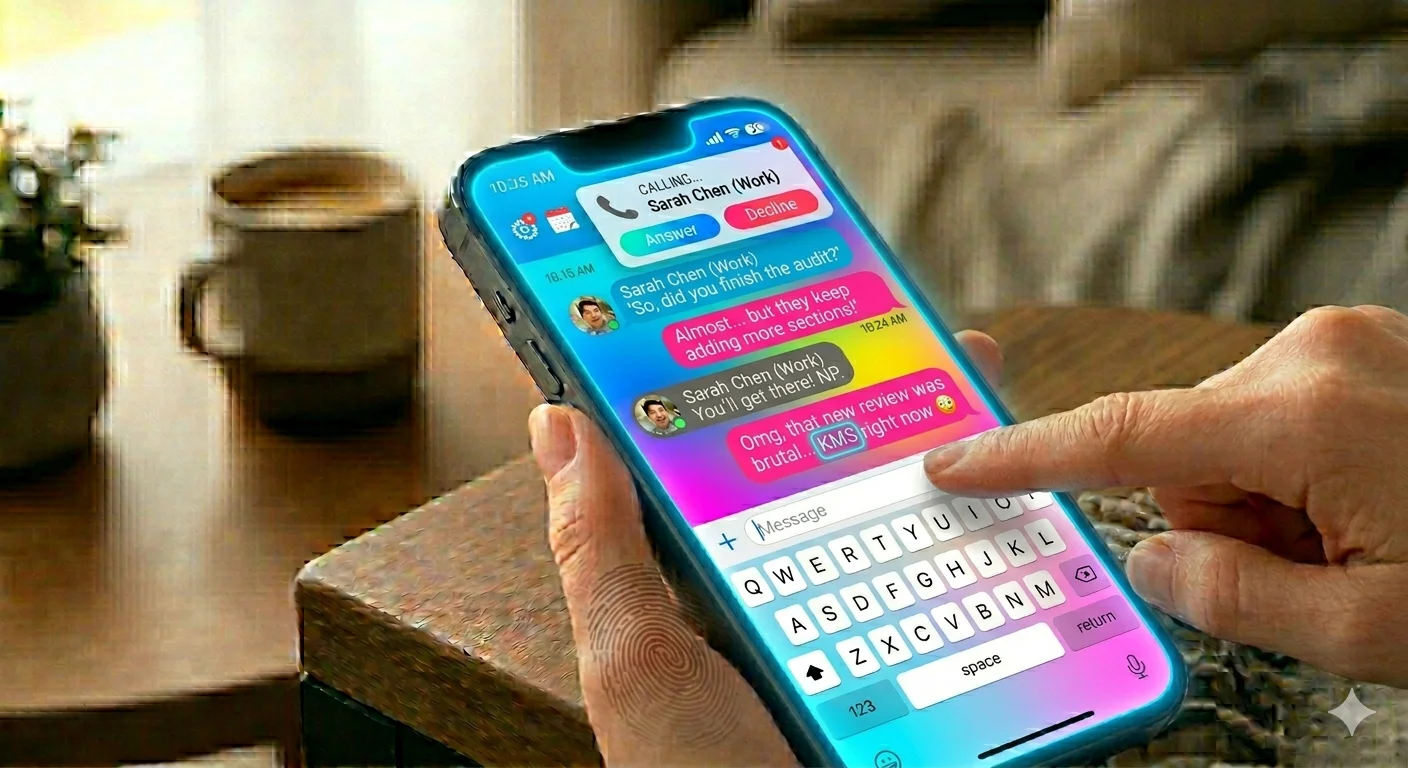
Meaning: Usually an exaggerated way to express frustration or embarrassment.
Full Form: KMS = “Kill Myself” (used as slang, not usually literal).
Context: Texting, memes, social media, casual chats.
Tone: Dramatic, sarcastic, sometimes risky or sensitive.
If you have seen “KMS” in a text message, meme, or social media comment, you might have felt confused or even concerned. Unlike many other slang terms, KMS can sound serious at first because of its full form. That is why many people search for its meaning to understand whether it is being used as a joke or something more serious.
In most online conversations, KMS is used in a non-literal way. People often use it to express strong emotions like embarrassment, frustration, or disbelief. For example, someone might say “KMS” after making a small mistake or hearing something awkward. It is meant to exaggerate their reaction, not to show real intent.
However, because the phrase itself is sensitive, it is important to understand its tone and context clearly. Using it without thinking can lead to misunderstandings or make others uncomfortable. In this article, you will learn what KMS means in texting, how it is used, when to avoid it, and safer alternatives you can use in everyday conversations.
What does KMS mean?
KMS stands for “Kill Myself.” In internet slang, it is rarely used in a literal sense. Instead, it is used as an exaggerated way to show how someone feels in a moment.
For example, if someone makes a small mistake, they might say “KMS” to express embarrassment. It is similar to saying “I’m so done” or “That was so awkward.”
The key point is that KMS is usually not meant seriously. It is a form of dramatic expression. However, because the phrase itself is serious, it should be understood carefully.
What does KMS mean in texting / slang / social media?
Texting meaning
In texting, KMS is used as a quick reaction. It often shows frustration, embarrassment, or annoyance.
For example, if someone sends a typo in a message, they might reply with “KMS” to show they feel awkward about it. It is short, expressive, and commonly used among friends.
Social media usage
On social media, KMS appears in memes, captions, and comments. People use it to react to funny or awkward situations.
For example, someone might post “KMS that was so embarrassing” under a video. It adds a dramatic and humorous tone to the reaction.
Gen Z context
Among Gen Z users, KMS is part of everyday slang. It is often used casually and without serious intent. However, awareness is growing about its sensitive nature, and many users are starting to replace it with safer alternatives.
Other meanings of KMS
KMS can also have other meanings depending on context:
- Kilometers (km): Sometimes written as KMS in informal use
- Key Management Service: A technical term in IT
These meanings are less common in texting and are usually clear from context.
How KMS is used in real conversations
KMS is mainly used in casual conversations with friends. It appears in texting, group chats, and online platforms.
People use it when reacting to something embarrassing, funny, or frustrating. It is often a quick, emotional response rather than a full sentence.
For example, after tripping in public, someone might text their friend “KMS that was so awkward.” It shows their reaction without needing a long explanation.
Examples
Here are some natural examples of KMS in use:
- “I just waved back at someone who wasn’t waving at me… KMS.”
- “I sent the wrong message to the wrong person, KMS.”
- “That was so embarrassing, KMS.”
- “I forgot my lines during the presentation, KMS.”
- “KMS I can’t believe I did that.”
- “I tripped in front of everyone, KMS.”
- “Just spilled coffee on myself, KMS.”
These examples show how it is used to express feelings in everyday situations.
Tone and intent
KMS usually carries a dramatic and exaggerated tone. It is meant to show strong emotion in a quick and casual way.
The tone is often negative but not serious. It expresses frustration, embarrassment, or disbelief. Sometimes, it can also be used humorously.
However, tone matters a lot. In some cases, it can be misunderstood as serious, especially if the person reading it does not know the context.
Origin or background
KMS comes from the broader trend of shortening phrases in internet culture. People started using dramatic expressions to make conversations more expressive and engaging.
Over time, phrases like “I’m dead” and “KMS” became popular in memes and texting. They spread quickly through social media platforms.
Today, KMS is widely recognized, but it is also becoming more controversial due to its sensitive meaning.
Is it rude or inappropriate?
KMS is not necessarily rude, but it can be inappropriate. Because it refers to a serious topic, it may upset or trigger some people.
Using it casually among friends who understand your tone may be fine. However, using it in public or with people you do not know well can be risky.
It is always important to consider your audience before using such terms.
When NOT to use it
You should avoid using KMS in formal or professional situations. It is not appropriate for work emails, school assignments, or serious conversations.
It is also better not to use it with people who may be sensitive to such language. In those cases, using safer alternatives is a better choice.
Avoid using it when the context could be misunderstood as serious.
Similar and related slang terms
There are many safer alternatives to KMS that express similar feelings:
- “I’m done”
- “I can’t”
- “This is too much”
- “I’m dead” (also slang, but less sensitive)
These phrases can help you express emotion without using sensitive language.
KMS vs related terms
KMS vs “I’m dead”:
Both express strong reactions, but “I’m dead” is less sensitive and more widely accepted.
KMS vs “I can’t”:
“I can’t” is softer and safer. It shows emotion without exaggeration.
KMS vs “I’m done”:
“I’m done” is simple and neutral compared to KMS.
Comparison Table
| Term | Meaning | Usage | Key Difference |
|---|---|---|---|
| KMS | Extreme frustration (slang) | Casual chats | Sensitive phrase |
| I’m dead | Something very funny | Social media | Less risky |
| I can’t | Overwhelmed reaction | Everyday use | Safe and neutral |
| I’m done | Frustration or completion | Casual/formal | Simple tone |
Common misunderstandings
One common misunderstanding is taking KMS literally. In most cases, it is not meant seriously, but it can still be misunderstood.
Another issue is using it without considering the audience. Some people may find it offensive or uncomfortable.
Understanding context and tone is key to avoiding confusion.
FAQ Section
1. What does KMS mean in texting?
It usually means expressing frustration or embarrassment in an exaggerated way.
2. Is KMS meant literally?
Most of the time, no. It is usually used as slang.
3. Is KMS offensive?
It can be, depending on the audience and context.
4. Can I use KMS with friends?
Yes, but only if they understand the tone and are comfortable with it.
5. What are safer alternatives to KMS?
“I’m done,” “I can’t,” or “This is too much.”
6. Is KMS appropriate for work?
No, it should be avoided in professional settings.
7. Why do people use KMS?
To express strong emotions quickly and dramatically.
conclusion
KMS is a powerful but sensitive slang term. It is commonly used in texting and social media to express strong emotions like embarrassment or frustration. While it is usually not meant literally, it can still be misunderstood or seen as inappropriate.
Understanding its meaning, tone, and context helps you use it wisely. In casual settings, it may feel natural, but in formal or sensitive situations, it is better to choose safer alternatives.