
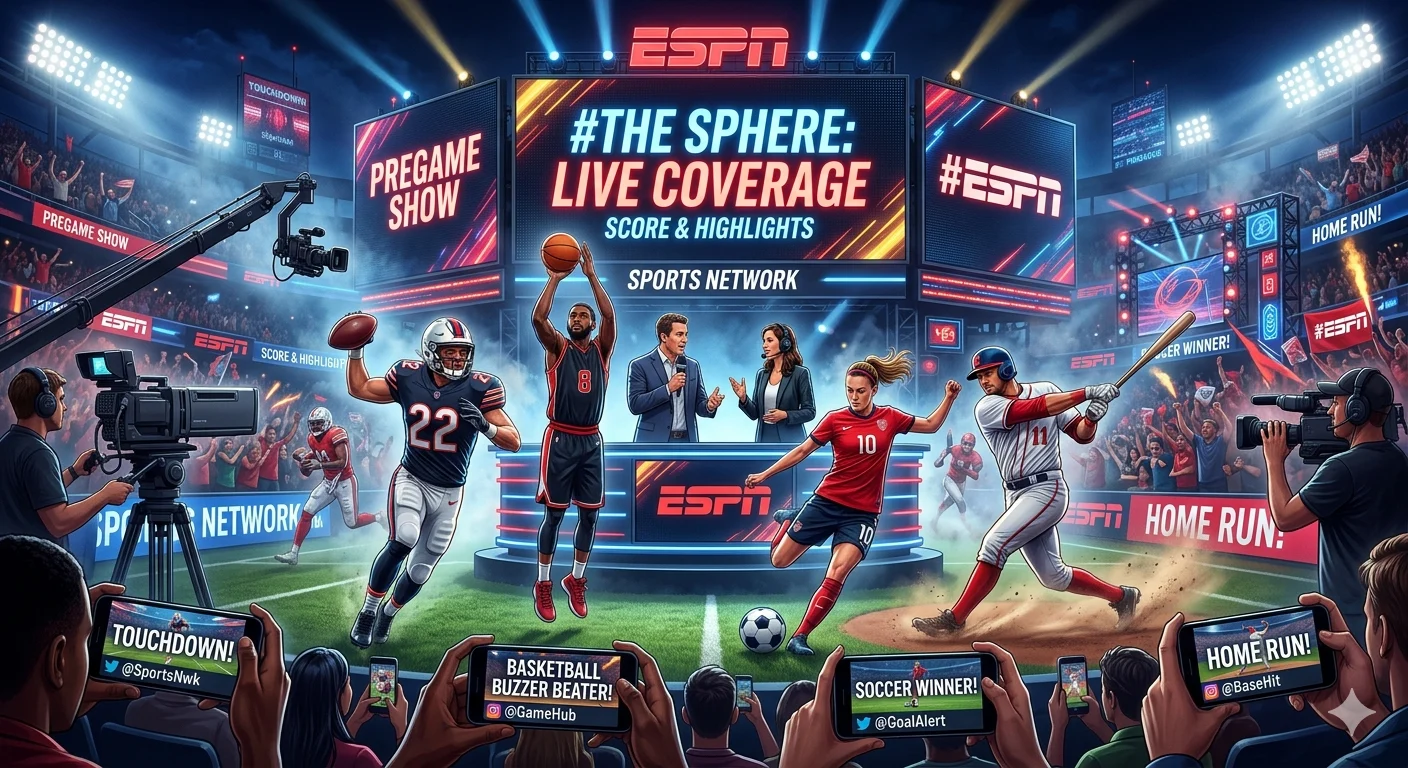
ESPN is one of the most recognized sports media brands in the world. The “ESPN meaning” is connected to sports broadcasting, live games, highlights, commentary, and sports news. Unlike many internet abbreviations, ESPN is not slang. It is the official name of a sports television and digital media network.
The full form of ESPN is “Entertainment and Sports Programming Network.” The company became famous for covering major sports events, including football, basketball, baseball, cricket, tennis, and more. Today, people mention ESPN not only on television but also in social media posts, memes, sports debates, fantasy leagues, and online discussions.
- Meaning: Entertainment and Sports Programming Network.
- Type: Sports media network.
- Context: Sports broadcasting, streaming, online sports culture.
- Tone: Informational, sports-focused, sometimes humorous in memes.
If you watch sports online, follow live games, or spend time on social media sports discussions, you have probably seen the name ESPN countless times. The “ESPN meaning” is often searched by people who want to know what the abbreviation stands for and why it is such a major part of sports culture. Unlike internet slang or texting abbreviations, ESPN is actually the name of one of the world’s most famous sports media networks.
ESPN stands for “Entertainment and Sports Programming Network.” The company is known for broadcasting live sports events, breaking sports news, player analysis, interviews, highlights, documentaries, and fantasy sports content. Since its launch, ESPN has become deeply connected with modern sports entertainment and online sports discussions.
Today, people mention ESPN not only on television but also across platforms like YouTube, Instagram, Reddit, TikTok, and X (formerly Twitter). Sports fans often reference ESPN during debates about rankings, player trades, match predictions, and viral highlights. In some online conversations, ESPN is even used humorously to describe dramatic sports arguments or intense commentary. In this article, we’ll explain the full meaning of ESPN, how it is used in sports culture, examples, comparisons, and why it remains one of the most recognized names in global sports media.
What does ESPN mean? (Core Definition)
The full form of ESPN is “Entertainment and Sports Programming Network.” It is a sports-focused television and digital media company that broadcasts games, sports news, analysis programs, documentaries, and highlights.
The network was created to provide nonstop sports coverage. Today, ESPN covers a huge range of sports including:
- Football
- Basketball
- Baseball
- Cricket
- Tennis
- MMA
- Golf
- Soccer
In simple terms, ESPN is a sports media platform that helps fans watch games, follow teams, and stay updated with sports news.
What does ESPN mean in texting / slang / social media?
Although ESPN is not slang, people often mention it in online conversations and social media discussions. In texting or sports chats, users may say things like:
- “Did you see ESPN’s rankings?”
- “ESPN posted the highlights already.”
- “This debate feels straight out of ESPN 😂”
In meme culture, ESPN is sometimes used humorously to describe dramatic sports opinions or exaggerated commentary. Sports fans also mention ESPN during fantasy league discussions, player trades, and live game reactions.
On platforms like TikTok, Reddit, Instagram, and X (formerly Twitter), ESPN clips and commentary frequently become viral sports content.
Other meanings of ESPN
The primary and widely recognized meaning of ESPN is the sports network. However, in rare situations, the abbreviation may represent other niche terms inside organizations or technical systems.
Still, for most people worldwide, ESPN almost always refers to the sports media company.
How ESPN is used in real conversations
People use ESPN naturally in sports-related conversations:
- Discussing live games
- Sharing sports highlights
- Talking about player rankings
- Watching sports commentary
- Fantasy sports debates
- Sports memes and reactions
For example:
- “ESPN says the Lakers might make a trade.”
- “I watched the game highlights on ESPN.”
- “This argument sounds like an ESPN debate show.”
The name is deeply connected to modern sports culture and media.
Examples of ESPN in sentences
Here are some natural examples showing how people use ESPN in conversations:
- “I checked ESPN for today’s scores.”
- “ESPN’s analysis was actually interesting this time.”
- “Did you watch the ESPN interview after the game?”
- “This sports debate belongs on ESPN 😂”
- “ESPN already posted the match highlights.”
- “I use ESPN for fantasy football updates.”
- “That player ranking from ESPN made fans angry.”
- “We watched the finals live on ESPN.”
These examples show both the informational and cultural use of the term online.
Tone and intent of ESPN
The tone of ESPN-related conversations depends on context:
- Informational: Sports news and updates
- Excited: Fans reacting to games
- Humorous: Sports memes and jokes
- Opinionated: Debates about players or rankings
- Analytical: Match breakdowns and statistics
Unlike internet slang, ESPN itself is neutral and professional. However, sports fans often use it emotionally during debates or live events.
Origin and background of ESPN
ESPN was launched in 1979 as a sports television network in the United States. Its goal was to provide 24-hour sports coverage, which was a new idea at the time.
Over the years, ESPN expanded into:
- Multiple TV channels
- Streaming services
- Sports websites
- Mobile apps
- Podcasts
- Documentaries
The company became a major part of global sports culture, especially with famous programs like SportsCenter and live championship coverage.
As internet streaming grew, ESPN adapted by offering digital content and online sports services for modern audiences.
Is ESPN rude or inappropriate?
No, ESPN is not rude, offensive, or inappropriate. It is simply the name of a sports media network.
However, conversations involving ESPN can sometimes become emotional because sports fans are passionate about teams, rankings, and player opinions. The term itself is completely safe in all normal contexts.
When NOT to use ESPN
Although ESPN is widely recognized, there are situations where the abbreviation may confuse people:
- Non-sports discussions
- Formal writing without explanation
- Audiences unfamiliar with sports media
- International contexts where ESPN may be less known
In professional writing, it may help to explain the full name the first time it appears.
Similar and related terms
Several sports media brands and platforms are often compared with ESPN:
- Fox Sports
- SportsCenter
- Bleacher Report
- NBA TV
- CBS Sports
These brands also provide sports news, highlights, commentary, and analysis.
ESPN vs related terms
- ESPN vs SportsCenter: ESPN is the network; SportsCenter is one of its programs
- ESPN vs Fox Sports: Both are sports broadcasters but with different coverage styles
- ESPN vs sports apps: ESPN offers both media coverage and digital services
- ESPN vs streaming platforms: ESPN combines live broadcasting with online content
These differences help explain ESPN’s role in sports media.
Comparison Table
| Term | Meaning | Usage | Key Difference |
|---|---|---|---|
| ESPN | Sports media network | TV, streaming, sports news | Full sports broadcasting company |
| SportsCenter | Sports news show | ESPN programming | Specific show, not network |
| Fox Sports | Sports broadcaster | Live sports coverage | Competing sports network |
| Bleacher Report | Sports media platform | Articles and highlights | More digital-focused |
| NBA TV | Basketball-focused channel | NBA coverage | Specific sport focus |
Common misunderstandings
Many people misunderstand the ESPN meaning because they assume it is internet slang or a random abbreviation.
Common misunderstandings include:
- Thinking ESPN is texting slang
- Confusing ESPN with SportsCenter
- Assuming ESPN only covers American sports
- Believing ESPN is only a TV channel
- Mixing ESPN streaming services with cable television
In reality, ESPN is a full sports media brand with television, streaming, digital content, and online services.
FAQ Section
1. What does ESPN stand for?
It stands for “Entertainment and Sports Programming Network.”
2. Is ESPN a slang term?
No, it is the name of a sports media company.
3. What is ESPN used for?
It provides sports news, live games, highlights, and commentary.
4. Is ESPN only about American sports?
No, ESPN covers international sports as well.
5. Can you stream ESPN online?
Yes, ESPN offers digital and streaming services.
6. Why is ESPN so popular?
Because it provides major sports coverage and analysis worldwide.
7. What is the difference between ESPN and SportsCenter?
ESPN is the network, while SportsCenter is one of its programs.
8. Does ESPN cover fantasy sports?
Yes, ESPN provides fantasy sports tools and updates.
conclusion
The “ESPN meaning” is directly connected to sports media, broadcasting, and global sports culture. Short for “Entertainment and Sports Programming Network,” ESPN became one of the world’s most recognized sports brands through live game coverage, sports analysis, highlights, and digital content. While it is not internet slang, the term frequently appears in social media discussions, memes, sports debates, and online fan communities. Understanding ESPN helps users better follow sports conversations, media references, and modern sports culture online.