
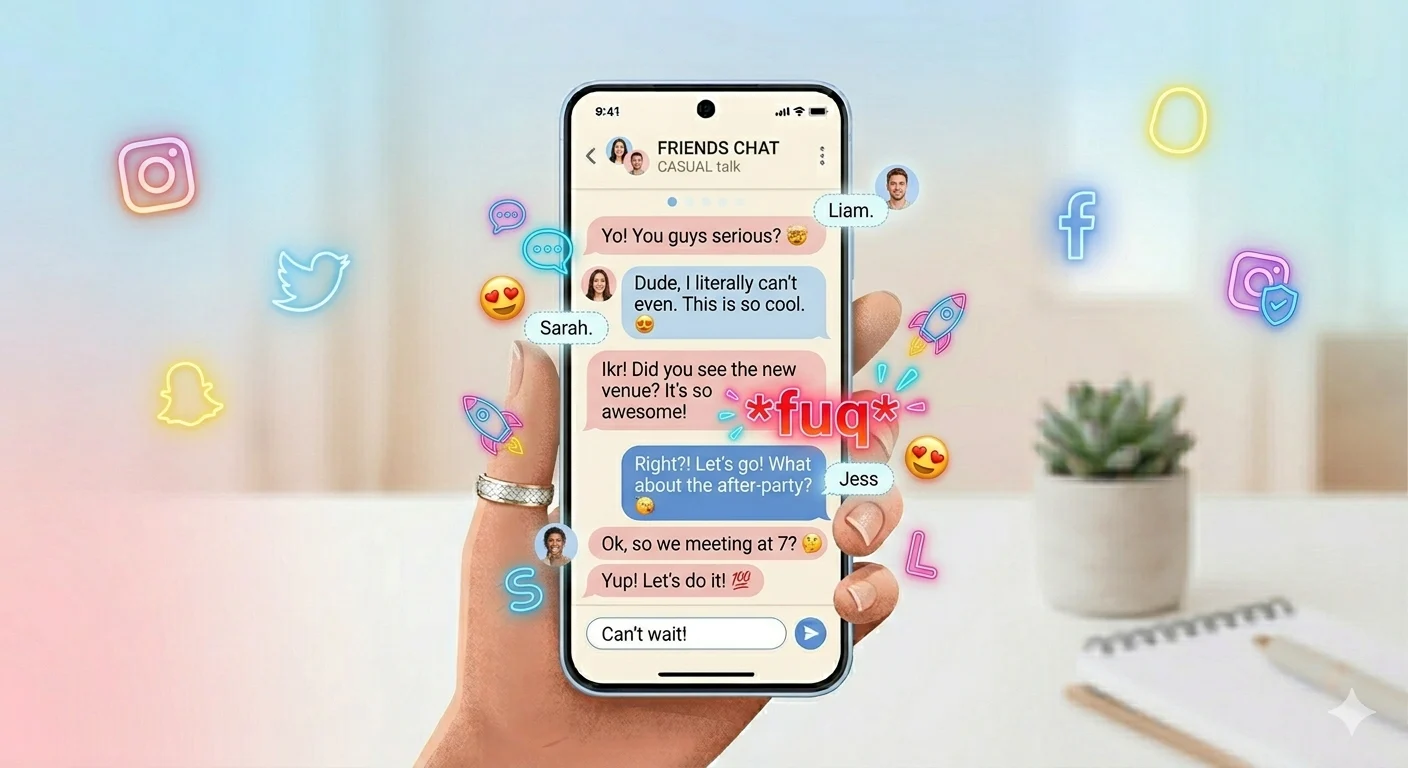
Meaning: “fuq” is a stylized or softened spelling of a common swear word, often used to express surprise, frustration, or emphasis.
Full form: Not an official acronym; it represents a modified spelling of “fuck”.
Context: Informal, online chats, memes, texting.
Tone: Can be rude, humorous, sarcastic, or expressive depending on context.
The term “fuq” is something many people notice while scrolling through social media or chatting online. At first glance, it may look like a typo or a random word. But in reality, it has a clear meaning and purpose in modern internet language. People often search for “fuq meaning in texting” because they want to understand what someone meant in a message or comment.
This word appears in casual conversations, memes, and quick reactions. It is especially common among younger users who enjoy creative and informal ways of expressing themselves. The unusual spelling can confuse new readers, but once you understand it, the meaning becomes very obvious.
“fuq” is not a formal term, and it is not something you would find in standard English writing. Instead, it belongs to slang and digital communication. It carries strong emotion and is often used to react quickly to a situation.
Understanding this term helps you better follow online conversations and avoid misunderstandings. It also teaches you when it is appropriate to use it and when it is better to choose more polite language.
what dose ‘fuq’ mean? At its core, “fuq” means the same as the word it replaces. It is a stylized spelling of a strong swear word used to express emotions like anger, shock, or excitement.
The key idea is this: people change the spelling to make it look less harsh or to avoid filters. Even though the letters are different, the meaning is still understood by readers.
In simple words, “fuq” is just a softer-looking version of a strong expression. It carries emotion. It grabs attention. But it avoids writing the exact original form.
What does “fuq” mean in texting / slang / social media?
In texting and online slang, “fuq” is used in a very casual way. People type it quickly when they want to react strongly. It often appears in short messages where emotions are high.
In chats, it can show frustration: when something goes wrong, someone might type it as a quick reaction. It can also show surprise: when something unexpected happens, the word comes out instantly.
On social media, “fuq” is often used in memes or captions. It adds humor. It makes reactions feel more dramatic. Younger users, especially those familiar with internet culture, use it freely in informal spaces.
The tone can change based on how it’s used. Sometimes it’s serious. Sometimes it’s playful. Sometimes it’s exaggerated just for laughs.
Other meanings of “fuq”
Most of the time, “fuq” does not have multiple meanings. It is not a formal abbreviation. It doesn’t stand for a phrase.
However, in rare cases, people might try to assign creative meanings to it, especially in jokes or online communities. These are not standard and can vary.
In general, when you see “fuq,” it almost always points back to its slang origin.
How “fuq” is used in real conversations
People use “fuq” in everyday digital conversations when they want to react quickly and strongly. It fits best in informal settings where strict language rules don’t apply.
You might see it in a chat when someone is annoyed about something not working. It can appear in gaming when a player loses unexpectedly. It can show up in comments when someone reacts to surprising news.
It’s common on platforms like messaging apps, social media, and online forums. The word is rarely used in spoken language but is very common in written digital communication.
Examples
- “fuq, I forgot my assignment again.”
- “What the fuq just happened?”
- “fuq this game, I keep losing.”
- “fuq, that scared me!”
- “Why is this so hard, fuq.”
- “fuq yeah, we won!”
- “fuq, I didn’t see that coming.”
These examples show different emotions. Some are angry. Some are surprised. Some are even excited.
Tone and intent
The tone of “fuq” depends heavily on the situation. It is not fixed.
It can be negative when used in anger or frustration. It can sound rude if directed at someone. It can also be playful when used among friends in a joking way.
Sometimes, people use it sarcastically. They might exaggerate their reaction for humor. In other cases, they use it seriously to express strong feelings.
Because of this flexibility, understanding the tone requires looking at the full sentence and situation.
Origin or background
“fuq” comes from internet culture, where people often change spellings of words. This can happen for many reasons. Some platforms filter strong language. Some users want to avoid being flagged. Others simply enjoy creative spelling.
Over time, these variations become popular. They spread through memes, chats, and online communities. “fuq” is one such variation that gained attention because it looks different but sounds familiar.
It reflects how language evolves online. People adapt words to fit digital spaces.
Is it rude or inappropriate?
Yes, “fuq” can be considered rude. Even though the spelling is different, the meaning is still linked to a strong swear word.
In casual conversations with friends, it might be acceptable. In more formal or respectful settings, it can come across as inappropriate.
The key point is context. The same word can feel harmless in one situation and offensive in another.
When NOT to use it
You should avoid using “fuq” in formal communication. This includes emails, school work, job applications, or professional messages.
It’s also better not to use it when speaking to elders, teachers, or people you don’t know well. In these situations, it can appear disrespectful.
If you’re unsure, it’s safer to choose a neutral word instead.
Similar and related slang terms
There are many similar slang terms that serve the same purpose. Some change spelling. Some shorten the word. Others replace it entirely.
Common related terms include “fck,” “fuk,” and expressions like “wtf.” These all express strong reactions but vary slightly in tone and usage.
Each variation reflects the creativity of online language.
“fuq” vs related terms
“fuq” is often seen as a softer or more playful version compared to the original word. It feels less direct but still carries emotion.
Other terms like “fck” are closer to the original spelling. “wtf” is more of a reaction phrase than a direct expression.
Choosing between them depends on tone. Some feel stronger. Some feel lighter.
Comparison Table
| Term | Meaning | Usage | Key Difference |
|---|---|---|---|
| fuq | Stylized swear word | Casual chats, memes | Softer spelling |
| fck | Shortened swear word | Texting | More direct |
| wtf | Expression of shock | Reactions | Phrase, not direct word |
| omg | Surprise/excitement | General use | Not offensive |
Common misunderstandings
One common mistake is thinking “fuq” is harmless just because it looks different. In reality, it still carries the meaning of a strong word.
Another misunderstanding is treating it like an abbreviation. It is not. It doesn’t stand for a phrase.
Some people also misuse it in formal settings, not realizing how it might be perceived.
FAQ Section
1. Is “fuq” a bad word?
It is a variation of a bad word, so it can be considered inappropriate in many situations.
2. Is “fuq” the same as the original swear word?
Yes, it carries the same meaning, just with a different spelling.
3. Can I use “fuq” with friends?
In casual settings, many people do. It depends on your group and comfort level.
4. Why do people spell it as “fuq”?
To avoid filters, soften the look, or add a creative touch.
5. Is “fuq” used in formal writing?
No, it should be avoided in professional or formal contexts.
6. Does “fuq” always sound rude?
Not always. It can be playful, but it still has a strong tone.
7. Is it popular among younger users?
Yes, it is commonly used in online communities and among younger audiences.
8. Can it be used in jokes?
Yes, it often appears in memes and humorous posts.
conclusion
“fuq” is a modern internet slang term that reflects how language changes online. It is a creative spelling of a strong word, used to express emotions quickly and clearly. While it may look softer, its meaning is still powerful.
Use it carefully. It fits casual, friendly conversations but not formal ones. Always consider your audience and context. Understanding this simple rule will help you communicate more effectively and avoid misunderstandings.