
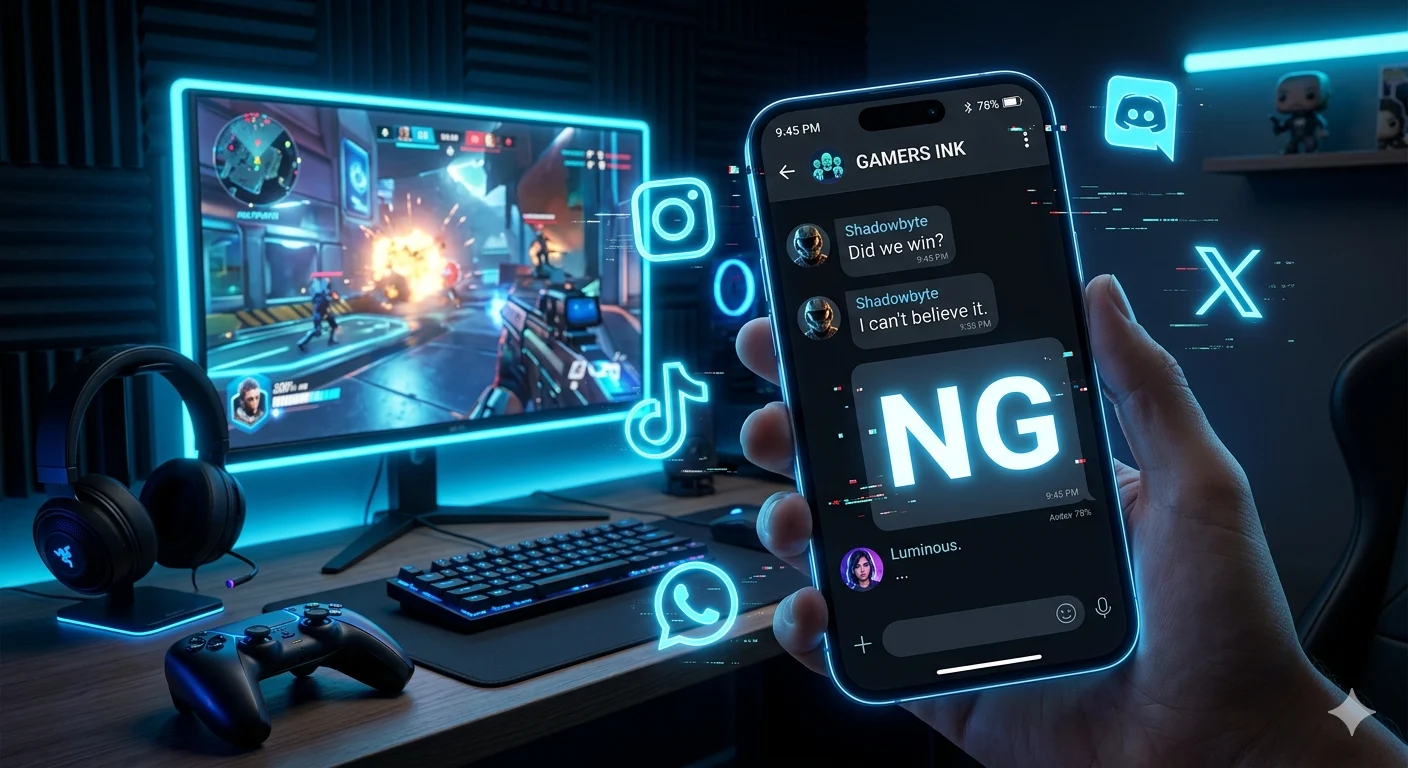
“NG meaning in chat” usually refers to a short internet abbreviation that stands for “No Good.” It is commonly used in texting, gaming, and online conversations to quickly express that something is not good, failed, or didn’t meet expectations. In many cases, NG is used as a fast reaction instead of writing a full sentence like “this is not good” or “that didn’t work.” However, depending on context, NG can sometimes have different meanings, especially in gaming or tech-related discussions. Most of the time, though, it carries a negative or corrective tone.
- Meaning: No Good / Not Good
- Full form: No Good
- Context: Texting, gaming, social media
If you have ever seen “NG” in a message, gaming chat, or social media comment and wondered what it means, you’re not alone. The “NG meaning in chat” is one of the most searched slang explanations because this short abbreviation appears everywhere online. At first, it may look confusing since it is only two letters, but its meaning is actually quite simple in most cases.
NG usually stands for “No Good,” a quick way of saying that something is not right, not acceptable, or did not work well. Instead of typing full sentences like “this is not good” or “that didn’t go well,” people use NG to respond faster in online conversations. This makes it very common in texting apps like WhatsApp, social media platforms like Instagram and TikTok, and especially in gaming chats where fast reactions matter.
However, like many internet slang terms, NG can sometimes have different meanings depending on context, such as “Next Generation” in tech discussions. Still, the most widely used meaning remains “No Good.” In this article, we will explore the full meaning of NG, how it is used in real conversations, examples, tone, and when you should or shouldn’t use it.
What does NG mean? (Core Definition)
The most common meaning of “NG” is “No Good.” It is a simple abbreviation used to show that something is not acceptable, failed, or below expectations. This usage comes from everyday English, where people say “no good” to describe something negative.
In internet slang, NG works as a shortened version of this phrase. It helps users respond quickly without typing full sentences. While the core meaning stays the same, the tone can vary depending on how it is used in conversation.
In short, NG means something did not work well, is not acceptable, or is considered bad in a given situation.
Why Context Matters When Using NG
Although “No Good” is the most common meaning of NG, the abbreviation can occasionally represent something different depending on the conversation. In technology, for example, it may refer to “Next Generation,” while certain industries and communities may use it for their own specialized terms. This is why paying attention to the surrounding discussion is important before assuming its meaning.
For everyday texting, online chats, and social media, however, the meaning is usually easy to understand. If someone replies with NG after a suggestion, game, or video, they are most likely saying that it wasn’t good or didn’t meet expectations. Learning these small internet abbreviations makes online conversations easier to follow and helps you communicate more naturally across different digital platforms.
NG in texting, slang & social media
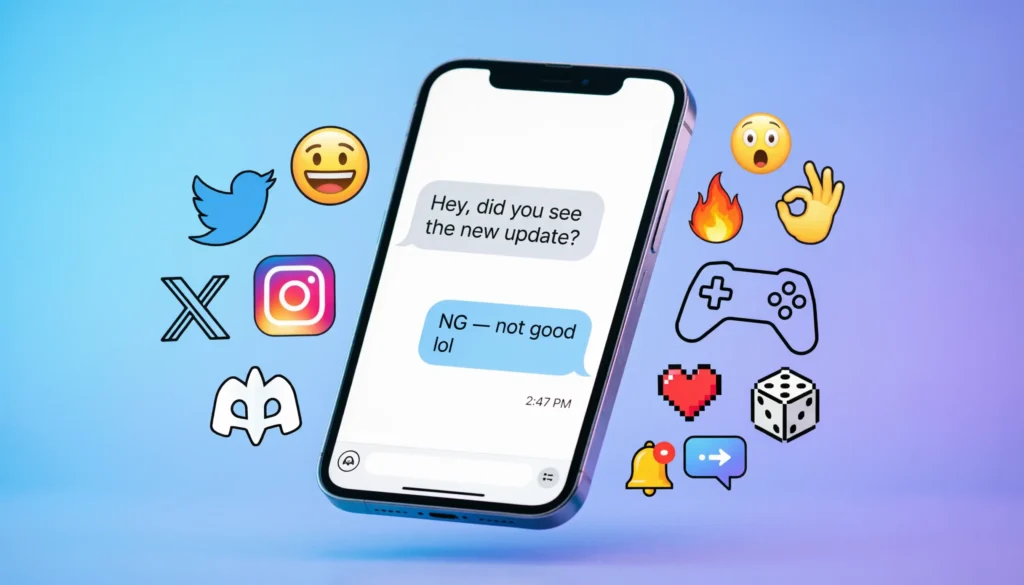
In texting and social media platforms like WhatsApp, Instagram, and TikTok, NG is used as a quick reaction. Instead of explaining in detail, users type “NG” to show disapproval or disappointment.
In Gen Z communication, speed is important. That’s why short forms like NG are popular. It can be used in comments, replies, or even captions to react to content quickly. For example, if a video or idea is not impressive, someone might simply comment “NG.”
In gaming communities, NG is even more common because players need fast communication during matches. It helps them give instant feedback without interrupting gameplay.
Other meanings of NG
Although “No Good” is the most common meaning, NG can sometimes have other interpretations depending on context:
- No Good (primary slang meaning)
- Next Generation (used in tech, devices, or media)
- Scene or production term meaning “not usable take” in filmmaking
- Rare or context-based shorthand in specific online communities
However, in everyday chat and gaming slang, “No Good” remains the dominant meaning.
How NG is used in real conversations
NG appears in many types of online communication, especially where quick reactions are needed:
- Gaming chats to rate performance or moves
- Social media comments reacting to videos or posts
- Text messages giving short feedback
- Group discussions where fast replies are needed
- Meme culture or humorous reactions
It is mostly used when users want to say something is not good without writing a full explanation.
Examples of NG in sentences
Here are some natural examples showing how NG meaning in chat is used:
- “That strategy was NG, we lost because of it.”
- “This update is NG, too many bugs.”
- “Your idea is NG, we should try something else.”
- “That move in the game was NG, bro.”
- “The quality of this video is NG.”
- “NG performance today, we need practice.”
- “This plan looks NG to me.”
- “That reaction was NG 😂”
Tone and intent of NG
The tone of NG is usually negative or corrective. It is used to point out that something is not good or didn’t work well.
- Negative: Most common usage (criticism or failure)
- Neutral: Simple feedback without emotion
- Rarely positive: Only in sarcastic or humorous context
- Sarcastic: Sometimes used jokingly among friends
Overall, NG is not aggressive, but it does carry a “not good” meaning.
Origin and background of NG
The term NG comes from the English phrase “No Good.” It was first used in everyday speech and later became popular in online gaming and internet forums. As online communication became faster, users began shortening common phrases into abbreviations.
In gaming culture, NG became especially useful for giving quick feedback during matches. From there, it spread into general texting and social media language. Today, it is part of standard internet slang used worldwide.
Understanding NG in Text Messages and Online Slang
NG is one of those internet abbreviations that looks confusing at first but is actually very simple once you know the context. In most text messages, gaming chats, and social media conversations, it stands for “No Good.” People use it as a quick way to say that something didn’t go as planned, wasn’t successful, or simply wasn’t good enough. Since online conversations move quickly, abbreviations like NG help users reply without typing long sentences.
You’ll often come across this term on platforms like WhatsApp, Discord, Instagram, TikTok, and in multiplayer games where fast communication is important. Whether someone is reacting to a failed strategy, a poor performance, or an idea they don’t like, NG serves as a short and clear response. In most casual conversations, it carries a negative but not offensive meaning.
Is NG rude or inappropriate?
NG is not considered rude or offensive. However, it can sound negative because it means “not good.” The tone depends on how it is used.
If used politely, it is just feedback. If used sharply, it can feel critical. But overall, it is safe and commonly used in casual communication.
When NOT to use NG
Even though NG is popular online, there are situations where it should be avoided:
- Formal emails or workplace communication
- Academic writing or reports
- Professional feedback without explanation
- Sensitive conversations where clarity matters
- Situations where slang might cause confusion
In these cases, it is better to write “not good” or explain clearly.
Similar and related slang terms
NG is part of a larger group of internet reaction slang:
- GG → Good Game (positive gaming term)
- Bad → simple negative reaction
- Fail → something unsuccessful
- Noob → inexperienced player (gaming slang)
- Trash → strong negative opinion (informal)
These terms are often used alongside NG in gaming and online chats.
NG vs related terms
- NG vs GG: NG is negative, GG is positive
- NG vs Bad: NG is slang shorthand, “bad” is plain English
- NG vs Fail: NG is opinion-based, fail is result-based
These differences help users understand tone more clearly.
Comparison Table
| Term | Meaning | Usage | Key Difference |
|---|---|---|---|
| NG | No Good | Chat, gaming, slang | Quick negative feedback |
| GG | Good Game | Gaming chats | Positive reaction |
| Bad | Not good | General English | Formal and clear |
| Fail | Unsuccessful | Casual + formal | Describes outcome |
| Noob | Inexperienced | Gaming slang | About skill level |
Common misunderstandings
Many people misunderstand NG meaning in chat:
- Thinking it always means something offensive
- Confusing it with unrelated technical terms
- Using it in formal writing incorrectly
- Assuming it has multiple complex meanings
- Misreading tone in conversations
Most confusion happens because context is not considered.
FAQ Section
1. What does NG mean in chat?
It usually means “No Good.”
2. Is NG negative or positive?
Mostly negative, but depends on context.
3. What does NG mean in gaming?
It is used to give quick feedback like “not good.”
4. Is NG rude?
No, it is informal but not offensive.
5. Does NG have multiple meanings?
Yes, but “No Good” is the most common.
6. Where is NG commonly used?
In chats, gaming, and social media.
7. Is NG formal or informal?
It is informal slang.
conclusion
The “NG meaning in chat” mainly stands for “No Good,” and it is widely used in texting, gaming, and social media to give quick feedback. While it can sometimes have other meanings depending on context, its most common usage is to show that something is not good or needs improvement. It is informal slang, so it should be used in casual conversation rather than professional or formal writing. Understanding context is key to using NG correctly in online communication.