
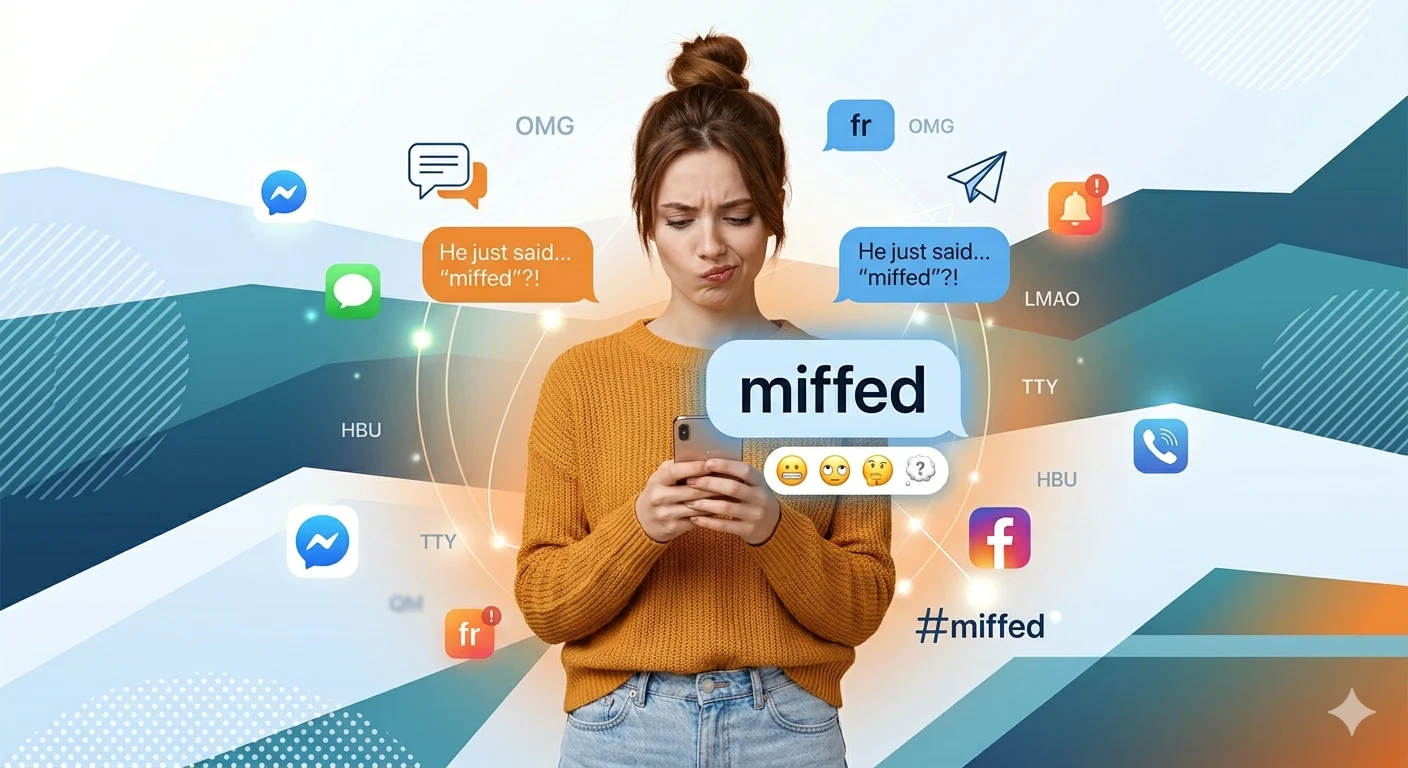
Meaning: Slightly annoyed, irritated, or mildly offended
Full Form: Not an acronym; miffed is a regular English word
Context: Texting, social media, everyday conversations, movies, and online discussions
Tone: Mildly negative, annoyed, disappointed, or slightly upset
If you’ve recently come across the word miffed in a text message, social media post, online conversation, or TV show, you may be wondering exactly what it means. Many people search for the miffed meaning because it sounds unusual compared to more common words like annoyed, angry, or upset. While the term is not internet slang, it frequently appears in casual conversations and online discussions.
The word miffed describes a feeling of mild annoyance, irritation, or slight offense. It is often used when someone feels bothered by a small situation but is not seriously angry. For example, a person might feel miffed if a friend forgets to invite them to an event or if someone interrupts them during a conversation.
Today, the term appears in texting, social media captions, workplace conversations, blogs, and entertainment content. Because it expresses a softer emotion than anger, it helps people communicate frustration without sounding overly dramatic.
In this guide, you’ll learn the complete meaning of miffed, how it is used in texting and social media, its origin, examples, related words, and the differences between miffed and other emotions such as annoyed, upset, and angry.
What Does Miffed Mean?
The word miffed means feeling slightly annoyed, irritated, offended, or bothered by something.
Unlike strong emotions such as anger or rage, miffed usually describes a mild emotional reaction. The person is unhappy about something, but not to an extreme degree.
For example:
- “I was a little miffed when they started without me.”
- “She seemed miffed after her idea was ignored.”
- “He felt miffed because nobody replied to his message.”
In each example, the person feels annoyed, but not intensely angry.
The word is often used when discussing:
- Minor disappointments
- Small misunderstandings
- Feeling overlooked
- Feeling ignored
- Mild frustration
In simple terms, being miffed means being a little upset about something.
What Does Miffed Mean in Texting, Slang, and Social Media?
In texting and social media, miffed usually keeps the same meaning it has in standard English.
People use it to describe feeling slightly annoyed by a situation.
Examples include:
- “I’m kinda miffed they canceled the event.”
- “She looked miffed after reading the comments.”
- “Honestly, I’m miffed nobody told me.”
On social media platforms, users often use the term when sharing frustrations or disappointments without sounding overly emotional.
For example:
- “A little miffed that my package still hasn’t arrived.”
- “Miffed that I missed the concert tickets.”
Although younger internet users often prefer words like salty or triggered, miffed remains a popular and widely understood term.
It is especially common among adults and professional writers because it sounds more polished than many modern slang expressions.
Other Meanings of Miffed
The primary meaning of miffed is mild annoyance, but the exact emotion can vary depending on the situation.
Feeling Slightly Offended
Someone may feel miffed after hearing a comment they perceive as disrespectful.
Feeling Ignored
A person might feel miffed when their opinion is overlooked.
Feeling Disappointed
Sometimes the word expresses disappointment rather than irritation.
Feeling Left Out
People often use miffed when describing situations where they feel excluded.
Although the circumstances change, the emotional intensity usually remains mild.
How Miffed Is Used in Real Conversations
The word appears in many everyday situations.
Personal Conversations
Friends often use it when discussing minor disagreements.
Example:
“I was a bit miffed when they forgot my birthday.”
Workplace Discussions
Employees may use the term professionally.
Example:
“She seemed miffed that her suggestion wasn’t considered.”
Social Media Posts
Users frequently share mild frustrations online.
Example:
“I’m miffed that the app keeps crashing.”
Family Conversations
Family members use it to describe small disappointments.
Example:
“Dad was miffed when dinner started without him.”
Examples of Miffed in Real Life
- “I was miffed when nobody responded to my email.”
- “She looked miffed after hearing the decision.”
- “He’s still miffed about losing the game.”
- “I’m a little miffed that they changed the schedule.”
- “They seemed miffed when the event was postponed.”
- “My sister was miffed because she wasn’t invited.”
- “I felt miffed after waiting an hour for the delivery.”
- “The customer was miffed by the unexpected delay.”
These examples show how the word describes mild annoyance rather than serious anger.
Tone and Intent
The tone of miffed can vary depending on context.
Mildly Negative Tone
Most commonly, the word describes a small amount of irritation.
Disappointed Tone
Sometimes it highlights feelings of disappointment.
Playful Tone
Friends occasionally use it jokingly.
Example:
“I’m miffed you ate the last cookie.”
Serious Tone
In professional situations, it can describe genuine dissatisfaction.
Example:
“The client seemed miffed by the delay.”
Regardless of the tone, the emotion remains relatively mild.
Origin or Background
The word miffed has been part of the English language for centuries.
It comes from the older word miff, which referred to a small fit of annoyance or displeasure.
Over time, English speakers began using miffed as an adjective to describe someone experiencing that feeling.
Unlike many modern internet terms, miffed did not originate online. Instead, it became part of everyday English long before texting and social media existed.
Today, the word remains popular because it fills a useful gap between being slightly annoyed and genuinely angry.
Is It Rude or Inappropriate?
No, miffed is not considered rude or offensive.
It is a polite and socially acceptable word.
Because it describes a mild emotion, it often sounds less harsh than words such as:
- Angry
- Furious
- Mad
- Enraged
This makes it appropriate for many conversations, including professional discussions.
For example:
“I was slightly miffed by the misunderstanding.”
This sounds much softer than saying:
“I was furious.”
When NOT to Use It
Although miffed is useful, it does not fit every situation.
Extreme Anger
If someone is genuinely furious, miffed is too mild.
Legal Documents
Formal legal writing usually requires more precise language.
Academic Writing
Researchers often prefer clearer emotional descriptions.
Serious Emotional Situations
Words like upset, distressed, or angry may be more accurate when emotions are stronger.
Choosing the correct emotional word helps avoid misunderstandings.
Similar and Related Slang Terms
Several words have meanings similar to miffed.
Annoyed
A common synonym.
Irritated
Slightly stronger than miffed.
Peeved
Very close in meaning.
Upset
Broader emotional range.
Salty
Modern slang for being annoyed.
Frustrated
Often relates to obstacles or repeated problems.
Each term carries a slightly different emotional intensity.
Miffed vs Related Terms
Miffed vs Annoyed
Both indicate irritation, but miffed often sounds milder and more conversational.
Miffed vs Peeved
These terms are nearly identical, though peeved may sound slightly stronger.
Miffed vs Angry
Angry represents a much stronger emotional reaction.
Miffed vs Upset
Upset can involve sadness, while miffed focuses mainly on irritation.
Miffed vs Salty
Salty is modern slang, while miffed is traditional English.
Comparison Table
| Term | Meaning | Usage | Key Difference |
|---|---|---|---|
| Miffed | Slightly annoyed | Casual and professional | Mild irritation |
| Annoyed | Bothered by something | Everyday use | More general |
| Peeved | Mildly irritated | Informal conversation | Similar intensity |
| Irritated | Noticeably annoyed | Common speech | Slightly stronger |
| Upset | Emotionally disturbed | Broad emotional use | Can include sadness |
| Angry | Strong displeasure | Serious situations | Much stronger emotion |
Common Misunderstandings
Assuming Miffed Means Angry
The most common mistake is believing miffed means very angry.
In reality, it usually refers to mild annoyance.
Thinking It Is Outdated
Although it sounds traditional, people still use it regularly today.
Confusing It With Serious Frustration
Miffed generally describes minor irritation, not major emotional distress.
Believing It Is Slang
The word is standard English, not internet slang.
Frequently Asked Questions
What does miffed mean in texting?
It means slightly annoyed, irritated, or mildly offended.
What does miffed mean on social media?
It usually describes a small disappointment or frustration.
Is miffed the same as angry?
No. Miffed is much milder than angry.
Is miffed a slang term?
No. It is a standard English word.
Is miffed rude?
No. It is generally polite and acceptable.
Can miffed be used professionally?
Yes. It often appears in workplace conversations.
What is the difference between miffed and annoyed?
They are very similar, but miffed often sounds softer.
Is miffed a strong emotion?
No. It describes mild irritation.
How do you use miffed in a sentence?
Example: “I was miffed when my order arrived late.”
Is miffed still commonly used?
Yes. Many English speakers continue to use it in everyday conversation.
Final Takeaway
The miffed meaning is simple: feeling slightly annoyed, irritated, disappointed, or mildly offended. It is a common English word used in texting, social media, workplace discussions, and everyday conversations. Unlike anger, miffed describes a softer emotional reaction to a minor problem or inconvenience. Understanding this word can help you recognize emotional tone more accurately and communicate your feelings with greater precision. If someone says they are miffed, they are probably bothered by something—but not seriously angry.
