
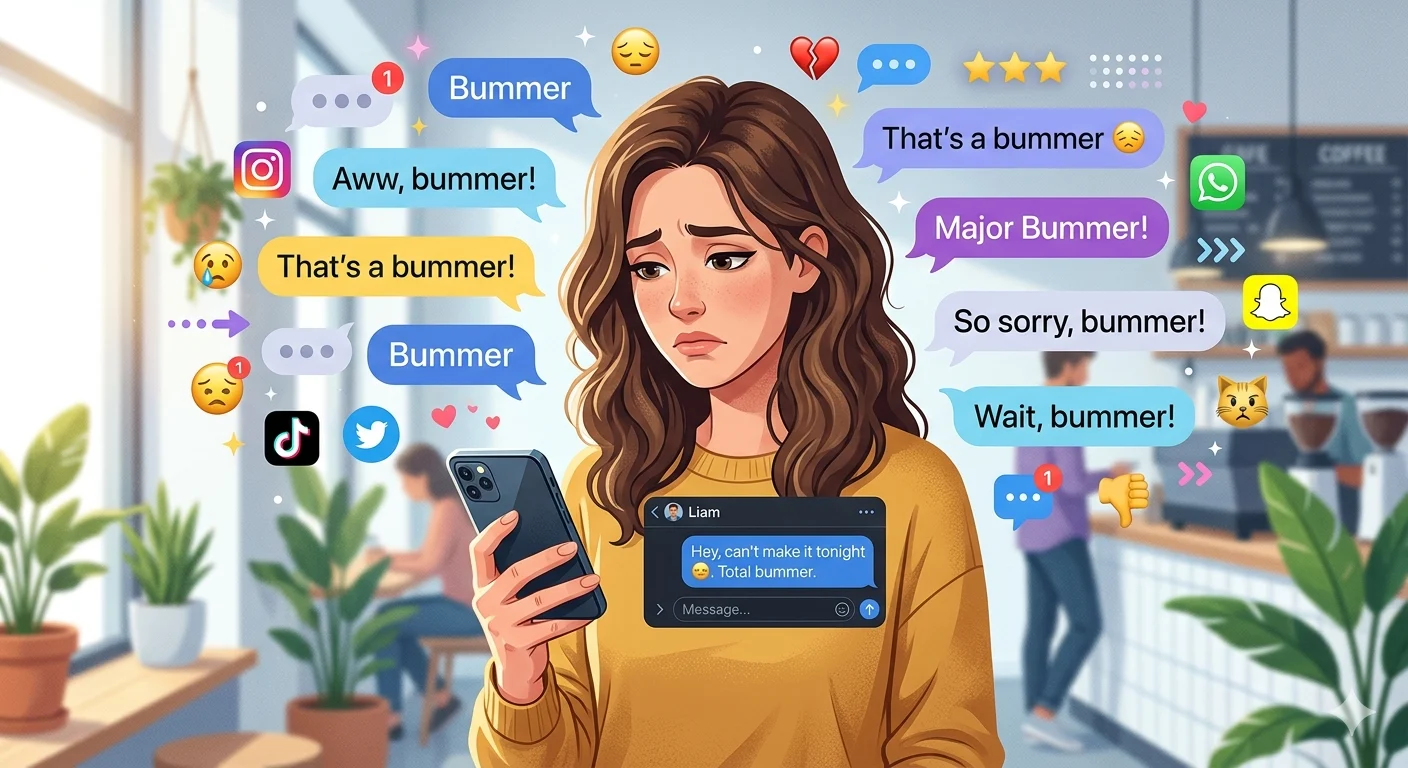
Meaning: Bummer is a slang term used to describe something disappointing, unfortunate, upsetting, or unpleasant.
Full Form: Bummer is not an acronym and does not have a full form.
Context: Texting, social media, everyday conversations, online chats.
Tone: Usually negative but mild, often expressing disappointment or sympathy.
If you’ve ever seen someone reply with “bummer” in a text message, social media comment, or casual conversation, you may have wondered exactly what the word means. While it is a common slang term in English, its meaning can vary slightly depending on the situation. In most cases, bummer is used when something disappointing, unfortunate, or frustrating happens.
The word has been part of everyday speech for decades and remains popular in modern digital communication. People use it to react to canceled plans, bad news, missed opportunities, or any situation that doesn’t turn out as expected. Unlike stronger expressions of frustration, bummer has a softer tone, making it a polite and friendly way to acknowledge disappointment.
Today, you’ll find the term used across texting apps, social media platforms, online forums, and face-to-face conversations. Whether someone misses a concert, loses an important item, or experiences a minor setback, bummer is often the perfect response.
In this guide, you’ll learn the complete bummer meaning, how it is used in texting and social media, its origin, examples, related slang terms, and situations where you should avoid using it.
What Does Bummer Mean?
Core Definition
A bummer is something disappointing, unpleasant, or unfortunate.
The word is commonly used to describe situations that make someone feel disappointed or frustrated. It can refer to an event, circumstance, or outcome that did not go as planned.
For example:
“The game was canceled because of rain. What a bummer.”
In this sentence, the cancellation is the disappointing event.
Simple Explanation
In simple terms, bummer means:
“That’s disappointing.”
People often use it when reacting to bad news that is unfortunate but not necessarily serious or tragic.
The term helps express sympathy and understanding without sounding overly emotional.
What Does Bummer Mean in Texting, Slang, and Social Media?
Chat Meaning
In texting, bummer is commonly used as a quick reaction to disappointing news.
Examples include:
- Missed events
- Canceled plans
- Failed exams
- Lost items
- Minor setbacks
If a friend tells you they couldn’t attend a party, replying with “Bummer” shows empathy and understanding.
Social Media Usage
On social media, users often comment “bummer” when reacting to unfortunate situations.
Examples include:
- Event cancellations
- Sports losses
- Delayed product launches
- Bad weather ruining plans
The word is short, easy to understand, and widely recognized across different age groups.
Gen Z and Internet Culture
Although younger users have introduced many new slang expressions, bummer remains a familiar term in internet culture.
Many Gen Z users still understand and occasionally use it, especially when describing minor disappointments.
However, alternatives like “that sucks” or “L” may appear more frequently among younger audiences.
Other Meanings of Bummer
Alternate Uses
While the most common meaning refers to a disappointing situation, bummer can also be used in a few other ways.
It may refer to:
- A disappointing event
- A disappointing experience
- A feeling of disappointment
- Occasionally, a disappointing person
For example:
“He’s such a bummer to be around.”
In this case, the word describes a person who negatively affects the mood.
However, this usage is less common than the standard meaning.
How Bummer Is Used in Real Conversations
Everyday Situations
People use bummer in many everyday situations.
Common examples include:
- A trip gets canceled
- A favorite team loses
- A phone stops working
- Bad weather ruins outdoor plans
- A package arrives late
- Missing an important opportunity
The term works best for situations that are disappointing but not extremely serious.
Popular Platforms
Bummer frequently appears on:
- TikTok
- X (Twitter)
- Snapchat
- Messenger
Because it is simple and versatile, it fits naturally into digital communication.
Examples of Bummer in Sentences
Here are some natural examples:
- “The concert got canceled? That’s a bummer.”
- “Bummer, I was really looking forward to it.”
- “It’s raining all weekend. What a bummer.”
- “My laptop stopped working today. Total bummer.”
- “That’s a bummer for your team.”
- “Bummer! Better luck next time.”
- “The vacation plans fell through. Such a bummer.”
- “I missed the sale by one day. Bummer.”
These examples show how the term is commonly used in everyday speech.
Tone and Intent
Emotional Meaning
Bummer usually communicates:
- Disappointment
- Sympathy
- Frustration
- Regret
The emotion is generally mild rather than intense.
Positive, Negative, or Neutral?
Bummer is mostly negative because it refers to unfortunate situations.
However, it is not a harsh or angry word.
Instead, it often carries a friendly and understanding tone.
Sarcasm vs Serious Usage
Most of the time, bummer is used sincerely.
Example:
“Bummer, I know how much you wanted that job.”
Occasionally, people use it sarcastically.
Example:
“Oh no, your favorite celebrity didn’t reply. What a bummer.”
The intended meaning depends on context and tone.
Origin and Background
Where It Came From
The word bummer has roots in American slang.
It became popular during the twentieth century as a casual way to describe disappointing experiences.
Over time, it evolved into a widely accepted expression used throughout English-speaking countries.
Growth in Popularity
Movies, television shows, and popular culture helped spread the term.
As internet communication grew, bummer naturally became part of texting and social media language.
Today, it remains one of the most recognizable words for expressing mild disappointment.
Is Bummer Rude or Inappropriate?
General Acceptability
Bummer is generally considered polite and acceptable.
Unlike many slang terms, it does not contain profanity or offensive language.
Most people view it as harmless.
Situations to Be Careful About
Although the term is usually acceptable, it may sound too casual in very serious situations.
For example:
- Deaths
- Major tragedies
- Serious illnesses
- Significant personal losses
In these situations, more thoughtful language is usually appropriate.
When NOT to Use Bummer
Formal Communication
Avoid using bummer in:
- Business emails
- Academic papers
- Professional reports
- Official documents
The word is informal and may seem unprofessional.
Incorrect Contexts
You should also avoid using it when:
- Discussing serious tragedies
- Offering condolences
- Addressing sensitive issues
A more compassionate response is often better.
Similar and Related Slang Terms
Common Alternatives
Several phrases carry a similar meaning:
- That sucks
- Too bad
- What a shame
- Tough break
- That’s unfortunate
Each expresses disappointment in a slightly different way.
Related Expressions
Other commonly used reactions include:
- Bad luck
- That’s rough
- Unlucky
- That’s disappointing
- What a pity
These alternatives can sometimes fit formal situations better than bummer.
Bummer vs Related Terms
Key Differences
Bummer is softer and friendlier than many alternatives.
For example:
- “That sucks” sounds stronger and more emotional.
- “Too bad” sounds more neutral.
- “What a shame” often conveys greater sympathy.
Choosing the right phrase depends on the situation.
Comparison Table
| Term | Meaning | Usage | Key Difference |
|---|---|---|---|
| Bummer | Disappointing situation | Casual conversations | Mild disappointment |
| That Sucks | Something bad happened | Informal chats | Stronger negative tone |
| Too Bad | Unfortunate event | Everyday speech | More neutral |
| Tough Break | Bad luck | Supportive situations | Focuses on misfortune |
| What a Shame | Regret or disappointment | Casual and semi-formal | More sympathetic |
Common Misunderstandings About Bummer
Frequent Confusions
Some people mistakenly think bummer is rude.
In reality, it is one of the milder slang expressions in English.
Others assume it can only describe events.
However, it can also describe feelings and occasionally people.
Misuse Examples
Incorrect:
Using “bummer” in response to a serious tragedy.
Correct:
Using “bummer” when discussing a canceled event or minor disappointment.
The severity of the situation matters.
FAQ About Bummer
What does bummer mean?
Bummer means something disappointing, unfortunate, or unpleasant.
Is bummer a slang word?
Yes. It is an informal slang expression.
Is bummer rude?
No. It is generally considered polite and harmless.
Can bummer be used in texting?
Yes. It is commonly used in text messages and chats.
Is bummer still popular?
Yes. Although it is an older slang term, it remains widely understood.
What is the difference between bummer and that sucks?
Bummer is usually milder and less emotional.
Can bummer describe a person?
Yes, but this usage is less common.
Is bummer appropriate for work?
Generally no. Formal alternatives are preferred.
Why do people say bummer?
They use it to express disappointment or sympathy.
Is bummer positive or negative?
It is generally negative because it refers to unfortunate situations.
conclusion
Bummer is a common slang term used to describe something disappointing, unfortunate, or unpleasant. It has been part of everyday English for decades and remains popular in texting, social media, and casual conversations. The word helps people express sympathy and disappointment in a friendly, non-offensive way.
Because bummer is informal, it works best in relaxed settings rather than professional or highly sensitive situations. Understanding the meaning of bummer can help you recognize and use the term naturally in both online and offline conversations.