
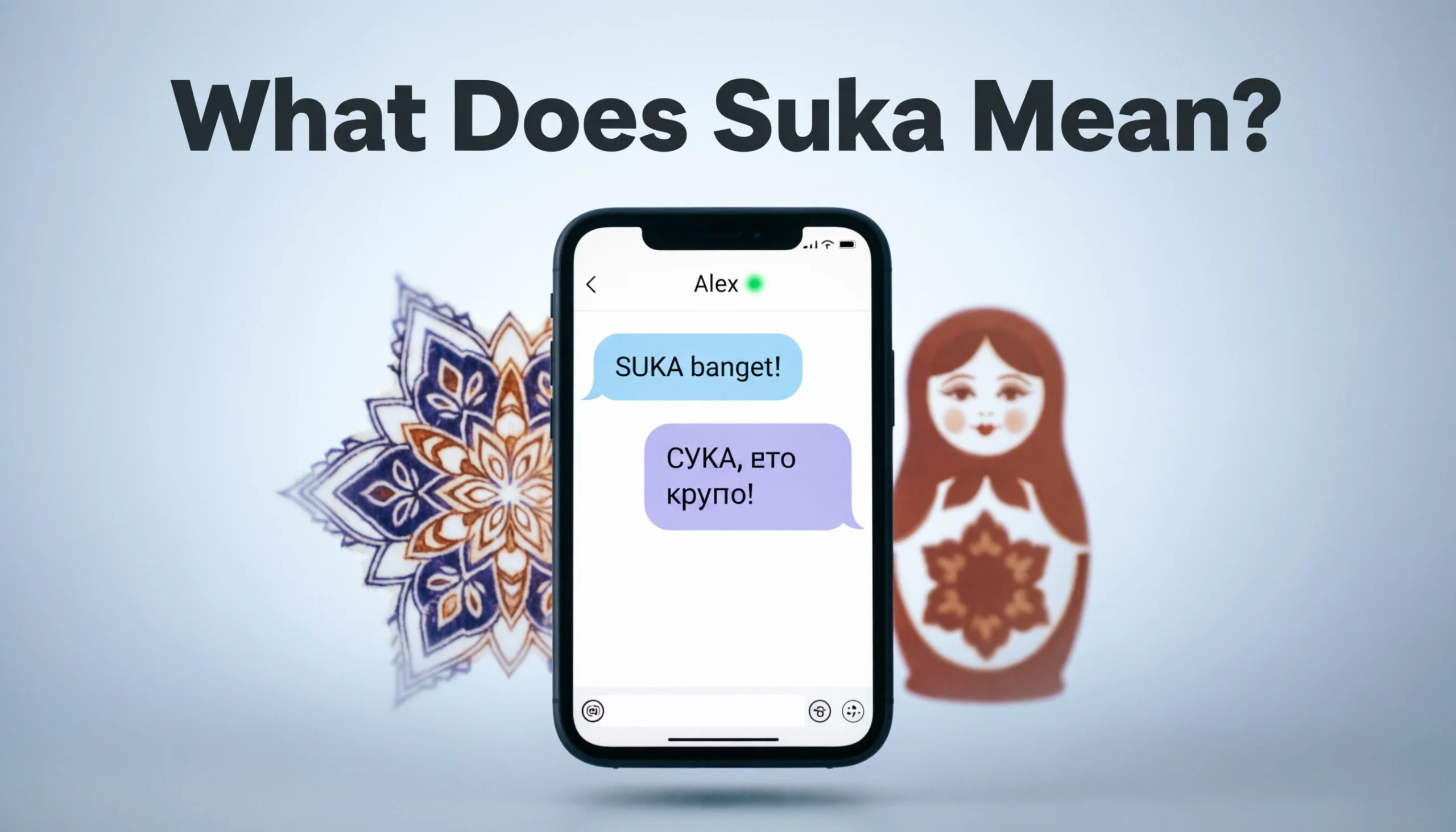
Suka can have completely different meanings depending on the language and context. In Indonesian, suka commonly means “to like,” “to enjoy,” or “to prefer.” In Russian, the transliterated word suka (сука) is a vulgar insult, often translated as “bitch,” and it can be used aggressively or casually in some online communities.
- Indonesian meaning: Like, enjoy, or prefer
- Russian slang meaning: A vulgar insult
- Context: Texting, social media, gaming, memes, and multilingual conversations
- Tone: Neutral or positive in Indonesian; offensive, aggressive, or joking in Russian slang
So, if you see “suka” online, don’t assume it has only one meaning. The surrounding words and the language being used are the biggest clues.
Have you come across the word “suka” in a text, social media comment, gaming chat, meme, or online conversation and wondered what it means? The answer isn’t quite as simple as it may seem.
The word suka exists in more than one language, and its meaning can change dramatically depending on where it comes from. In Indonesian, suka is a normal everyday word that can mean to like, enjoy, or prefer something. It isn’t inherently slang or offensive.
However, the same spelling appears online as the English-letter transliteration of the Russian word сука. In Russian slang, that word is a vulgar insult and can be used as an offensive expression. It is particularly recognizable in some gaming communities, memes, and internet conversations where Russian slang has become popular.
This difference can create plenty of confusion. Someone might see suka in an Indonesian sentence and assume it is profanity, while someone familiar with Russian internet slang might interpret it as an insult.
In this guide, we’ll explain what suka means, its Indonesian and Russian meanings, how it appears in texting and social media, examples of each usage, related terms, and how context helps you identify the intended meaning.
What Does “Suka” Mean?
There isn’t one universal definition of suka.
The meaning depends primarily on the language.
In Indonesian, suka commonly means “like,” “enjoy,” or “prefer.” It is used in ordinary conversations about food, hobbies, people, activities, and personal preferences.
For example:
“Saya suka kopi.”
This means:
“I like coffee.”
In Russian, the word сука is commonly transliterated into English as suka. It is a vulgar insult whose literal and figurative uses are associated with the word “bitch.” Depending on context, it can function as an insult, an angry exclamation, or part of informal speech.
This Russian usage is quite different from the Indonesian word.
Therefore, if someone asks “What does suka mean in texting?”, the best answer is: it depends on the context and language.
What Does “Suka” Mean in Texting, Slang, and Social Media?
“Suka” in Internet Slang
On the internet, words often travel between languages.
A term that starts in one language can become popular among gamers, meme communities, or social media users who don’t actually speak that language. This is one reason you may see suka written in English letters.
If you see it in an English-language gaming chat, for example, it may be a transliteration of the Russian сука rather than the Indonesian word.
But if you see it in an Indonesian conversation, the ordinary Indonesian meaning is much more likely.
“Suka” in Indonesian
In Indonesian, suka is a common everyday word.
It can describe:
- Something you like
- Something you enjoy
- A personal preference
- Romantic interest, depending on context
- An activity you enjoy doing
For example:
“Aku suka musik.”
This means:
“I like music.”
Another example is:
“Dia suka membaca.”
This means:
“He/she likes reading.”
So, in Indonesian, suka is not a bad word. It is simply part of normal vocabulary.
“Suka” in Russian Slang
The Russian word сука, written as suka in Latin letters, is very different.
It is a vulgar insult and is often translated as “bitch.” Its exact force can depend on tone, speaker, and context.
You may see it in:
- Gaming chats
- Memes
- Russian-language posts
- Heated arguments
- Informal online conversations
- Translated or transliterated slang
Because it is profanity, it may sound aggressive or offensive, although some speakers also use it casually or jokingly among friends.
Why Context Matters
The biggest clue is the language surrounding the word.
Compare:
“Saya suka makanan ini.”
Here, suka is clearly Indonesian and means “like.”
Now compare that with:
“Suka!” 😡
in a Russian gaming or meme context.
Here, the word may be functioning as an insult or profanity.
The spelling is identical in English letters, but the meanings are completely different.
Other Meanings of “Suka”
The two major interpretations are worth remembering.
Indonesian Suka
Suka can mean:
- Like
- Enjoy
- Prefer
- Be fond of
- Have an interest in
The exact English translation depends on the sentence.
It is a normal word and can appear in both casual and more formal Indonesian communication.
Russian Су́ка
The Russian word сука is vulgar language.
Its literal origin is connected with the word for a female dog, but in modern insulting usage it is commonly understood as a derogatory term directed at a person.
The transliteration suka is especially common online because Russian words are frequently written using Latin characters instead of Cyrillic.
“A Suka” as a Phrase
The phrase “a suka” does not have one established universal meaning in English.
If someone searches specifically for “a suka meaning,” they may have encountered the term without enough context.
The word could be:
- An Indonesian word
- Russian slang written in Latin letters
- A community-specific internet reference
- A word copied from a meme or gaming conversation
That’s why identifying the original language is important.
How “Suka” Is Used in Real Conversations
Indonesian Conversations
A normal Indonesian conversation might include:
“Kamu suka film ini?”
This means:
“Do you like this movie?”
Here, suka is completely ordinary.
Gaming Chats
In gaming communities, suka may appear as Russian profanity written in Latin letters.
Someone might use it after losing a match, getting frustrated, or reacting angrily.
Social Media
On social media, the word may appear in memes or comments.
If the post contains Indonesian language, the meaning is likely related to liking or enjoying something.
If the post is Russian or uses Russian gaming slang, the vulgar meaning may be intended.
Multilingual Communities
Internet communities often mix English with words borrowed from other languages.
A person may use suka simply because they saw it in a meme or gaming clip.
In such cases, the user may not even be using the word according to its original linguistic context.
“Suka” Meaning Examples
Example 1: Indonesian
“Aku suka pizza.”
Meaning: “I like pizza.”
Here, suka expresses a personal preference.
Example 2: Indonesian
“Dia suka bermain game.”
Meaning: “He/she likes playing games.”
Again, the word is completely neutral.
Example 3: Indonesian Romantic Context
“Aku suka dia.”
Depending on context, this can mean:
“I like him/her.”
It can express romantic interest, although the exact feeling depends on the situation.
Example 4: Russian Internet Slang
“Suka!”
In a Russian-influenced gaming or meme context, this may represent the vulgar Russian word сука.
Example 5: Gaming
“Why did he type ‘suka’ after losing?”
Meaning: The player may have used Russian profanity as an emotional reaction.
Example 6: Asking About the Word
“Does suka mean ‘like’ or is it Russian slang?”
This is a reasonable question because both interpretations exist.
Example 7: Social Media
“I saw ‘suka’ under an Indonesian post.”
Meaning: The Indonesian context may indicate that the word simply means “like” or “enjoy.”
Example 8: Meme Culture
“The meme uses suka as Russian slang.”
Meaning: The term is being used as transliterated Russian profanity rather than Indonesian vocabulary.
Tone and Intent of “Suka”
The tone of suka depends almost entirely on which language is being used.
Neutral or Positive
In Indonesian, suka is generally neutral or positive.
Someone can use it to talk about:
- Food
- Music
- Movies
- Hobbies
- People
- Preferences
There is nothing offensive about the word in this context.
Romantic
In Indonesian, suka can sometimes express attraction or romantic interest.
For example, saying someone suka another person can mean they like that person.
Negative or Aggressive
The Russian сука can be offensive.
When directed at someone during an argument, it can communicate anger or contempt.
Humorous or Casual
Online, Russian profanity is sometimes used jokingly among friends or in memes.
However, humorous use doesn’t remove the word’s vulgar nature.
Origin and Background of “Suka”
The different meanings of suka come from different linguistic backgrounds.
Indonesian Origin
In Indonesian, suka is an established word used to express liking, enjoyment, or preference.
It is part of normal everyday vocabulary rather than modern internet slang.
Russian Origin
The Russian сука is a separate word with a different linguistic history.
It is traditionally connected to a female dog and developed a derogatory human meaning. In modern Russian, it is recognized as vulgar language.
When Russian words are written in Latin characters rather than Cyrillic, сука becomes suka through transliteration.
Internet culture helped spread this spelling internationally, particularly through gaming communities, memes, videos, and online discussions.
This explains why an English-speaking internet user might recognize suka as Russian profanity without knowing anything about its Indonesian meaning.
Is “Suka” Rude or Inappropriate?
It depends on the meaning.
If you’re using suka in Indonesian, it is not inherently rude. It is an ordinary word meaning “like,” “enjoy,” or “prefer.”
If you’re using suka as the transliteration of Russian сука, it is vulgar and can be offensive.
This distinction is important.
Someone who sees the word online shouldn’t automatically assume that it is profanity. Likewise, someone who learns the Indonesian word shouldn’t assume it carries the Russian insult’s meaning.
The language and context determine the tone.
When Not to Use “Suka”
If you’re using the Indonesian word suka, there is generally no special restriction. It is a normal part of the language.
However, if you’re using suka as Russian profanity, be careful.
Avoid using it:
- In professional communication
- In formal writing
- With people you don’t know
- In respectful conversations
- When you’re unsure how the recipient will react
- In situations where offensive language could cause problems
It’s especially risky to copy foreign slang from a meme without understanding its meaning.
A word that looks funny online may be considerably more offensive in its original language.
Similar and Related Slang Terms
Several words may appear alongside suka, especially in multilingual internet communities.
Like
The English word “like” is the closest everyday equivalent of Indonesian suka when discussing preferences.
“I like coffee.”
can correspond to:
“Saya suka kopi.”
Sayang
Sayang is an Indonesian word associated with affection, care, or endearment.
It can communicate a stronger emotional connection than simply saying suka.
Blyat
Blyat is another Russian profanity frequently seen in gaming and internet culture. Like suka, it is often written in Latin letters by English-speaking internet users.
Its meaning and usage are different from сука, even though both are vulgar Russian expressions.
Russian Су́ка
This is the original Cyrillic form behind the transliterated internet spelling suka when the Russian slang meaning is intended.
“Suka” vs Related Terms
Suka vs Like
Indonesian suka and English like often overlap in meaning.
“Saya suka kopi.”
means:
“I like coffee.”
The key difference is language, not necessarily meaning.
Suka vs Sayang
Both can describe feelings toward another person, but they aren’t identical.
Suka generally means liking or being interested in someone.
Sayang can express affection, care, love, or emotional attachment.
Context determines the exact nuance.
Suka vs Су́ка
These are visually identical when the Russian word is transliterated into Latin letters, but they are completely different words.
- Indonesian suka = like/enjoy/prefer
- Russian сука = vulgar insult
This is probably the most important distinction to remember.
Suka vs Blyat
Both can appear in Russian internet slang and gaming communities, but they are different profanity terms.
Suka is commonly associated with an insult, while blyat is another vulgar Russian expression often used as an exclamation or intensifier.
“Suka” Meaning Comparison Table
| Term | Meaning | Usage | Key Difference |
|---|---|---|---|
| Suka (Indonesian) | Like, enjoy, prefer | Everyday Indonesian | Normal, non-offensive vocabulary |
| Like | Enjoy or have a preference for | English conversations | English equivalent of Indonesian suka |
| Sayang | Affection, care, endearment | Indonesian | Often expresses stronger affection |
| Suka (Russian transliteration) | Vulgar insult | Russian slang, gaming, memes | Different word despite identical Latin spelling |
| Blyat | Russian profanity/exclamation | Gaming and internet slang | Different Russian swear word |
Common Misunderstandings About “Suka”
The biggest misunderstanding is assuming suka has one fixed meaning everywhere.
It doesn’t.
A person who knows Russian internet slang may immediately recognize suka as profanity. An Indonesian speaker may see the same letters and understand them as an ordinary word meaning “like.”
Another source of confusion is transliteration. Russian is normally written in Cyrillic, so сука becomes suka when represented using Latin letters.
This means English-speaking users may encounter the transliterated version online without realizing where it came from.
Gaming and meme culture make this even more confusing because foreign words are often copied without their original context.
The best way to interpret suka meaning in texting is therefore to ask:
- What language is the conversation using?
- What words appear around suka?
- Is the conversation about preferences or gaming/slang?
- Is the person using Cyrillic or Latin letters?
- Does the community commonly use Russian internet slang?
These clues can usually reveal the intended meaning.
Frequently Asked Questions About “A Suka”
What does suka mean in Indonesian?
In Indonesian, suka commonly means “like,” “enjoy,” or “prefer.” It is a normal everyday word.
What does suka mean in Russian slang?
Russian сука, transliterated as suka, is a vulgar insult commonly translated as “bitch.” Its tone can range from aggressive to casual or joking depending on the speaker and context.
Is suka a bad word?
Not necessarily. Indonesian suka is not a bad word. Russian сука, however, is vulgar and can be offensive.
What does “a suka” mean in texting?
There is no universal texting definition of “a suka.” The intended meaning depends on the language and context in which the word appears.
Is suka a Gen Z slang word?
Not exactly. Indonesian suka is a normal Indonesian word, while Russian suka is an established vulgar expression. Both may appear in internet culture, but neither has one universal Gen Z definition.
Why do gamers say suka?
Gamers may use suka as the Latin-letter spelling of Russian сука, particularly in memes, gaming chats, or communities influenced by Russian internet culture.
Does suka mean “like”?
Yes, in Indonesian, suka commonly means “like,” “enjoy,” or “prefer.” This is completely different from the Russian slang meaning.
Is suka offensive?
Indonesian suka is not offensive. The Russian word сука is vulgar and can be offensive, especially when directed at someone as an insult.
conclusion
So, what does suka mean? The answer depends on the language.
In Indonesian, suka is an ordinary word meaning “like,” “enjoy,” or “prefer.” In Russian internet slang, suka is the Latin transliteration of сука, a vulgar insult.
These meanings look identical when written in English letters, but they are completely different in origin, tone, and usage.
If you encounter suka in texting, gaming, or social media, don’t judge its meaning from the spelling alone. Look at the surrounding language and conversation. A simple Indonesian sentence may use suka as a completely normal word, while a gaming meme may be using the Russian slang version.
Context is the key to understanding “suka” correctly.