
| Term | Meaning |
|---|---|
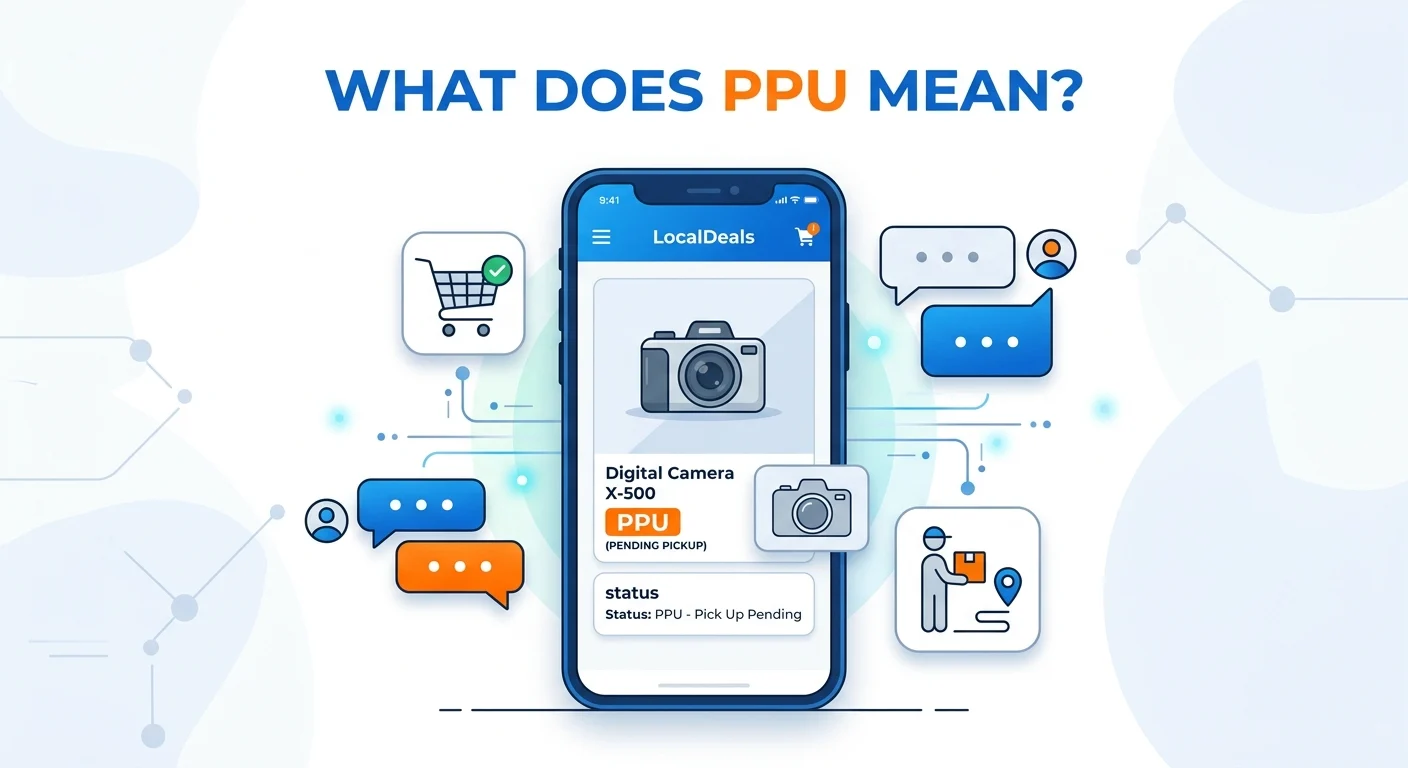
| PPU | Most commonly means “Pending Pick Up” in online selling and marketplaces |
| Other Meanings | Pay Per Use, Parts Per Unit, Pounds Per Unit |
| Used In | Texting, Facebook Marketplace, online shopping, business, technical discussions |
| Tone | Neutral and informational |
| Purpose | Used as a short abbreviation to save time in conversations |
If you have seen PPU while browsing Facebook Marketplace, reading a text message, or joining an online discussion, you may wonder what it means. Unlike many internet slang terms, PPU does not have only one definition. Its meaning depends on where you see it and how it is being used.
In most online buying and selling conversations, PPU means “Pending Pick Up.” Sellers use it to show that an item has already been reserved by someone and is waiting to be collected. However, PPU can also mean other things, such as Pay Per Use in business or technology contexts.
Because this abbreviation appears in different industries and online communities, understanding the context is important. A seller on Facebook Marketplace and a company discussing software costs may use PPU in completely different ways.
This guide explains what PPU means, how it is used in texting and online conversations, its different meanings, examples, comparisons, and common misunderstandings.
What Does PPU Mean?
The meaning of PPU depends on the situation, but the most common online meaning is:
PPU = Pending Pick Up
This phrase is especially popular on online marketplaces where people buy and sell used items.
When a seller marks an item as PPU, it usually means:
- Someone has already shown interest
- A buyer has agreed to collect the item
- The seller is waiting for pickup
- The item may no longer be available
For example:
“Chair is PPU. I’ll update if the buyer doesn’t collect it.”
This means someone has already arranged to pick up the chair.
Simple Explanation
Think of PPU as a status update.
Instead of writing:
“This item is reserved for someone who will collect it later.”
A seller can simply write:
“PPU.”
It saves time and quickly informs other buyers that the item is temporarily unavailable.
However, PPU is not limited to marketplaces. In other contexts, it can have completely different meanings.
What Does PPU Mean in Texting, Slang, and Social Media?
The meaning of PPU in texting depends on the conversation.
PPU in Text Messages
In casual chats, PPU is often used when people discuss buying or selling items.
Example:
Person 1:
“Is the table still available?”
Person 2:
“Sorry, PPU right now.”
Here, PPU means someone else is already scheduled to pick it up.
Unlike slang words such as LOL or BRB, PPU is more of a practical abbreviation than an emotional expression.
PPU on Social Media
Social media platforms have made PPU very common, especially in local selling groups.
You may see it on:
- Facebook Marketplace
- Community buy-and-sell groups
- Local trading pages
- Online classified websites
Sellers often use short labels because they receive many messages from potential buyers.
Common examples:
- Available
- Pending
- PPU
- Sold
PPU helps sellers manage interest and avoid answering the same questions repeatedly.
PPU in Online Slang
Although PPU appears online, it is not traditional internet slang. It is mainly a convenience abbreviation.
Different communities may use it differently, which is why checking the context is important.
Other Meanings of PPU
While Pending Pick Up is the most common online meaning, PPU can represent several other phrases.
1. Pay Per Use
In business and technology, PPU can mean Pay Per Use.
This refers to a pricing model where customers pay based on how much they use a service.
Examples:
- Cloud services
- Software tools
- Equipment rental
- Utility-based services
Example:
“The company switched to a PPU model.”
Meaning:
The company now pays according to usage.
2. Parts Per Unit
In manufacturing or technical discussions, PPU may mean Parts Per Unit.
It can describe the number of parts included in a product or system.
3. Pounds Per Unit
In measurement-related contexts, PPU may refer to pounds per unit.
The exact meaning depends on the industry.
4. Other Industry-Specific Meanings
Some organisations may use PPU internally for specific terms. These meanings are usually uncommon outside that particular field.
How PPU Is Used in Real Conversations
PPU appears in different types of conversations depending on the context.
Marketplace Conversations
This is where most people encounter PPU.
Example:
“Is the baby stroller available?”
“It’s PPU. Someone is picking it up tomorrow.”
The seller is informing the buyer that the item is temporarily reserved.
Online Discussions
People may use PPU in groups where products, services, or transactions are discussed.
Example:
“Laptop is PPU. I’ll remove the post if it sells.”
Business Conversations
In professional settings, PPU may refer to Pay Per Use.
Example:
“Our new subscription follows a PPU pricing model.”
Here, it has nothing to do with collecting an item.
Examples of PPU in Sentences
Here are some natural examples:
- “The sofa is PPU, but I’ll let you know if the buyer cancels.”
- “Sorry, this item is already PPU.”
- “The seller marked the bike as PPU this morning.”
- “The software uses a PPU payment system.”
- “The equipment rental company offers a PPU option.”
- “Several people asked about the phone, but it is currently PPU.”
- “I’ll update the listing if the PPU buyer does not show up.”
- “The service moved from monthly pricing to PPU.”
Tone and Intent of PPU
PPU is generally a neutral abbreviation. It does not express emotions like happiness, anger, or excitement.
Emotional Meaning
Unlike many texting expressions, PPU is mostly practical.
It communicates information rather than feelings.
For example:
“PPU”
simply provides a status update.
Positive, Negative, or Neutral?
PPU is usually neutral.
It can be positive for the seller because someone is interested in the item, but it can also disappoint other buyers who wanted it.
Example:
Buyer:
“Can I buy the table?”
Seller:
“Sorry, it’s PPU.”
The message is not rude; it is simply an update.
Serious vs Casual Usage
PPU is commonly used casually online, especially in marketplace conversations.
In formal communication, people usually write the complete phrase instead.
Origin and Background of PPU
The popularity of PPU grew with online marketplaces and digital communication.
As websites like Facebook Marketplace and community selling groups became popular, sellers needed faster ways to manage listings.
Short abbreviations became common because they:
- Save typing time
- Make listings easier to update
- Help buyers understand item status quickly
Over time, PPU became a familiar term among online sellers and buyers.
Other marketplace abbreviations developed alongside it, including:
- OBO (Or Best Offer)
- NFS (Not For Sale)
- ISO (In Search Of)
Is PPU Rude or Inappropriate?
No, PPU is not rude or offensive.
It is simply an abbreviation used to communicate information quickly.
However, confusion can happen if someone does not know the meaning.
For example, a new marketplace user may not understand:
“PPU, sorry.”
They may think the seller is using a random abbreviation.
In reality, it is just a common selling term.
When NOT to Use PPU
Although PPU is useful online, it is not suitable everywhere.
Avoid using only the abbreviation in:
- Formal emails
- Business reports
- Customer documents
- Academic writing
Instead, write the full phrase.
For example:
Informal:
“The item is PPU.”
Formal:
“The item is currently pending pickup.”
Avoiding Confusion
If you are speaking with someone unfamiliar with marketplace abbreviations, using the full phrase is clearer.
Similar and Related Terms
Several abbreviations are commonly seen with PPU.
PU (Pickup)
A shorter version related to pickup arrangements.
OBO (Or Best Offer)
Used when a seller accepts the highest reasonable offer.
NFS (Not For Sale)
Shows that an item is not available for purchase.
ISO (In Search Of)
Used by buyers looking for a specific item.
Pending
A general status meaning something is temporarily reserved.
PPU vs Related Terms
PPU vs PU
Both relate to pickup, but PPU means the pickup is already arranged or expected.
PU simply refers to pickup.
PPU vs Pending
Pending is broader and can refer to many situations.
PPU specifically suggests someone is waiting to collect an item.
IT vs OBO
PPU describes item status.
OBO describes a seller’s willingness to consider offers.
PPU vs Pay Per Use
These two meanings are completely different.
PPU in marketplaces means Pending Pick Up.
PPU in business means Pay Per Use.
Comparison Table
| Term | Meaning | Usage | Key Difference |
|---|---|---|---|
| PPU | Pending Pick Up | Online marketplaces | Shows an item is reserved for collection |
| PU | Pickup | Buying and selling | Refers only to collection |
| Pending | Waiting or not completed | General use | Broader than PPU |
| OBO | Or Best Offer | Selling items | Related to pricing, not pickup |
| Pay Per Use | Usage-based payment | Business and technology | A completely different meaning |
Common Misunderstandings
Because PPU has multiple meanings, people often misunderstand it.
Assuming PPU Always Means One Thing
A marketplace seller and a software company may use PPU differently.
Confusing PPU With Sold
PPU does not always mean the item is sold.
It usually means someone plans to pick it up, but the transaction may not be completed yet.
Thinking It Is Internet Slang
PPU is an abbreviation, but it is not mainly used as a slang expression.
It is more of a practical shortcut.
Ignoring Context
The sentence around PPU usually reveals the meaning.
For example:
“Table is PPU” = Pending Pick Up.
“Software uses PPU pricing” = Pay Per Use.
Frequently Asked Questions
What does PPU mean in texting?
PPU usually means “Pending Pick Up” when used in buying and selling conversations.
What does PPU mean on Facebook Marketplace?
On Facebook Marketplace, PPU means an item has someone waiting to collect it.
Is PPU a slang word?
PPU is more of an abbreviation than traditional slang.
Does PPU have different meanings?
Yes. It can mean Pending Pick Up, Pay Per Use, Parts Per Unit, and other industry-specific terms.
Is PPU the same as sold?
No. PPU means someone is expected to pick up the item, but the sale may not be completed.
What does PPU mean in business?
In business, PPU often means Pay Per Use, a pricing model based on consumption.
Why do people use PPU?
People use PPU because it is shorter and easier than writing the full phrase.
Can PPU be used professionally?
Yes, but the meaning should be clear. In formal writing, spelling out the full phrase is usually better.
conclusion
PPU is a short abbreviation with different meanings depending on context. In online marketplaces, the most common meaning is Pending Pick Up, which tells buyers that an item has already been reserved for collection.
In business and technology, PPU can also mean Pay Per Use, referring to a usage-based payment system.
Because the abbreviation has multiple meanings, always look at where it appears before deciding what it means. Whether you see it in a marketplace listing, text message, or professional discussion, context is the key to understanding PPU correctly.