
| Term | Meaning |
|---|---|
| IDM | I Don’t Mind |
| Common Use | Texting, Snapchat, TikTok, chats |
| Tone | Casual, relaxed, polite |
| Main Purpose | Showing flexibility or no preference |
| Popular Platforms | Snapchat, Instagram, WhatsApp, Discord |
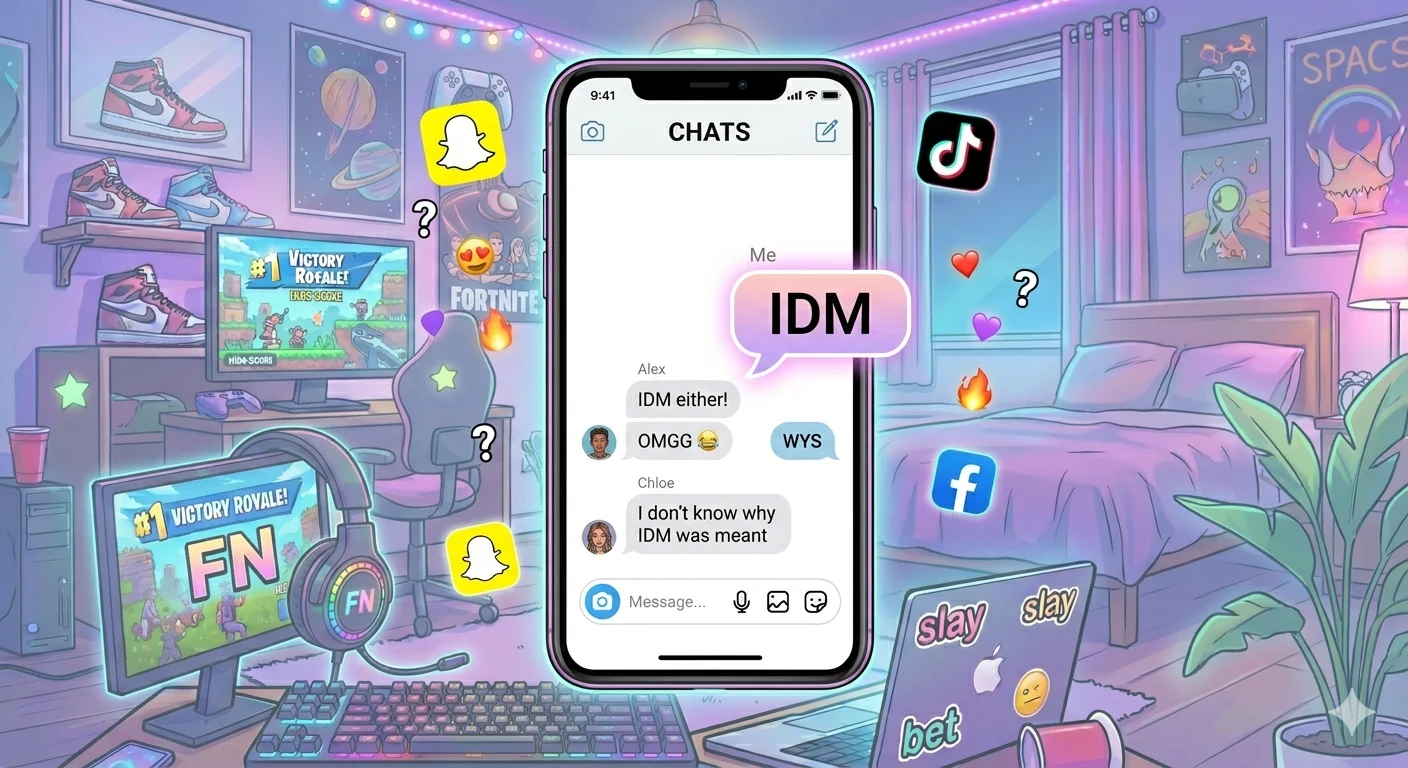
The abbreviation “IDM” is commonly used in texting, social media, and online chats. If you recently saw someone type IDM in a Snapchat message, TikTok comment, Instagram DM, or text conversation, you may be wondering what it actually means. Like many internet slang abbreviations, IDM is short, quick, and easy to type, which makes it popular in fast online communication.
In most casual conversations, IDM stands for “I Don’t Mind.” People use it when they are okay with something, flexible about a decision, or willing to go along with another person’s choice. Instead of writing a full sentence like “I’m okay with that” or “Either option works for me,” users simply type IDM to save time.
The abbreviation is especially common in casual planning conversations. For example, if someone asks where you want to eat and you reply “IDM,” it means you have no strong preference and are happy with any choice.
Although IDM is usually friendly and neutral, the tone can sometimes feel distant or uninterested depending on the situation and wording. Context matters a lot online because short abbreviations can carry different emotional meanings.
This guide explains the full IDM meaning in texting, slang, Snapchat, TikTok, and social media, including examples, usage, tone, comparisons, and common misunderstandings.
What Does IDM Mean?
The most common meaning of IDM is:
- “I Don’t Mind”
This phrase is used when someone:
- Has no strong preference
- Feels flexible
- Is comfortable with multiple options
- Agrees casually
For example:
- “Do you want pizza or burgers?”
- “IDM.”
In this conversation, the person means:
- “Either is fine.”
- “I’m okay with both.”
- “You can choose.”
The abbreviation helps people respond quickly without typing long explanations.
What Does IDM Mean in Texting, Slang, and Social Media?
IDM is mostly used in casual online communication.
IDM in Texting
In texting, IDM usually shows:
- Flexibility
- Relaxed agreement
- A calm response
Examples:
- “Want to watch a movie tonight?”
- “IDM.”
Or:
- “Should we meet at 7?”
- “IDM.”
The phrase sounds casual and easygoing.
IDM on Snapchat
Snapchat conversations are often fast and informal, which makes abbreviations like IDM extremely common.
People use IDM when:
- Making plans
- Responding casually
- Avoiding long replies
- Showing no preference
Example:
- “Which filter should I use?”
- “IDM honestly.”
IDM on TikTok and Instagram
On TikTok and Instagram, IDM may appear:
- In comments
- In DMs
- In casual reactions
- In short conversations
Example:
- “Should I post this photo?”
- “IDM it looks good.”
IDM in Gen Z Slang
Gen Z users prefer:
- Fast typing
- Minimal text
- Casual abbreviations
- Relaxed communication styles
IDM fits naturally into that online culture.
Other Meanings of IDM
Although “I Don’t Mind” is the most common slang meaning, IDM can also have other interpretations in different industries.
Identity Management
In technology and business settings, IDM may stand for:
- Identity Management
This refers to systems that manage:
- User accounts
- Passwords
- Digital access
However, this meaning is mostly used in professional or technical environments.
Internet Slang Meaning
In everyday texting and social media, “I Don’t Mind” is by far the most common interpretation.
Why Context Matters
The meaning usually depends on:
- The platform
- The topic
- The conversation style
For example:
- Casual chat = “I Don’t Mind”
- IT discussion = Identity Management
How IDM Is Used in Real Conversations
IDM appears in many casual situations.
Everyday Situations
People commonly use IDM when:
- Choosing food
- Making plans
- Picking activities
- Deciding schedules
- Answering simple questions
Examples:
- “Do you want to call later?”
- “IDM.”
Or:
- “Should we leave early?”
- “IDM either way.”
Popular Platforms
IDM is frequently used on:
- Snapchat
- TikTok
- Discord
- Messenger
- Text messages
Because these platforms focus on quick communication, abbreviations spread easily.
Examples of IDM in Sentences
Here are natural examples showing how IDM is used online.
- “Do you want coffee or tea?”
“IDM.” - “Should we meet tomorrow instead?”
“IDM honestly.” - “Which movie do you want to watch?”
“IDM you choose.” - “Want to go out tonight?”
“IDM either way.” - “Should I wear the black hoodie?”
“IDM both look nice.” - “We can stay home if you want.”
“IDM.” - “Do you care where we sit?”
“Nah IDM.” - “Should we play later?”
“IDM if I finish work.”
These examples show the abbreviation’s relaxed and flexible tone.
Tone and Intent
The tone of IDM depends heavily on context.
Neutral Tone
Most of the time, IDM sounds:
- Calm
- Neutral
- Casual
- Easygoing
It usually means the person genuinely has no preference.
Friendly Tone
IDM can sound polite and cooperative.
Example:
- “Where do you want to eat?”
- “IDM, whatever you prefer.”
This shows flexibility and friendliness.
Passive or Uninterested Tone
Sometimes IDM may sound emotionally distant.
For example:
- “Do you even want to come?”
- “IDM.”
This may feel cold or uninterested depending on the relationship and situation.
Tone online can be difficult to read because short messages lack facial expressions and voice tone.
Origin and Background of IDM
Rise of Internet Abbreviations
IDM became popular through:
- SMS texting culture
- Online chats
- Instant messaging apps
People shortened phrases to:
- Save time
- Type faster
- Fit character limits
This created many abbreviations like:
- BRB
- TBH
- RN
- IMO
- IDC
Social Media Influence
Modern apps such as:
- TikTok
- Snapchat
- Discord
helped slang abbreviations spread even faster.
Today, short phrases dominate online communication because they feel quick and natural.
Is IDM Rude or Inappropriate?
IDM is generally harmless.
Usually Safe
Most people use IDM casually without negative intent.
It is considered:
- Friendly
- Neutral
- Informal
- Safe
When It Can Sound Cold
In emotional conversations, IDM may sometimes sound:
- Uninterested
- Distant
- Passive
Example:
- “Do you even care?”
- “IDM.”
That response may feel emotionally disconnected.
Because texting lacks tone of voice, misunderstandings happen easily.
When NOT to Use IDM
Although IDM is common online, it does not fit every situation.
Formal Situations
Avoid using IDM in:
- Business emails
- School assignments
- Professional messages
- Job applications
Writing the full phrase sounds more professional.
Emotional Conversations
Avoid IDM when:
- Someone needs emotional support
- A serious discussion is happening
- Clear feelings are important
In those situations, more thoughtful responses work better.
Similar and Related Slang Terms
Several internet abbreviations are similar to IDM.
IDC
Means:
- “I Don’t Care”
This sounds more dismissive than IDM.
IMO
Means:
- “In My Opinion”
Used when sharing personal views.
RN
Means:
- “Right Now”
Refers to the current moment.
NVM
Means:
- “Never Mind”
Used to dismiss or cancel a topic.
IDM vs Related Terms
IDM vs IDC
This is an important difference.
IDM means:
- “I’m okay with it.”
IDC means:
- “I do not care.”
IDM sounds softer and more polite.
it vs IMO
IDM expresses flexibility.
IMO expresses opinion.
IDM vs “Whatever”
“Whatever” can sound rude or annoyed.
IDM usually sounds calmer and more respectful.
Comparison Table
| Term | Meaning | Usage | Key Difference |
|---|---|---|---|
| IDM | I Don’t Mind | Flexible responses | Polite and relaxed |
| IDC | I Don’t Care | Lack of concern | More dismissive |
| IMO | In My Opinion | Sharing thoughts | Opinion-focused |
| RN | Right Now | Current time | Time-related meaning |
| NVM | Never Mind | Dropping topic | Ends conversation topic |
Common Misunderstandings
Thinking IDM Means “I Don’t Care”
This is the most common misunderstanding.
IDM is usually softer and more polite than IDC.
Confusing Technical and Slang Meanings
In business or IT discussions, IDM may mean Identity Management instead of “I Don’t Mind.”
Misreading Tone
Short messages sometimes feel colder than intended.
Someone typing IDM may simply be relaxed, not uninterested.
Frequently Asked Questions
What does IDM mean in texting?
It usually means “I Don’t Mind.”
What does IDM mean on Snapchat?
It commonly means the person has no strong preference.
Is IDM rude?
No. It is generally neutral and polite.
Does IDM mean “I Don’t Care”?
No. IDM sounds softer and more flexible.
What does IDM mean on TikTok?
It usually means “I Don’t Mind” in comments or chats.
Can IDM sound passive-aggressive?
Sometimes, depending on tone and context.
Is IDM professional?
No. It is mainly casual internet slang.
How do you respond to IDM?
You can continue the conversation normally or make the choice yourself.
Why is IDM popular online?
Because it is short, simple, and fast to type.
Is IDM part of Gen Z slang?
Yes. Younger users commonly use abbreviations like IDM online.
conclusion
IDM is a popular internet abbreviation that usually means “I Don’t Mind.” It is widely used in texting, Snapchat, TikTok, Instagram, and casual online conversations to show flexibility, agreement, or a lack of strong preference.
The phrase became popular because online communication favors short and quick responses. Instead of typing full sentences, users often rely on abbreviations like IDM to keep conversations fast and casual.
Although the slang is generally friendly and harmless, tone still matters. In some situations, IDM may accidentally sound distant or uninterested, especially during emotional conversations. Understanding context helps avoid confusion.
Today, IDM remains one of the most common casual texting abbreviations across social media and internet culture.