
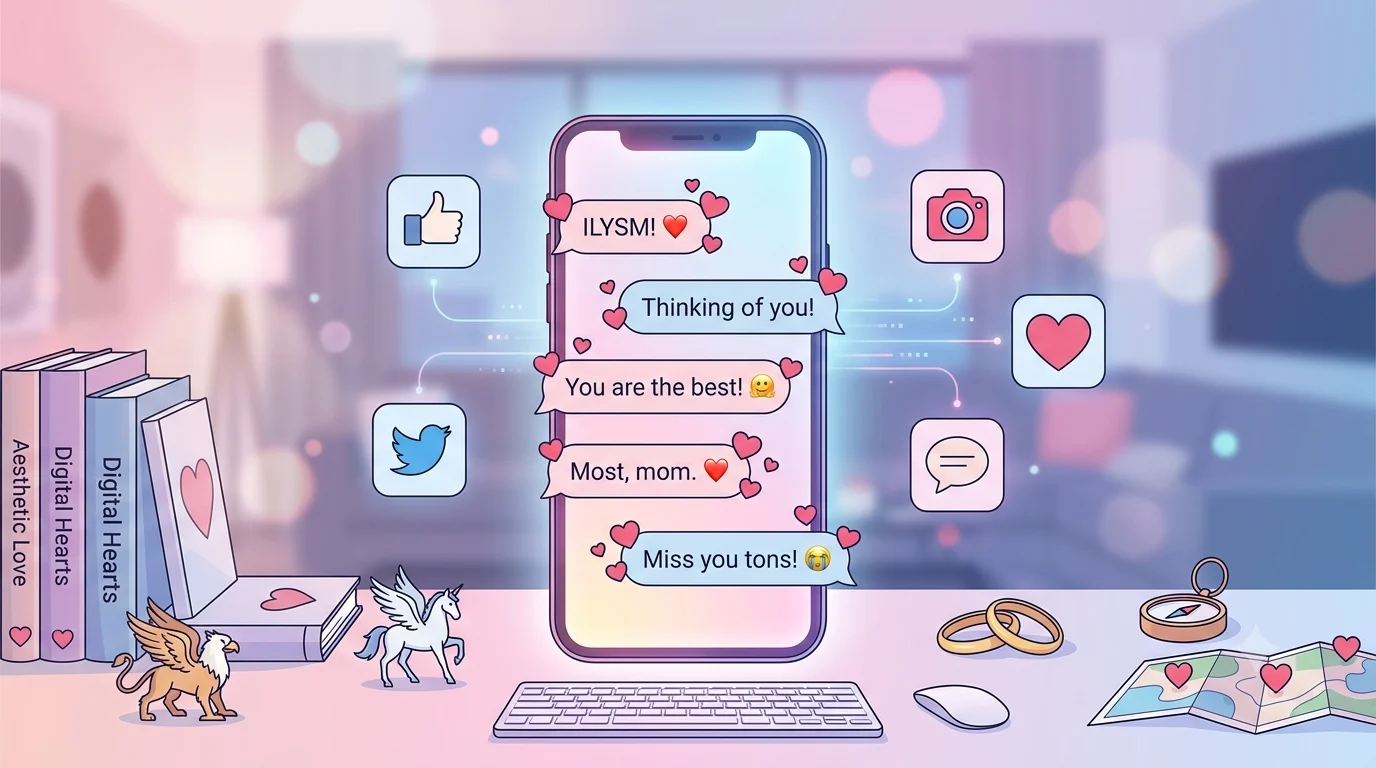
ILYSM means “I Love You So Much.” It is an internet slang abbreviation used in texting, social media comments, and online conversations to express strong love, affection, or appreciation.
| Term | Meaning |
|---|---|
| ILYSM | I Love You So Much |
| Context | Texting, Instagram, TikTok, Snapchat, online chats |
| Tone | Loving, emotional, friendly, affectionate |
| Common Use | Couples, friends, family, and online communities |
If you have seen ILYSM in a text message, Instagram comment, Snapchat chat, or TikTok caption and wondered what it means, you are not alone. Online conversations are full of short forms that help people express feelings quickly, and ILYSM is one of the most common abbreviations used to show affection.
The ILYSM meaning is simple: “I Love You So Much.” People use it when they want to express deeper feelings than a regular “I love you.” It can show romantic love between partners, strong friendship, family affection, or appreciation for someone special.
Unlike some internet slang terms that can be confusing, ILYSM usually has a positive meaning. However, the exact feeling behind it depends on the relationship between the people using it.
This guide explains what ILYSM means, how it is used in texting and social media, examples of real conversations, similar abbreviations, and when it is appropriate to use.
What Does ILYSM Mean?
ILYSM stands for “I Love You So Much.”
It is a shortened version of a common emotional phrase. People use abbreviations like ILYSM because typing a shorter message feels faster and more natural in digital conversations.
The phrase adds extra emotion compared to simply saying:
ILY = I Love You
By adding “SM” (So Much), the person shows stronger feelings and greater appreciation.
For example:
“Good luck with your exam. ILYSM ❤️”
This means:
“I love you so much, and I really care about you.”
ILYSM is commonly used when someone wants their message to feel warm, personal, and emotional.
What Does ILYSM Mean in Texting, Slang, and Social Media?
ILYSM in Text Messages
In texting, ILYSM is often used between people who share a close relationship.
Common users include:
- Romantic partners
- Best friends
- Family members
- Close online friends
Example:
Person 1: Thanks for always supporting me.
Person 2: Of course, ILYSM.
Here, the abbreviation shows appreciation and emotional closeness.
ILYSM on Instagram, TikTok, and Snapchat
Social media users often write ILYSM in comments, captions, and replies.
Examples:
- Commenting on a friend’s photo
- Supporting someone’s achievement
- Replying to a meaningful post
- Showing appreciation for a creator
Example:
“Your videos always make my day. ILYSM.”
The phrase creates a friendly and emotional connection.
ILYSM in Gen Z and Online Culture
Among younger internet users, abbreviations like ILYSM are part of casual digital communication.
Gen Z and online communities often use shortened phrases to make messages feel:
- Cute
- Personal
- Emotional
- Expressive
Similar examples include:
- OMG
- LOL
- TYSM
- IMY
- ILY
These abbreviations help people communicate feelings quickly without writing long messages.
Other Meanings of ILYSM
The most common and widely accepted meaning of ILYSM is:
I Love You So Much
Unlike some abbreviations that have multiple meanings, ILYSM is usually straightforward.
In rare cases, people may create their own interpretations in private groups or communities, but these are not commonly recognized.
When you see ILYSM online, the safest assumption is that the person is expressing strong affection or appreciation.
How ILYSM Is Used in Real Conversations
Romantic Conversations
Couples often use ILYSM to express deep feelings.
Example:
“I miss you already. ILYSM ❤️”
It adds warmth and emotion to a romantic message.
Friendship Conversations
ILYSM is not only for romantic relationships. Many close friends use it to show appreciation.
Example:
“Thank you for being there for me. ILYSM.”
Here, it means:
“I care about you a lot.”
Social Media Interactions
People also use ILYSM when reacting to posts from friends, celebrities, or creators they admire.
Examples:
- “Your content helps me so much. ILYSM.”
- “You are amazing. ILYSM.”
- “This made my day. ILYSM.”
Examples of ILYSM in Conversations
Example 1
Friend: Thank you for helping me today.
Reply: Anytime, ILYSM.
Meaning: The person shows strong appreciation.
Example 2
Partner: I hope you have a great day.
Reply: You too. ILYSM ❤️
Meaning: A romantic expression of love.
Example 3
Comment: Your artwork is beautiful. ILYSM for sharing this.
Meaning: Showing admiration and support.
Example 4
Friend: I got the job!
Reply: Congratulations! ILYSM, you deserve it.
Meaning: Celebrating someone with affection.
Example 5
Message: Just wanted to remind you that ILYSM.
Meaning: A direct expression of love.
Example 6
Caption: Feeling grateful for these people. ILYSM.
Meaning: Showing appreciation for close people.
Tone and Intent of ILYSM
The meaning of ILYSM is usually positive, but the emotional tone can change depending on the situation.
Loving and Emotional Meaning
The most common use expresses deep affection.
Examples:
- Between couples
- Between family members
- Between close friends
It shows that someone feels strongly connected to another person.
Friendly Meaning
Many people use ILYSM with friends without romantic meaning.
For example:
“My best friend helped me through everything. ILYSM.”
This simply means:
“I care about you deeply.”
Sarcastic or Playful Usage
Sometimes people use ILYSM jokingly with close friends.
Example:
“You brought me coffee? ILYSM.”
The person may be exaggerating for fun, but the tone remains positive.
Origin and Background of ILYSM
ILYSM comes from the broader internet trend of shortening common phrases for faster communication.
Early texting culture created many abbreviations because mobile keyboards were slower and messages were often limited. Over time, these shortcuts became part of everyday online language.
Expressions like:
- ILY
- ILYSM
- LOL
- BRB
- OMG
became popular through text messages, chat rooms, and social media platforms.
Today, ILYSM remains common because it combines speed with emotional expression.
Is ILYSM Rude or Inappropriate?
No, ILYSM is generally not rude or offensive.
It is a positive phrase used to express love, kindness, or appreciation.
However, the context matters.
For example:
- Saying ILYSM to a close friend is usually normal.
- Sending it to someone you barely know may feel too personal.
- Using it in a professional setting would not be appropriate.
Understanding your relationship with the person helps you use it correctly.
When NOT to Use ILYSM
Although ILYSM is common online, it is not suitable for every situation.
Avoid using ILYSM in:
- Business emails
- Professional messages
- Formal communication
- Workplace discussions
Instead, use more neutral phrases like:
- Thank you so much
- I really appreciate you
- I appreciate your support
Also, be careful using ILYSM with someone who may misunderstand your feelings.
Similar and Related Slang Terms
ILY
ILY means “I Love You.”
It is shorter and more common than ILYSM.
Example:
“Good night, ILY ❤️”
ILU
ILU is another abbreviation for “I Love You.”
It has the same meaning as ILY but uses different letters.
TYSM
TYSM means “Thank You So Much.”
It expresses gratitude rather than love.
IMY
IMY means “I Miss You.”
It expresses longing or missing someone.
XOXO
XOXO represents hugs and kisses.
It is often used at the end of affectionate messages.
ILYSM vs Related Terms
ILYSM vs ILY
ILY means “I Love You.”
ILYSM means “I Love You So Much.”
The difference is that ILYSM adds stronger emotion and emphasis.
ILYSM vs ILU
Both mean “I Love You.”
The difference is only the style of abbreviation.
ILYSM vs TYSM
ILYSM expresses love.
TYSM expresses gratitude.
They are used for different emotions.
Comparison Table
| Term | Meaning | Usage | Key Difference |
|---|---|---|---|
| ILYSM | I Love You So Much | Deep affection | Stronger than regular love expressions |
| ILY | I Love You | Casual love messages | Shorter and simpler |
| ILU | I Love You | Texting abbreviation | Alternative spelling |
| TYSM | Thank You So Much | Gratitude | Shows appreciation, not love |
| IMY | I Miss You | Missing someone | Expresses longing |
| XOXO | Hugs and kisses | Affectionate endings | Symbolic expression |
Common Misunderstandings
Some people misunderstand ILYSM because they assume it always has a romantic meaning.
Common mistakes include:
- Thinking it can only be used between couples.
- Assuming every use is serious.
- Sending it to people who may not understand the relationship.
- Confusing it with gratitude phrases like TYSM.
The relationship and conversation context usually reveal the true meaning.
Frequently Asked Questions
What does ILYSM mean?
ILYSM means “I Love You So Much.” It expresses strong affection or appreciation.
What does ILYSM stand for?
ILYSM stands for I Love You So Much.
Is ILYSM romantic?
It can be romantic, but friends and family members also use it.
Can friends say ILYSM?
Yes. Many close friends use ILYSM to show appreciation and emotional connection.
What is the difference between ILY and ILYSM?
ILY means “I Love You,” while ILYSM means “I Love You So Much,” which adds more emphasis.
Is ILYSM a slang word?
It is an internet abbreviation commonly used in texting and social media.
How do you reply to ILYSM?
You can reply with phrases like:
- ILYSM too
- Love you too
- Aww, thank you
- I appreciate you so much
conclusion
ILYSM means “I Love You So Much” and is a popular texting abbreviation used to express strong affection, appreciation, and emotional connection. It appears frequently in messages, social media comments, and online conversations.
While many people use ILYSM romantically, it can also show love between friends, family members, and close communities. Like most internet abbreviations, the meaning depends on the relationship and context.
Use ILYSM in casual conversations when you want to make your message feel warmer, but avoid it in formal situations where a more professional tone is needed.