
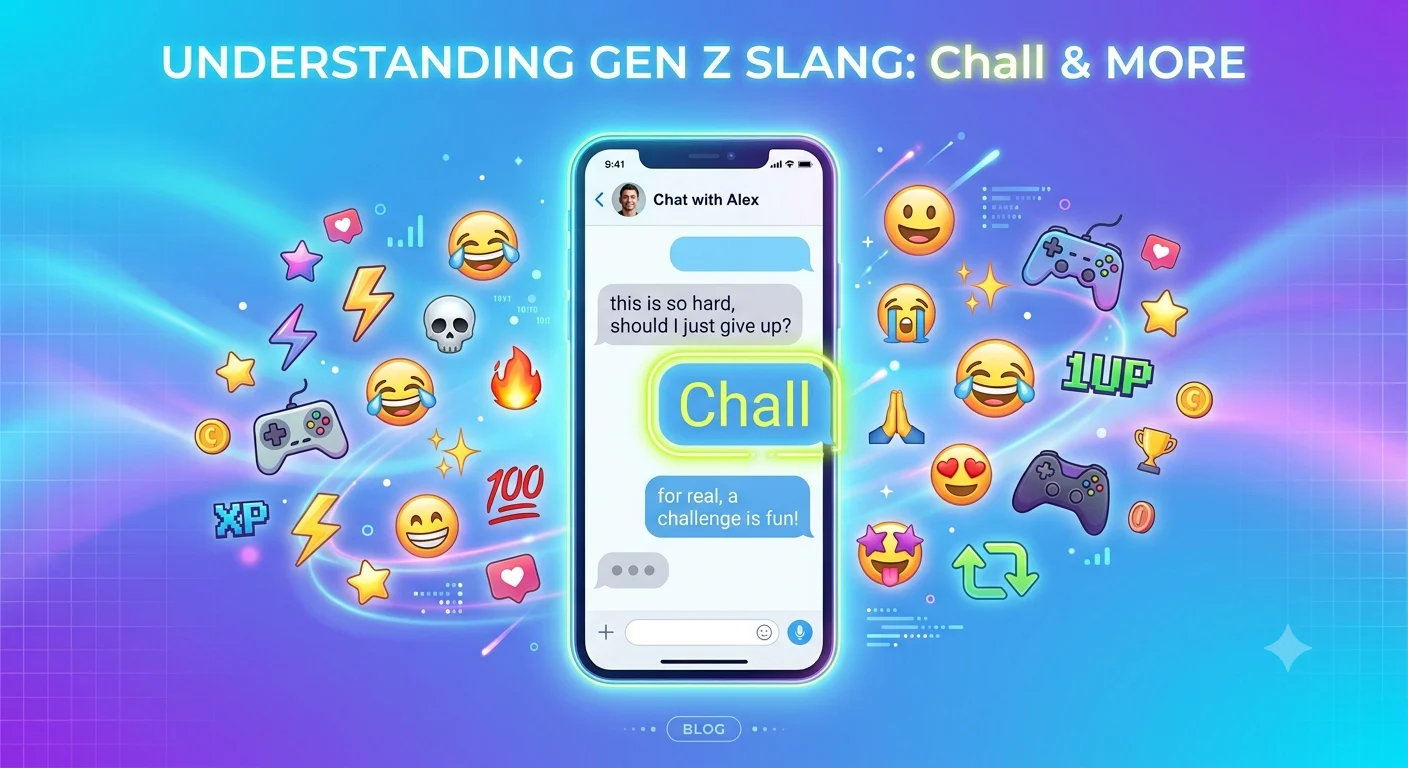
Meaning: “Chall” is informal slang used to mean a challenge, dare, or “let’s do it” in a playful or casual way
Full form: Derived from “challenge” (also influenced by “chal” in South Asian slang)
Context: Used in texting, gaming, and social media conversations
Tone: Playful, competitive, casual, sometimes teasing
Platforms: WhatsApp, Instagram, TikTok, Snapchat, gaming chats
If you’ve seen the word “chall” in a chat, comment, or gaming conversation, you might be wondering what it actually means. At first, it can look like a typo or an incomplete word, but in internet slang, it carries a clear and interesting meaning. “Chall” is commonly used as a short, informal way to refer to a challenge or a playful dare. People use it when they want to compete with someone, accept a challenge, or simply encourage action in a fun way.
This slang is especially popular in texting, gaming communities, and social media platforms like TikTok, Instagram, and Snapchat. It fits the fast, expressive style of online communication where short words replace long sentences. Understanding “chall” helps you keep up with modern internet slang and respond naturally in casual conversations without confusion.
What Does Chall Mean?
Core Definition
“Chall” is an informal slang term that usually refers to a challenge or a playful dare. It is often used to motivate someone, provoke friendly competition, or suggest taking action. It is not a formal English word but rather a shortened, casual expression used in digital communication.
Simple Explanation
In simple words, “chall” means “let’s do it” or “I challenge you.” It can be serious in competitive situations or lighthearted between friends. The meaning depends heavily on context and tone.
For example:
- “Chall accepted” → I accept the challenge
- “Chall me if you can” → Try to compete with me
What Does Chall Mean in Texting, Slang, and Social Media?
In Chat Conversations
In texting, “chall” is commonly used between friends during playful arguments, dares, or competitions. It adds excitement and energy to conversations. Instead of saying “I challenge you,” people shorten it to “chall” to keep things fast and casual.
On Social Media
On platforms like TikTok, Instagram, and Snapchat, “chall” often appears in captions, comments, or challenge-based trends. It can be part of viral trends where users dare others to participate in a challenge or reaction video.
- TikTok: Used in challenge trends or comment battles
- Instagram: Used in reels, captions, or friendly competition posts
- Snapchat: Used in private chats for dares or jokes
- Gaming chats: Used when competing against other players
Gen Z and Youth Usage
Gen Z users prefer short, expressive slang, and “chall” fits perfectly into that style. It is quick to type and works well in fast-paced conversations. It also adds a fun, competitive vibe without sounding too serious or aggressive.
Other Meanings of Chall
Alternate Interpretations
While the most common meaning is related to “challenge,” “chall” can sometimes be interpreted differently depending on region or context:
- “Chal” (South Asian slang): meaning “go,” “come on,” or “let’s move”
- Possible misspelling of “chill” in fast typing
- Rare informal use in gaming or meme culture without fixed meaning
However, in most online conversations, it is still tied to the idea of a challenge or dare.
How Chall Is Used in Real Conversations
Situations
“Chall” appears in many casual scenarios:
- Accepting or giving a challenge
- Friendly competition between friends
- Encouraging someone to take action
- Playful teasing during arguments or games
Common Platforms
You will mostly see “chall” in:
- WhatsApp group chats
- Instagram comments and reels
- TikTok challenge videos
- Snapchat conversations
- Online gaming chats and Discord servers
It is part of informal digital language where speed and expression matter more than grammar.
Examples of Chall
Here are some natural examples of how people use it:
- “Chall accepted, let’s see who wins.”
- “You think you’re better? Chall me.”
- “Chall for a race after school.”
- “If you’re confident, chall me in this game.”
- “Chall on, I’m not backing down.”
- “That’s easy, chall me harder.”
- “We’re doing this chall tonight.”
- “You won last time, chall again?”
Tone and Intent
Emotional Meaning
“Chall” usually carries a playful or competitive emotional tone. It can show excitement, confidence, or friendly rivalry depending on the situation.
Positive, Neutral, or Negative
Most of the time, “chall” is:
- Positive: used in fun competitions
- Neutral: used casually without strong emotion
- Slightly negative: in heated arguments, it can sound confrontational
Sarcasm vs Serious Use
It can be used both ways:
- Serious: “Chall me in this game.”
- Sarcastic: “Oh really? Chall me then.”
The tone is always shaped by context and relationship between speakers.
Origin or Background of Chall
Internet and Language Influence
“Chall” comes from shortening the word “challenge,” but it is also influenced by South Asian slang “chal,” which means “come on” or “go ahead.” Over time, online users merged these expressions into a fast, informal slang term.
Popularity Growth
The term spread through:
- Gaming communities
- Meme culture
- Social media challenge trends
- Fast texting habits among younger users
It became more common as online communication shifted toward short, expressive words.
Is Chall Rude or Inappropriate?
“Chall” is generally not rude. It is mostly used in fun, casual conversations. However, if used in anger or arguments, it can sound aggressive or confrontational.
In normal usage, it is harmless and friendly.
When NOT to Use Chall
Formal Situations
Avoid using “chall” in:
- Professional emails
- Academic writing
- Job interviews
- Official communication
It is too informal for serious contexts.
Better Alternatives
Instead of “chall,” you can say:
- “Let’s compete”
- “I accept your challenge”
- “Let’s go”
- “Bring it on”
These sound clearer and more formal when needed.
Similar and Related Slang Terms
“Chall” belongs to a group of casual slang expressions:
- Chal
- Challenge
- Let’s go
- Bet
- Bring it on
- No cap (in motivational context)
All of these express action, confidence, or agreement in informal speech.
Chall vs Related Terms
| Term | Meaning | Usage | Key Difference |
|---|---|---|---|
| Chall | Informal challenge or dare | Casual chats, gaming | Short slang version |
| Challenge | Formal/informal contest | General use | Full standard word |
| Chal | “Go” or “come on” (regional slang) | South Asian chats | Action-based meaning |
| Bet | Agreement or confirmation | Slang conversations | Acceptance rather than challenge |
Common Misunderstandings
People often misunderstand “chall” in a few ways:
- Thinking it is a formal English word
- Confusing it with “chill”
- Misreading tone in serious conversations
- Assuming it always means aggression
In reality, it is flexible and mostly harmless slang.
Frequently Asked Questions (FAQ)
What does chall mean in texting?
It means a challenge or playful dare in casual conversation.
Is chall the same as challenge?
It comes from “challenge,” but it is informal slang.
Is chall rude?
No, it is usually playful and friendly.
Where is chall used most?
It is common in chats, gaming, and social media.
Is chall slang or formal English?
It is slang, not formal English.
What is chal vs chall?
“Chal” means “come on,” while “chall” means challenge.
Can I use chall in school chats?
Yes, but only in informal friend conversations.
conclusion
“Chall” is a modern slang term derived from “challenge” and influenced by casual internet and regional speech patterns. It is widely used in texting, gaming, and social media to express dares, competition, or playful motivation. While it is not suitable for formal writing, it works perfectly in informal conversations where tone is relaxed and friendly.
Understanding “chall” helps you follow modern online communication more easily and use slang naturally in everyday chats.