
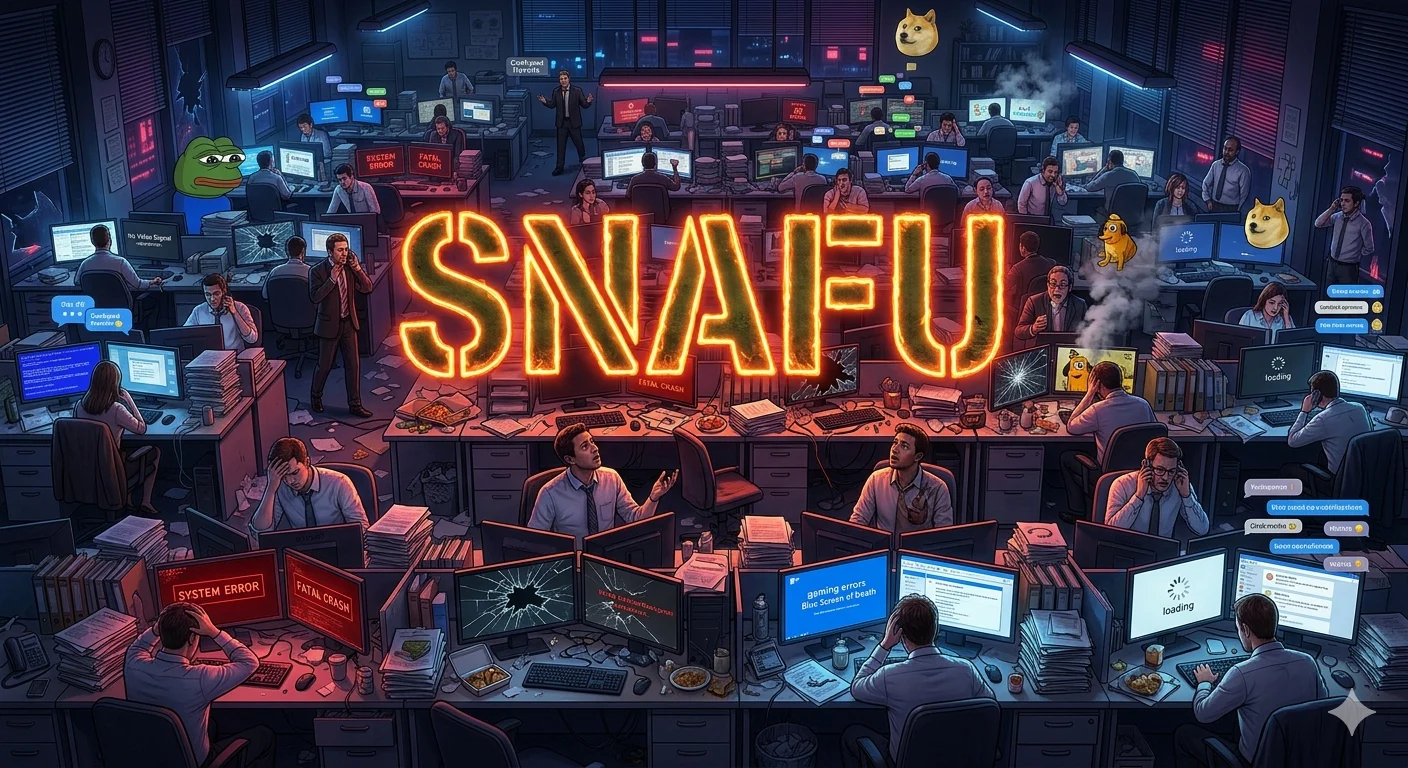
The “SNAFU meaning in texting” usually refers to a messy, chaotic, or badly organized situation. The term originally came from military slang, but over time it became part of everyday internet language, workplace humor, memes, and casual conversations.
SNAFU is an acronym that stands for “Situation Normal: All Fouled Up.” In its uncensored form, the final word is stronger profanity, but modern online use often replaces it with a softer version to keep conversations casual and less offensive.
Today, people use SNAFU when talking about:
- Technical problems
- Workplace confusion
- Gaming disasters
- Group project failures
- Everyday chaos
- Funny online situations
You may see the term on:
- X (formerly Twitter)
- Discord
- Gaming forums
- Workplace chats
- Meme pages
- Meaning: A chaotic or messed-up situation
- Full form: Situation Normal: All Fouled Up
- Context: Slang, military history, internet culture
- Tone: Sarcastic, frustrated, humorous
If you spend time online, especially in meme communities, gaming spaces, or workplace chats, you may have seen the word “SNAFU” appear in conversations. The “SNAFU meaning in texting” has become popular because it perfectly describes situations where everything seems disorganized, broken, confusing, or unnecessarily complicated.
Although the word sounds unusual, SNAFU has existed for decades. It originally came from military slang during World War II, where soldiers used it humorously to describe chaotic conditions or badly managed situations. Over time, the term spread into mainstream culture and eventually became part of internet slang.
Today, SNAFU appears in casual texting, social media posts, gaming discussions, office conversations, and memes. People often use it sarcastically when dealing with delays, technical issues, failed plans, or stressful situations that somehow feel “normal.” For example, someone might call a broken software update a complete SNAFU or joke about a disastrous meeting using the term.
One reason the abbreviation remains popular is because it combines frustration and humor at the same time. Instead of sounding extremely angry, SNAFU often communicates annoyed acceptance of chaos.
In this article, we’ll explain the meaning of SNAFU in texting and slang, its military origins, online usage, emotional tone, examples, comparisons, and common misunderstandings connected to the term.
What does SNAFU mean? (Core Definition)
SNAFU most commonly means:
“Situation Normal: All Fouled Up.”
In the original military version, the last word used profanity instead of “fouled.”
The phrase describes situations where:
- Everything is disorganized
- Problems keep happening
- Confusion feels constant
- Mistakes are everywhere
- Chaos becomes normal
In simple language, SNAFU means a messy or badly handled situation.
Examples:
- “The office network crashed again. Total SNAFU.”
- “Our vacation plans became a SNAFU after the flight cancellation.”
The term usually combines frustration with humor or sarcasm.
What does SNAFU mean in texting / slang / social media?
The “SNAFU meaning in texting” is mostly connected to internet humor and casual complaints about chaotic situations.
People use SNAFU online when:
- Technology fails
- Plans fall apart
- Gaming servers crash
- Workplace problems happen
- Group projects become confusing
- Daily life feels chaotic
Social media users often use it sarcastically.
Examples:
- “Today’s update caused a complete SNAFU.”
- “The tournament registration system is a SNAFU.”
- “Another Monday, another SNAFU 😭”
On platforms like Reddit and Discord, SNAFU is especially common among older internet users or people familiar with military slang culture.
Other meanings of SNAFU
Although the military-based definition is the most common, SNAFU can appear in other contexts.
Possible meanings include:
- Military slang
- Internet slang for chaos
- Pop culture references
- Business jargon
- Gaming frustration slang
In most cases, however, the meaning still revolves around confusion, disorder, or failure.
How SNAFU is used in real conversations
People use SNAFU in many real-life situations.
Common examples include:
- Workplace disasters
- Technical failures
- School project confusion
- Travel problems
- Gaming glitches
- Event planning mistakes
Examples:
- “The conference setup became a SNAFU.”
- “Their customer service system is a total SNAFU.”
- “The server crash created another gaming SNAFU.”
- “Our road trip turned into a SNAFU after the GPS stopped working.”
The term often sounds more humorous than aggressive.
Examples of SNAFU in sentences
Here are natural examples showing the “SNAFU meaning in texting” and online slang usage:
- “This software update is a complete SNAFU.”
- “The group project became a SNAFU overnight.”
- “Airport delays caused a travel SNAFU.”
- “Our gaming lobby was bugged again. SNAFU.”
- “Today’s meeting was an organizational SNAFU.”
- “The livestream turned into a technical SNAFU.”
- “Every holiday shopping season becomes a SNAFU.”
- “Their scheduling system is permanently SNAFU 😂”
These examples show how flexible the term can be in casual communication.
Tone and intent of SNAFU
The tone of SNAFU is usually:
- Sarcastic
- Frustrated
- Humorous
- Informal
- Cynical
People often use the word when they are annoyed but still trying to laugh about the situation.
For example:
- “Another app crash? Classic SNAFU.”
This sentence sounds frustrated but not overly angry.
Unlike direct insults, SNAFU focuses more on the situation itself rather than attacking people personally.
Origin and background of SNAFU
SNAFU originated during World War II as American military slang.
Soldiers used the phrase humorously to describe chaotic military conditions, confusing leadership decisions, or everyday operational problems.
The original uncensored phrase was:
“Situation Normal: All F*ed Up.”**
Because the wording included profanity, cleaner versions later replaced the final word with “fouled.”
Over time, the term spread beyond military culture into:
- Workplace language
- Business conversations
- Movies and TV shows
- Internet slang
- Meme culture
Today, SNAFU remains popular because it describes modern chaos surprisingly well.
Is SNAFU rude or inappropriate?
SNAFU is mildly informal because of its profanity-based origin.
However, the censored version using “fouled” is generally considered acceptable in casual conversation.
Still, the term may feel inappropriate in:
- Formal business writing
- Academic papers
- Professional presentations
- Very polite environments
Online and in casual speech, though, most people treat SNAFU as humorous slang rather than offensive language.
When NOT to use SNAFU
There are situations where using SNAFU may sound unprofessional or confusing.
Avoid using it in:
- Job interviews
- Academic essays
- Formal emails
- Serious legal communication
- Corporate presentations
Some people may not understand the military slang background.
Using simpler language like “problem,” “confusion,” or “disorganization” may work better in formal settings.
Similar and related slang terms
Several slang expressions share a similar meaning with SNAFU.
Examples include:
- FUBAR
- Chaos
- Dumpster fire
- Trainwreck
- Mess
- Cluster
These terms all describe disorder, failure, or confusion in different ways.
SNAFU vs related terms
- SNAFU vs FUBAR: FUBAR usually sounds more severe or catastrophic
- SNAFU vs chaos: Chaos is broader and less slang-based
- SNAFU vs trainwreck: Trainwreck emphasizes visible disaster
- SNAFU vs mess: Mess is simpler and less sarcastic
SNAFU stands out because it combines humor, sarcasm, and frustration.
Comparison Table
| Term | Meaning | Usage | Key Difference |
|---|---|---|---|
| SNAFU | Chaotic normal situation | Slang & workplace humor | Sarcastic military origin |
| FUBAR | Completely ruined situation | Military slang | More extreme |
| Chaos | Disorder/confusion | General use | Neutral tone |
| Trainwreck | Obvious disaster | Informal slang | Dramatic failure |
| Mess | Disorganized situation | Everyday speech | Simpler wording |
Common misunderstandings
Many people misunderstand the “SNAFU meaning in texting” because they are unfamiliar with military slang.
Common confusion includes:
- Thinking it is a modern meme word only
- Assuming it is extremely offensive
- Misunderstanding the sarcastic tone
- Believing it refers to people instead of situations
- Confusing it with other military slang terms
In reality, SNAFU usually describes messy situations with humor and frustration.
FAQ Section
1. What does SNAFU stand for?
SNAFU stands for “Situation Normal: All Fouled Up.”
2. Is SNAFU offensive?
It is mildly informal because of its original profanity-based version.
3. What does SNAFU mean in texting?
It refers to a chaotic, confusing, or badly managed situation.
4. Is SNAFU military slang?
Yes, it originally came from World War II military slang.
5. Can SNAFU be used professionally?
It is better suited for informal or casual communication.
6. What is the difference between SNAFU and FUBAR?
FUBAR usually describes more severe disaster or damage.
7. Is SNAFU still used today?
Yes, especially online and in casual workplace conversations.
8. Is SNAFU positive or negative?
It is usually negative but often humorous.
conclusion
The “SNAFU meaning in texting” refers to a messy, confusing, or badly organized situation that somehow feels normal or expected. Originally created as military slang during World War II, the term evolved into a popular internet and workplace expression used to describe chaos with sarcasm and humor. Today, people use SNAFU in memes, gaming chats, office conversations, and social media posts whenever plans collapse, technology fails, or confusion takes over. Although the term comes from profanity-based origins, its modern usage is usually lighthearted and informal rather than offensive. Understanding the context behind SNAFU helps explain why it remains one of the internet’s most recognizable slang expressions for everyday chaos.