
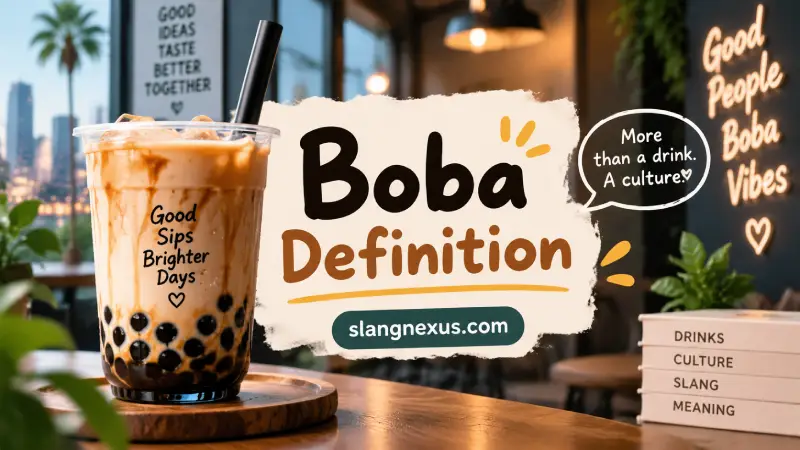
Boba is a popular Taiwanese drink made with tea, milk or fruit flavors, and chewy tapioca pearls. The word “boba” can refer to the tapioca pearls themselves or to the drink commonly known as boba tea or bubble tea.
Boba has become popular around the world, especially in the United States. People enjoy it for its combination of sweet drinks and chewy pearls, which create a texture that makes the drink different from ordinary tea or flavored beverages.
Quick Answer: What Is Boba?
Boba is a chewy tapioca pearl commonly added to bubble tea. Boba drinks usually contain tea, milk or a fruit-based mixture, ice, sweetener, and chewy toppings.
In everyday American English, “boba” can mean either the pearls or the entire drink.
Boba Definition
The simplest boba definition is:
Boba is a chewy tapioca pearl, usually made from tapioca starch, that is commonly served in Taiwanese-style bubble tea.
The term is also widely used to describe the drink itself. For example, someone might say, “Let’s get boba,” meaning they want to buy a bubble tea drink.
The pearls are usually dark brown or black, although boba toppings can come in many colors, flavors, and forms.
What Does the Word Boba Mean?
The word boba is commonly associated with bubble tea and tapioca pearls.
In the United States, “boba” is often used as a shortened way of saying boba tea. Depending on the context, it can refer specifically to the chewy pearls or the complete beverage.
The exact history of the word is more complicated than simply saying it means “tapioca.” Different explanations have been proposed for how the term became associated with bubble tea, and usage varies by region.
What Is Boba Made Of?
Traditional boba pearls are mainly made from:
- Tapioca starch
- Water
- Sugar or sweetener
Tapioca starch comes from the cassava root. The starch gives boba its characteristic chewy texture.
Many commercial boba pearls are also cooked and then soaked in a sweet syrup or brown sugar mixture before being added to drinks.
What Does Boba Taste Like?
Plain tapioca pearls have a mild flavor.
Much of the sweetness comes from the sugar or syrup used during preparation and from the drink itself.
The most noticeable feature of boba is usually its chewy texture, rather than a strong flavor.
Depending on the recipe, boba may taste slightly sweet, caramel-like, or brown-sugar flavored.
What Does Boba Feel Like?
Boba is best known for its chewy texture.
Freshly prepared tapioca pearls are soft on the outside and pleasantly chewy in the center. This texture is sometimes described using the Taiwanese concept of QQ, which refers to a pleasantly chewy or springy texture.
The texture can change depending on how the pearls are cooked and how long they sit in the drink.
Boba vs. Bubble Tea
The terms boba and bubble tea are often used interchangeably in the United States, but they can refer to different things.
| Term | Common Meaning |
|---|---|
| Boba | Tapioca pearls or the entire drink |
| Bubble tea | The complete tea-based beverage |
| Tapioca pearls | The chewy balls added to the drink |
| Boba tea | Another name for bubble tea |
So, if someone says “I want boba,” they may mean the whole drink rather than just the tapioca pearls.
Types of Boba
There are several types of boba and boba-style toppings.
Classic Tapioca Boba
Classic tapioca pearls are usually dark brown or black and have a chewy texture.
They are often cooked with brown sugar or another sweetener.
Brown Sugar Boba
Brown sugar boba is associated with a rich caramel-like sweetness.
The pearls may be prepared with brown sugar syrup and served in milk-based drinks.
Mini Boba
Mini boba pearls are smaller than traditional tapioca pearls.
They can be easier to drink through a straw and may have a slightly different texture.
Popping Boba
Popping boba is different from traditional tapioca boba.
Instead of being chewy throughout, popping boba contains a liquid center that bursts when bitten. It is often made with fruit flavors.
Crystal Boba
Crystal boba is a translucent, chewy topping that is generally made from plant-based ingredients such as konjac rather than traditional tapioca starch.
It is often used as an alternative to classic black boba.
Popular Boba Drinks
Boba can be added to many different beverages.
Common choices include:
- Milk tea
- Black tea
- Green tea
- Thai tea
- Taro milk tea
- Matcha drinks
- Fruit tea
- Brown sugar milk
- Strawberry tea
- Mango tea
- Coffee-based drinks
The combination of drink, sweetness, ice, and toppings can be customized.
Why Is Boba So Popular?
Boba became popular because it offers more than a traditional beverage.
People enjoy the combination of:
- Sweet flavors
- Tea
- Creamy or fruity drinks
- Chewy textures
- Customizable sweetness
- Different toppings
- Attractive presentation
Boba shops also provide a social experience. Friends often visit them together, and the drinks are popular in photos and social media content.
Where Did Boba Come From?
Bubble tea originated in Taiwan in the 1980s.
The modern drink developed from Taiwan’s established tea culture and the creative addition of ingredients such as milk, sweeteners, and chewy tapioca pearls.
There are competing claims about which Taiwanese tea shop created the first bubble tea, so the exact origin story is not completely settled.
From Taiwan, bubble tea spread throughout Asia and later became popular in North America and other parts of the world.
Why Is Boba Called Bubble Tea?
The name bubble tea has several proposed explanations.
One explanation connects the name with the bubbles created when tea is shaken. Another popular association comes from the round tapioca pearls, which look like small bubbles.
The exact naming history varies between accounts, but “bubble tea” is now a widely recognized name for the beverage.
Is Boba the Same as Tapioca?
Boba and tapioca are related, but they are not exactly the same thing.
Tapioca is a starch made from cassava root.
Boba usually refers to chewy pearls made using tapioca starch.
So tapioca is an ingredient, while boba is the finished chewy topping.
How Is Boba Made?
Traditional tapioca boba is made through a relatively simple process.
Step 1: Mix the Ingredients
Tapioca starch is combined with hot water and sugar or another sweetener.
Step 2: Form the Dough
The mixture is worked into a dough that can be shaped into small pieces.
Step 3: Shape the Pearls
The dough is rolled and cut or shaped into small round pearls.
Step 4: Cook the Boba
The pearls are boiled until they develop their familiar chewy texture.
Step 5: Sweeten the Pearls
After cooking, the boba may be placed in brown sugar syrup or another sweet liquid.
Step 6: Add Them to a Drink
The finished pearls are added to tea, milk tea, fruit drinks, or other beverages.
What Is the Difference Between Boba and Popping Boba?
The biggest difference is texture.
Traditional boba is chewy because it is usually made from tapioca starch.
Popping boba has a thin outer layer and a liquid center that bursts when bitten.
Traditional boba is associated with a chewy experience, while popping boba provides a juicy burst of flavor.
Is Boba Tea Always Made With Tea?
No.
Although bubble tea traditionally developed around tea-based drinks, modern boba shops offer many beverages that may contain little or no traditional tea.
Some drinks are primarily milk-based, fruit-based, coffee-based, or made with other ingredients.
The word “boba” therefore describes a broader drink category in everyday use.
Is Boba Sweet?
Boba drinks are often sweet, but the sweetness can usually be customized.
Many shops allow customers to choose different sugar levels.
Common options may include:
- Full sugar
- Reduced sugar
- Half sugar
- Light sugar
- No added sugar
The sweetness of the pearls themselves can also contribute to the overall flavor.
Is Boba Gluten-Free?
Traditional tapioca pearls made from tapioca starch are generally naturally gluten-free.
However, ingredients and preparation methods can vary between products and shops. If you need to avoid gluten, check the specific ingredients and ask about possible cross-contact.
Is Boba Vegan?
Some boba pearls may be vegan because they are made primarily from tapioca starch, water, and sugar.
However, the complete drink may contain milk, dairy creamers, or other animal-derived ingredients.
If you follow a vegan diet, check both the boba ingredients and the drink ingredients.
Boba Definition in a Sentence
Here are a few examples of how to use the word boba in a sentence:
- “I ordered a milk tea with boba.”
- “The boba pearls were soft and chewy.”
- “We went to a boba shop after school.”
- “She prefers fruit tea with popping boba.”
- “Boba has become popular in many American cities.”
Boba vs. Other Drink Toppings
| Topping | Texture | Common Characteristic |
|---|---|---|
| Tapioca boba | Chewy | Mildly sweet |
| Popping boba | Juicy | Liquid center |
| Crystal boba | Chewy | Translucent appearance |
| Grass jelly | Soft and jelly-like | Herbal flavor |
| Aloe vera | Soft and slightly chewy | Mild flavor |
| Red bean | Soft | Sweet, earthy flavor |
Different toppings can completely change the texture and taste of the same drink.
Boba Meaning in Modern Culture
Boba has become more than a drink for many people.
Boba shops are often social spaces where people meet friends, study, work, or spend time together.
The drink has also become part of Asian American food culture and global youth culture. Its customizable flavors, colorful appearance, and playful textures have helped it spread far beyond its Taiwanese origins.
FAQS
What is the simple definition of boba?
Boba is a chewy tapioca pearl commonly served in bubble tea. In everyday American English, boba can also refer to the entire bubble tea drink.
What is boba made from?
Traditional boba pearls are mainly made from tapioca starch, water, and sugar or another sweetener.
Is boba the same as bubble tea?
Not always. Boba can mean the chewy tapioca pearls, while bubble tea usually refers to the complete beverage. In the United States, the terms are often used interchangeably.
Where did boba originate?
Modern bubble tea originated in Taiwan during the 1980s. The exact shop credited with creating the first version is disputed.
Why is boba chewy?
Traditional boba is chewy because tapioca starch forms a soft, elastic texture when properly cooked.
Is boba healthy?
Boba drinks can contain significant amounts of added sugar, especially when sweetened tea, syrups, and sweet toppings are combined. Nutrition depends on the drink, portion size, sweetness level, and toppings.
Final Thoughts on Boba Definition
The simplest boba definition is a chewy tapioca pearl commonly served in bubble tea. In everyday conversation, however, “boba” can also mean the entire drink.
Boba originated in Taiwan and has grown into a global beverage culture with milk teas, fruit teas, popping pearls, crystal boba, and many other toppings.
What makes boba different is the combination of flavor and texture. The drink provides the flavor, while the chewy pearls create the distinctive experience that has made boba popular around the world.