
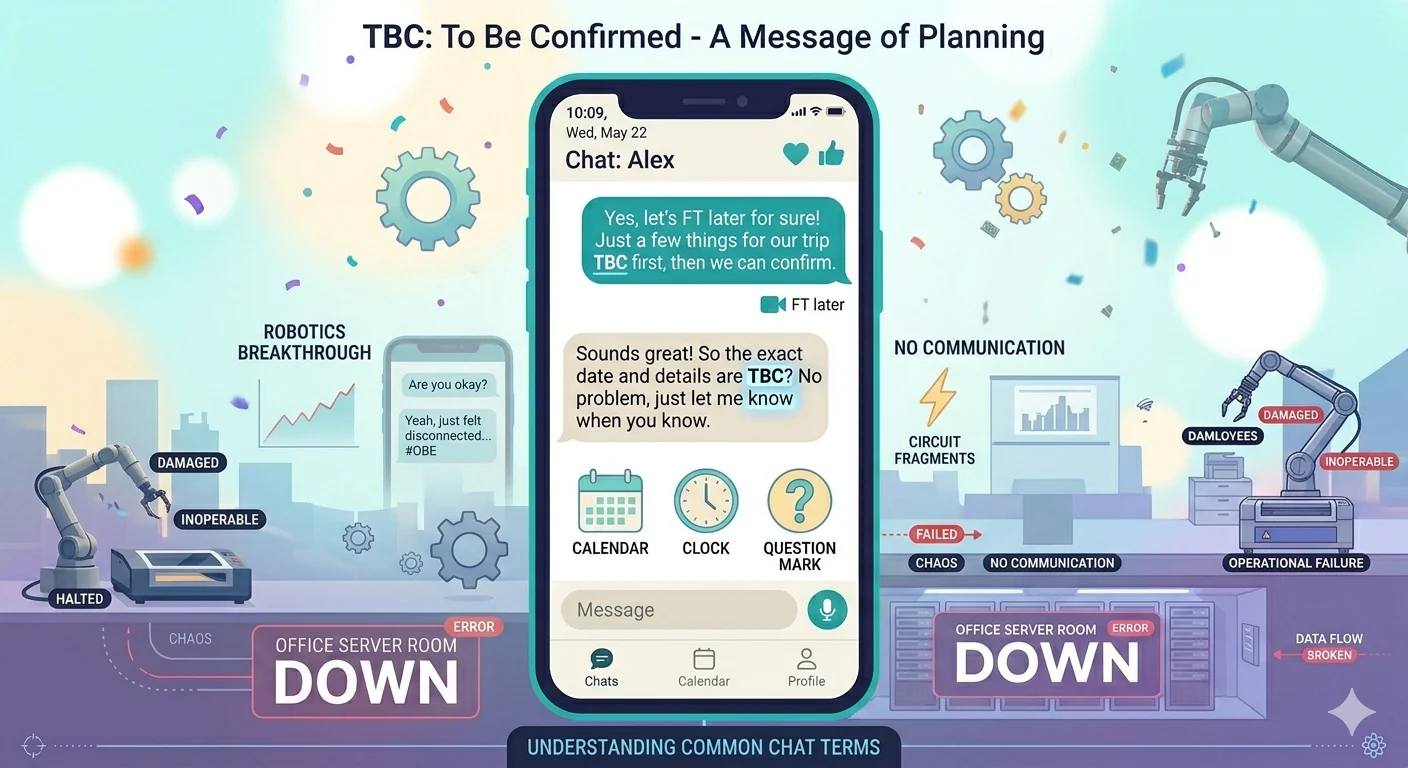
- Meaning: To Be Confirmed
- Full form: TBC = To Be Confirmed
- Context: Used when details (date, time, plan, or information) are not final yet
- Tone: Neutral, informational, slightly formal
If you’ve seen “TBC” in a message, event post, or online schedule, you’re probably wondering what it actually means. It shows up in many places. You might see it in WhatsApp chats, Instagram captions, or even on official event posters. At first glance, it can feel confusing. It looks short and simple, but it can have more than one meaning depending on the situation.
Most people use TBC when something is not fully decided yet. But sometimes, it can mean something else entirely, like “To Be Continued.” That’s where the confusion begins. The same three letters can carry different meanings based on context.
In this guide, you’ll learn the exact meaning of TBC, how it’s used in texting and social media, and how to avoid common mistakes. Everything is explained in a simple and clear way so you can use it confidently.
What does TBC mean?
TBC stands for “To Be Confirmed.” This is its most common and widely accepted meaning.
When someone uses TBC, they are saying that a specific detail is not final yet. It could be a date, time, location, or any piece of information that is still being decided. In simple words, it means “we are not sure yet, but we will confirm soon.”
For example, if an event says “Meeting at 5 PM (TBC),” it means the time is not fixed yet. It might change, and confirmation will come later.
The key idea behind TBC is uncertainty with an expectation of confirmation.
What does TBC mean in texting / slang / social media?
In texting and social media, TBC keeps the same meaning. It still stands for “To Be Confirmed,” but the way people use it is more casual.
In chats, people often use TBC when making plans. For example, if friends are planning to meet but haven’t decided the exact time, they might say “Time TBC.” It saves time and avoids long explanations.
On social media, TBC is commonly used in posts about events, announcements, or updates. For example, someone might post, “New video dropping this week, time TBC.” This tells followers that more details are coming soon.
Among younger users or Gen Z, the meaning doesn’t change much. It’s still practical and direct. It’s not really slang in the fun or expressive sense.
Other meanings of TBC
While “To Be Confirmed” is the main meaning, TBC can also stand for other things depending on context.
One common alternative meaning is “To Be Continued.” This is often used in storytelling, TV shows, or videos. For example, at the end of a video, you might see “TBC…” which means the story will continue later.
Another meaning appears in business or tech contexts. TBC can sometimes refer to “The Boring Company,” which is a company name. However, this is much less common in everyday conversation.
In medical contexts, TBC can refer to Tuberculosis, but this is formal and not used in casual chats.
Because TBC has multiple meanings, context is very important. Always look at the situation to understand the correct meaning.
How TBC is used in real conversations
TBC is used in many real-life situations, both online and offline. It is especially common when planning or organizing something.
In daily conversations, people use TBC when plans are not final. For example, if you are planning a trip but haven’t confirmed the hotel, you might say, “Hotel details TBC.”
In professional settings, TBC is often used in emails, schedules, or reports. It helps indicate that some information will be updated later. For example, a meeting agenda might include “Guest speaker: TBC.”
On social platforms like WhatsApp or Instagram, it is used for quick updates. People use it to avoid repeating long sentences like “we will confirm later.”
Overall, TBC is a practical shortcut used wherever there is uncertainty.
Examples
Here are some natural examples to help you understand how TBC is used:
- “Our dinner plan is this weekend, time TBC.”
- “Event location TBC, stay tuned for updates.”
- “I’ll let you know the final details, still TBC.”
- “Meeting date is next week, exact day TBC.”
- “New product launch coming soon, price TBC.”
- “Trip plan is almost ready, hotel booking TBC.”
- “Match schedule TBC due to weather conditions.”
These examples show how TBC fits naturally into everyday communication.
Tone and intent
TBC has a neutral tone. It is not emotional or expressive. It simply provides information.
When someone uses TBC, they are not being funny or sarcastic. They are just indicating that something is not confirmed yet. It can sometimes give a sense of uncertainty, but not in a negative way.
The intent is always practical. It helps keep communication clear without adding unnecessary details.
Origin or background
TBC comes from formal and professional language. It has been used for a long time in schedules, event planning, and official documents.
Before texting and social media became popular, TBC was already used in printed materials like posters, timetables, and announcements. It helped organizers show that certain details were still pending.
Over time, as digital communication grew, people started using TBC in chats and online platforms. It became a quick and efficient way to communicate the same idea.
Today, it is widely used across both formal and informal settings.
Is it rude or inappropriate?
TBC is not rude or inappropriate at all. It is completely safe to use in most situations.
It does not carry any negative or offensive meaning. In fact, it is often used in professional communication, which makes it quite acceptable.
However, because it is slightly formal, it might feel a bit stiff in very casual conversations. Still, most people understand it without any problem.
When NOT to use it
Even though TBC is useful, there are times when you should avoid using it.
Do not use TBC when the information is already confirmed. It can create confusion and make people think something is still undecided.
Avoid using it with people who may not understand abbreviations. In such cases, it is better to write the full phrase “to be confirmed.”
In very formal writing, like official reports or academic documents, it is better to use full sentences instead of abbreviations.
Also, try not to overuse it in casual chats. Too many abbreviations can make your message harder to read.
Similar and related slang terms
There are a few terms that are similar to TBC. They are often used in the same context but have slightly different meanings.
TBD means “To Be Decided.” It is used when a decision has not been made yet.
TBA means “To Be Announced.” It is used when information will be shared publicly later.
Other abbreviations like ASAP or FYI are also used in communication, but they serve different purposes.
Understanding these related terms helps you choose the right one for each situation.
TBC vs related terms
TBC, TBD, and TBA may look similar, but they are not the same. The term TBC is used when something is expected but not confirmed yet. TBD is used when a decision still needs to be made. TBA is used when information will be officially shared later.
For example, if an event time is not final but likely decided soon, you use TBC. If no decision has been made at all, you use TBD. If the organizer plans to announce it publicly later, you use TBA.
Choosing the right term depends on the level of certainty.
Comparison Table
| Term | Meaning | Usage | Key Difference |
|---|---|---|---|
| TBC | To Be Confirmed | When details are almost decided but not final | Waiting for confirmation |
| TBD | To Be Decided | When a decision has not been made yet | No decision yet |
| TBA | To Be Announced | When details will be shared publicly later | Focus on announcement |
Common misunderstandings
Many people confuse TBC with other similar terms. One common mistake is using TBC when they actually mean TBD. These two are close, but not identical.
Another misunderstanding is thinking TBC always means “To Be Continued.” While this is true in some cases, it is not the default meaning.
Some people also assume that TBC means the detail is already fixed. This is incorrect. It always means the detail is still pending.
Understanding these differences helps avoid confusion.
FAQ Section
What does TBC stand for?
TBC stands for “To Be Confirmed.”
Is TBC formal or informal?
It can be both. It is commonly used in professional and casual settings.
Can TBC mean “To Be Continued”?
Yes, but only in specific contexts like stories or videos.
Is TBC used in texting?
Yes, it is widely used in chats and social media.
What is the difference between TBC and TBD?
TBC means waiting for confirmation, while TBD means a decision has not been made yet.
Is TBC professional?
Yes, it is often used in emails, schedules, and official communication.
Can I use TBC in emails?
Yes, it is acceptable in most professional emails.
Does TBC mean something is canceled?
No, it only means the details are not confirmed yet.
Conclusion
TBC is a simple but useful abbreviation that means “To Be Confirmed.” It is used when information is not final but will be updated soon. You will see it in texts, social media, and even professional settings.
The key to using TBC correctly is understanding the context. It always signals that something is pending, not finished. It is neutral, safe, and widely understood. If you remember one thing, let it be this: TBC means “wait for confirmation.”