
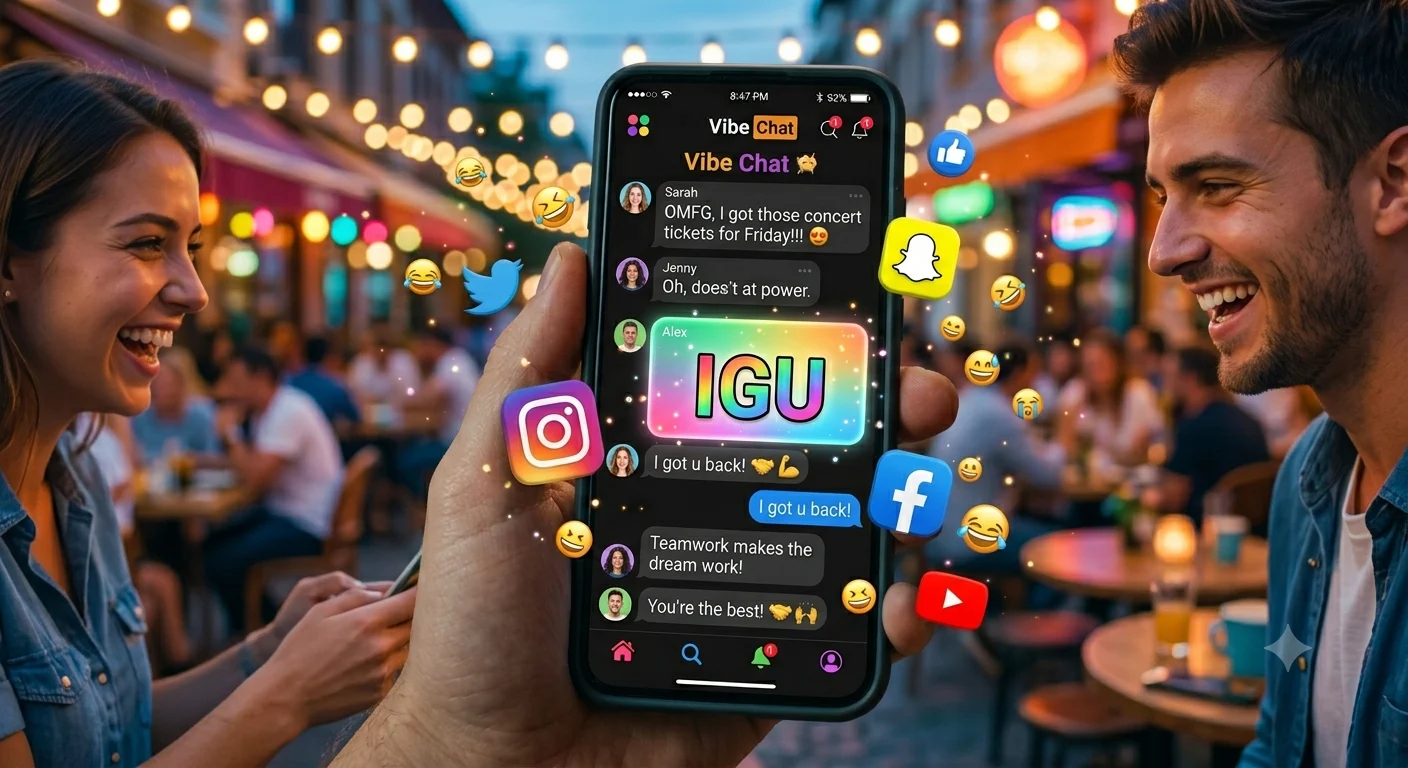
Meaning: IGU is a popular texting abbreviation that usually means “I Got You.”
Full Form: I Got You
Context: Text messages, social media, online chats, gaming communities, and casual conversations.
Tone: Friendly, supportive, reassuring, and informal.
If you’ve recently seen the term IGU in a text message, TikTok comment, Snapchat chat, Instagram reply, or online conversation, you may be wondering what it means. Internet slang changes quickly, and many abbreviations become popular before they are widely understood. IGU is one of those short forms that appears frequently in casual digital communication.
Most people use IGU as a shortened version of “I Got You.” The phrase is commonly used to reassure someone, offer help, confirm understanding, or show support. Because it contains only three letters, it allows users to respond quickly while still communicating a positive message.
The abbreviation is especially common among younger internet users, gamers, and social media communities. However, people of all ages may encounter it in modern online conversations.
This guide explains the IGU meaning, its usage in texting and social media, examples, alternative meanings, tone, origin, and how it compares with similar slang expressions.
What Does IGU Mean?
IGU most commonly stands for “I Got You.”
The phrase is used to tell someone that you understand them, will help them, support them, or take care of something for them.
In everyday conversation, “I got you” can mean:
- I understand.
- I’ll help you.
- Don’t worry.
- I’ll handle it.
- I support you.
IGU simply shortens this phrase into an easy-to-type abbreviation.
For example:
“Can you send me the notes later?”
“IGU.”
In this conversation, the second person is saying they will take care of it.
The abbreviation is simple but carries a strong sense of support and reliability.
What Does IGU Mean in Texting, Slang, and Social Media?
In texting, IGU is usually used as a quick response when someone asks for help or needs reassurance.
Examples include:
“Can you pick me up after work?”
“IGU.”
or
“I forgot how to do this assignment.”
“IGU, I’ll explain it.”
The phrase saves time while maintaining a friendly tone.
On social media platforms such as TikTok, Instagram, Snapchat, Facebook, Discord, and X, IGU often appears in comments and replies.
Someone might write:
“Need recommendations for good movies.”
“IGU. Here’s my list.”
The abbreviation is particularly popular because it communicates helpfulness and confidence in just three letters.
Among Gen Z users, IGU has become part of a broader trend of shortening common phrases for faster communication.
Other Meanings of IGU
Although “I Got You” is the most common slang meaning, IGU can have other definitions depending on the context.
Some alternative meanings include:
- Insulating Glass Unit (construction industry)
- International Geographic Union
- Internal Group Unit
- Industry-specific abbreviations
For example, a construction professional discussing windows may use IGU to refer to an Insulating Glass Unit rather than internet slang.
This is why context always matters when interpreting abbreviations.
In texting and social media conversations, however, IGU almost always means “I Got You.”
How IGU Is Used in Real Conversations
IGU appears in many everyday situations.
People use it whenever they want to reassure someone or promise assistance.
Common situations include:
- Offering help
- Confirming plans
- Supporting a friend
- Answering requests
- Giving reassurance
- Showing understanding
For example:
“Can you cover my shift tomorrow?”
“IGU.”
Another example:
“I’m having a rough day.”
“IGU. Want to talk about it?”
The abbreviation works well because it sounds casual and friendly.
Popular platforms where IGU appears include:
- Messenger
- Snapchat
- TikTok
- Discord
- Text messaging apps
- Gaming chats
Examples of IGU in Sentences
Here are several natural examples of IGU in real conversations:
- Don’t worry about the tickets. IGU.
- Need help moving this weekend? IGU.
- I forgot my charger. Can you bring one? IGU.
- You need notes from class? IGU.
- I’m running late. Can you save me a seat? IGU.
- Need someone to talk to? IGU.
- I can explain the game rules. IGU.
- If you need anything, IGU.
These examples show how the abbreviation communicates support, assistance, and reliability.
Tone and Intent
The tone of IGU is usually positive.
Unlike many internet abbreviations that express excitement, laughter, or frustration, IGU focuses on reassurance and support.
People use it to communicate:
- Helpfulness
- Friendship
- Understanding
- Dependability
- Encouragement
Positive, Negative, or Neutral?
IGU is generally positive.
It often creates a feeling of trust because the speaker is offering assistance or showing they understand someone’s situation.
Serious vs Casual Usage
IGU can be both serious and casual.
A friend helping another friend may use it casually.
Someone providing emotional support may use it more seriously.
For example:
“I’m stressed about tomorrow.”
“IGU. Everything will be okay.”
The meaning remains supportive regardless of the situation.
Origin and Background of IGU
IGU developed as part of internet shorthand culture.
As texting became more common, users began shortening frequently used phrases into abbreviations.
Popular examples include:
- LOL (Laughing Out Loud)
- BRB (Be Right Back)
- IMO (In My Opinion)
- IDK (I Don’t Know)
- IGU (I Got You)
The phrase “I got you” already existed in spoken English long before texting.
People commonly used it to promise assistance or show understanding.
When digital communication became faster and more mobile-focused, users shortened the phrase into IGU.
Social media platforms helped spread the abbreviation to wider audiences, especially younger users.
Is IGU Rude or Inappropriate?
No, IGU is generally not rude or offensive.
In fact, it is one of the more positive internet abbreviations because it usually communicates support and helpfulness.
Most people view IGU as:
- Friendly
- Respectful
- Supportive
- Harmless
- Informal
However, because it is slang, some audiences may not understand its meaning.
The abbreviation is best suited for casual conversations rather than formal communication.
When NOT to Use IGU
Although IGU is useful in informal settings, there are situations where it may not be appropriate.
Avoid using IGU in:
- Business emails
- Academic papers
- Professional reports
- Official documents
- Job applications
- Corporate presentations
For example:
“The company will complete the project on schedule. IGU.”
This appears unprofessional and may confuse readers.
Instead, use complete phrases such as:
- We will handle it.
- We can assist you.
- We understand your concern.
Formal communication should prioritize clarity over slang.
Similar and Related Slang Terms
Several slang expressions have meanings similar to IGU.
I Gotchu
“I Gotchu” is essentially the same phrase written informally.
It carries the same supportive meaning.
Got You
A shorter variation often used in text messages.
Bet
Bet is used to express agreement or acceptance.
Say Less
This phrase means “I understand” or “consider it done.”
IGM
In some communities, IGM can also indicate understanding or support.
IGT
IGT may occasionally be used as shorthand for related expressions.
IGU vs Related Terms
IGU vs I Gotchu
Both expressions have nearly identical meanings.
IGU is the abbreviated form, while I Gotchu is a phonetic spelling.
IT vs Bet
IGU focuses on helping or supporting someone.
Bet focuses on agreement or acceptance.
IGU vs Say Less
Say Less usually means no further explanation is needed.
IGU specifically emphasizes assistance or understanding.
Comparison Table
| Term | Meaning | Usage | Key Difference |
|---|---|---|---|
| IGU | I Got You | Support and assistance | Focuses on helping |
| I Gotchu | I Got You | Casual support | Spelled-out slang version |
| Bet | Agreed | Acceptance or agreement | Less focused on assistance |
| Say Less | I Understand | Quick acknowledgment | Emphasizes understanding |
| Got You | I Understand or Will Help | Informal chats | Less structured abbreviation |
| IMO | In My Opinion | Sharing views | Not support-related |
Common Misunderstandings
One common misunderstanding is assuming IGU means only “I understand.”
While understanding is part of the phrase, it often goes further by offering help or support.
Another misunderstanding occurs when people interpret IGU using professional or technical meanings.
For example, someone familiar with construction may think of an Insulating Glass Unit.
In social media and texting contexts, however, “I Got You” is almost always the intended meaning.
Some users also confuse IGU with other abbreviations that begin with “IG.”
Looking at the surrounding conversation usually reveals the correct interpretation.
Frequently Asked Questions
What does IGU stand for?
IGU most commonly stands for “I Got You.”
What does IGU mean in texting?
It means the sender understands, supports, or will help the other person.
Is IGU the same as “I got you”?
Yes. IGU is simply the abbreviated version.
Is IGU popular on social media?
Yes. It appears frequently on TikTok, Instagram, Snapchat, Discord, and other platforms.
Can IGU have different meanings?
Yes. Some industries use IGU differently, but in slang it usually means “I Got You.”
Is IGU considered slang?
Yes. It is an informal internet abbreviation.
Can I use IGU in professional communication?
It is generally better to avoid slang abbreviations in formal settings.
When should I use IGU?
Use IGU when offering help, reassurance, support, or understanding in casual conversations.
conclusion
IGU is a popular internet abbreviation that most commonly means “I Got You.” It is widely used in texting, social media, gaming chats, and everyday online conversations to express support, understanding, and willingness to help.
The abbreviation has a friendly and positive tone, making it useful when responding to requests, reassuring friends, or confirming that you will handle something. Although IGU can have technical meanings in certain industries, its slang definition dominates online communication.
Understanding the context is essential, but in most digital conversations, IGU is simply a quick and modern way of saying, “Don’t worry—I got you.”