
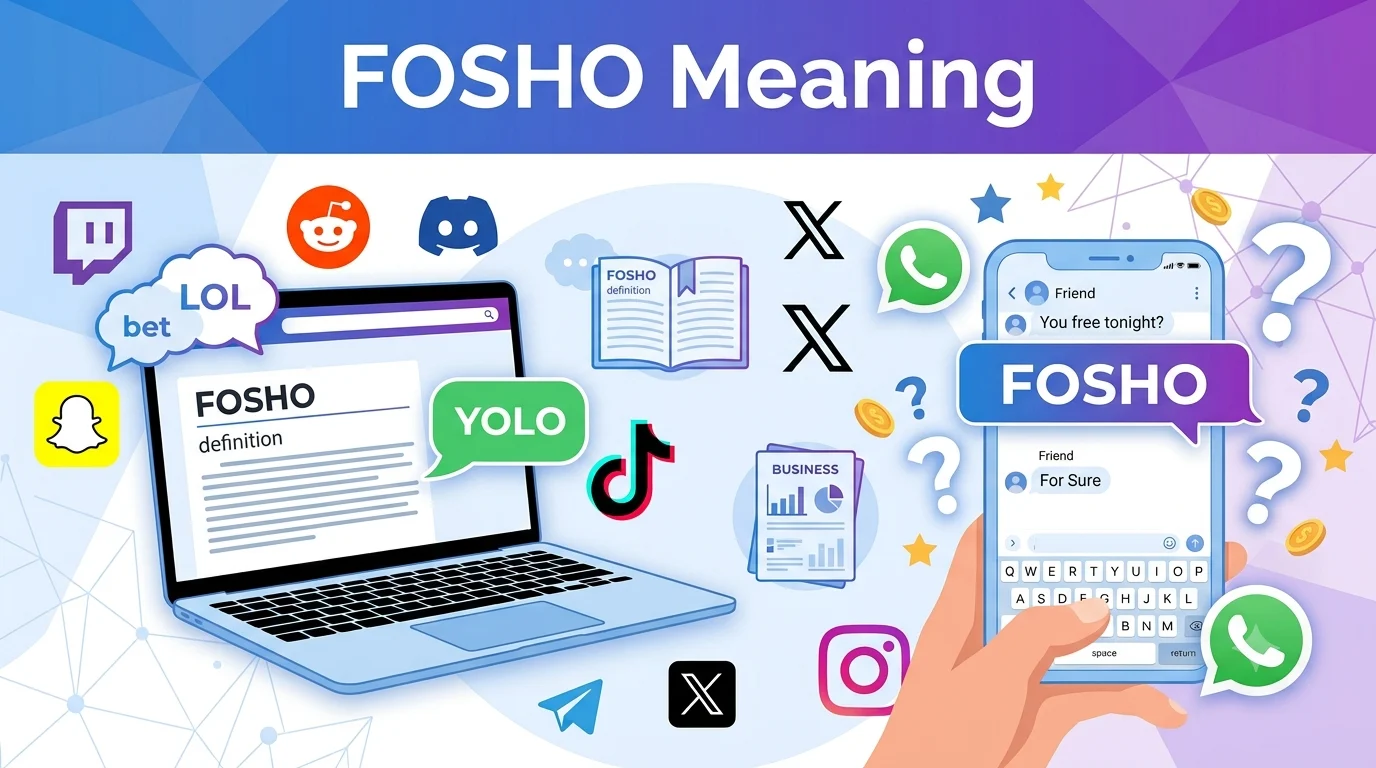
| Term | FOSHO |
|---|---|
| Meaning | For Sure |
| Full Form | For Sure |
| Context | Texting, slang, social media, online chats |
| Tone | Casual, confident, friendly |
If you have seen someone write FOSHO in a text message, TikTok comment, Instagram reply, or online conversation, you may wonder what it means. Internet slang changes quickly, and many words are written the way they sound instead of following traditional spelling rules. FOSHO is one of those casual expressions that has become popular in digital communication.
The FOSHO meaning is simple: it means “For Sure.” People use it when they want to show strong agreement, confirm something, or express confidence about a statement. It is commonly used in friendly conversations where people want a quick and relaxed way to say “definitely” or “absolutely.”
In this guide, you’ll learn what FOSHO means in texting, how it is used on social media, where it came from, whether it is appropriate to use, and how it compares with similar slang terms like FS, bet, and definitely.
What Does FOSHO Mean?
FOSHO means “For Sure.”
It is a slang spelling of the phrase “for sure,” written the way it sounds when spoken casually. People use it to express agreement, certainty, or confidence.
For example:
- “Are you coming to the party?”
- “FOSHO!”
This means:
- “Yes, definitely.”
- “Absolutely.”
- “Of course.”
The term is not a formal abbreviation. Instead, it is an example of internet slang where users shorten or modify words to make conversations faster and more natural.
What Does FOSHO Mean in Texting, Slang, and Social Media?
In Text Messages
In texting, FOSHO is used as a quick response when someone strongly agrees with something.
Examples:
- “Do you want to watch that movie tonight?”
- “FOSHO.”
- “That new song is amazing.”
- “FOSHO, it’s one of my favorites.”
It gives the conversation a relaxed and friendly tone.
On Social Media
You may see FOSHO in places like:
- TikTok comments
- Instagram captions
- Snapchat messages
- YouTube comments
- X (Twitter) replies
- Discord chats
People often use it when reacting positively to posts or opinions.
Example:
“This is the best game update ever.”
Reply:
“FOSHO 🔥”
Here, the person is saying they completely agree.
Among Gen Z and Internet Users
Younger internet users often use pronunciation-based spellings like FOSHO because they match everyday speech. Similar examples include:
- Gonna (going to)
- Wanna (want to)
- Lemme (let me)
- Dunno (don’t know)
FOSHO fits into this casual online language style. It feels more conversational than simply writing “yes” or “sure.”
Other Meanings of FOSHO
The most common and widely accepted meaning of FOSHO is “For Sure.”
Unlike some internet acronyms that have multiple definitions, FOSHO generally does not have many alternative meanings in normal online conversations.
However, context is always important. In rare cases, a group, brand, or organization could use the letters FOSHO as an internal abbreviation, but that is uncommon.
If you see FOSHO in a:
- Text message
- Social media comment
- Meme
- Online chat
it almost always means “For Sure.”
How FOSHO Is Used in Real Conversations
Showing Agreement
The most common use of FOSHO is agreeing with someone.
Example:
Person 1:
“That restaurant has the best burgers.”
Person 2:
“FOSHO!”
Meaning:
“Definitely!”
Confirming Plans
People also use FOSHO when confirming an activity or decision.
Example:
Friend:
“Are we still meeting tomorrow?”
Reply:
“FOSHO.”
Meaning:
“Yes, definitely.”
Showing Confidence
FOSHO can also show that someone feels certain about something.
Example:
“Do you think our team will win?”
Reply:
“FOSHO!”
Meaning:
“For sure, I believe they will.”
Friendly Online Communication
Because FOSHO sounds casual, it works well in relaxed conversations with friends, followers, or online communities.
Real-Life Examples of FOSHO
Example 1
Alex: “Are you joining the game tonight?”
Sam: “FOSHO, I’ll be there.”
Meaning: Sam definitely plans to join.
Example 2
Comment: “This movie deserves more attention.”
Reply: “FOSHO! It’s underrated.”
Meaning: The person strongly agrees.
Example 3
Friend: “That was the funniest video ever.”
Reply: “FOSHO 😂”
Meaning: “Absolutely.”
Example 4
Person 1: “Will you help me with this project?”
Person 2: “FOSHO.”
Meaning: “Of course, I will.”
Example 5
Post: “This is the best pizza place in town.”
Comment: “FOSHO 🍕
Meaning: The commenter agrees.
Example 6
Friend: “You’re going to love this new game.”
Reply: “FOSHO, I already downloaded it.”
Meaning: “Definitely.”
Example 7
Person 1: “That outfit looks great.”
Person 2: “FOSHO!”
Meaning: Strong agreement.
Tone and Intent
The tone of FOSHO is usually positive, casual, and confident.
It can express:
- Agreement
- Excitement
- Support
- Certainty
- Approval
For example:
“FOSHO, that’s a great idea.”
sounds friendly and supportive.
However, like most slang terms, the tone depends on the situation. Someone could also use it sarcastically.
Example:
“You’re FOSHO the smartest person here.”
Depending on the conversation, this could be genuine praise or sarcasm.
Origin and Background of FOSHO
The expression “for sure” has been used in everyday English for many years as a way to express certainty. The slang spelling FOSHO developed from casual pronunciation, especially in American informal speech.
The phrase became more recognizable through:
- Hip-hop culture
- Online communities
- Text messaging
- Social media platforms
As people began writing conversations the way they speak, spellings like FOSHO became more common.
Today, it is mainly used online by people who want their messages to sound relaxed and conversational.
Is FOSHO Rude or Inappropriate?
No, FOSHO is generally not rude or offensive.
It is simply a casual way to say “for sure.” Most people understand it as friendly agreement.
However, it may not be suitable for every situation.
For example:
Casual:
“FOSHO, I’ll be there!”
Professional:
“Absolutely, I will attend.”
The word itself is harmless, but the level of formality matters.
When NOT to Use FOSHO
Because FOSHO is slang, it is best avoided in formal communication.
Avoid using it in:
- Job applications
- Business emails
- Academic assignments
- Official documents
- Professional reports
Instead, use clearer alternatives:
- Definitely
- Certainly
- Absolutely
- Yes, of course
Using formal words helps your message sound professional and appropriate.
Similar and Related Slang Terms
FS
FS is another abbreviation for “for sure.”
Example:
“That movie was great.”
Reply:
“FS.”
It is shorter and commonly used in texting.
Bet
Bet means “okay,” “definitely,” or “I agree.”
Example:
“Meet me at 7?”
“Bet.”
No Doubt
This phrase expresses strong agreement.
Example:
“That was the best performance.”
“No doubt.”
Definitely
A more standard word meaning complete certainty.
Example:
“I’ll definitely come.”
Absolutely
A stronger and more enthusiastic form of agreement.
Example:
“Absolutely, I agree.”
FOSHO vs Related Terms
FOSHO vs FS
Both mean “For Sure.”
The difference is:
- FOSHO sounds more like spoken slang.
- FS is a shorter texting abbreviation.
FOSHO vs Bet
Both can show agreement.
Difference:
- FOSHO means “definitely.”
- Bet often means “okay” or “deal.”
FOSHO vs Definitely
Difference:
- FOSHO is informal slang.
- Definitely works in both casual and professional situations.
FOSHO vs Absolutely
Difference:
- Absolutely sounds more enthusiastic.
- FOSHO feels more relaxed and conversational.
Comparison Table
| Term | Meaning | Usage | Key Difference |
|---|---|---|---|
| FOSHO | For Sure | Casual texting and social media | Slang spelling of “for sure” |
| FS | For Sure | Quick online replies | Shorter abbreviation |
| Bet | Okay / Definitely | Casual agreement | Often used to confirm plans |
| Definitely | Certainly | Everyday and formal use | More standard English |
| No Doubt | Strong agreement | Conversations | Emphasizes confidence |
| Absolutely | Strong yes | Casual and formal settings | More enthusiastic |
Common Misunderstandings
Some people think FOSHO is a completely different word, but it is simply a casual spelling of “for sure.”
Another common mistake is using FOSHO in professional situations. While most people understand it, slang can make formal communication appear less polished.
Some users also confuse FOSHO with FS. Although both have the same meaning, FOSHO is usually more playful and conversational.
The best way to understand FOSHO is by looking at the surrounding conversation.
Frequently Asked Questions
What does FOSHO stand for?
FOSHO stands for “For Sure.”
Is FOSHO the same as for sure?
Yes. FOSHO is simply a slang spelling of “for sure.”
Is FOSHO considered slang?
Yes. It is informal internet and texting slang.
Who uses FOSHO?
It is commonly used by younger internet users, social media users, and people who enjoy casual online conversations.
Can I use FOSHO at work?
It is better to avoid it in formal workplace communication. Use “definitely” or “certainly” instead.
What is the difference between FOSHO and FS?
Both mean “for sure,” but FS is a shorter abbreviation while FOSHO copies casual pronunciation.
How do you reply to FOSHO?
You can respond naturally with agreement, such as:
- “Exactly!”
- “Same!”
- “Definitely!”
- “Absolutely!”
Is FOSHO a positive word?
Yes. It usually expresses agreement, confidence, or support.
conclusion
The FOSHO meaning is simple: it means “For Sure.” This casual slang term is commonly used in texting, social media comments, and online chats to show agreement , confidence, or excitement.
FOSHO is a friendly and informal expression, making it perfect for conversations with friends and online communities. However, because it is slang, it is better to avoid using it in professional or formal writing.
Whether you see it in a TikTok comment, Instagram reply, or text message, FOSHO simply means someone is saying “definitely” or “absolutely.”