
Updated: October 21, 2026
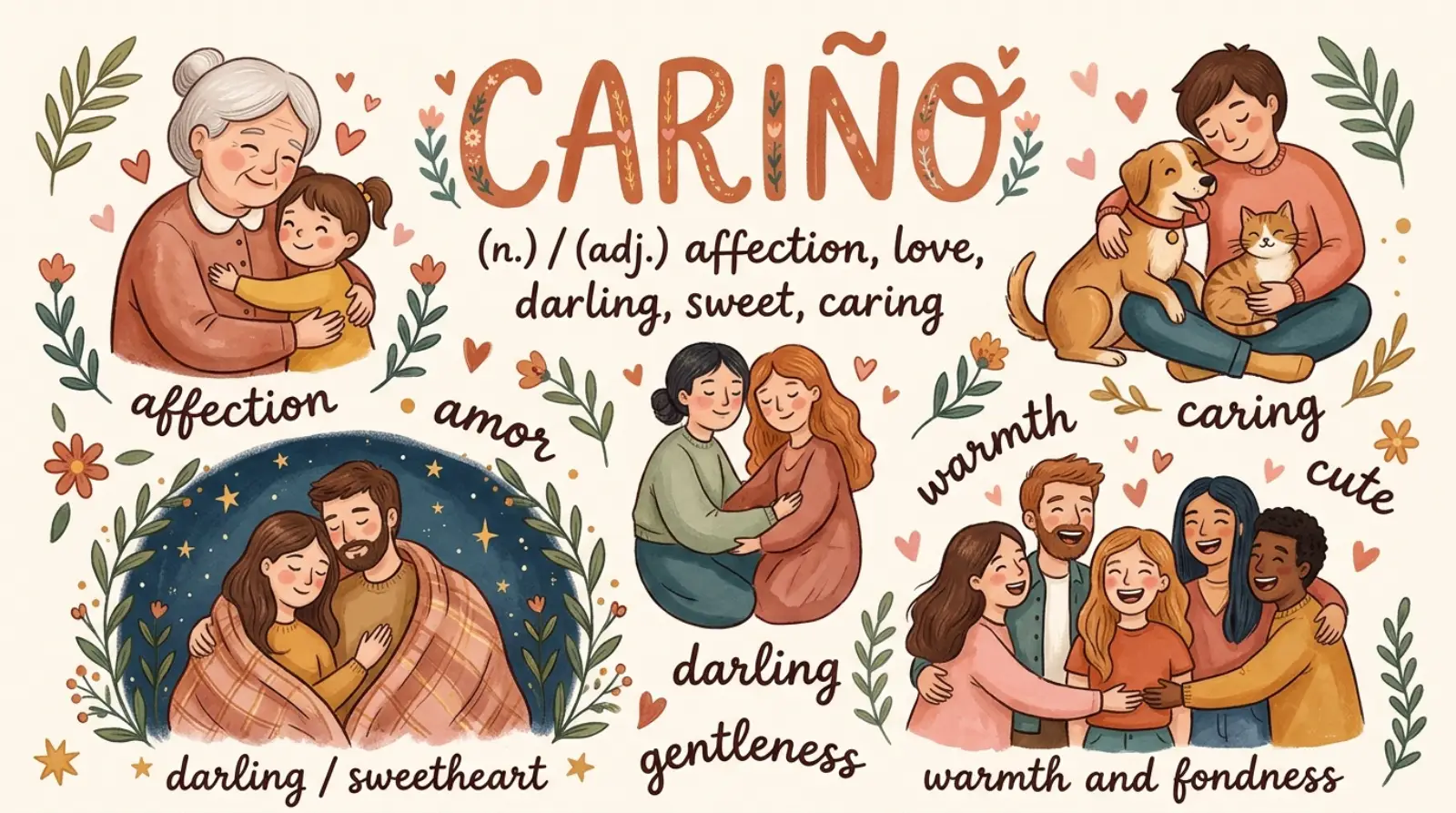
If you have heard someone say “cariño” in a Spanish conversation, text message, movie, or social media post, you may wonder what it means. The word can express affection, fondness, love, or tenderness. Depending on the situation, it can also be used as a sweet way to address someone, similar to “sweetheart,” “dear,” or “honey” in English.
However, cariño does not always mean romantic love. Spanish speakers use it with romantic partners, family members, close friends, and sometimes children. The meaning depends on the relationship, tone, and context.
In this guide, you will learn the meaning of cariño in English, how to pronounce it, how people use it in conversations and text messages, and what the phrase es de cariño means when someone says a joke or nickname is affectionate.
Quick Answer: What Does Cariño Mean?
Cariño is a Spanish word that means affection, fondness, tenderness, or love. When used to address someone, it can mean “sweetheart,” “dear,” “honey,” or “darling.”
- Language: Spanish
- English meaning: Affection, fondness, love, or sweetheart
- Pronunciation: kah-REE-nyoh
- Common use: Romantic relationships, family conversations, friendly interactions, and affectionate messages
- Tone: Usually warm and caring, although context determines the exact meaning
Example: Te quiero mucho, cariño.
English translation: “I love you very much, sweetheart.”
What Does Cariño Mean in English?
The Spanish word cariño has two closely related uses. It can describe a feeling of affection, or it can serve as an affectionate name for another person.
1. Cariño Means Affection
When cariño describes a feeling, it refers to the warmth, fondness, or tenderness someone feels toward another person.
Example:
- Spanish: Le tengo mucho cariño a mi abuela.
- English: “I have a lot of affection for my grandmother.”
Here, cariño describes a caring emotional connection rather than a romantic relationship.
2. Cariño Means Sweetheart or Darling
When someone uses cariño to address another person, it can function like “sweetheart,” “darling,” “dear,” or “honey.”
Example:
- Spanish: ¿Cómo estás, cariño?
- English: “How are you, sweetheart?”
A romantic partner might use it, but a parent could also say it to a child. It does not automatically indicate romantic interest.
3. Cariño Can Express Tenderness
The word can describe the gentle care someone shows through their words or actions.
Example:
- Spanish: Ella cuida a sus hijos con mucho cariño.
- English: “She takes care of her children with great affection.”
In this sentence, cariño suggests warmth, patience, and loving attention.
4. Cariño Can Mean Fondness
People also use the word when describing a positive emotional attachment to a person, place, memory, or object.
Example:
- Spanish: Tengo mucho cariño por esta ciudad.
- English: “I have a lot of fondness for this city.”
The feeling does not need to be romantic. It can reflect familiarity, appreciation, and meaningful experiences.
5. Cariño Can Be a Term of Endearment
A term of endearment is a word used to express warmth or closeness toward someone. Cariño is a common example in Spanish.
Example:
- Spanish: Ven aquí, cariño.
- English: “Come here, sweetheart.”
Whether it sounds natural depends on the speaker, relationship, region, and situation. Some people use it frequently, while others reserve it for close relationships.
What Does Cariño Mean in Text Messages?
In text messages, cariño usually expresses affection, warmth, or closeness. Its meaning depends on who sends it and what the conversation is about.
Here are some common examples:
| Spanish text | English meaning |
|---|---|
| Hola, cariño ❤️ | Hi, sweetheart ❤️ |
| Buenas noches, cariño. | Good night, darling. |
| Gracias, cariño. | Thank you, dear. |
| Te extraño, cariño. | I miss you, sweetheart. |
| Cuídate mucho, cariño. | Take good care of yourself, dear. |
| Está bien, cariño. | It’s okay, sweetheart. |
Does Cariño in a Text Mean Someone Likes You?
Not necessarily. If someone calls you cariño, they may feel romantic affection, but they may also be speaking in a friendly, familiar, or caring way.
Consider these situations:
- From a romantic partner: It may express love, closeness, or tenderness.
- From a family member: It usually communicates familial affection.
- From a close friend: It may be a friendly term of endearment, depending on the people involved.
- From someone you barely know: It could be a casual expression, a regional habit, or an overly familiar way of speaking.
Look at the full conversation rather than interpreting one word as proof of romantic interest.
What Does Cariño Mean in a Relationship?
In a romantic relationship, cariño is often used to express love, tenderness, and emotional closeness. A partner may use it when greeting you, comforting you, sending a message, or saying goodbye.
For example:
- Buenos días, cariño.
“Good morning, sweetheart.” - Te amo, cariño.
“I love you, darling.” - Ven conmigo, cariño.
“Come with me, sweetheart.” - Descansa, cariño.
“Get some rest, dear.”
The word can sound intimate and affectionate, but it is not necessarily as intense as saying te amo (“I love you”). In many situations, it works more like an affectionate nickname.
Important: Calling someone cariño does not, by itself, prove that the person is in love with them. Their behavior and the context matter more than the word alone.
What Does “Es de Cariño” Mean?
The Spanish phrase “es de cariño” can mean “it’s out of affection,” “it’s meant affectionately,” or “it’s said with love.” In casual conversation, someone might use it to explain that a nickname, joke, or teasing comment is intended to be affectionate rather than hostile.
For example, imagine two friends teasing each other. One makes a joke, and the other becomes annoyed. The first person might say:
- Spanish: Es de cariño.
- English: “It’s meant affectionately.”
- Natural interpretation: “I’m only teasing you affectionately.”
The exact translation depends on the surrounding conversation. The phrase does not automatically mean romantic love. It may describe friendly teasing, a familiar nickname, or a joke between people who know each other well.
Examples of “Es de Cariño”
Example 1: Friendly teasing
- Person A: Siempre llegas tarde.
- Person B: ¡Oye!
- Person A: Es de cariño.
English:
- Person A: “You’re always late.”
- Person B: “Hey!”
- Person A: “I’m only teasing you affectionately.”
Example 2: An affectionate nickname
Someone calls a close friend a playful nickname. If the friend asks why, the speaker might respond, Es de cariño, meaning the nickname is intended as a sign of fondness.
Example 3: A joke between family members
A sibling makes a familiar joke about another sibling. They may explain es de cariño to communicate that the joke comes from familiarity and affection rather than a desire to insult.
Does “Es de Cariño” Mean “No Offense”?
Sometimes the idea is similar, but the expressions are not exact equivalents.
- Es de cariño: It’s meant affectionately or out of fondness.
- No es por ofender: It’s not meant to offend.
- Es broma: It’s a joke.
- Lo digo con cariño: I say it with affection / I mean it affectionately.
These expressions can overlap, but they emphasize slightly different things.
One important distinction: saying a comment is affectionate does not mean the other person must find it funny. If a joke hurts someone’s feelings, the speaker should still respect that reaction.
How to Pronounce Cariño
The Spanish word cariño is pronounced approximately kah-REE-nyoh.
Break it into three parts:
- Ca: sounds like “kah.”
- Ri: sounds like “ree,” with the main stress on this syllable.
- ño: sounds roughly like “nyoh.” The Spanish letter ñ has a sound similar to “ny” in the English word “canyon.”
The stress falls on the middle syllable: ca-RI-ño.
The letter ñ is important. Cariño is the correct Spanish spelling for the word meaning affection or sweetheart. Writing carino without the tilde is a common typing substitute when someone cannot easily enter Spanish accents, but the standard spelling is cariño.
Cariño vs. Amor vs. Querido
Although these Spanish words can all communicate affection, they are not interchangeable in every situation.
| Spanish word | Main English meaning | Typical use |
|---|---|---|
| Cariño | Affection, fondness, sweetheart | Tenderness, emotional closeness, affectionate address |
| Amor | Love, my love | Strong affection; often romantic, but also used with family |
| Querido / Querida | Dear, beloved | Letters, greetings, affectionate address, or describing someone cherished |
Cariño vs. Amor
Cariño often emphasizes tenderness, fondness, or an affectionate way of addressing someone. Amor more directly means “love” and can be used as a term of endearment.
Examples:
- Te tengo cariño. = “I feel affection for you.”
- Te amo. = “I love you.”
- Hola, amor. = “Hi, my love.”
The precise emotional intensity depends on the relationship and how the words are used.
Cariño vs. Querido
Querido is the masculine form and querida is the feminine form of an adjective meaning “dear” or “beloved.” It is commonly used in greetings, letters, and affectionate descriptions.
Examples:
- Querida María: “Dear María:”
- Mi cariño por ti es sincero. “My affection for you is sincere.”
In everyday conversation, cariño often functions naturally as a spoken term of endearment, while querido or querida may sound more formal, literary, or context-dependent in some situations.
7 Common Examples of Cariño in Everyday Spanish
The following examples show how the word works in different contexts.
1. Speaking to a Romantic Partner
Spanish: Te quiero mucho, cariño.
English: “I love you very much, sweetheart.”
This expresses affection toward a romantic partner. Depending on context, te quiero can mean “I love you” or “I care about you.”
2. Speaking to a Child
Spanish: Ven aquí, cariño.
English: “Come here, sweetheart.”
A parent or caregiver might use the word to sound gentle and reassuring.
3. Thanking Someone
Spanish: Muchas gracias, cariño.
English: “Thank you very much, dear.”
The word adds warmth to the expression of gratitude. Whether it sounds natural depends on the relationship and the speaker’s habits.
4. Showing Concern
Spanish: Cuídate mucho, cariño.
English: “Take good care of yourself, sweetheart.”
This can be used when saying goodbye or expressing concern for someone.
5. Describing Family Affection
Spanish: Siento mucho cariño por mi familia.
English: “I feel a lot of affection for my family.”
Here, cariño describes an emotion, not a nickname.
6. Expressing Affection for a Place
Spanish: Le tengo mucho cariño a mi antiguo barrio.
English: “I have a lot of fondness for my old neighborhood.”
This usage shows that cariño can describe an emotional attachment to a place or memory.
7. Explaining a Teasing Comment
Spanish: No te enfades; lo digo con cariño.
English: “Don’t get upset; I mean it affectionately.”
The speaker is explaining their intention. However, the listener’s feelings still matter, even if the comment was not meant to hurt.
Is Cariño Romantic or Friendly?
Cariño can be romantic, familial, or friendly. It is not exclusively a romantic word.
Its meaning often depends on three things:
- Your relationship: A partner, parent, friend, or relative may use it differently.
- The tone: A gentle tone may communicate care, while a sarcastic tone may change how the word feels.
- The situation: A good-night message from a partner differs from a casual expression used by a family member.
For example, buenas noches, cariño can mean “good night, sweetheart,” but the relationship determines whether it sounds romantic, familial, or simply affectionate.
If someone uses cariño with you, consider their usual communication style and the broader situation before drawing conclusions.
Is Cariño a Compliment?
Not exactly. Cariño is primarily a word for affection or a term of endearment, rather than a direct compliment about someone’s appearance, personality, or achievements.
For example:
- Eres muy amable. = “You are very kind.”
- Eres hermoso / hermosa. = “You are beautiful.”
- Gracias, cariño. = “Thank you, dear.”
The last example expresses warmth toward the listener. It does not necessarily praise a personal quality.
Common Mistakes When Using Cariño
If you are learning Spanish, these are useful points to remember.
- Assuming it always means romantic love: It can express affection between family members and friends, too.
- Confusing the feeling with the nickname: Siento cariño describes affection, while hola, cariño addresses someone affectionately.
- Ignoring the accent mark: The standard spelling is cariño, with ñ.
- Treating it as a guaranteed sign of attraction: One word is not enough to establish romantic interest.
- Assuming affectionate intent makes every joke acceptable: Phrases such as es de cariño explain the speaker’s intention, but they do not erase the effect of hurtful words.
Frequently Asked Questions About Cariño
1. What does cariño mean in English?
Cariño means affection, fondness, tenderness, or love. When used to address someone, it can mean “sweetheart,” “dear,” “honey,” or “darling.”
2. Does cariño mean sweetheart?
Yes. When used as a term of endearment, cariño often translates as “sweetheart” or “darling.” It can be used with a romantic partner, family member, or another person the speaker addresses affectionately.
3. Does cariño mean I love you?
Not directly. Cariño refers to affection or can mean “sweetheart.” The phrase te quiero commonly means “I love you” or “I care about you,” depending on context.
4. What does es de cariño mean?
Es de cariño means something like “it’s meant affectionately” or “it’s out of affection.” It may be used to explain a playful nickname or teasing comment.
5. Is cariño used for friends?
Yes. Spanish speakers may use cariño with friends, although whether it feels natural depends on the relationship, region, and personal speaking style.
6. Is cariño masculine or feminine?
The noun cariño is grammatically masculine in Spanish, so it is used with masculine articles such as el cariño and mucho cariño. As a term of endearment, it can address a person of any gender.
7. How do you spell cariño correctly?
The standard Spanish spelling is cariño, with the letter ñ. In informal digital messages, people sometimes type carino when they cannot enter the accent mark, but cariño is the correct spelling.
8. Can cariño be used sarcastically?
Yes, depending on tone and context. Although the word is generally affectionate, someone could use it sarcastically or in a condescending way. The surrounding conversation helps determine the intended meaning.
9. What is the difference between cariño and amor?
Cariño usually emphasizes affection, fondness, or tenderness. Amor directly means “love” and is also frequently used as an affectionate name, such as “my love.”
10. Does calling someone cariño mean they are flirting?
Not necessarily. It can be flirtatious, but it can also be a normal expression of affection or familiarity. Consider the person’s behavior, relationship with you, and overall conversation.
Conclusion: What Does Cariño Really Mean?
Cariño means affection, fondness, tenderness, or sweetheart in Spanish. It is a warm and versatile word used in romantic relationships, family conversations, friendships, and everyday interactions.
When someone calls you cariño, they may be expressing love or simply speaking affectionately. Likewise, es de cariño usually suggests that a joke, nickname, or comment is intended to come from affection rather than hostility.
The most important thing to remember is that context determines the meaning. Understanding who said the word, how they said it, and what was happening in the conversation will help you interpret cariño more accurately.