
Updated: October 8, 2026
Meaning: Abracadabra is a traditional magic word used by magicians and performers, usually before or during a trick. In modern English, it can also describe something that seems to happen through mysterious or magical means. The word has a long and uncertain history and is associated with ancient magical traditions.
Context: Magic, entertainment, literature, casual speech, and figurative language.
Tone: Playful, theatrical, humorous, or magical.
Quick Answer: What Does Abracadabra Mean?
Abracadabra is a traditional word associated with magic and magical spells. Today, people most often use it as a playful expression when performing a magic trick or pretending that something has happened through magic. Its exact origin is uncertain, although historical sources connect the word with ancient magical practices and protective charms.
What Does Abracadabra Mean in English?
In modern English, abracadabra generally refers to a word associated with magic.
A magician might say:
“Abracadabra!”
immediately before revealing the result of a trick.
The expression does not have a precise literal translation in everyday English. Instead, it works as a performative magic word, similar to an imaginary spell.
It can also be used figuratively to describe language or actions that seem mysterious, confusing, or magically effective.
7 Common Meanings and Uses of Abracadabra
1. A Magic Word
The most familiar use of abracadabra is as a magic word.
Children, entertainers, and magicians may say it while pretending to cast a spell or make something disappear.
Example:
“Abracadabra! The coin is gone.”
Here, the word adds theatrical effect to the magic trick.
2. A Magical Spell or Incantation
Abracadabra can also refer more generally to a supposed magical formula or incantation.
In historical contexts, the word was associated with magical practices rather than simply being a stage expression.
Example:
“The story describes an ancient spell beginning with abracadabra.”
3. A Playful Expression
People often use abracadabra humorously even when no actual magic is involved.
For example:
“A little abracadabra, and dinner was ready.”
The speaker is jokingly presenting an ordinary action as if it were magic.
4. Something Mysterious or Unexplained
The word can be used figuratively for something that appears to happen mysteriously.
Example:
“With a little abracadabra, the old room looked completely different.”
The sentence does not suggest real magic. It uses the word to create a playful sense of transformation.
5. Nonsense or Unintelligible Language
Abracadabra can sometimes describe words or language that seem meaningless or difficult to understand.
Example:
“The technical explanation sounded like complete abracadabra to me.”
Here, abracadabra means something similar to gibberish or incomprehensible language.
This usage is figurative rather than a reference to an actual magic spell.
6. A Theatrical Cue
In entertainment, saying “abracadabra” can signal that something surprising is about to happen.
It creates anticipation before a reveal.
For example:
“The magician raised his wand and said, ‘Abracadabra!’”
The expression helps establish the familiar atmosphere of a magic performance.
7. A Symbol of Magic
Beyond its literal use, abracadabra has become a cultural symbol of magic, wonder, transformation, and illusion.
Because the word is widely recognized, writers and speakers can use it without explaining what it represents.
Where Did the Word Abracadabra Come From?
The exact origin of abracadabra is uncertain.
One of the earliest well-known historical references appears in the writings of Serenus Sammonicus, a Roman-era writer traditionally associated with the use of the word as a protective charm. The word was arranged in a triangular pattern with letters gradually removed, creating a diminishing sequence.
The charm was believed in some ancient traditions to have protective or healing power.
However, scholars have proposed several explanations for where the word came from, and there is no universally accepted etymology.
Some theories connect it with ancient Semitic or Aramaic expressions, while other proposed explanations have been disputed.
Therefore, it is safer to say that the precise origin of abracadabra remains uncertain.
Abracadabra as an Ancient Charm
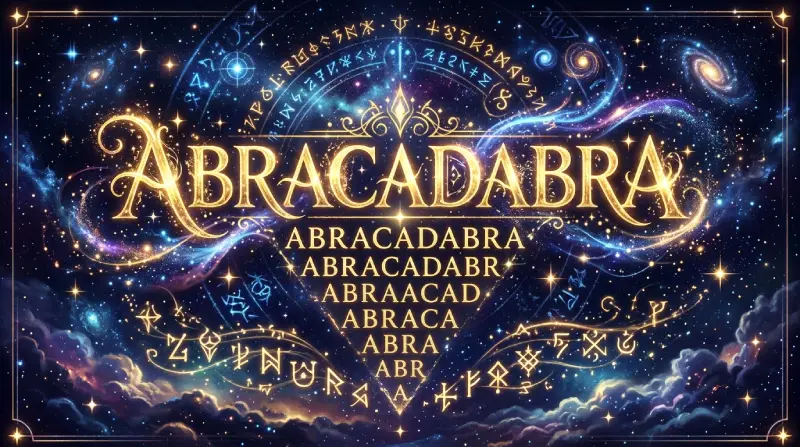
One fascinating historical use of abracadabra involved writing the word in a diminishing pattern.
A traditional example looks conceptually like this:
ABRACADABRA
ABRACADABR
ABRACADAB
ABRACADA
ABRACAD
ABRACA
ABRAC
ABRA
ABR
AB
A
The idea was that the word would gradually disappear as it was written downward.
Historical accounts describe this arrangement as a protective charm associated with attempts to ward off illness or harmful influences.
This historical practice is quite different from the way modern magicians use the word on stage.
Is Abracadabra a Real Magic Word?
Abracadabra is a real word, but it is not scientifically established as a magical power.
Modern magicians generally use it as part of entertainment and theatrical performance.
Historically, however, the word was associated with magical and protective beliefs. People in earlier periods sometimes believed that written words, symbols, or charms could have supernatural effects.
So the meaning depends heavily on the historical context.
How Do You Use Abracadabra in a Sentence?
Here are several natural examples:
Magic:
“The magician waved his wand and shouted, ‘Abracadabra!’”
Playful use:
“Abracadabra, and suddenly the kitchen was spotless.”
Figurative use:
“The designer worked a little abracadabra and transformed the outdated website.”
Nonsense language:
“The contract was filled with legal abracadabra that I couldn’t understand.”
These examples show that the word can be literal, playful, or figurative.
Is Abracadabra Formal or Informal?
Abracadabra is generally informal and playful.
You would normally use it in:
- Casual conversation
- Children’s stories
- Magic performances
- Fiction
- Humor
- Informal writing
It would usually sound inappropriate in formal professional writing unless you are deliberately using it figuratively.
Abracadabra Synonyms
Depending on the context, related words and expressions include:
- Magic word
- Spell
- Incantation
- Hocus-pocus
- Presto
- Magic
- Gibberish
- Nonsense
These are not exact synonyms in every situation.
For example, “gibberish” fits the meaning of unintelligible language, while “incantation” fits the historical magical sense.
Abracadabra vs. Hocus-Pocus
Abracadabra and hocus-pocus are both associated with magic and illusion, but they are not identical.
Abracadabra is especially recognizable as a magic word or spell-like expression.
Hocus-pocus can refer to magic tricks, deception, or something presented as impressive but lacking substance.
For example:
“Abracadabra!” said the magician before the reveal.
But:
“The complicated explanation was just hocus-pocus.”
Is Abracadabra a Spell?
Historically, abracadabra was used as a magical or protective formula, particularly in the triangular form associated with ancient and medieval magical traditions.
In modern entertainment, however, it is primarily a magic-themed expression rather than a genuine spell.
Frequently Asked Questions
What does abracadabra mean?
Abracadabra is a traditional magic word associated with spells, magical performances, and supernatural imagery. Today, it is mainly used playfully by magicians, entertainers, writers, and people pretending to perform magic.
Is abracadabra a real word?
Yes. Abracadabra is an established English word. It is commonly used as a noun or interjection for a magic word or magical expression.
What is the origin of abracadabra?
The exact origin is uncertain. One of the best-known historical references connects the word with Serenus Sammonicus and a protective charm in which the letters were gradually removed from the word.
Is abracadabra Latin?
Abracadabra has often been connected with proposed ancient-language origins, but its exact etymology remains uncertain. It should not simply be described as an ordinary Latin word.
What does abracadabra mean in slang?
Abracadabra is not primarily modern slang. In casual speech, however, it can jokingly mean that something happened as if by magic or that complicated language sounds like nonsense.
What is another word for abracadabra?
Depending on the context, alternatives include hocus-pocus, magic word, spell, incantation, or gibberish. The best replacement depends on how abracadabra is being used.
Conclusion
Abracadabra is one of the most recognizable magic words in English. Today, it is mainly used by magicians and in playful or figurative speech, but its history reaches back to much older magical traditions.
Its exact origin remains uncertain, and its historical use as a protective charm is different from the theatrical expression people know today. Whether used for a magic trick, a joke, or figuratively for something mysterious, abracadabra continues to represent the idea of magic, mystery, and transformation.