
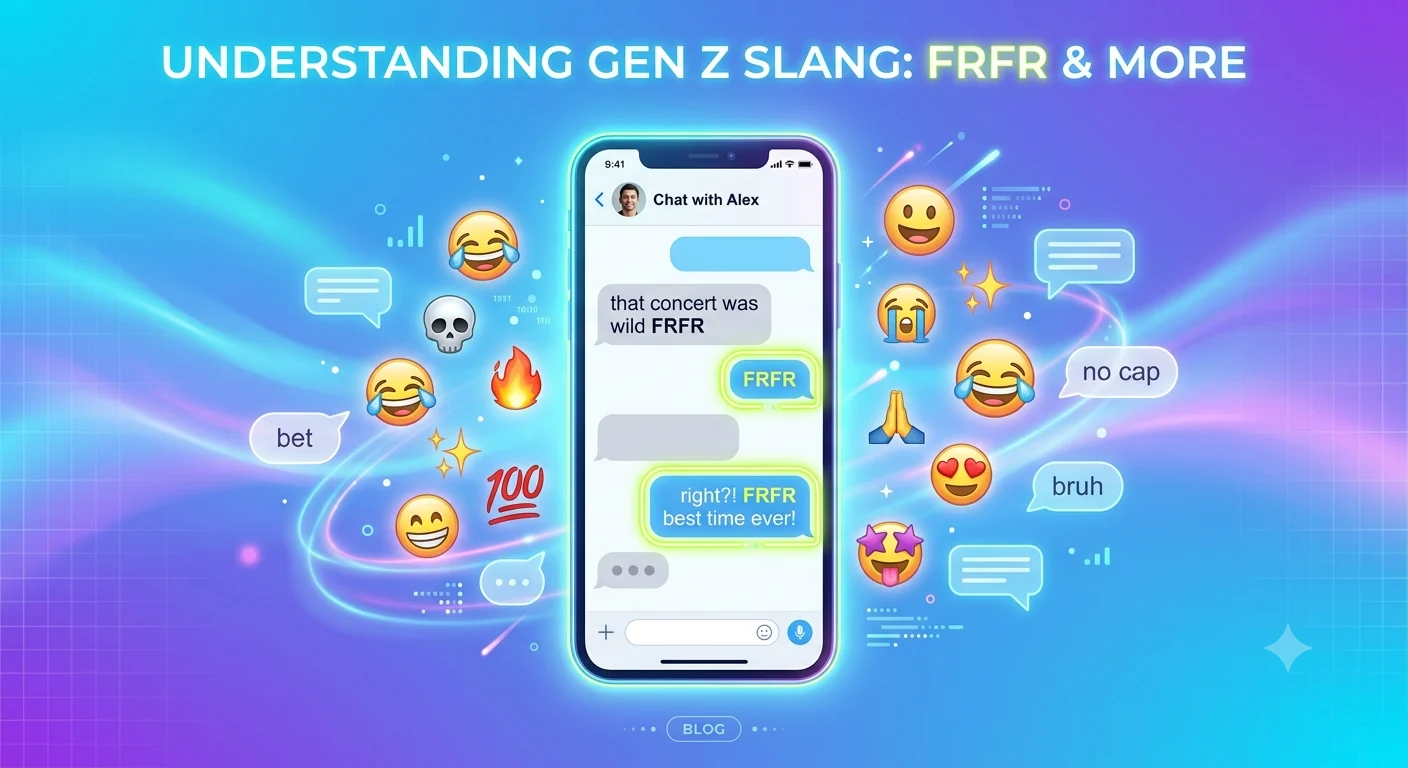
Meaning: “FRFR” means “For Real, For Real,” used to emphasize honesty or agreement
Full form: For Real For Real
Context: Used in texting, social media, and casual online conversations
Tone: Serious, expressive, casual, sometimes emotional
Platforms: TikTok, Snapchat, Instagram, Discord, X (Twitter), messaging apps
If you’ve seen “FRFR” in a chat or comment and felt confused, you’re not alone. This slang term shows up everywhere online, especially in casual conversations between friends. It often appears in replies, memes, captions, and even short videos. People use it to stress that they are being completely honest or strongly agree with something.
The confusion comes from how short it is and how similar it looks to other slang like “FR” or “no cap.” At first glance, it might seem like a random abbreviation, but it actually has a clear meaning in internet language. Understanding it helps you follow online conversations better and respond naturally.
What Does FRFR Mean?
Core Definition
FRFR stands for “For Real, For Real.” It is used to emphasize that someone is being completely serious, honest, or strongly agreeing with a statement. The repetition of “for real” adds extra intensity, making the message feel more sincere.
When someone says “frfr,” they are not just saying “yes” or “I agree.” They are saying “I really mean this” or “I’m 100% serious about it.”
Simple Explanation
In simple words, FRFR is like doubling down on truth. If “FR” means “for real,” then “FRFR” means “very for real.” It’s a way of adding emotional weight to what you are saying, especially in casual chats where tone matters.
For example:
- “That movie was amazing, frfr.” → I truly mean it was amazing.
- “He’s the best player, frfr.” → I strongly believe this is true.
What Does FRFR Mean in Texting, Slang, and Social Media?
In Text Messages
In texting, FRFR is used to show honesty or agreement between friends. It makes messages feel more natural and expressive. Instead of just saying “yes” or “true,” people add FRFR to make their feelings stronger.
Example tone in texting:
- “That was crazy, frfr.”
- “You’re right, frfr.”
On Social Media
On platforms like TikTok, Instagram, Snapchat, and X (Twitter), FRFR is commonly used in captions and comments. It helps users react quickly and emotionally to posts.
- TikTok: Used in comment sections to agree with videos or reactions
- Instagram: Appears in captions or replies under posts
- Snapchat: Used in casual chats and stories
- Discord: Common in gaming and community chats
- X (Twitter): Used in short replies to emphasize opinions
Gen Z Context
Gen Z users especially love FRFR because it’s short, expressive, and fits fast communication styles. It replaces longer phrases like “I’m being serious” or “I really mean it.” It also fits well with meme culture, where short emotional expressions are more effective.
Other Meanings of FRFR
Alternate Interpretations
In almost all cases, FRFR means “for real, for real.” However, in rare contexts outside slang, abbreviations like FRFR may be used differently in niche groups or technical shorthand. These are not common in everyday internet use.
So, when you see FRFR online, it almost always refers to the slang meaning, not anything technical or formal.
How FRFR Is Used in Real Conversations
Everyday Situations
FRFR is used in many types of casual conversations:
- Agreeing strongly with someone
- Confirming truth or honesty
- Expressing emotions like surprise or excitement
- Emphasizing opinions
Common Platforms
You’ll most often see FRFR in:
- Messaging apps like WhatsApp and Messenger
- Gaming chats like Discord or in-game messages
- Social media comment sections
- Meme pages and viral posts
It is part of the fast, expressive style of modern online communication.
Examples of FRFR
Here are some natural ways people use FRFR in conversation:
- “That test was so hard, frfr.”
- “She’s the nicest person I know, frfr.”
- “I’m tired of this weather, frfr.”
- “That outfit is fire, frfr.”
- “We should hang out more, frfr.”
- “This game is actually addictive, frfr.”
- “You handled that situation well, frfr.”
- “I’m not joking, frfr.”
Each example shows how FRFR strengthens the message and adds emotional honesty.
Tone and Intent
Emotional Meaning
FRFR usually carries emotional weight. It can show:
- Strong agreement
- Sincerity
- Excitement
- Frustration
- Realness or authenticity
It helps the speaker sound more genuine.
Positive, Neutral, or Negative?
FRFR is mostly neutral but can shift depending on context:
- Positive: “That was an amazing game, frfr.”
- Neutral: “It’s cold today, frfr.”
- Negative: “This situation is annoying, frfr.”
The meaning depends on the sentence it is used in.
Sarcasm vs Serious Use
FRFR can sometimes be sarcastic. For example:
- “Yeah right, frfr…” (sarcastic disbelief)
But most of the time, it is used seriously to emphasize truth.
Origin and Background of FRFR
Internet History
FRFR comes from the shortened slang “FR,” which means “for real.” Over time, internet users began repeating words for emphasis, turning “FR” into “FRFR” to make the meaning stronger.
Popularity Growth
The term became popular through:
- Social media platforms
- Meme culture
- Hip-hop lyrics and online communities
- Fast texting habits among younger users
As online communication became faster, short expressive slang like FRFR became more common.
Is FRFR Rude or Inappropriate?
FRFR is not rude or offensive. It is generally safe to use in casual conversations. However, tone matters. If used in a serious or emotional situation, it might sound too casual or dismissive.
In most cases, it is friendly and informal.
When You Should Not Use FRFR
Formal Situations
Avoid using FRFR in:
- Work emails
- Academic writing
- Job interviews
- Professional reports
It is too informal for serious communication.
Better Alternatives
Instead of FRFR, you can use:
- “I truly agree”
- “I am serious”
- “That is correct”
- “I completely agree”
These sound more professional and clear.
Similar and Related Slang Terms
FRFR is part of a bigger group of internet slang. Similar terms include:
- FR (for real)
- NGL (not gonna lie)
- TBH (to be honest)
- No cap (no lie)
- ONG (on God, meaning seriously)
- Bet (agreement or confirmation)
- Lowkey (slightly or secretly)
- Highkey (strongly or openly)
These all help express honesty, emotion, or agreement in different ways.
FRFR vs Related Terms
FRFR is stronger than most similar slang because it repeats the emphasis. While “FR” already means “for real,” FRFR makes it even more intense.
- FR: Simple agreement or truth
- FRFR: Strong, serious agreement
- No cap: Emphasizes no lie or exaggeration
- TBH: Used for honesty but often softer
FRFR is more direct and emotional compared to others.
Comparison Table
| Term | Meaning | Usage | Key Difference |
|---|---|---|---|
| FR | For real | Casual agreement | Basic version |
| FRFR | For real for real | Strong emphasis on truth | Stronger intensity |
| No cap | No lie | Emphasizing honesty | More expressive slang |
| TBH | To be honest | Sharing opinion or truth | Softer tone |
| NGL | Not gonna lie | Honest admission | Often opinion-based |
Common Misunderstandings
Some people misunderstand FRFR in a few ways:
- Thinking it is a formal acronym (it is not)
- Confusing it with technical abbreviations
- Using it in professional writing
- Assuming it always means sarcasm
In reality, FRFR is simple slang used for emphasis in casual speech.
Frequently Asked Questions (FAQ)
What does FRFR mean?
It means “for real, for real,” used to emphasize honesty or agreement.
What is the full form of FRFR?
The full form is “For Real For Real.”
Is FRFR the same as FR?
No, FR is “for real,” while FRFR is a stronger version.
Is FRFR rude?
No, it is informal but not rude.
Who uses FRFR?
Mostly Gen Z and social media users.
Can adults use FRFR?
Yes, but it is mainly used in casual conversations.
Is FRFR popular on TikTok?
Yes, it is commonly used in comments and captions.
When should you avoid FRFR?
Avoid it in formal or professional communication.
conclusion
FRFR is a simple but powerful slang term that means “for real, for real.” It is used to emphasize honesty, agreement, or strong feelings in casual online conversations. You will mostly see it on social media, messaging apps, and gaming chats.
While it is not suitable for formal writing, it is very common in everyday internet language. Understanding FRFR helps you follow modern slang easily and communicate more naturally in online spaces.