
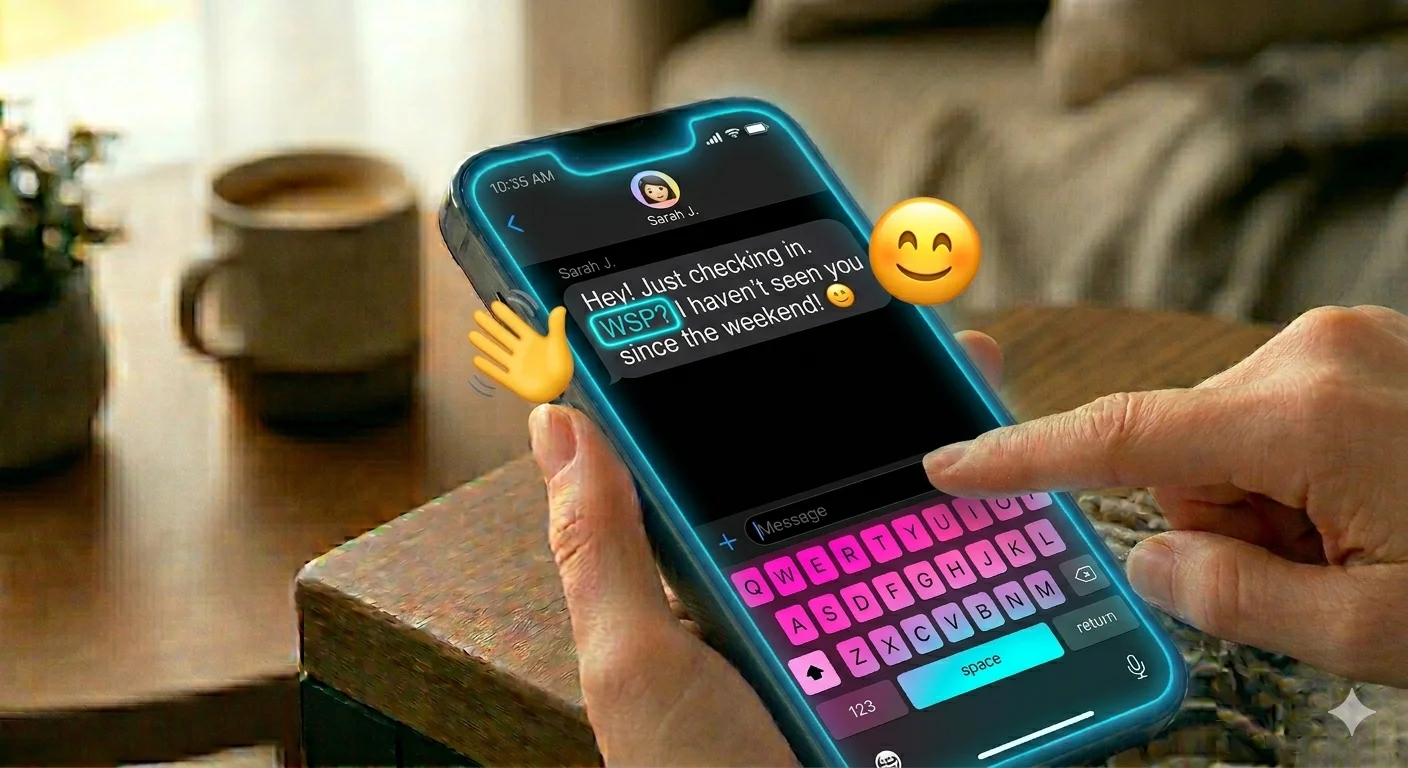
Meaning: A casual way to say “What’s up?”
Full Form: WSP = What’s up.
Context: Texting, social media, DMs, chats.
Tone: Friendly, relaxed, informal.
If you have seen “WSP” in a message or social media chat, you might be wondering what it means. It looks simple, but if you are not familiar with texting slang, it can feel confusing at first. Many people come across WSP in direct messages, comments, or group chats and are unsure how to respond.
WSP is one of those short forms that people use to save time while texting. Instead of typing a full sentence, they use just a few letters to send the same message. In this case, WSP stands for “What’s up?” which is a very common way to greet someone or start a conversation.
You will often see WSP used in casual situations, especially among friends or on social media platforms. It is quick, easy, and friendly. However, like most slang terms, it is important to understand when and where to use it.
In this article, you will learn the meaning of WSP, how it is used in texting and social media, examples, tone, and how it compares to similar slang terms.
What does WSP mean?
WSP is a short form of “What’s up?” It is used as a greeting or a way to check in with someone. Instead of asking a full question, people use WSP to keep things simple and fast.
In basic terms, WSP means:
“Hey, what are you doing?” or “What’s going on?”
It is not always meant as a serious question. Sometimes, it is just a way to start a conversation. The person sending it may not expect a detailed answer.
For example, if someone texts “WSP,” they are just saying hello and opening the conversation.
What does WSP mean in texting / slang / social media?
Texting meaning
In texting, WSP is used as a quick greeting. It replaces longer phrases like “What’s up?” or “How are you?”
It is commonly used between friends. It helps start a chat without sounding too formal.
For example, someone might text “WSP?” to check what you are doing or to start talking.
Social media usage
On social media, WSP is often used in direct messages, comments, or replies. People use it to connect with others quickly.
You might see messages like “WSP bro?” or “WSP today?” It keeps the conversation light and casual.
Gen Z context
Among Gen Z users, WSP is very common. It fits their style of fast and simple communication. Short forms like WSP help them chat quickly without typing full sentences.
It is part of everyday digital language for many young users.
Other meanings of WSP
WSP mainly means “What’s up?” in texting. However, in rare cases, it could have other meanings depending on the context.
For example:
- It could stand for something technical or professional in specific industries
- It may be used as initials for names or organizations
These meanings are not common in everyday conversations. In most cases, WSP simply means “What’s up?”
How WSP is used in real conversations
WSP is mostly used at the beginning of a conversation. It is a simple way to greet someone or check in.
You can use it when texting a friend, starting a chat, or replying to someone after a long time.
For example, if you have not talked to someone in a while, you might send “WSP?” to reconnect. It feels natural and friendly.
It is also used in group chats where people want to keep the conversation going.
Examples
Here are some natural examples of how WSP is used:
- “WSP? Haven’t heard from you in a while.”
- “Yo, WSP?”
- “WSP today? Got any plans?”
- “Hey, WSP bro?”
- “WSP, you free right now?”
- “WSP? Let’s hang out.”
- “WSP with you these days?”
These examples show how flexible and simple the term is.
Tone and intent
WSP has a friendly and relaxed tone. It is not serious or formal. It is used to make conversations feel easy and natural.
The intent is usually positive. It shows interest in talking or connecting with someone.
It is not used to express strong emotions. Instead, it keeps things light and casual.
Origin or background
WSP comes from the phrase “What’s up?” which has been used for a long time as a casual greeting. As texting became more popular, people started shortening common phrases.
“What’s up?” became “WSP” to save time and effort. This is part of a larger trend where people use abbreviations in digital communication.
Over time, WSP became widely accepted, especially on social media and messaging apps.
Is it rude or inappropriate?
WSP is not rude or inappropriate. It is a safe and friendly term in most situations.
However, it is informal. Using it in very serious or professional settings may not be appropriate.
With friends and casual contacts, it is perfectly fine and widely used.
When NOT to use it
You should avoid using WSP in formal communication. This includes work emails, official messages, or professional conversations.
It may also not be suitable when talking to someone you do not know well, especially in a formal context.
In such situations, it is better to use full phrases like “Hello” or “How are you?”
Similar and related slang terms
There are many similar slang terms used as greetings:
- “Sup”
- “WYD” (What You Doing)
- “Hey”
- “Yo”
Each of these has a slightly different tone, but they all serve as conversation starters.
WSP vs related terms
WSP vs “Sup”:
Both mean “What’s up,” but “Sup” is even shorter and more casual.
WSP vs “WYD”:
WSP is a general greeting, while WYD specifically asks what someone is doing.
WSP vs “Hey”:
“Hey” is more universal and can be used in both casual and slightly formal settings.
Comparison Table
| Term | Meaning | Usage | Key Difference |
|---|---|---|---|
| WSP | What’s up | Casual chats | Friendly greeting |
| Sup | What’s up | Very casual | Shorter version |
| WYD | What you doing | Texting | Specific question |
| Hey | Hello | General use | More flexible |
Common misunderstandings
Some people think WSP has a deeper meaning, but it is just a simple greeting.
Others may confuse it with different abbreviations or think it is formal language. In reality, it is very casual.
Understanding that it is just a conversation starter helps avoid confusion.
FAQ Section
1. What does WSP mean in texting?
It means “What’s up?” and is used as a greeting.
2. Is WSP the same as “Sup”?
Yes, both have the same meaning, but “Sup” is shorter.
3. Can I use WSP in formal messages?
No, it is better to avoid it in formal communication.
4. How do I reply to WSP?
You can reply with what you are doing or simply say “Nothing much.”
5. Is WSP used on social media?
Yes, it is commonly used in DMs and comments.
6. Is WSP rude?
No, it is friendly and casual.
7. Who uses WSP the most?
Mostly younger users and people active on social media.
conclusion
WSP is a simple and popular texting slang that means “What’s up?” It is used to start conversations and connect with others in a casual way.
It is friendly, easy to use, and widely understood in online communication. However, it is best used in informal situations with friends or on social media.
Understanding when and where to use WSP will help you communicate more naturally and confidently in everyday chats.