
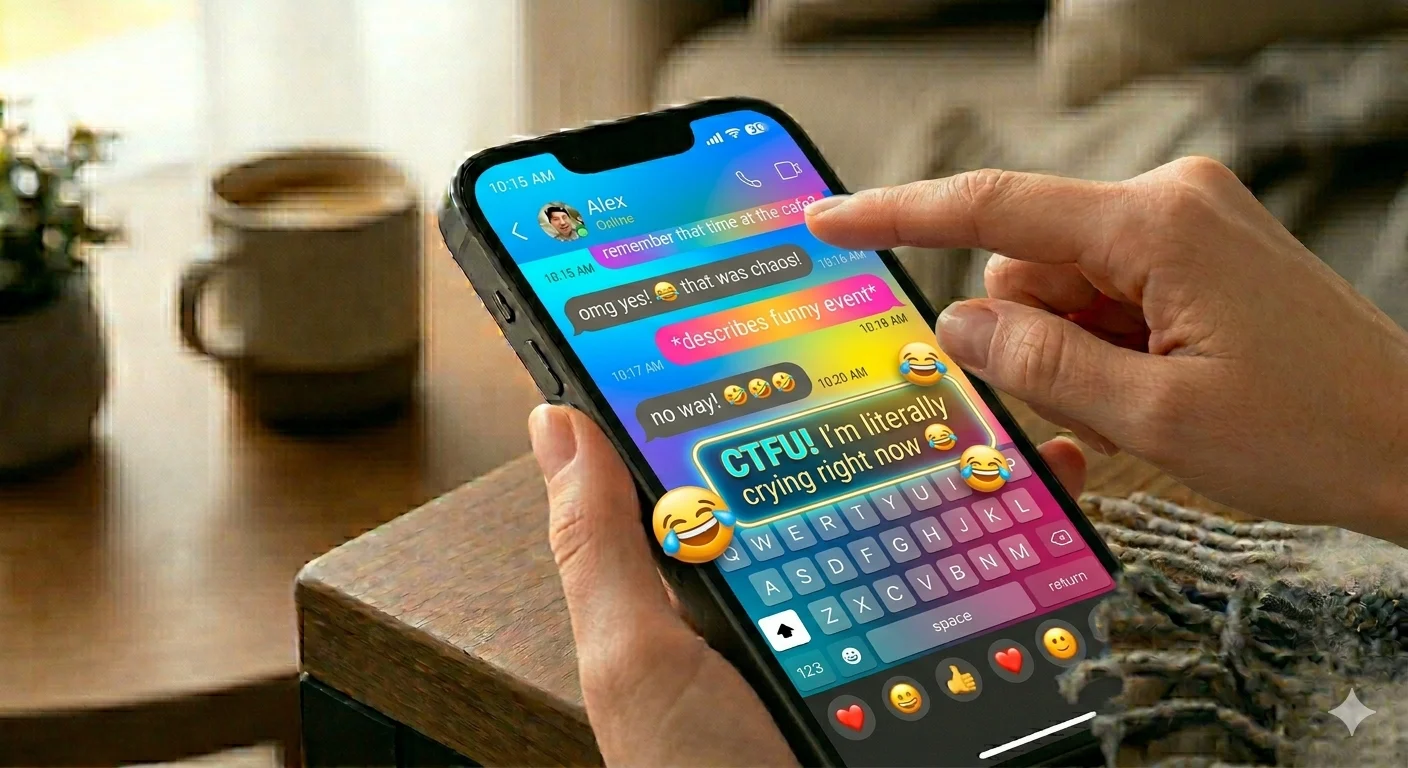
Meaning: Laughing very hard (extreme laughter).
Full Form: Cracking The F*** Up.
Context: Texting, social media, memes, casual chats.
Tone: Funny, informal, sometimes slightly offensive.
If you spend time on social media or texting apps, you have probably come across the term “CTFU” and wondered what it means. It is one of those short internet slang terms that can feel confusing at first, especially if you are not familiar with modern texting language. Many users see it in chats, memes, or comments and try to guess its meaning, often mixing it up with more common terms like “LOL” or “LMAO.”
The truth is, CTFU is used to express a strong reaction to something funny. It shows that a person is not just smiling, but laughing a lot. Because it includes a hidden strong word in its full form, some people may feel unsure about using it in conversations. This makes it even more important to understand its meaning, tone, and proper context.
In today’s digital world, slang like CTFU plays a big role in how people communicate quickly and express emotions online. Learning what it means and when to use it can help you avoid confusion and connect better with others in casual conversations.
What does CTFU mean?
CTFU stands for “Cracking The F*** Up.” It is used to show that something is extremely funny. When someone says CTFU, they are not just smiling or lightly laughing. They are reacting to something that made them laugh very hard.
In simple words, it means: “I am laughing a lot” or “That is really funny.” The phrase uses strong language to increase the intensity of the reaction. So, it is more powerful than basic expressions like “LOL.”
Even though the full form includes a swear word, people often use the abbreviation without thinking much about it. It has become a normal part of internet slang.
What does CTFU mean in texting / slang / social media?
Texting meaning
In texting, CTFU is used as a quick reaction. Instead of writing a full sentence like “That is so funny,” people simply type “CTFU.” It saves time and shows a strong emotional response.
For example, if a friend sends a funny joke, replying with “CTFU” tells them you found it hilarious.
Social media usage
On social media, CTFU is commonly seen in comments and captions. People use it when reacting to memes, videos, or funny posts. It shows engagement and adds emotion to the interaction.
You might see comments like “CTFU this made my day” or “I’m CTFU right now.” It helps express laughter in a quick and relatable way.
Gen Z context
Among younger users, especially Gen Z, CTFU is part of everyday slang. It is often used alongside other expressions and emojis. Compared to “LOL,” it feels more intense and expressive.
Gen Z users prefer stronger reactions, so terms like CTFU, LMAO, and ROFL are more common than simple “haha.”
Other meanings of CTFU
CTFU mostly has one main meaning, which is related to laughter. However, in very rare cases, people might try to give it different meanings based on context. These alternate meanings are not widely accepted and can cause confusion.
For clarity, it is best to understand CTFU as “Cracking The F*** Up” in almost all situations.
How CTFU is used in real conversations
People use CTFU in casual and friendly conversations. It appears in text messages, group chats, and online platforms. It is usually a reaction rather than a full statement.
For example, if someone shares a funny story, others might reply with “CTFU.” It shows they enjoyed the story and found it very funny.
It is also used during live conversations online, such as gaming chats or comment sections. The goal is always the same: to express strong laughter.
Examples
Here are some natural examples of how CTFU is used:
- “That video you sent me had me CTFU.”
- “CTFU I can’t stop laughing at this.”
- “Bro, your joke got me CTFU.”
- “I’m literally CTFU right now.”
- “CTFU this is too funny.”
- “She said what? CTFU!”
- “That meme got me CTFU all day.”
These examples show how the term fits naturally into everyday conversations.
Tone and intent
CTFU carries a strong emotional tone. It is used to show intense laughter and enjoyment. The tone is usually positive and playful.
However, it can sometimes be used sarcastically. For example, someone might say “CTFU” even if they do not find something funny, just to respond casually.
Because it includes a hidden swear word, the tone can feel slightly bold or edgy. This makes it more suitable for informal settings.
Origin or background
CTFU comes from internet slang culture, where people shorten phrases to type faster. Over time, users started adding stronger words to express emotions more clearly.
The phrase likely evolved from expressions like “cracking up,” which means laughing a lot. Adding the extra word increased its intensity. As texting and social media grew, abbreviations like CTFU became more popular.
Today, it is widely recognized across different platforms and age groups.
Is it rude or inappropriate?
CTFU is not always rude, but it can be inappropriate in certain situations. The full form includes a swear word, even if it is hidden in the abbreviation.
Among friends, it is usually fine and even expected. However, in formal or respectful environments, it may not be appropriate.
For example, using CTFU in a professional email or with someone you do not know well could come across as disrespectful.
When NOT to use it
You should avoid using CTFU in formal situations. This includes work emails, school assignments, or professional conversations.
It is also better not to use it with elders or people who may find such language offensive. In serious discussions, it can make you seem careless or immature.
Stick to simple and neutral expressions in those cases, like “That is funny” or “I enjoyed that.”
Similar and related slang terms
There are many slang terms that express laughter. Some common ones include:
- LOL (Laughing Out Loud)
- LMAO (Laughing My A** Off)
- ROFL (Rolling On the Floor Laughing)
- LMFAO (Laughing My F*ing A Off)
Each of these terms shows laughter but with different levels of intensity.
CTFU vs related terms
CTFU is stronger than LOL but similar in intensity to LMAO or LMFAO. The main difference is the wording and personal preference.
Some people use LOL for light laughter, while others prefer CTFU for stronger reactions. It depends on how funny something is and the tone you want to show.
Comparison Table
| Term | Meaning | Usage | Key Difference |
|---|---|---|---|
| LOL | Laughing Out Loud | Casual chats | Light laughter |
| LMAO | Laughing My A** Off | Informal texting | Stronger than LOL |
| ROFL | Rolling On the Floor Laughing | Online reactions | Very expressive |
| CTFU | Cracking The F*** Up | Casual, slang | Intense laughter with edgy tone |
| LMFAO | Laughing My F*ing A Off | Social media | Very strong and bold |
Common misunderstandings
Some people think CTFU is the same as LOL, but it is actually much stronger. Others may not realize it includes a swear word, which can lead to awkward situations.
Another misunderstanding is using it in formal contexts. This can create a negative impression.
It is important to understand both the meaning and the tone before using it.
FAQ Section
1. What does CTFU stand for?
It stands for “Cracking The F*** Up,” meaning laughing very hard.
2. Is CTFU the same as LOL?
No, it is stronger and shows more intense laughter.
3. Can I use CTFU in school or work?
It is not recommended because it is informal and includes slang.
4. Is CTFU offensive?
It can be, depending on the audience and situation.
5. Where is CTFU commonly used?
In texting, social media, and casual online conversations.
6. What is a safer alternative to CTFU?
You can use “LOL” or “That’s funny” in formal settings.
7. Do all people understand CTFU?
Not everyone, especially older audiences or those unfamiliar with slang.
conclusion
CTFU is a popular internet slang term that means laughing very hard. It is commonly used in texting and social media to express strong amusement. While it is fun and expressive, it should be used carefully because of its informal tone and hidden strong language.
Understanding when and where to use CTFU helps you communicate better and avoid misunderstandings. In casual conversations, it fits perfectly. In formal situations, it is better to choose simpler and more respectful words.