
Meaning: A GIF is a short, looping animated image used to express reactions or emotions
Full form: Graphics Interchange Format
Context: Texting, social media, memes, internet communication
Tone: Fun, expressive, emotional, sometimes sarcast.
If you spend time online, you’ve probably seen people send or reply with a GIF instead of typing a message. It might be a funny reaction, a movie clip, or a quick emotional response. But many people still search for “GIF meaning” because they are unsure what it actually stands for or how it is used.
The confusion often comes from two things. First, GIF is both a technical file format and a social media tool. Second, it’s used in so many different ways across platforms like WhatsApp, Instagram, Twitter, and Messenger. Some people also get confused about how to pronounce it or when to use it.
This guide will explain everything in simple terms. You’ll learn what a GIF is, how it’s used in texting and slang, and how to use it correctly in real-life conversations.
What does GIF mean?
GIF stands for Graphics Interchange Format. It is a type of image file that supports animation. Unlike a normal picture, a GIF can show multiple frames in a loop, which makes it look like a short video without sound.
In simple words, a GIF is a moving image that repeats itself again and again. It can be just a few seconds long, but it captures a moment perfectly.
Originally, GIFs were created for simple graphics on early websites. Over time, they evolved into a powerful way to communicate online. Today, they are used to express emotions, reactions, and ideas quickly without typing long messages.
What does GIF mean in texting / slang / social media?
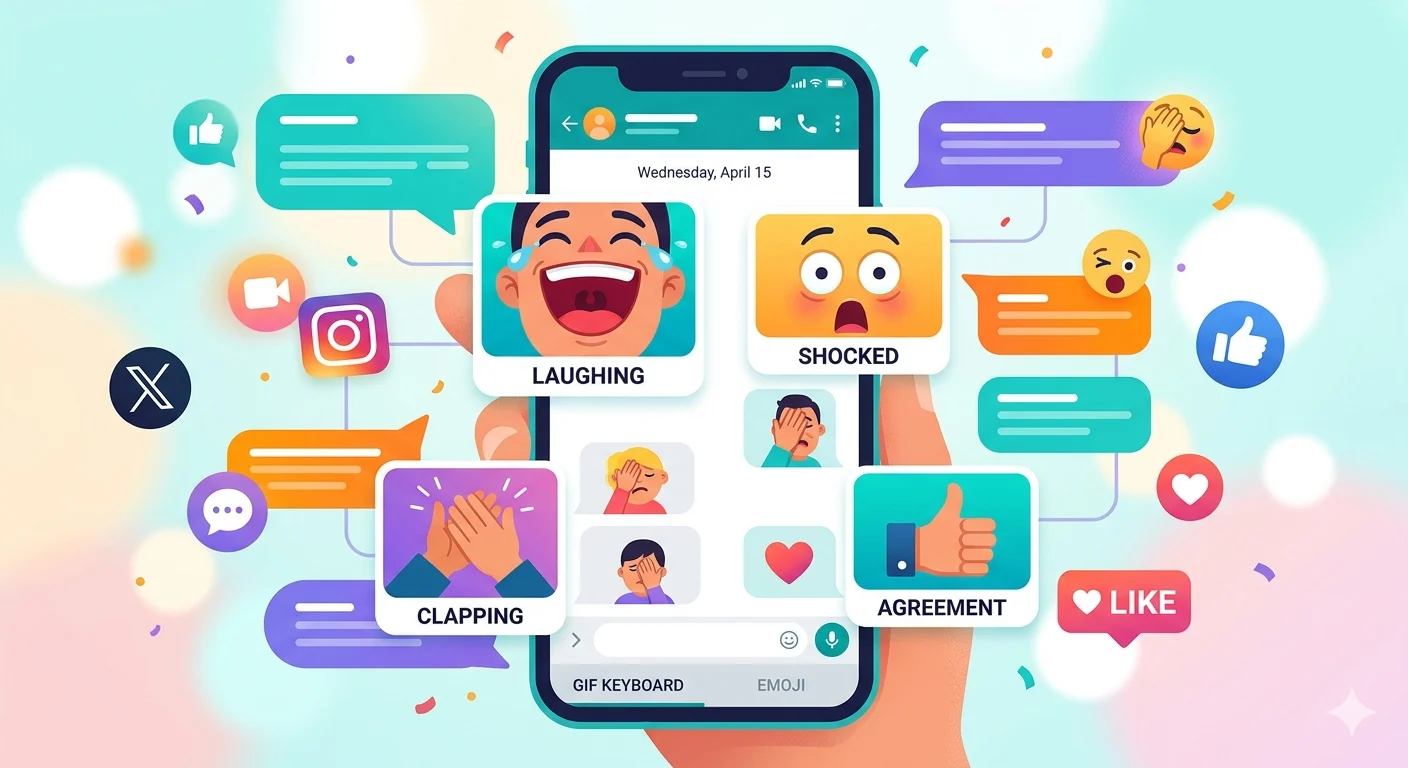
In texting and social media, GIFs are used as a form of visual communication. Instead of writing “That’s funny,” someone might send a laughing GIF. Instead of saying “I’m shocked,” they might send a surprised reaction GIF.
This makes conversations faster and more expressive. A single GIF can show emotion, tone, and humor all at once.
On platforms like WhatsApp and Messenger, people often search for GIFs using keywords like “happy,” “angry,” or “wow.” On Twitter and Reddit, GIFs are commonly used in replies to react to posts.
Among younger users and Gen Z, GIFs are part of meme culture. They are used creatively to add humor, sarcasm, or dramatic reactions. Sometimes, a well-chosen GIF can say more than a full sentence.
Other meanings of GIF
The main and widely accepted meaning of GIF is Graphics Interchange Format. There are no widely used alternate meanings in slang or texting.
However, people sometimes use “GIF” informally to refer to the animated image itself, not just the file format. For example, someone might say, “Send me a GIF,” meaning they want a funny or expressive animation.
How GIF is used in real conversations
GIFs are used in many everyday digital conversations. In personal chats, they are often used to react quickly without typing. For example, if a friend shares good news, you might send a celebration GIF.
On social media, GIFs are used to reply to posts, comment on content, or join trending conversations. They help users express opinions in a fun and engaging way.
In online communities, GIFs are part of humor and storytelling. People use them to make their messages more entertaining.
However, in professional settings like emails or formal communication, GIFs are usually avoided because they may seem too casual.
Examples
Here are some natural examples of how GIFs are used in conversations:
- “I can’t stop laughing 😂” → sends a laughing GIF
- “That was shocking!” → sends a surprised reaction GIF
- “Monday again…” → sends a tired or annoyed GIF
- “You did amazing!” → sends a clapping or cheering GIF
- “I don’t believe you” → sends a funny disbelief GIF
- “That’s so cute” → sends a happy smiling GIF
- “I’m done with this” → sends a dramatic exit GIF
Tone and intent
GIFs are all about tone and emotion. They help add feeling to a message that plain text might not show.
The tone can be positive, like happiness or excitement, or negative, like frustration or sarcasm. It depends on the GIF chosen.
Many people use GIFs to be funny or dramatic. Others use them to soften a message or make it more friendly.
Because GIFs are visual, they can sometimes be misunderstood if the receiver interprets them differently. So choosing the right GIF is important.
Origin or background
GIF was created in 1987 by a company called CompuServe. At that time, it was designed as a way to display images efficiently on slow internet connections.
Later, developers discovered that GIFs could support animation by combining multiple frames. This made them more dynamic and engaging.
With the rise of the internet, social media, and smartphones, GIFs became extremely popular. Today, they are a key part of online culture and communication, especially in memes and reactions.
Is it rude or inappropriate?
GIFs are generally not rude or inappropriate. They are widely used for fun, humor, and expression.
However, the content of a GIF matters. Some GIFs may include sarcasm, mockery, or sensitive topics, which could be seen as inappropriate in certain situations.
Always consider the context and the person you are communicating with before sending a GIF.
When NOT to use it
There are times when using a GIF is not appropriate. In formal communication, such as job emails, business meetings, or official messages, GIFs can look unprofessional.
You should also avoid using GIFs in serious conversations, such as discussing problems or sensitive issues. In these cases, clear and respectful text is better.
Another situation to avoid is when the other person may not understand the GIF. This can lead to confusion instead of clarity.
Similar and related slang terms
There are several similar tools used in digital communication. Memes are images or videos with text that convey humor or ideas. Emojis are small icons used to show emotions. Stickers are larger, more detailed images often used in messaging apps.
All of these serve a similar purpose: making communication more expressive and engaging.
GIF vs related terms
GIFs are different from other visual tools. A GIF is animated and loops continuously. A meme usually includes text and a specific joke or message. Emojis are simple icons, while stickers are more like illustrations.
Each one has its own role in communication, but GIFs stand out because they combine motion and emotion.
Comparison Table (MANDATORY)
| Term | Meaning | Usage | Key Difference |
|---|---|---|---|
| GIF | Animated image loop | Texting, social media | Moving image without sound |
| Meme | Image/video with text | Humor, trends | Focuses on jokes or ideas |
| Emoji | Small digital icon | Quick emotional expression | Simple and static |
| Sticker | Illustrated image | Messaging apps | More detailed than emojis |
| Video | Full motion content | Entertainment, info | Longer and includes sound |
Common misunderstandings
One common misunderstanding is about pronunciation. Some people say “GIF” with a hard G, while others say it like “JIF.” Both are used, but the creator prefers the soft G pronunciation.
Another confusion is thinking GIFs are the same as memes. While they are related, GIFs are just animated images, while memes usually include text and a specific message.
Some people also overuse GIFs, which can make conversations feel cluttered or unclear.
FAQ Section
1. What does GIF stand for?
It stands for Graphics Interchange Format.
2. What is a GIF in simple words?
It is a short, looping animated image used to express reactions or emotions.
3. How is GIF used in texting?
People use GIFs to reply with emotions instead of typing messages.
4. Is GIF the same as a meme?
No, a GIF is an animated image, while a meme usually includes text and a joke.
5. How do you pronounce GIF?
It can be pronounced as “GIF” or “JIF,” but the creator prefers “JIF.”
6. Are GIFs safe to use?
Yes, as long as the content is appropriate for the situation.
7. Can I use GIFs in professional emails?
No, it’s better to avoid them in formal communication.
8. Why are GIFs so popular?
Because they are quick, fun, and expressive ways to communicate online.
conclusion
GIFs are a powerful and simple way to communicate online. They combine movement, emotion, and humor in a short loop, making conversations more engaging.
While the full form is Graphics Interchange Format, most people use GIFs as reaction tools in texting and social media. The key to using them correctly is understanding the context.
Use GIFs in casual conversations to add personality and fun. Avoid them in formal or serious situations. Once you understand how they work, GIFs become an easy and effective way to express yourself without words.