
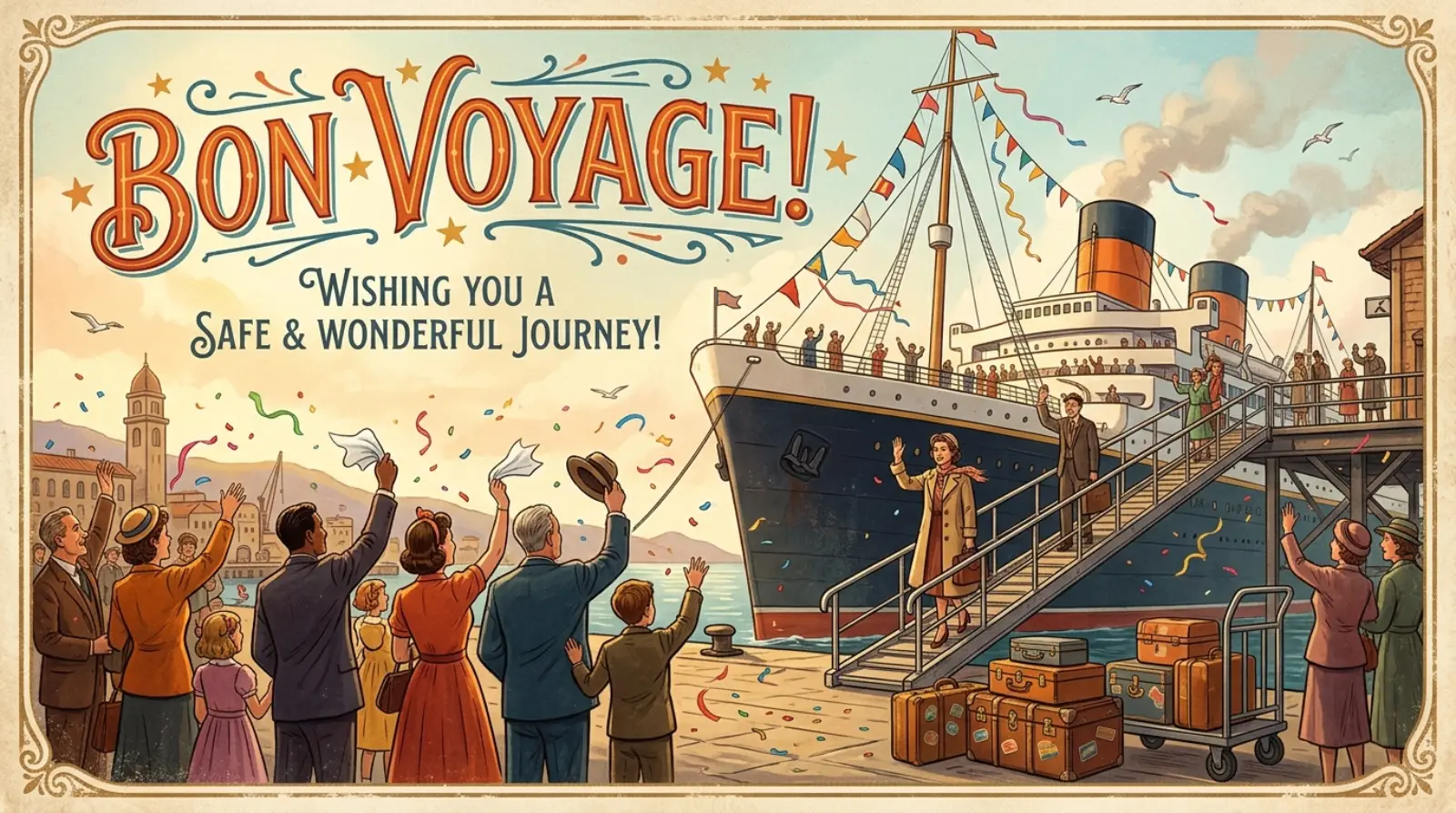
Updated: October 18, 2026
Have you ever heard someone say “bon voyage” before a friend leaves for a trip? This popular French expression means “have a good trip” or “have a safe and enjoyable journey.” It is commonly used when someone is going on vacation, traveling abroad, or starting a new adventure.
Although the phrase comes from French, it is widely recognized in the United States and appears in everyday conversations, farewell cards, and social media posts. In this guide, you will learn what bon voyage means in English, how to pronounce it, and how to use it naturally in different situations.
Quick Answer:
Bon voyage is a French expression that means “have a good trip” or “have a safe and enjoyable journey.” People say it when someone is about to travel, often as a friendly way to say goodbye and wish them well. <Cite refs={[“turn775692search8″,”turn775692search2”]}/>
- Meaning: Have a good trip.
- Full phrase: Bon voyage.
- Origin: French.
- Pronunciation: Roughly bon voy-AHZH in English.
- Context: Travel, farewells, vacations, and social media messages.
- Tone: Friendly, warm, and sometimes elegant.
Example: “Have a wonderful vacation in Italy. Bon voyage!”
What Does Bon Voyage Mean in Plain English?
Have you heard someone say “bon voyage” when a friend is leaving for a vacation or a family member is traveling abroad? This familiar French expression is used to wish someone a pleasant journey. In everyday American English, it carries the same basic meaning as “have a good trip” or “travel safely.”
You can use bon voyage when someone is leaving for a vacation, business trip, cruise, study-abroad program, or another journey. It is a friendly expression that combines a farewell with good wishes for the traveler.
For example, if your friend is flying to New York for a week, you could say, “Bon voyage! I hope you have an amazing time.”
The phrase is not limited to international travel. You can use it for a short road trip or a long journey, too.
What Language Is Bon Voyage?
Bon voyage comes from French. The word bon means “good,” while voyage means “journey” or “trip.” Together, the words literally mean “good journey.” <Cite refs={[“turn775692search3″,”turn775692search4”]}/>
Although the expression is French, it is also used in English. Many English speakers recognize it from travel conversations, farewell messages, movies, books, and greeting cards.
You do not need to speak French to use the phrase. In English, it works as a standalone expression when wishing someone well before a trip.
How Do You Pronounce Bon Voyage?
In American English, bon voyage is commonly pronounced approximately “bahn voy-AHZH” or “bohn voy-AHZH.” The final syllable sounds similar to the ending of the word mirage. Pronunciation can vary between English and French speakers. <Cite refs={[“turn775692search6″,”turn775692search8”]}/>
Here is a simple breakdown:
| Word | Pronunciation Guide |
|---|---|
| Bon | Bahn or bohn |
| Voyage | Voy-AHZH |
| Bon voyage | Bahn voy-AHZH |
The French pronunciation differs somewhat from the English version, especially in the vowel sounds. The guide above is intended to help English speakers say the expression comfortably.
When Should You Say Bon Voyage?
You can say bon voyage whenever someone is about to begin a journey and you want to wish them well.
Common situations include:
- Before a vacation: Wish a friend a relaxing and enjoyable holiday.
- Before a business trip: Send a colleague off with friendly good wishes.
- Before a flight: Tell a family member to have a safe and pleasant journey.
- Before a cruise: Use it when someone is leaving for a cruise vacation.
- Before studying abroad: Wish a student well as they travel to another country.
- In a farewell card: Add the phrase to a travel-themed greeting card.
- On social media: Write it in a comment or caption for someone sharing travel plans.
Bon voyage can sound polished, but it is not restricted to formal occasions. It is perfectly natural in a friendly conversation.
Bon Voyage Examples in Sentences
Here are seven examples that show how to use bon voyage naturally in everyday English.
1. Before a vacation
“Bon voyage! Enjoy every minute of your trip to Hawaii.”
Meaning: The speaker wishes the traveler a wonderful vacation.
2. Before a business trip
“You have a busy week ahead in Chicago. Bon voyage, and good luck with your meetings!”
Meaning: The speaker wishes the traveler a good journey and success.
3. Before an international flight
“Text me when you land. Bon voyage!”
Meaning: The speaker wishes the person a pleasant trip.
4. For a family member
“Bon voyage, Grandma! We cannot wait to hear about your cruise.”
Meaning: The family wishes Grandma well as she begins her trip.
5. For a friend studying abroad
“Your semester in France sounds exciting. Bon voyage and enjoy the experience!”
Meaning: The speaker wishes the student a positive journey and experience.
6. In a farewell card
“Wishing you new adventures and wonderful memories. Bon voyage!”
Meaning: The message expresses good wishes for the person’s upcoming travels.
7. In a social media comment
“Your European adventure starts today. Bon voyage!”
Meaning: The commenter wishes the traveler a good trip.
Bon Voyage Meaning in Text and Social Media
In text messages and social media posts, bon voyage usually means “have a good trip” or “travel safely.” People use it when a friend announces a vacation, shares a boarding pass photo, or posts about an upcoming journey.
For example:
Friend 1: “Flying to London tomorrow morning!”
Friend 2: “Bon voyage! Have the best time.”
In this conversation, the second friend is wishing the traveler an enjoyable journey.
On Instagram, Facebook, and other platforms, bon voyage may also appear in travel captions, farewell posts, and pictures from airports or cruise ships. It is not generally an abbreviation or internet slang term. Its meaning remains connected to travel and good wishes.
Bon Voyage vs. Have a Good Trip
Bon voyage and “have a good trip” have essentially the same meaning. The difference is mainly in language and style.
| Feature | Bon Voyage | Have a Good Trip |
|---|---|---|
| Origin | French | English |
| Meaning | Have a pleasant journey | Have a pleasant journey |
| Tone | Sometimes elegant or playful | Direct and conversational |
| Common use | Farewells, cards, travel posts | Everyday conversation |
| Formality | Suitable for casual or formal settings | Suitable for casual or formal settings |
Both expressions are correct. Choose bon voyage if you like the French phrase, or say “have a good trip” if you prefer straightforward English.
Is Bon Voyage Formal or Informal?
Bon voyage works in both formal and informal settings. You can say it to a friend going on vacation, write it in a colleague’s farewell card, or use it when saying goodbye to a family member.
Its tone is usually warm and positive. It may sound slightly more stylish than “have a good trip,” but it is not necessarily formal or old-fashioned.
You can make it more personal by adding a short message, such as “Bon voyage! I hope you have a safe flight and a fantastic vacation.”
Frequently Asked Questions
What does bon voyage mean in English?
Bon voyage means “have a good trip” or “have a safe and enjoyable journey.” It is a French expression used to wish someone well before traveling.
Is bon voyage French?
Yes. Bon voyage is a French phrase. It literally means “good journey” and is also commonly used in English. <Cite refs={[“turn775692search3″,”turn775692search4”]}/>
How do you pronounce bon voyage?
In American English, a rough pronunciation is “bahn voy-AHZH.” The last syllable sounds similar to the ending of mirage.
When should you say bon voyage?
Say bon voyage when someone is about to travel. It is appropriate before vacations, flights, road trips, cruises, business trips, and other journeys.
What does bon voyage mean in a text message?
In a text message, bon voyage means “have a good trip” or “travel safely.” It is often used to respond to someone’s travel plans.
Is bon voyage formal or informal?
It can be used in both formal and informal situations. You can say it to friends and relatives or include it in a professional farewell message.
What is another way to say bon voyage?
You can say “have a good trip,” “safe travels,” “have a wonderful journey,” or “enjoy your vacation.” These phrases communicate similar good wishes.
Is bon voyage only used for international travel?
No. You can use bon voyage for both domestic and international journeys, whether someone is taking a short road trip or traveling across the world.
Conclusion
Bon voyage is a French expression meaning “have a good trip” or “have a safe and enjoyable journey.” It is commonly used when someone is about to travel and serves as a friendly way to say goodbye while wishing them well.
Whether a friend is going on vacation, a colleague is traveling for work, or a family member is heading abroad, bon voyage is a simple and thoughtful expression. Use it in conversation, greeting cards, and social media messages to wish travelers a pleasant journey.