
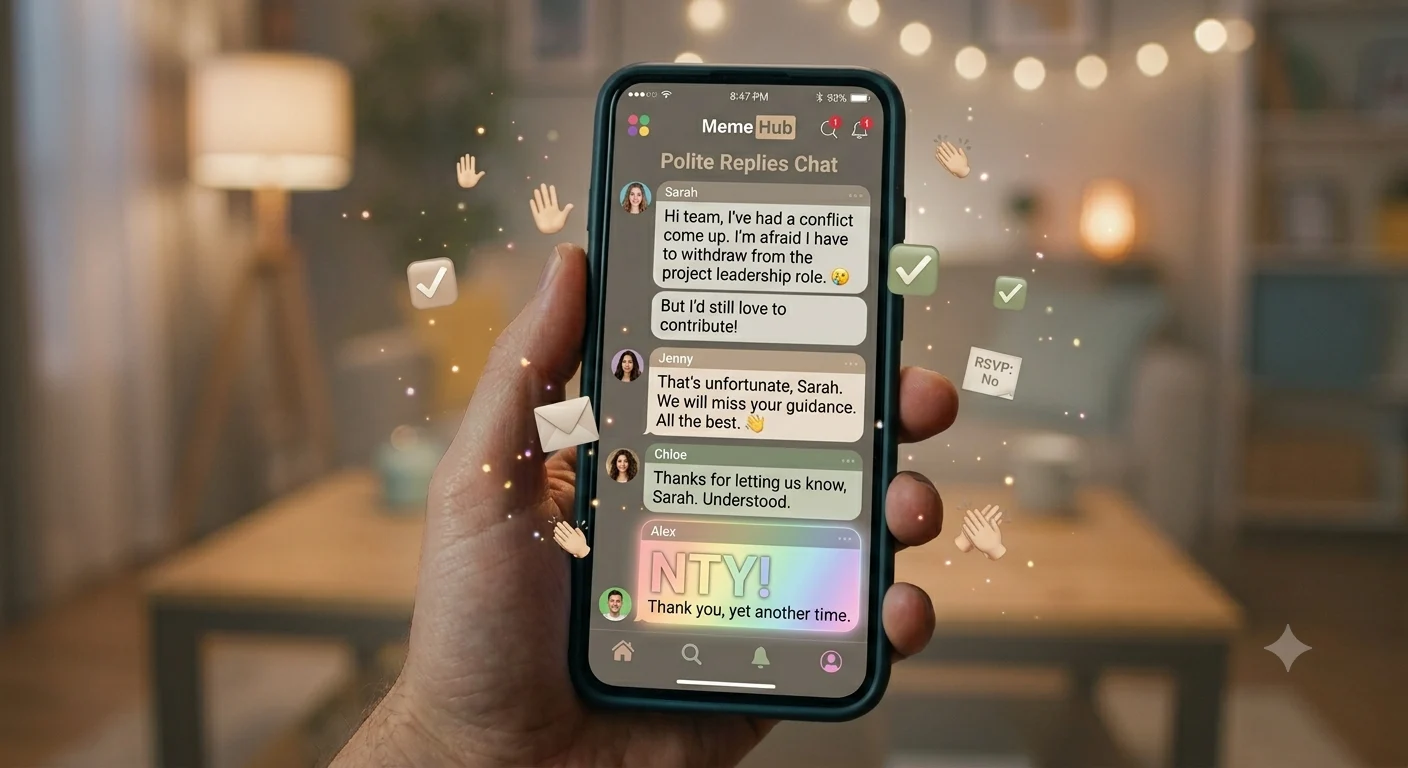
Meaning: NTY is a common internet abbreviation used to politely decline something.
Full Form: No Thank You
Context: Text messages, social media, online chats, gaming communities, and casual conversations.
Tone: Polite, respectful, direct, and usually neutral.
If you’ve seen the abbreviation NTY in a text message, social media comment, online marketplace, gaming chat, or direct message, you may be wondering what it means. As digital communication becomes faster, people often shorten common phrases into abbreviations that save time while keeping conversations clear.
NTY is one of the simplest and most widely understood shorthand expressions used online. In most situations, it stands for “No Thank You.” People use it when they want to politely reject an offer, decline an invitation, refuse a suggestion, or indicate that they are not interested in something.
Because the abbreviation is short and straightforward, it appears frequently across platforms such as TikTok, Instagram, Snapchat, Facebook, Discord, and messaging apps. While its meaning is generally easy to understand once explained, some people may not recognize it immediately.
This guide covers the NTY meaning, how it is used in texting and social media, examples, alternative meanings, tone, comparisons, and common misunderstandings.
What Does NTY Mean?
NTY most commonly stands for “No Thank You.”
It is a shortened version of a polite phrase people use when declining something. Instead of typing the full expression, users simply write NTY.
For example:
“Do you want to join our game tonight?”
“NTY.”
In this conversation, the person is politely refusing the invitation.
The abbreviation allows someone to decline without sounding overly harsh or rude.
Depending on the situation, NTY can mean:
- No thank you.
- I’m not interested.
- I’ll pass.
- Not right now.
- I appreciate the offer, but no.
The exact meaning depends on the context of the conversation.
What Does NTY Mean in Texting, Slang, and Social Media?
In texting, NTY is commonly used when someone wants to reject an offer quickly and politely.
For example:
“Want some pizza?”
“NTY, I already ate.”
Instead of typing a complete sentence, the abbreviation delivers the message efficiently.
On social media, NTY often appears in comments, replies, and direct messages.
Examples include:
“Would you buy this product?”
“NTY.”
“Who wants spoilers?”
“NTY please.”
Many users also use NTY in online marketplaces when declining trade offers or purchase proposals.
On platforms such as TikTok, Instagram, Snapchat, Facebook, Discord, and X, the abbreviation helps users communicate a respectful refusal without creating unnecessary conflict.
Among younger internet users, NTY has become a common part of digital shorthand.
Other Meanings of NTY
Although “No Thank You” is the primary meaning in online conversations, NTY can occasionally have different meanings depending on the industry or community using it.
Some less common interpretations include:
- Organization-specific abbreviations
- Internal project codes
- Business-related shorthand
- Community-specific terminology
However, these meanings are relatively rare.
If you encounter NTY in texting, social media, gaming, or casual online conversations, it almost always means “No Thank You.”
This is why context remains important when interpreting abbreviations.
How NTY Is Used in Real Conversations
NTY appears in many everyday situations.
People use it whenever they want to decline something politely.
Common situations include:
- Rejecting invitations
- Declining offers
- Refusing suggestions
- Turning down requests
- Rejecting trades in games
- Declining product offers
For example:
“Want to watch another movie?”
“NTY, I’m tired.”
Another example:
“Trade your sword for mine?”
“NTY.”
The abbreviation is especially useful because it keeps conversations friendly while still communicating a clear refusal.
Popular places where NTY appears include:
- Text messages
- Messenger
- Snapchat
- Discord
- TikTok comments
- Gaming chats
Examples of NTY in Sentences
Here are some natural examples of NTY in everyday conversations:
- Do you want dessert? NTY, I’m full.
- Would you like to join the meeting? NTY, I have other plans.
- Interested in trading items? NTY.
- Want another cup of coffee? NTY.
- Would you buy this product? NTY, it’s not for me.
- Can I sign you up for updates? NTY.
- Do you want to stay longer? NTY, I need to leave.
- Would you like help with that? NTY, I’ve got it covered.
These examples show how NTY works as a polite refusal rather than a rude rejection.
Tone and Intent
The tone of NTY is usually respectful and neutral.
Unlike blunt responses such as “No” or “Nope,” NTY includes an element of politeness because it comes from the phrase “No Thank You.”
People often use it to avoid sounding harsh.
Common tones associated with NTY include:
- Polite
- Respectful
- Neutral
- Direct
- Friendly
Positive, Negative, or Neutral?
NTY is generally neutral.
It is neither particularly positive nor negative.
However, because it contains a form of gratitude, it often feels more polite than a simple refusal.
Sarcastic vs Serious Usage
Most of the time, NTY is used sincerely.
However, tone can change depending on the conversation.
For example:
“Want to repeat that terrible experience?”
“NTY.”
In this situation, the abbreviation may carry a humorous or sarcastic tone.
The surrounding context usually makes the intended meaning clear.
Origin and Background of NTY
NTY emerged from internet shorthand culture.
As texting became more popular, users began shortening frequently used phrases to save time and typing effort.
Popular abbreviations include:
- LOL (Laughing Out Loud)
- BRB (Be Right Back)
- IDK (I Don’t Know)
- IMO (In My Opinion)
- NTY (No Thank You)
The phrase “No Thank You” has existed in spoken language for centuries as a polite way to decline offers.
When digital communication became more common, users shortened it to NTY.
The abbreviation spread through:
- SMS texting
- Chat rooms
- Forums
- Social media platforms
- Gaming communities
Today, it remains one of the simplest and most recognizable refusal abbreviations online.
Is NTY Rude or Inappropriate?
NTY is generally not rude.
In fact, it is usually considered more polite than simply saying “No.”
Because it includes an implied expression of gratitude, it softens the refusal.
Most people view NTY as:
- Respectful
- Friendly
- Appropriate
- Non-offensive
- Casual
However, tone can sometimes be misinterpreted in text communication.
A one-word response may feel abrupt depending on the relationship between the people involved.
Adding context can make it sound warmer:
“NTY, but thanks for asking.”
This often feels friendlier than using NTY by itself.
When NOT to Use NTY
Although NTY works well in casual communication, it is not appropriate everywhere.
Avoid using NTY in:
- Professional emails
- Business reports
- Academic papers
- Formal letters
- Official documents
- Workplace presentations
For example:
“We reviewed the proposal. NTY.”
This could sound overly casual and unprofessional.
Instead, formal communication should use complete sentences such as:
“Thank you for the proposal, but we will not proceed at this time.”
NTY should also be avoided when communicating with people unfamiliar with internet abbreviations.
Similar and Related Slang Terms
Several slang expressions serve a similar purpose.
No Thanks
This is the full version of NTY.
It carries the same meaning.
Nah
Nah is an informal refusal.
It often sounds more casual than NTY.
Pass
Pass indicates a lack of interest.
It is commonly used online.
I’m Good
This phrase politely declines an offer while suggesting satisfaction with the current situation.
Nope
Nope is a casual version of “No.”
It may sound less polite than NTY.
NTY vs Related Terms
NTY vs No Thanks
The meaning is identical.
NTY is simply the abbreviated version.
IT vs Nah
NTY usually sounds more polite.
Nah is more casual and conversational.
NTY vs I’m Good
“I’m Good” often explains the refusal indirectly.
NTY provides a more direct response.
Comparison Table
| Term | Meaning | Usage | Key Difference |
|---|---|---|---|
| NTY | No Thank You | Polite refusal | Includes implied gratitude |
| No Thanks | Polite refusal | Everyday conversation | Full phrase |
| Nah | No | Casual conversations | Less formal |
| Pass | Not interested | Informal online chats | Focuses on disinterest |
| I’m Good | Declining politely | Friendly conversations | More conversational |
| Nope | No | Casual responses | Can sound more abrupt |
Common Misunderstandings
One common misunderstanding is believing NTY is rude because it is short.
In reality, the abbreviation comes from a polite phrase and is generally intended respectfully.
Another misunderstanding occurs when people assume NTY means disapproval.
Most of the time, it simply means the person is declining an offer rather than criticizing it.
Some users may also confuse NTY with less common abbreviations that share similar letters.
Looking at the surrounding conversation usually reveals the correct meaning.
Frequently Asked Questions
What does NTY stand for?
NTY stands for “No Thank You.”
What does NTY mean in texting?
It means the sender is politely declining an offer, invitation, or suggestion.
Is NTY rude?
No. It is generally considered polite and respectful.
Is NTY the same as saying no thanks?
Yes. NTY is simply the abbreviated version of “No Thanks” or “No Thank You.”
Is NTY popular on social media?
Yes. It appears frequently in comments, chats, and direct messages.
Can NTY have different meanings?
Occasionally, but in internet slang it almost always means “No Thank You.”
Can I use NTY at work?
It is better to use complete phrases in professional communication.
When should I use NTY?
Use NTY when you want to politely refuse something in casual conversations.
conclusion
NTY is a popular internet abbreviation that stands for “No Thank You.” It is commonly used in texting, social media, gaming communities, and online conversations when someone wants to decline an offer politely and efficiently.
Unlike blunt refusals, NTY adds a layer of courtesy that helps maintain a friendly tone. Whether you are turning down an invitation, refusing a trade, rejecting a suggestion, or passing on an offer, the abbreviation provides a quick and respectful response.
While NTY is perfect for casual digital communication, it is best avoided in formal or professional settings where complete sentences are preferred. Understanding the context ensures that you interpret and use NTY correctly whenever you encounter it online.