
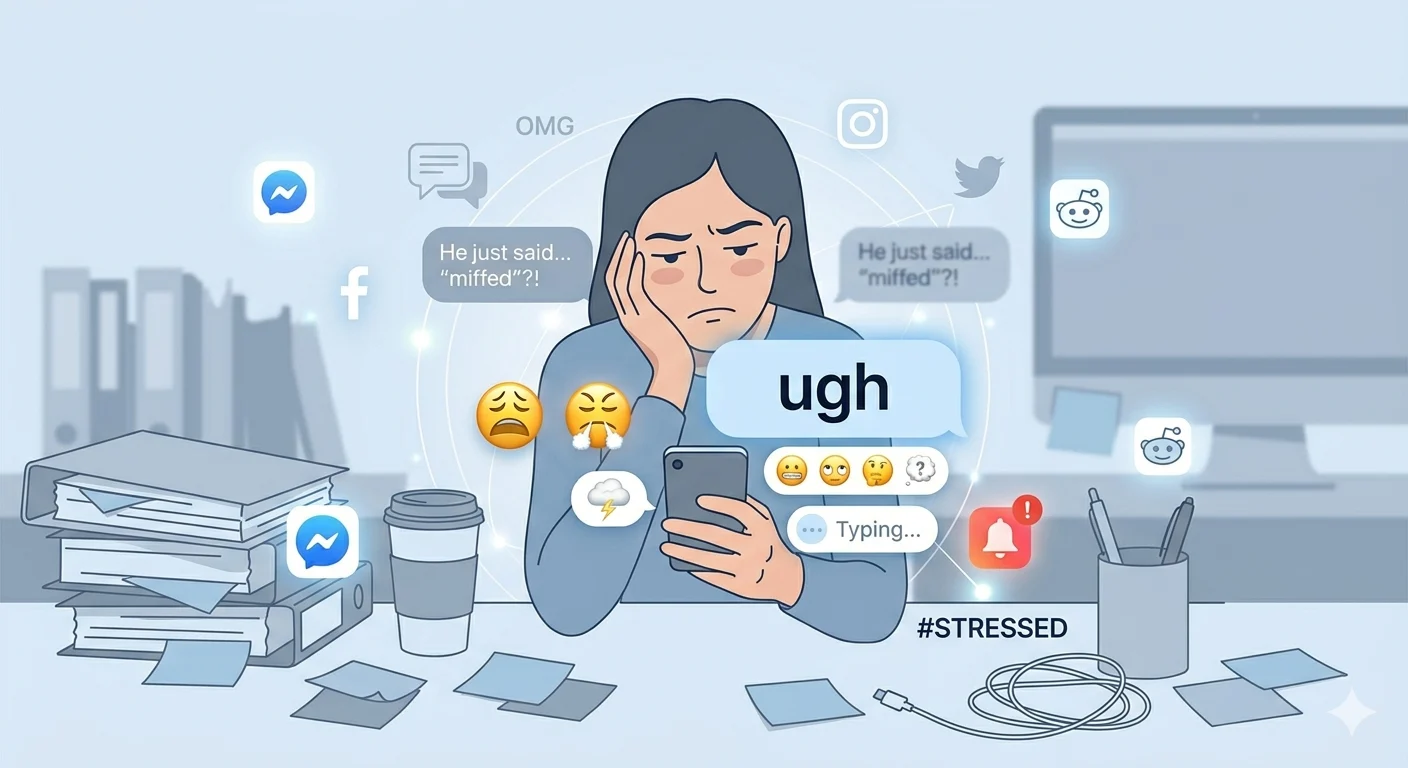
Meaning: An expression of frustration, annoyance, disappointment, disgust, or exhaustion
Full Form: Not an acronym; “ugh” is a natural sound/exclamation
Context: Texting, social media, casual speech, comments, and emotional reactions online
Tone: Negative to neutral, depending on situation (frustration, tiredness, or mild disgust)
If you’ve ever seen someone type “ugh” in a text message, comment, or social media post, you may have wondered about the ugh meaning. Unlike most words or abbreviations, “ugh” is an emotional expression rather than a conventional term. It is commonly used to communicate a reaction that might be difficult to express in a full sentence.
In everyday digital communication, ugh usually expresses frustration, annoyance, tiredness, disappointment, boredom, or mild disgust. The exact meaning depends on the situation and the tone of the conversation. For example, someone might text “ugh, I’m so tired” after a long day, while “ugh, not again!” can show irritation about something that went wrong.
People also search for terms such as ugh meaning in chat, ugh slang meaning, ugh meaning in Instagram, and ugh meaning slang because the expression can have slightly different meanings depending on how it is used. It is especially common in casual conversations, texting, comments, memes, and social media.
A common question is whether ugh has a full form. In standard English, “ugh” does not have an official full form. It is generally considered an interjection or vocal expression that represents an emotional reaction. Therefore, searches such as ugh full form, ugh full form in chat, full form of ugh in chat, and ugh full form in Instagram generally refer to the same expression rather than a formal abbreviation.
The meaning can also change with context. For instance, “ugh yes” may express strong agreement or an enthusiastic reaction, while “ugh” from a girl to a guy could indicate annoyance, embarrassment, exhaustion, playful frustration, or another emotion depending on the conversation.
In this guide, we’ll explain what “ugh” means in texting and social media, whether it has a full form, how its meaning changes by context, and provide clear examples so you can understand exactly what someone means when they type “ugh.”
What Does Ugh Mean?
The word ugh is an informal exclamation used to express a strong feeling of discomfort or irritation. It is not a proper word with a dictionary-style definition like nouns or verbs. Instead, it represents a sound people make when reacting emotionally.
Core Definition
Ugh is used when someone feels:
- Annoyed or frustrated
- Tired or overwhelmed
- Disgusted by something
- Disappointed by a situation
It is often written exactly as “ugh,” but people may also extend it as “ughh” or “ughhh” to show stronger emotion.
Simple Explanation
In simple terms, ugh means “I am not happy about this situation.”
For example:
- “Ugh, I have so much homework.”
- “Ugh, why is this happening again?”
It is a quick emotional reaction rather than a full sentence.
What Does Ugh Mean in Texting, Slang, and Social Media?
In texting and online conversations, ugh is used to instantly show emotion without needing explanation.
Chat Meaning
In messages between friends or family, “ugh” usually shows frustration or disappointment.
Examples:
- “Ugh, I missed the bus.”
- “Ugh, I forgot my phone at home.”
It helps the speaker express emotion quickly.
Social Media Usage
On social media, “ugh” is often used in captions or comments when reacting to life situations.
Examples:
- “Ugh Monday again 😩”
- “Ugh this weather is killing me”
It is commonly paired with emojis to strengthen emotional expression.
Gen Z Context
Among younger users, “ugh” is often used in a dramatic or humorous way. It is sometimes exaggerated for effect, especially with multiple letters or emojis.
For example:
- “Ughhhhh I can’t even 😭”
- “Ugh life right now…”
It can be both serious and playful depending on context.
Other Meanings of Ugh
While “ugh” does not have multiple dictionary meanings, it can express different emotions based on situation.
Expression of Frustration
Used when something is annoying or not going well.
- “Ugh, traffic is so bad.”
Expression of Disappointment
Used when expectations are not met.
- “Ugh, I thought it would be better.”
Expression of Disgust
Used when something feels unpleasant.
- “Ugh, that smell is terrible.”
Expression of Exhaustion
Used when someone is tired or overwhelmed.
- “Ugh, I need sleep.”
How Ugh Is Used in Real Conversations
Personal Conversations
People use it when talking about daily struggles.
- “Ugh, I had a rough day.”
Text Messages
It is very common in private chats.
- “Ugh, I lost my keys again.”
Social Media Posts
Used for emotional or relatable content.
- “Ugh, adulting is hard.”
School or Work Situations
Students and workers use it informally.
- “Ugh, another assignment due tomorrow.”
Examples (5–8 Natural Examples)
- “Ugh, I woke up late again.”
- “Ugh, why is everything going wrong today?”
- “Ugh, I don’t feel like doing anything.”
- “Ugh, this homework is too much.”
- “Ugh, I missed the best part of the movie.”
- “Ugh, Monday mornings are the worst.”
- “Ugh, I can’t deal with this traffic.”
- “Ughhh, I need a break 😩”
Tone and Intent
Frustrated Tone
Most common use, showing irritation or stress.
Disappointed Tone
Used when something does not go as planned.
Humorous Tone
Often used jokingly among friends.
- “Ugh, I have to be responsible now 😂”
Dramatic Tone
Used for exaggeration online for effect.
Origin or Background
The word ugh comes from natural human vocal expressions. People have used similar sounds for centuries to show frustration or disgust.
It became widely recognized in written form through:
- Books and literature
- Comic strips
- Early internet chats
- Text messaging culture
With the rise of social media, “ugh” became even more popular because it is fast, expressive, and relatable in everyday digital communication.
Is It Rude or Inappropriate?
No, ugh is not considered rude in most situations.
However:
- It can sound negative depending on tone
- It may seem dismissive in serious conversations
In general, it is safe for casual communication but not ideal for formal settings.
When NOT to Use It
Professional Emails
Avoid using “ugh” in workplace communication.
Academic Writing
Not suitable for formal assignments or essays.
Serious Conversations
It may appear insensitive if someone expects a thoughtful response.
Similar and Related Slang Terms
Common Related Terms
- Meh (indifference)
- Oof (sympathy or reaction)
- Ew (disgust)
- Yikes (awkward situation)
- Sigh (frustration or sadness)
- Ughh (stronger emotion)
Ugh vs Related Terms
Ugh vs Meh
it shows frustration, while meh shows boredom or indifference.
IT vs Ew
Ugh can be broad; ew specifically shows disgust.
IT vs Oof
Oof is more about sympathy or impact, while ugh is personal frustration.
IT vs Sigh
“Sigh” is a physical reaction, while “ugh” is written emotional expression.
Comparison Table
| Term | Meaning | Usage | Key Difference |
|---|---|---|---|
| Ugh | Frustration or annoyance | Texts, social media | General emotional reaction |
| Meh | Indifference | Casual replies | Lack of interest |
| Ew | Disgust | Reactions | Stronger disgust |
| Oof | Sympathy or impact | Internet slang | Reaction to situations |
| Yikes | Awkward or bad situation | Online comments | Shock or concern |
| Sigh | Emotional exhaustion | Written or spoken | Physical expression |
Common Misunderstandings
Thinking It Has One Fixed Meaning
Ugh can express multiple emotions depending on context.
Assuming It Is a Word
It is actually an expressive sound.
Misreading Tone Online
Without emojis or context, it can be misunderstood.
FAQ Section
What does ugh mean in texting?
It expresses frustration, annoyance, or disappointment.
What does ugh mean on social media?
It shows emotional reactions to life or situations.
Is ugh rude?
No, it is usually casual and harmless.
Is ugh an acronym?
No, it is not an abbreviation.
Why do people write “ughh”?
To show stronger emotion or emphasis.
What emotion does ugh express?
Frustration, disgust, or tiredness.
Can ugh be funny?
Yes, it is often used jokingly online.
Is ugh negative?
Usually yes, but sometimes playful.
How do you use ugh in a sentence?
“Ugh, I’m so tired today.”
Is ugh still popular online?
Yes, it is widely used in texting and social media.
Conclusion
The ugh meaning is simple but powerful. It is an emotional expression used to show frustration, disappointment, disgust, or exhaustion in everyday communication. Common in texting and social media, it helps people quickly express how they feel without using full sentences. While it is informal and often negative, it can also be playful or humorous depending on context. Understanding “ugh” helps you better interpret emotional tone in digital conversations and respond appropriately in real-life communication.