
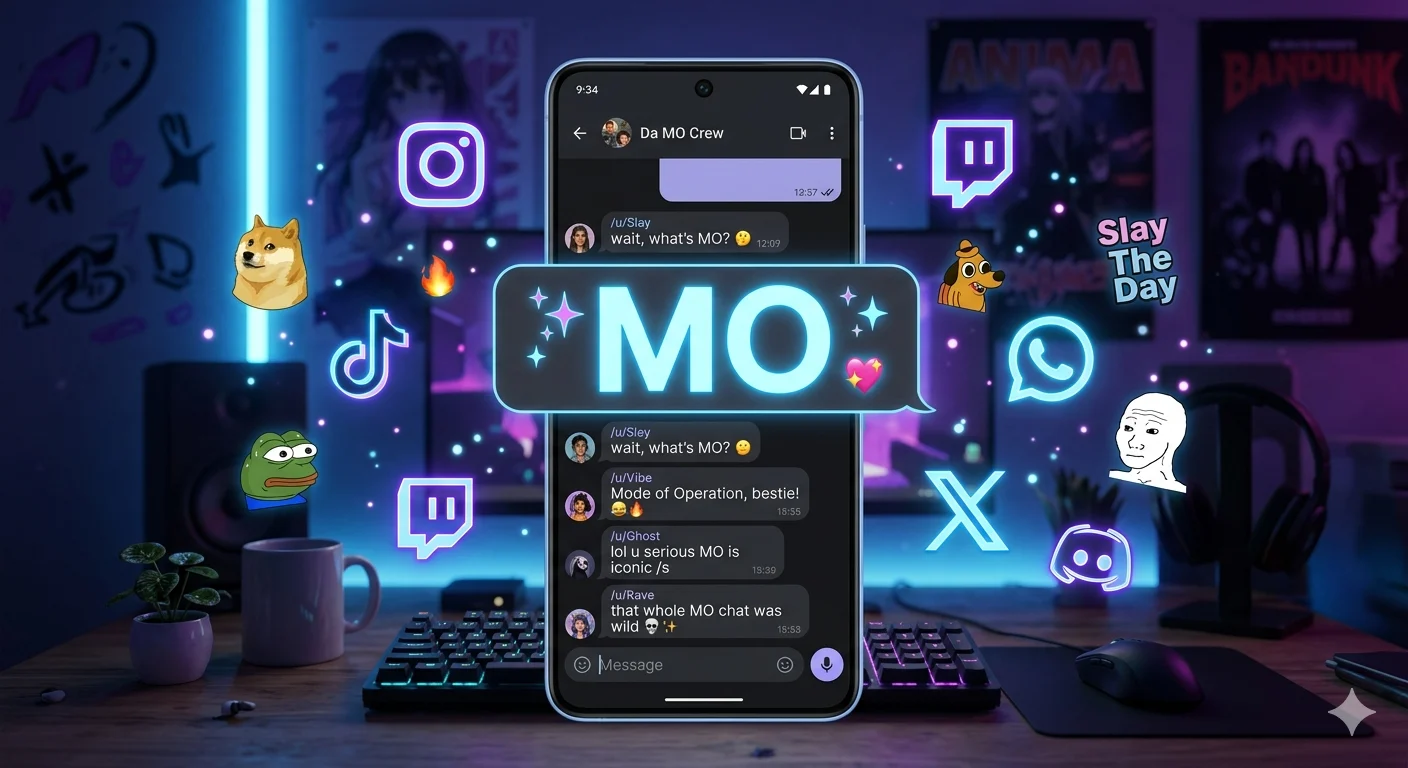
The “MO meaning in texting” can change depending on the conversation because “MO” is a short abbreviation with multiple meanings. In online slang, texting, and social media, people use MO in different ways, but the most common meaning is “modus operandi,” which refers to someone’s usual way of doing things or behaving.
In casual chats, some people also use “mo” as shorthand for words like “more” or as part of regional slang. Because the abbreviation is so short, context is extremely important when understanding what someone means.
You may see MO used in:
- Text messages
- Social media captions
- Crime documentaries
- Online discussions
- Gaming chats
- Meme culture
- Meaning: Usually “modus operandi”
- Full form: Modus Operandi
- Context: Texting, online slang, casual conversations
- Tone: Neutral, casual, informational
If you have seen someone type “MO” online, you may have wondered what it actually means. The “MO meaning in texting” can be confusing because the abbreviation has several different interpretations depending on the situation. Unlike longer slang terms with one clear definition, MO changes meaning based on context, platform, and conversation style.
In many cases, MO stands for “modus operandi,” a phrase used to describe a person’s usual habits, behavior, or way of doing things. For example, if someone always arrives late or constantly changes plans, a friend might jokingly call that their “MO.”
At the same time, MO can appear in social media slang, gaming chats, and casual texting as a shortened expression or nickname. Some users even mistake it for completely different abbreviations because it is only two letters long.
The term has become common in internet culture because short abbreviations make conversations faster and more casual. Understanding how MO is used online helps avoid confusion and makes digital communication easier to follow. In this article, we’ll explain the full meaning of MO, how it is used in texting and slang, examples, comparisons, alternate meanings, and common misunderstandings surrounding the term.
What does MO mean? (Core Definition)
The most common meaning of “MO” is “modus operandi.” This Latin phrase translates roughly to “method of operating” or “usual way of doing something.”
In simple terms, MO describes:
- A person’s habits
- Their typical behavior
- A repeated pattern of action
- Their normal style of doing things
For example:
- “Ignoring calls is basically his MO.”
- “That dramatic reaction is her usual MO.”
In these examples, MO refers to a consistent behavior pattern.
Outside internet slang, the term is also used professionally in:
- Criminal investigations
- Psychology
- Business discussions
- Behavioral analysis
However, online users usually use MO casually in conversations.
What does MO mean in texting / slang / social media?
In texting and social media, MO is often used casually to describe someone’s typical behavior. It can sound playful, sarcastic, or observational depending on the situation.
Examples include:
- “Staying up late is my MO.”
- “That’s his MO every weekend.”
- “Ghosting people is apparently her MO.”
On platforms like TikTok, Reddit, Instagram, and X (formerly Twitter), MO is commonly used in jokes, memes, and commentary posts where users describe habits or repeated behavior.
Some users also use “mo” informally as shorthand for “more” in very casual texting, though this is less common.
Gen Z users especially prefer short abbreviations because they make online conversations faster and more relaxed.
Other meanings of MO
Because MO is such a short abbreviation, it can have several meanings depending on context.
Common alternate meanings include:
- Modus operandi (most common)
- Missouri (US state abbreviation)
- More (casual shorthand)
- Moment (rare chat abbreviation)
- Medical office (professional abbreviation)
- Management operations (business usage)
Usually, the surrounding conversation makes the intended meaning clear.
For example:
- “I live in MO” → Missouri
- “That’s his MO” → Modus operandi
How MO is used in real conversations
People use MO naturally in many different types of conversations:
- Casual texting
- Online jokes
- Social media posts
- Crime discussions
- Workplace conversations
- Gaming chats
The term is especially useful when talking about repeated behavior.
Examples:
- “Complaining online is their MO.”
- “That aggressive playstyle is his MO in every game.”
- “Changing plans last minute is basically her MO.”
Because the abbreviation is short and flexible, it fits naturally into quick online conversations.
Examples of MO in sentences
Here are some natural examples showing the “MO meaning in texting”:
- “Being late is kind of his MO.”
- “That sarcastic humor is her MO online.”
- “My MO during exams is staying awake all night.”
- “Ghosting people seems to be their MO.”
- “That player’s MO is attacking aggressively.”
- “Posting memes every morning is basically his MO.”
- “Drama is always their MO on social media.”
- “That detective figured out the criminal’s MO quickly.”
These examples show both casual and professional-style usage.
Tone and intent of MO
The tone of MO depends completely on context because the abbreviation itself carries no emotional meaning.
Possible tones include:
- Neutral → describing habits
- Funny → playful observations
- Sarcastic → criticizing repeated behavior
- Informational → professional discussions
- Casual → everyday texting
For example:
- “Sleeping late is my MO 😂” → humorous
- “That scammer’s MO involved fake emails” → serious
The surrounding sentence determines the emotional tone.
Origin and background of MO
The abbreviation MO comes from the Latin phrase “modus operandi.” The phrase has existed for centuries and was originally used in formal and professional settings.
Over time, English speakers shortened it to “MO” for convenience. It became especially common in:
- Police investigations
- Crime documentaries
- Journalism
- Everyday speech
As internet culture evolved, users adopted MO in texting and online slang because short abbreviations are faster to type and easier to use casually.
Today, the phrase appears both in serious professional discussions and relaxed social media conversations.
Is MO rude or inappropriate?
No, MO is generally not rude or offensive. It is considered a neutral abbreviation in almost all situations.
However, the surrounding sentence may sound negative if someone uses MO to criticize behavior.
For example:
- “Lying is his MO.”
In this case, the criticism comes from the statement itself, not the abbreviation.
Overall, MO is safe for general conversation.
When NOT to use MO
Although MO is common online, there are situations where using the abbreviation may create confusion:
- Formal academic writing
- Professional reports without explanation
- Conversations with people unfamiliar with slang
- Situations requiring full clarity
In formal contexts, writing “modus operandi” instead of “MO” may sound clearer and more professional.
Similar and related slang terms
MO is often grouped with other short internet abbreviations used in texting and social media:
- IMO → In My Opinion
- TBH → To Be Honest
- FR → For Real
- IDK → I Don’t Know
- NGL → Not Gonna Lie
Unlike emotional slang abbreviations, MO usually describes habits or behavior patterns.
MO vs related terms
- MO vs IMO: MO describes behavior; IMO expresses opinions
- MO vs slang abbreviations: MO is more descriptive than emotional
- MO vs modus operandi: Same meaning, but one is abbreviated
- MO vs “more”: Context decides interpretation
These differences matter because MO can have multiple meanings in online conversations.
Comparison Table
| Term | Meaning | Usage | Key Difference |
|---|---|---|---|
| MO | Modus operandi | Behavior patterns | Describes habits |
| IMO | In My Opinion | Opinions online | Expresses viewpoint |
| TBH | To Be Honest | Honest statements | Adds sincerity |
| FR | For Real | Agreement/emphasis | Emotional reaction |
| IDK | I Don’t Know | Casual texting | Expresses uncertainty |
Common misunderstandings
Many people misunderstand the “MO meaning in texting” because the abbreviation is so short.
Common confusion includes:
- Assuming MO always means one thing
- Confusing it with Missouri
- Misreading it as “more”
- Not understanding the Latin origin
- Thinking it is only crime-related terminology
In reality, context almost always reveals the intended meaning.
FAQ Section
1. What does MO mean in texting?
Usually “modus operandi,” meaning someone’s usual behavior or habits.
2. What does MO stand for?
It commonly stands for “modus operandi.”
3. Is MO slang?
It can be used casually in slang and texting conversations.
4. Does MO mean modus operandi?
Yes, that is the most common meaning.
5. What does MO mean on social media?
It usually refers to someone’s typical actions or habits.
6. Is MO formal or informal?
It can be both depending on context.
7. Can MO have multiple meanings?
Yes, it has several meanings depending on usage.
8. Is MO rude?
No, the abbreviation itself is neutral.
conclusion
The “MO meaning in texting” usually refers to “modus operandi,” which describes a person’s usual habits, behavior, or method of doing things. Although the abbreviation has multiple meanings, internet users most commonly use it in casual conversations, social media posts, memes, and online commentary about repeated behavior patterns. Because MO is short and context-dependent, understanding the surrounding conversation is important. Whether used seriously or humorously, MO remains a flexible and widely recognized abbreviation in both professional language and modern internet culture.