
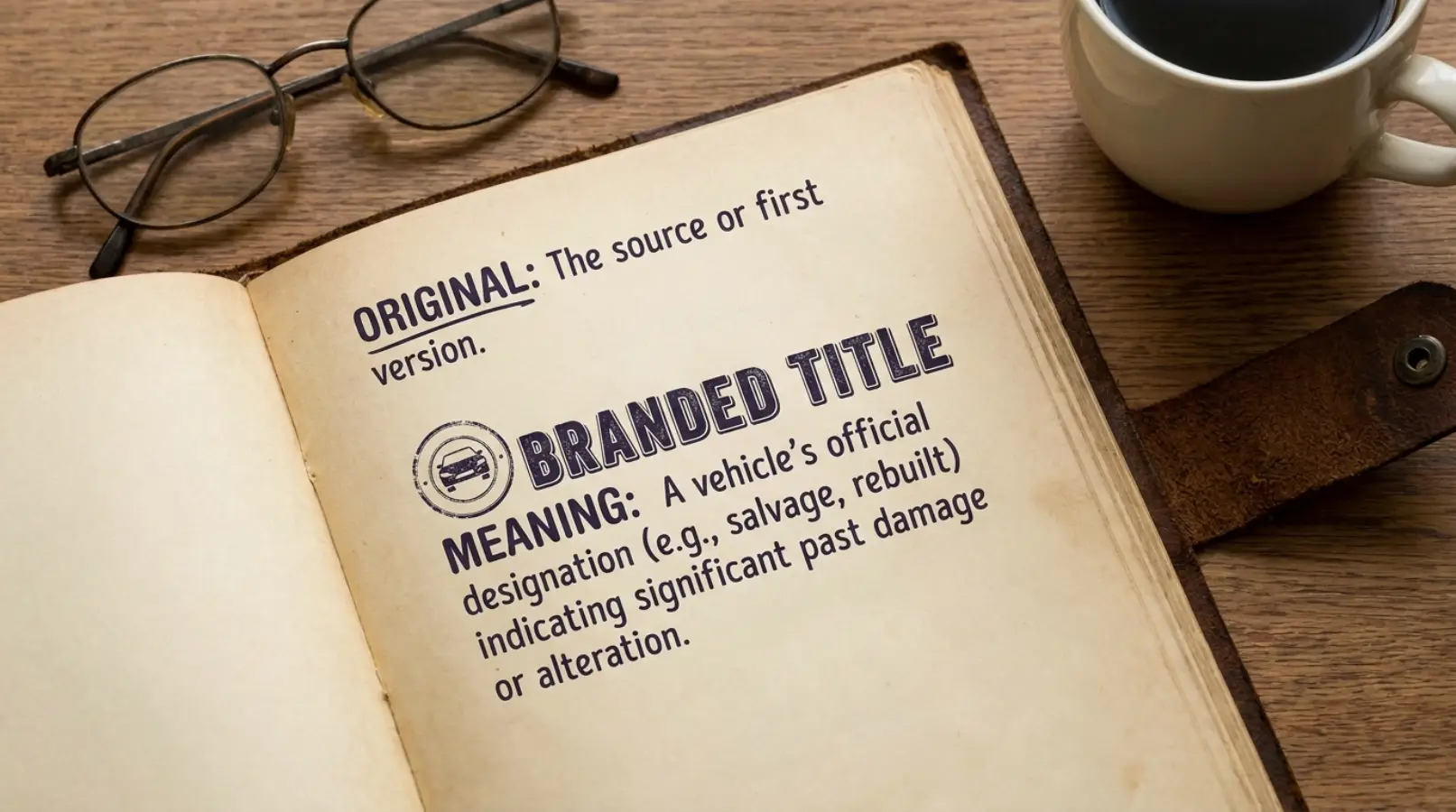
Branded titles can indicate different problems, from serious accident damage to manufacturer buybacks or mileage discrepancies. The exact title terminology and requirements vary by state, so always verify the specific designation.
Salvage Title
A salvage title generally means the vehicle met the state’s criteria for salvage status, often after an insurance company declared it a total loss because of an accident, flood, or another covered event.
Can you drive it? Usually, a salvage vehicle cannot be driven on public roads until it meets the applicable repair, inspection, and retitling requirements. Check your state’s rules before attempting to register or drive it.
Rebuilt Title
A rebuilt title generally identifies a vehicle that previously had salvage status and subsequently met the state’s requirements for a rebuilt designation.
Important: A rebuilt title does not guarantee that all repairs were completed correctly or that hidden damage is absent. An independent inspection is still essential.
Lemon or Manufacturer Buyback Title
A lemon or manufacturer buyback brand may indicate that a manufacturer repurchased a vehicle under applicable consumer-protection or lemon laws because of qualifying defects or recurring problems.
Potential concern: Buyers should review the original defect, repair history, and any continuing warranty coverage before purchasing the vehicle.
Flood or Water-Damage Title
A flood-damage brand identifies qualifying water damage under the relevant state’s rules. Flooding can affect electrical systems, sensors, wiring, and other components, and some problems may appear months after the initial damage.
Warning signs: A musty smell, unexplained corrosion, water marks, or electrical malfunctions can justify further investigation. However, the absence of these signs does not prove that a vehicle has never been flooded.
Odometer-Related Brand
An odometer-related brand may indicate that the vehicle’s mileage is inaccurate, altered, or not verifiable under applicable requirements.
Why it matters: Incorrect mileage can make it difficult to estimate wear, maintenance needs, and fair market value. Review service records and the vehicle’s history rather than relying only on the displayed odometer reading.
Hail-Damage History
Hail can damage a vehicle’s roof, hood, glass, paint, and body panels. Depending on state rules and the circumstances, extensive hail damage may be reflected in a title brand or other vehicle-history records.
Note: Hail damage does not automatically result in a branded title in every state. Confirm the vehicle’s actual title status and inspect the damage before buying.
Quick Comparison Guide to Branded Title Types
| Title type or history | What it may indicate | Main concern |
|---|---|---|
| Salvage | Qualifying damage or total-loss status | Structural damage and repair costs |
| Rebuilt | A former salvage vehicle that met applicable rebuilding requirements | Hidden or incomplete repairs |
| Lemon or buyback | A manufacturer repurchase related to qualifying defects | Recurring mechanical problems |
| Flood damage | Qualifying water damage | Electrical faults and corrosion |
| Odometer-related | Mileage discrepancy or an odometer issue | Uncertain mileage and vehicle wear |
| Hail damage | Hail-related damage, whether or not a title brand applies | Body, glass, and repair costs |
These categories are not identical in every state, and some descriptions may appear in vehicle history reports rather than as formal title brands.
How a Branded Title Can Affect Resale and Insurance
A branded-title vehicle may cost less upfront than a comparable vehicle with a clean title. However, the initial savings should be weighed against potential long-term costs.
- Lower resale value: Buyers often pay less for vehicles with significant title brands because of their history and potential risks. The amount varies by brand, damage, repair quality, model, and local demand.
- Financing challenges: Some lenders restrict loans for branded-title vehicles or apply additional requirements.
- Insurance limitations: Coverage varies by insurer. Some companies may limit comprehensive or collision coverage, while others may insure certain rebuilt vehicles after reviewing their documentation.
- More difficult resale: Future buyers may be reluctant to purchase a vehicle with a history of major damage or recurring defects.
- Uncertain repair expenses: Hidden damage can lead to unexpected costs after the purchase.
Before buying, compare the asking price with similar vehicles, ask lenders about financing, and confirm insurance availability directly with an insurer.
Can You Drive a Branded-Title Car?
Whether a branded-title vehicle can legally be driven depends on its exact title status, the vehicle’s condition, and state law.
A vehicle with salvage or junk status may be ineligible for ordinary road use until it meets the applicable requirements. A rebuilt vehicle may be eligible for registration after satisfying the relevant inspection and documentation rules. Other brands, including certain manufacturer buyback or damage-related designations, may be subject to different requirements.
Do not assume that every branded-title car is illegal to drive or that every repaired car is automatically road-legal. Confirm registration eligibility with the state’s motor vehicle agency.
Can a Branded Title Be Removed?
In many cases, a title brand remains part of the vehicle’s official history even after repairs. The rules depend on the brand and the state, so buyers should not assume that a vehicle can return to clean-title status.
One related concern is title washing. This term describes attempts to conceal or obscure a vehicle’s branded history, sometimes by moving the vehicle between jurisdictions. Not every title transfer is suspicious, but a clean-looking document should not be treated as conclusive proof of a clean history.
To protect yourself, compare the VIN on the vehicle with its title and history records, review available state records, and investigate any inconsistencies before paying.
Is a Branded Title the Same as a Rebuilt Title?
No. Branded title is a broad term for a title carrying a special designation. A rebuilt title is one specific type of branded title, generally associated with a vehicle that previously had salvage status and later met the state’s requirements for a rebuilt designation.
In other words, every rebuilt title is a type of branded title, but not every branded title is a rebuilt title.
Should You Buy a Vehicle With a Branded Title?
A branded-title vehicle may suit some buyers, but the decision requires careful evaluation.
It may be worth considering if:
- You understand the vehicle’s history and the risks associated with its title brand.
- Repair records and inspection documentation are available.
- An independent mechanic finds no unacceptable safety or mechanical concerns.
- The purchase price reflects the title history.
- You have confirmed that the vehicle can be registered and insured as needed.
It may be better to avoid it if:
- The seller cannot explain the title brand or provide repair records.
- You need straightforward financing or full insurance coverage.
- You rely on the vehicle for essential daily transportation and cannot risk unexpected repairs.
- There are unresolved safety concerns or inconsistent VIN and title records.
- The savings are too small to justify the additional uncertainty.
How to Protect Yourself Before Buying
Follow these steps before purchasing a branded-title vehicle:
- Review a vehicle history report. Look for reported accidents, damage, title events, and mileage discrepancies.
- Arrange an independent inspection. Ask a qualified mechanic to check structural components, electronics, mechanical systems, and signs of poor repairs.
- Verify the repair history. Request invoices, photographs, parts records, and inspection documents when available.
- Confirm the title status. Contact the relevant state motor vehicle agency if the designation or registration eligibility is unclear.
- Check insurance and financing. Obtain answers before committing to the purchase.
- Compare the price carefully. Consider the vehicle’s condition, title history, future repair expenses, and likely resale value.
A vehicle history report is useful, but it cannot guarantee that every past incident or defect has been recorded. Use multiple sources of evidence when making your decision.
Final Decision
A branded title does not automatically make a vehicle a bad purchase, but it does mean that the buyer should investigate its history more carefully. Salvage, rebuilt, manufacturer buyback, flood-damage, and odometer-related designations can carry different risks and legal implications.
Before buying, verify the title, investigate the vehicle identification number (VIN), review repair documentation, arrange an independent inspection, and confirm insurance and registration requirements. The right vehicle may offer value, but the savings should justify the risks.
1 thought on “Branded Title Meaning: 7 Clear Definitions, Examples & Risks”