
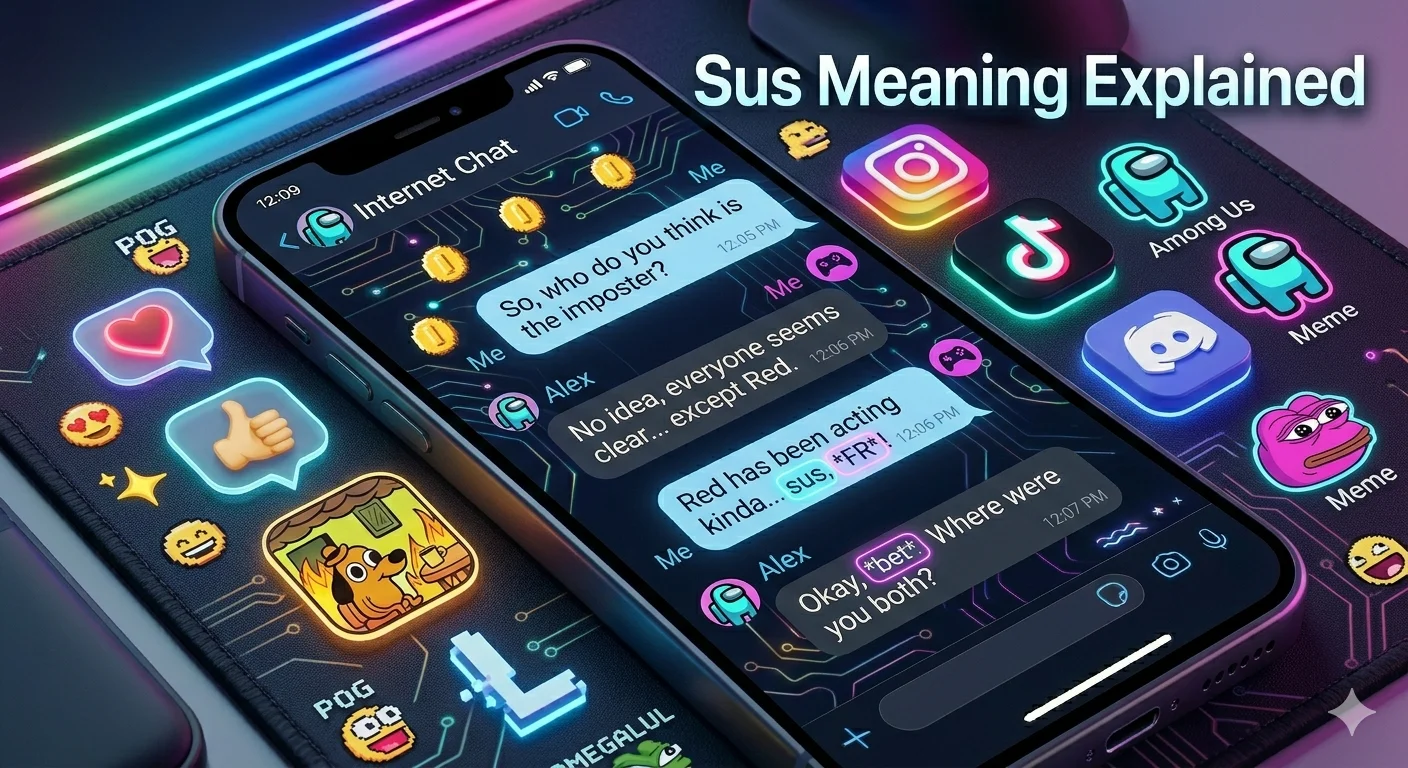
Meaning: Suspicious
Full Form: Short for “Suspicious”
Used In: Texting, social media, gaming, memes, and online conversations
Tone: Usually playful, joking, questioning, or suspicious
Common Platforms: TikTok, Instagram, Snapchat, Discord, X, and gaming communities
Example: “He’s acting kind of sus today.”
If you’ve spent time online recently, chances are you’ve come across the word “sus.” It appears everywhere—from TikTok comments and Instagram captions to gaming chats and text messages. While the term may seem confusing at first, its meaning is actually quite simple once you understand the context.
The slang word “sus” is most commonly used as a shortened version of “suspicious.” People use it when someone’s behavior seems unusual, questionable, dishonest, or strange. In many cases, the term is used humorously rather than seriously. Friends often call each other sus as a joke, especially when someone says or does something unexpected.
The popularity of sus exploded through online gaming culture, particularly after the success of the video game Among Us. Since then, the word has become a major part of internet slang and is widely understood across social media platforms.
In this guide, you’ll learn the complete meaning of sus, how it is used in texting and social media, where it came from, examples of real-life usage, and how it compares to similar slang terms commonly used online.
What Does Sus Mean?
The term “sus” is simply a shortened form of the word “suspicious.”
When someone says that a person, action, statement, or situation is sus, they mean it seems questionable or doesn’t look completely trustworthy.
For example:
- “Why are you smiling like that? That’s sus.”
- “He suddenly changed his story. Kind of sus.”
- “That excuse sounds sus.”
In everyday internet slang, sus often means:
- Suspicious
- Questionable
- Untrustworthy
- Strange
- Odd
However, it does not automatically mean someone is guilty of wrongdoing. It simply suggests that something feels off or unusual.
What Does Sus Mean in Texting, Slang, and Social Media?
Sus in Text Messages
In texting, people use sus when they want to question someone’s behavior or tease a friend.
Examples:
- “You disappeared for three hours. Sus.”
- “That’s a pretty sus explanation.”
- “Why are you being so quiet today? Sus.”
The word is often playful and not intended as a serious accusation.
Sus on Social Media
Social media users frequently comment “sus” when they notice something unusual in a post, video, or statement.
Examples:
- “This story sounds sus.”
- “That timing is very sus.”
- “Not gonna lie, that’s kinda sus.”
The term works as a quick reaction and is easy to understand across different platforms.
Sus in Gen Z Slang
Gen Z users helped make sus one of the most recognizable slang terms online.
Today, many younger users say sus even when they are joking about harmless situations.
For example:
- “You took the last slice of pizza? Sus.”
- “You knew the answer too quickly. Sus.”
In these situations, the speaker is teasing rather than expressing genuine suspicion.
Other Meanings of Sus
Sus as Short for Suspicious
This is the most common and widely accepted meaning of the term.
Sus in Gaming Culture
Gamers often use sus when they believe another player may be hiding something, cheating, lying, or acting strangely.
Example:
- “Red is acting sus.”
This usage became extremely popular through Among Us.
Other Less Common Meanings
Outside slang, sus may occasionally appear as an abbreviation in specific industries or organizations. However, when used online, it almost always means suspicious.
How Sus Is Used in Real Conversations
Casual Conversations
Friends commonly use sus while joking around.
Example:
Person A: “I ate the cookies.”
Person B: “There were twelve cookies. That’s sus.”
Online Communities
Internet forums, comment sections, and social media posts regularly feature the term.
Example:
“That explanation seems sus to me.”
Group Chats
Sus is especially common in group chats because it provides a quick and humorous response.
Example:
“Nobody saw him all day and now he’s here? Sus.”
Gaming Conversations
Gaming remains one of the biggest sources of sus usage.
Example:
“I saw him leave the room right before the lights went out. Very sus.”
Examples of Sus in Use
- “That excuse sounds really sus.”
- “You’re acting sus today.”
- “Why did you delete the message? Sus.”
- “That’s a sus way to answer the question.”
- “He suddenly became quiet. Kinda sus.”
- “This deal looks too good to be true. Sus.”
- “The whole situation feels sus.”
- “You knew exactly what happened. That’s sus.”
These examples show how the word can apply to people, actions, statements, and situations.
Tone and Intent
When Sus Is Serious
Sometimes people genuinely believe something is suspicious.
Examples:
- “The transaction looks sus.”
- “His explanation is sus.”
In these cases, the speaker is expressing real concern.
When Sus Is Playful
Most modern uses are humorous.
Examples:
- “You finished all the snacks? Sus.”
- “You replied instantly. Sus.”
Friends often use the word for light teasing.
When Sus Is Sarcastic
Internet users frequently use sus in memes and jokes.
Example:
- “The cat is staring at me again. Sus.”
The humor comes from applying suspicion to harmless situations.
Origin and Background
The word “sus” existed long before social media. It has been used in spoken English for decades as a shortened version of “suspicious” or “suspect.”
However, the term became globally popular through Among Us, a multiplayer game where players attempt to identify impostors hiding within a group.
During gameplay, participants constantly accused each other of acting suspiciously. To communicate quickly, players shortened the word to “sus.”
As gameplay videos, memes, and livestreams spread online, millions of people adopted the term. Soon it moved beyond gaming and became a mainstream internet slang expression used on TikTok, Instagram, Discord, Snapchat, and countless other platforms.
Today, sus is recognized worldwide and remains one of the most popular online slang terms.
Is Sus Rude or Inappropriate?
Generally, no.
Sus is usually considered harmless slang. Most people use it jokingly or casually.
However, context matters.
It can become offensive if:
- It is used to falsely accuse someone.
- It is directed at sensitive topics.
- The speaker intends to insult or embarrass someone.
Among friends, sus is typically viewed as playful rather than rude.
When NOT to Use Sus
Formal Communication
Avoid using sus in:
- Business emails
- Academic assignments
- Professional reports
- Job applications
Professional settings require clearer language.
Workplace Conversations
Instead of saying:
- “That proposal is sus.”
Use:
- “That proposal raises concerns.”
- “The information seems questionable.”
Serious Situations
Avoid using sus when discussing legal, medical, financial, or sensitive personal matters where precision is important.
Similar and Related Slang Terms
Sketchy
Means questionable or potentially unsafe.
Shady
Suggests dishonesty or secretive behavior.
Fishy
Means something does not seem right.
Weird
Refers to unusual behavior but not necessarily suspicious behavior.
Cap
Means a lie or false statement.
No Cap
Means someone is telling the truth.
These terms often appear in similar conversations but carry slightly different meanings.
Sus vs Related Terms
Sus vs Sketchy
Both imply concern, but sketchy often suggests potential danger while sus simply suggests suspicion.
Sus vs Shady
Shady usually implies dishonesty or hidden motives. Sus only indicates suspicion.
Sus vs Fishy
Fishy and sus are very similar. Fishy is slightly more traditional, while sus is modern internet slang.
Sus vs Weird
Weird means unusual. Sus means unusual in a way that raises suspicion.
Comparison Table
| Term | Meaning | Usage | Key Difference |
|---|---|---|---|
| Sus | Suspicious | Questionable behavior | Suggests suspicion |
| Sketchy | Potentially unsafe | People or situations | Stronger concern |
| Shady | Dishonest | Actions and motives | Implies wrongdoing |
| Fishy | Doesn’t seem right | Situations or stories | Traditional expression |
| Weird | Unusual | General behavior | Not necessarily suspicious |
| Cap | Lie | Calling out falsehoods | Focuses on dishonesty |
Common Misunderstandings
Thinking Sus Means Someone Is Guilty
Sus only indicates suspicion. It does not prove wrongdoing.
Assuming It Is Always Negative
Many people use sus as a joke among friends.
Misunderstanding Meme Culture
Internet users often apply sus to completely harmless situations for comedic effect.
Believing It Started With Among Us
The word existed before the game. Among Us simply made it incredibly popular.
Frequently Asked Questions
What does sus mean in texting?
In texting, sus usually means suspicious or questionable.
Does sus mean suspicious?
Yes. Sus is a shortened version of suspicious.
Why do gamers say sus?
Gamers use it to describe players who seem dishonest, strange, or potentially guilty.
Is sus a Gen Z slang term?
It is widely used by Gen Z, but people of all ages use it online.
What does sus mean on TikTok?
On TikTok, sus usually describes behavior that appears strange, suspicious, or funny.
Is sus rude?
Not usually. It is generally considered casual internet slang.
Can sus be used as a joke?
Yes. Many people use it humorously to tease friends.
What is the difference between sus and sketchy?
Sketchy often implies danger or risk, while sus mainly suggests suspicion.
Is sus still popular?
Yes. It remains one of the most recognized internet slang terms.
Should I use sus in professional communication?
No. It is best reserved for informal conversations.
conclusion
Sus is one of the most popular slang terms used in texting, social media, and online gaming. Short for “suspicious,” it describes behavior, actions, or situations that seem questionable, unusual, or untrustworthy. While it can be used seriously, it is often playful and humorous, especially among friends and online communities. Understanding the meaning of sus helps you follow modern internet conversations and use the term naturally when chatting online.