Ensure vs. Insure: Which Is Correct? 7 Powerful Differences, Meaning & Usage

ensure vs insure

Updated: September 14, 2026 Ensure and insure are both correct English words, but they are not interchangeable in most situations. Ensure means to make certain that something happens or is true, while insure usually means to protect against financial loss by obtaining insurance. The easiest way to remember the difference is: Ensure = make certain … Read more

Principal vs. Principle: Meaning, Differences, Examples & Usage

Principal vs. Principle

Updated: September 13, 2026 Principal and principle are both correct English words, but they have different meanings and grammatical functions. Principal usually means a person in a leading position, something most important, or the original amount of money, while principle means a rule, belief, standard, or basic truth. Quick Answer: Principal vs. Principle Principal means … Read more

Capital vs. Capitol: Which Word Is Correct?

capital vs capitol

Capital and capitol are both correct words, but they have different meanings. Capital has several common meanings, including a city that serves as a seat of government and money or wealth. Capitol specifically refers to a building or group of buildings where a legislature meets, especially a state capitol or the US Capitol. Capital vs. … Read more

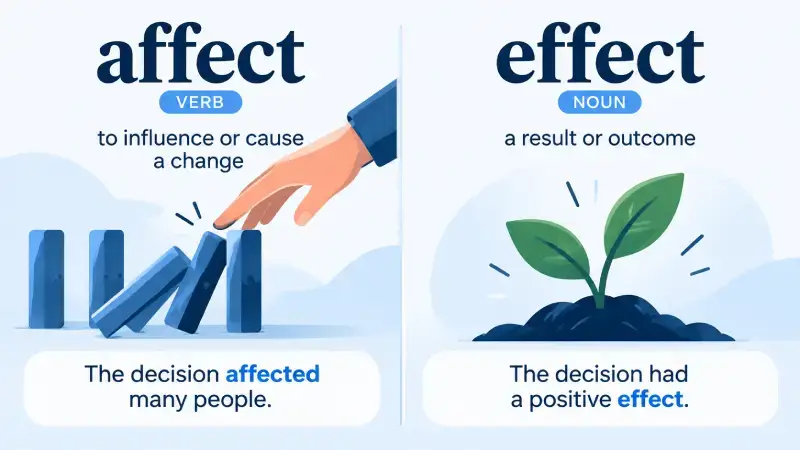
Affect vs. Effect: Which One Is Correct?

affect vs effect

Affect vs. effect are both correct English words, but they usually serve different grammatical functions. Affect is most often a verb meaning “to influence,” while effect is most often a noun meaning “result.” However, both words have additional meanings and uses that can cause confusion. Affect vs. Effect: The Quick Answer Use affect when you … Read more

Atheist vs. Athiest: Which Is Correct? Meaning, Spelling & Usage

atheist vs athiest

If you are confused about atheist vs. athiest, the correct spelling is atheist. The spelling athiest is a common misspelling. Correct: atheistIncorrect: athiest An atheist is a person who does not believe in the existence of a god or gods. The word is commonly used in discussions about religion, belief, philosophy, worldview, and personal convictions. … Read more