8355d841-92ab-4adc-821d-0095b0c27835

Guidance vs. Guidence: 7 Clear Differences, Correct Spelling & Usage

Guidance is the correct spelling. Guidence is a common misspelling and is not the standard spelling of the English word. The word guidance means advice, direction, help, or recommendations given to someone. It is commonly used in education, careers, business, personal development, professional communication, and everyday English. If you are wondering whether to write guidance … Read more
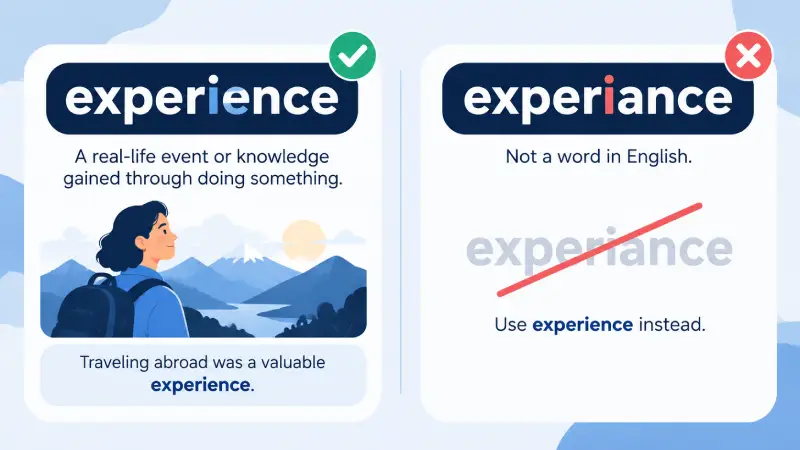
Experience vs. Experiance: 7 Clear Differences, Correct Spelling & Usage

experience vs experiance

If you are unsure whether the correct spelling is experience or experiance, you are not alone. These words look very similar, but only one is correct in standard English. The correct spelling is experience. Experiance is a common spelling mistake and should not be used in standard American English. Quick Answer Spelling Correct? Meaning Experience … Read more

Dumbbell vs. Dumbell: 7 Clear Differences, Correct Spelling & Usage

dumbbell vs dumbell

Dumbbell is the correct spelling. Dumbell is a common misspelling. If you are writing about strength training, fitness, workouts, or gym equipment, use dumbbell with two b’s and only one l at the end. Quick Answer Spelling Correct? Meaning Dumbbell ✅ Correct A handheld weight used for strength training Dumbell ❌ Incorrect Common misspelling of … Read more

WYF Meaning in Text: 7 Clear Meanings, Examples & Slang Use

wyf meaning

Meaning: WYF most commonly means “Where you from?” or “Where are you from?” in texting and online conversations.Full form: Usually “Where you from?”Context: Text messages, social media, dating apps, gaming chats, and casual conversations.Tone: Casual, informal, and conversational. What Does WYF Mean in Text? WYF usually means “Where you from?” in text messages, social media, … Read more

Yaoi Meaning: 7 Key Meanings, Origin, Usage & What It Refers To

yaoi meaning

Meaning: Yaoi is a term historically used for Japanese media featuring romantic or sexual relationships between male characters.Full form: Often explained as “Yama nashi, ochi nashi, imi nashi,” meaning roughly “no climax, no point, no meaning.”Context: Anime, manga, fan culture, online communities, and discussions of Japanese media.Tone: Neutral as a descriptive genre term, although usage … Read more

Yellow Roses Meaning: 7 Powerful Meanings, Symbolism & When to Give Them

Meaning: Yellow roses commonly symbolize friendship, happiness, warmth, appreciation, and positive feelings.Symbolism: Joy, optimism, affection, caring, and cheerful energy.Context: Gifts, friendships, celebrations, congratulations, thank-you gestures, and everyday occasions.Tone: Warm, cheerful, friendly, affectionate, and positive. What Do Yellow Roses Mean? Yellow roses are widely associated with friendship, happiness, joy, appreciation, and warmth. Their bright color gives … Read more

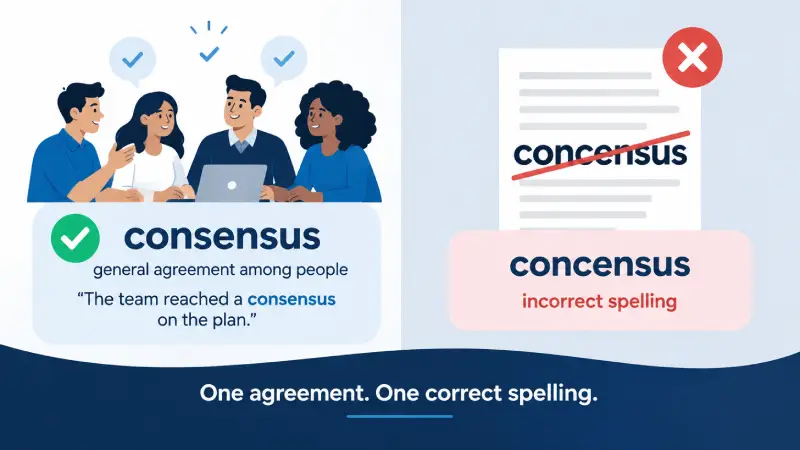
Consensus vs. Concensus: 7 Clear Differences, Correct Spelling & Usage

Consensus vs Concensus

Consensus vs. concensus is a common spelling confusion in English. If you are wondering which one is correct, consensus is the standard spelling, while concensus is a misspelling. The word consensus means general agreement or a shared opinion among a group of people. The confusion usually happens because consensus and concensus look and sound very … Read more

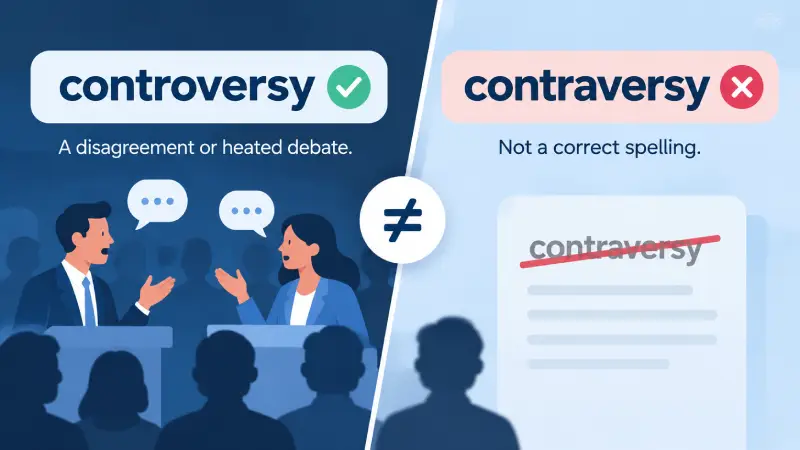
Controversy vs. Contraversy: 7 Powerful Differences, Correct Spelling & Usage

controversy vs contraversy

Controversy vs. contraversy is a common spelling confusion because the two forms look and sound very similar. If you are wondering which spelling is correct, the answer is simple: controversy is the correct spelling, while contraversy is a misspelling. The word controversy means a situation, issue, or subject that causes disagreement, debate, or conflicting opinions. … Read more

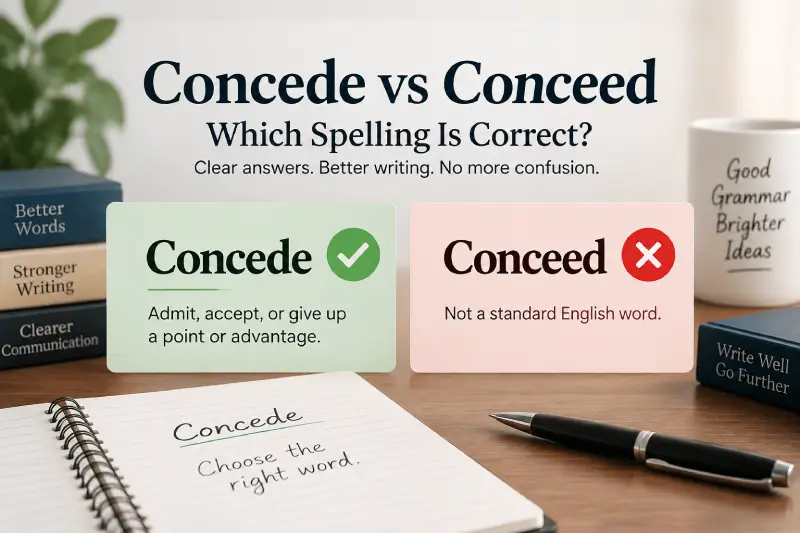
Concede vs Conceed: Which Spelling Is Correct?

concede vs conceed

When choosing between concede vs conceed, the correct spelling is simple: concede is the standard English word. Conceed is not a standard spelling. The confusion happens because many English words use similar letter patterns, especially words ending in -ceed. However, concede follows a different spelling pattern. Writers often make this mistake when they remember words … Read more