
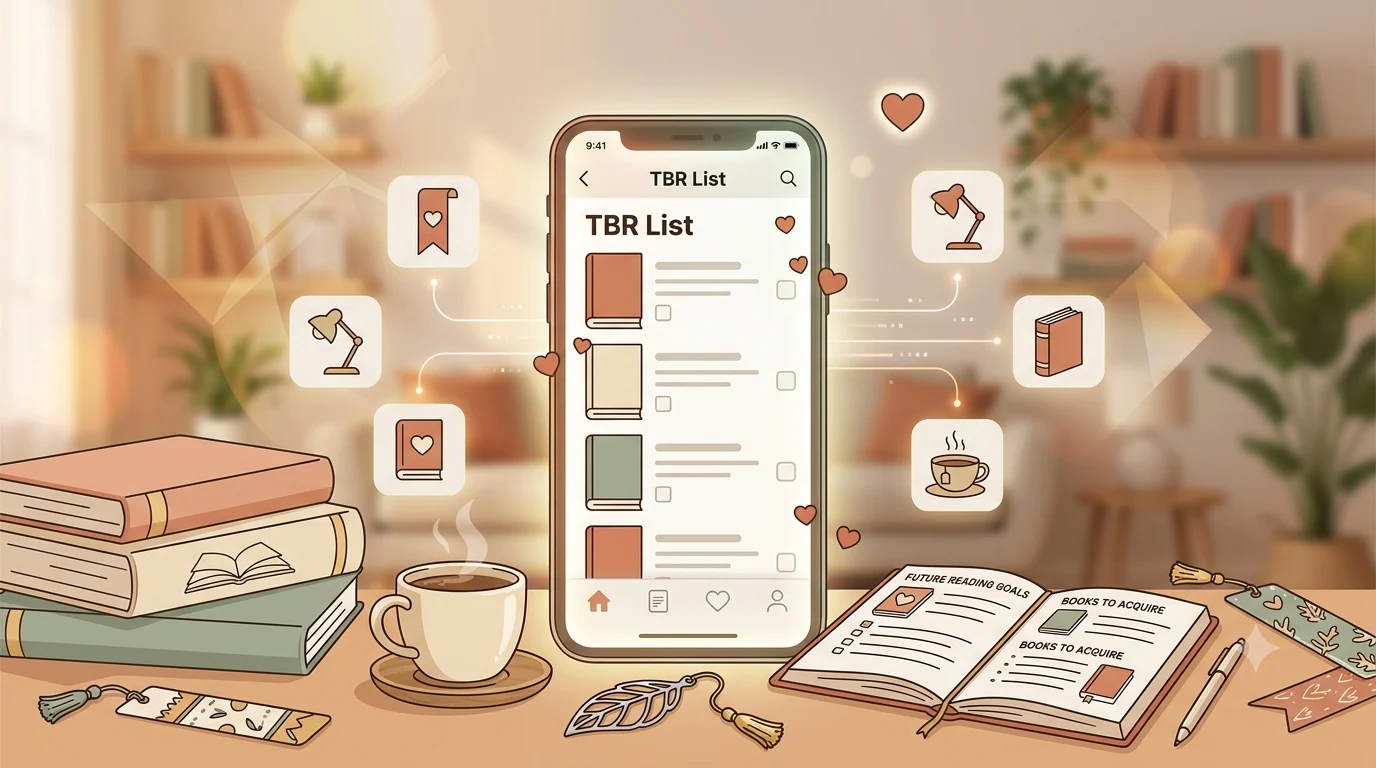
TBR most commonly stands for “To Be Read.” It is a popular abbreviation used by book lovers to describe books they plan to read in the future. You’ll often see TBR on BookTok, Bookstagram, Goodreads, YouTube, and other reading communities. Depending on the context, TBR can also mean “To Be Reviewed” or “To Be Released,” but “To Be Read” is by far the most common meaning.
| Term | Meaning |
|---|---|
| TBR | To Be Read |
| Context | Books, reading communities, texting, social media |
| Tone | Casual, organized, informative |
| Other Meanings | To Be Reviewed, To Be Released |
If you’ve been browsing BookTok, Goodreads, Instagram, or a reading forum, you’ve probably seen the abbreviation TBR. It appears in book recommendations, monthly reading challenges, and social media posts, leaving many new readers wondering what it actually means.
The TBR meaning is simple. It stands for “To Be Read,” referring to books someone plans to read in the future. Many readers keep a TBR list to organize upcoming books, track recommendations, and set reading goals.
Although TBR is most closely associated with book communities, it can also have other meanings depending on the conversation. In publishing, professional writing, or project management, it may stand for “To Be Reviewed” or “To Be Released.”
This guide explains the complete TBR meaning, how it is used in texting and social media, examples from real conversations, related reading abbreviations, and the differences between TBR and similar terms.
What Does TBR Mean?
The most common TBR meaning is “To Be Read.”
It refers to books that someone intends to read in the future. Instead of remembering every recommendation, readers create a TBR list that helps them organize their next books.
For example:
“My TBR is getting longer every week.”
This means the person keeps adding books they want to read.
A TBR list can include:
- Books recommended by friends.
- New book releases.
- Bestsellers.
- Classic novels.
- Personal reading goals.
Many readers enjoy building TBR lists almost as much as reading the books themselves.
What Does TBR Mean in Texting, Slang, and Social Media?
TBR in Text Messages
In text conversations, TBR usually appears when discussing books.
Example:
Friend: Have you read that mystery novel yet?
Reply: Not yet. It’s on my TBR.
Here, the person means the book is on their future reading list.
TBR on BookTok, Bookstagram, and Goodreads
TBR is one of the most common abbreviations in online reading communities.
Readers often post:
- Monthly TBR.
- Summer TBR.
- Fall TBR.
- Holiday TBR.
- 2026 TBR list.
Content creators also make videos showing:
- Massive TBR piles.
- TBR recommendation lists.
- Reading challenge TBRs.
- Random TBR picks.
BookTok has helped make TBR one of the most recognized book-related abbreviations online.
TBR on Other Social Media Platforms
Although TBR is strongly connected with books, it also appears on:
- Facebook reading groups
- X (formerly Twitter)
- Discord communities
In most cases, the meaning remains “To Be Read.”
Occasionally, businesses or publishers may use TBR differently, but the surrounding conversation usually makes the intended meaning clear.
Other Meanings of TBR
While “To Be Read” is the primary meaning, TBR has a few other interpretations.
Some examples include:
- To Be Reviewed – Used in editing or publishing.
- To Be Released – Refers to products, software, or media that will launch later.
- Technical or business abbreviations – Some organizations assign their own internal meanings.
Because TBR has multiple definitions, always consider the context before deciding what it means.
How TBR Is Used in Real Conversations
Reading Communities
Book lovers use TBR every day.
Examples include:
- Sharing reading goals.
- Recommending books.
- Organizing reading lists.
- Joining book clubs.
Example:
“My fantasy TBR already has twenty books.”
Social Media Conversations
Book creators frequently post updates like:
- My June TBR.
- What’s on my TBR this month?
- Help me choose my next TBR.
- Rating books from my TBR.
These posts encourage discussions and recommendations.
Everyday Texting
Friends often mention TBR when talking about books.
Example:
Friend: Is that novel worth reading?
Reply: Yes, add it to your TBR.
This simply means to place the book on your reading list.
Examples of TBR in Conversations
Example 1
Friend: What are you reading next?
Reply: It’s already on my TBR.
Meaning: It is on the future reading list.
Example 2
BookTok Caption: My October TBR is finally ready.
Meaning: The creator is sharing planned books.
Example 3
Reader: My TBR keeps growing faster than I can read.
Meaning: New recommendations are constantly being added.
Example 4
Comment: That novel just moved to the top of my TBR.
Meaning: The person plans to read it soon.
Example 5
Text: Can you recommend something for my TBR?
Meaning: The person wants new book suggestions.
Example 6
Goodreads Post: Half my TBR comes from TikTok recommendations.
Meaning: Social media influences reading choices.
Tone and Intent
The meaning of TBR is almost always neutral and positive.
Casual and Friendly
Readers use TBR naturally during conversations about books.
It helps keep discussions short and easy to understand.
Organized and Goal-Oriented
Many readers use TBR to plan:
- Monthly reading.
- Annual reading goals.
- Reading challenges.
- Book club selections.
A TBR list helps readers stay organized.
Other Contexts
Outside reading communities, TBR may simply indicate that something still needs attention, such as being reviewed or released.
Again, context determines the correct meaning.
Origin and Background of TBR
The abbreviation TBR became popular among book lovers long before BookTok existed.
Online reading forums and Goodreads users regularly created TBR lists to organize their books.
As YouTube book channels, Instagram reading communities, and TikTok grew, the abbreviation spread rapidly.
Today, TBR has become one of the most recognizable terms in online book culture.
Whether someone reads five books a year or fifty, they probably have a TBR list.
Is TBR Rude or Inappropriate?
No.
TBR is completely safe and appropriate.
It is a neutral abbreviation that simply helps people discuss reading plans more efficiently.
It contains no offensive or inappropriate meaning in its common usage.
When NOT to Use TBR
Although TBR is widely understood among readers, it may confuse people outside book communities.
Avoid using TBR in:
- Formal business emails.
- Academic writing without explanation.
- Professional reports.
- Conversations where the audience may not know the abbreviation.
If clarity matters, writing “To Be Read” is usually the better choice.
Similar and Related Slang Terms
CR
CR means “Currently Reading.”
It refers to the book someone is reading right now.
DNF
DNF means “Did Not Finish.”
Readers use it when they stop reading a book before completing it.
ARC
ARC stands for “Advance Review Copy.”
Publishers send these early copies to reviewers before a book is officially released.
Book Haul
A book haul refers to a collection of books someone recently purchased or received.
Reading Wrap-Up
A wrap-up summarizes books someone finished during a week, month, or year.
TBR vs Related Terms
TBR vs CR
TBR refers to books you plan to read.
CR refers to the book you are currently reading.
TBR vs DNF
TBR contains books waiting to be read.
DNF refers to books you started but chose not to finish.
TBR vs ARC
TBR is a personal reading list.
An ARC is an early review copy provided before publication.
Comparison Table
| Term | Meaning | Usage | Key Difference |
|---|---|---|---|
| TBR | To Be Read | Future reading list | Books planned for later |
| CR | Currently Reading | Current book | Reading now |
| DNF | Did Not Finish | Unfinished book | Reading stopped |
| ARC | Advance Review Copy | Early review copy | Pre-publication edition |
| Book Haul | Newly acquired books | Sharing purchases | Focus on buying books |
| Reading Wrap-Up | Finished books summary | Monthly or yearly recap | Looks back instead of forward |
Common Misunderstandings
Because TBR has several meanings, people sometimes misunderstand it.
Common mistakes include:
- Thinking TBR always refers to books.
- Confusing TBR with “To Be Reviewed.”
- Assuming every TBR list must be completed.
- Believing TBR is only used on TikTok.
- Ignoring context when reading the abbreviation.
Looking at the surrounding conversation usually reveals the intended meaning.
Frequently Asked Questions
What does TBR mean?
TBR most commonly means “To Be Read.”
What does TBR stand for?
The full form is “To Be Read.”
What is a TBR list?
A TBR list is a collection of books someone plans to read in the future.
What does TBR mean on BookTok?
On BookTok, TBR usually refers to books creators plan to read or recommend.
Is TBR internet slang?
Yes. It is a widely recognized abbreviation in online reading communities.
Can TBR have other meanings?
Yes. It can also mean “To Be Reviewed” or “To Be Released,” depending on the context.
What is the difference between TBR and CR?
TBR refers to books you plan to read, while CR refers to the book you are reading now.
Why do readers use TBR?
Readers use TBR to organize recommendations, plan reading goals, and keep track of books they want to read.
conclusion
TBR most commonly means “To Be Read” and is one of the most popular abbreviations in the book community. It helps readers organize future reading lists, share recommendations, and participate in reading challenges across platforms like BookTok, Goodreads, Instagram, and YouTube.
Although TBR can have other meanings in publishing and professional settings, “To Be Read” is the definition you will encounter most often online. By understanding the context, you’ll have no trouble recognizing how this simple abbreviation is used in conversations about books and reading.