
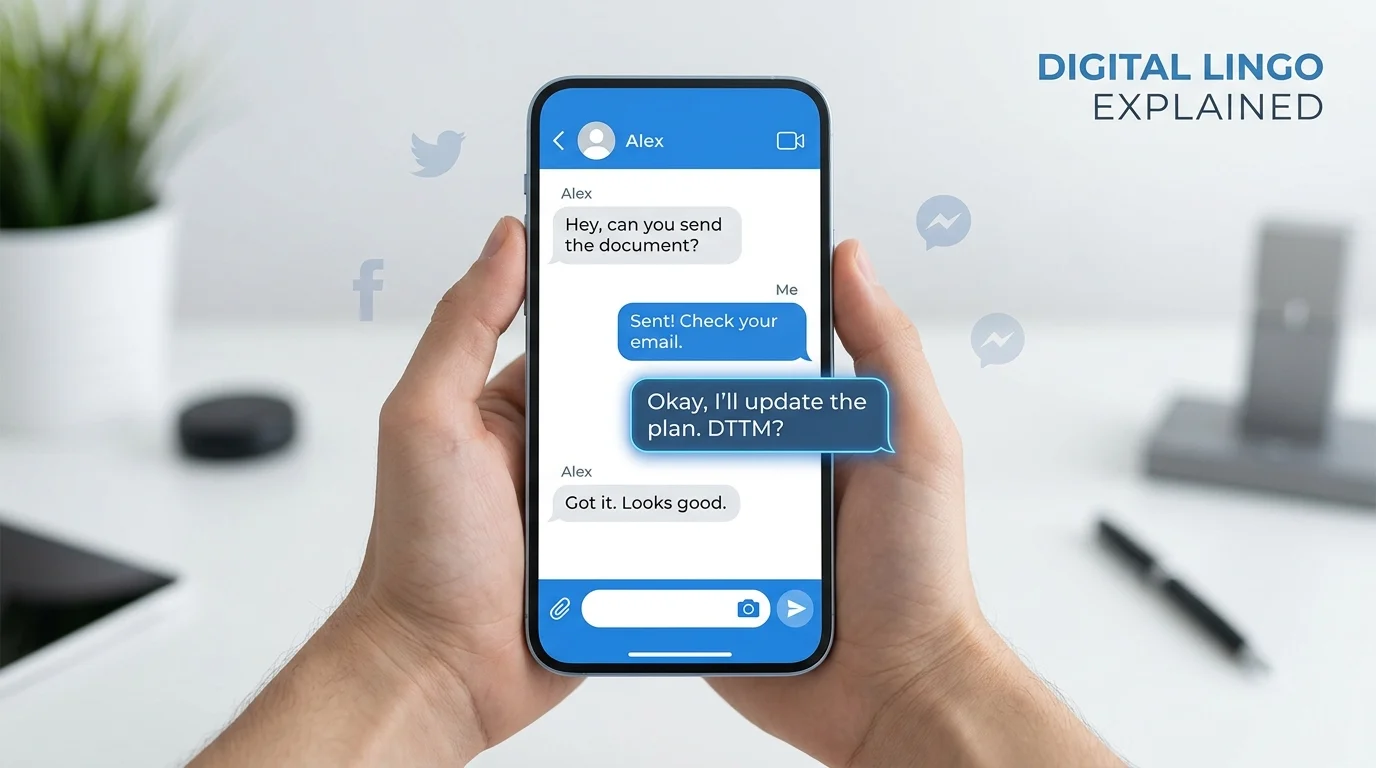
Meaning: DTTM usually stands for Don’t Talk To Me.
Full Form: Don’t Talk To Me.
Context: Text messages, social media posts, online chats, and casual conversations.
Tone: Often annoyed, frustrated, joking, or dramatic depending on the situation.
If you’ve come across DTTM in a text message, social media comment, or online conversation, you may be wondering what it means. Unlike common abbreviations such as LOL, BRB, or OMG, DTTM is less widely used, which can make it confusing for many people.
In most cases, DTTM stands for Don’t Talk To Me. People use it when they feel annoyed, embarrassed, overwhelmed, or simply want some space. Sometimes it is serious, but often it is used humorously among friends. The meaning depends heavily on the context and the relationship between the people involved.
As texting and social media continue to shape modern communication, abbreviations like DTTM help people express emotions quickly. Understanding how this phrase is used can help you avoid misunderstandings and better interpret online conversations. This guide explains the meaning of DTTM, its usage in texting and social media, examples, tone, origins, and how it compares to similar internet slang.
What Does DTTM Mean?
DTTM most commonly means Don’t Talk To Me.
People use it to tell someone they want space, are upset, or do not feel like having a conversation at that moment. The phrase can be genuine or exaggerated for humor.
For example:
Friend 1: I accidentally sent that message to my boss.
Friend 2: DTTM 😭
In this example, the person is jokingly expressing embarrassment rather than literally asking everyone to stop talking.
The abbreviation makes communication faster and adds emotional emphasis without typing a full sentence.
What Does DTTM Mean in Texting, Slang, and Social Media?
In texting, DTTM is usually an emotional reaction.
Someone may use it when they:
- Feel embarrassed
- Are frustrated
- Need a break
- Want privacy
- Are joking about a situation
On social media, DTTM often appears in:
- Comments
- Captions
- Stories
- Tweets
- Group chats
- Meme posts
For example:
I just tripped in front of everyone. DTTM.
Here, the phrase shows embarrassment rather than a literal request for silence.
Gen Z and Internet Usage
Many younger internet users employ DTTM dramatically for humor. Instead of genuinely wanting isolation, they use it to exaggerate an awkward moment.
Examples include:
- Bad exam results
- Embarrassing photos
- Awkward conversations
- Social media mistakes
This playful exaggeration has made the phrase popular in casual online communication.
Other Meanings of DTTM
Although Don’t Talk To Me is the most common meaning, abbreviations can sometimes carry different interpretations depending on the community using them.
Possible alternative meanings include:
- Organization-specific terms
- Internal company abbreviations
- Gaming abbreviations
- Technical shorthand
However, when seen in texting or social media, Don’t Talk To Me remains the most likely meaning.
How DTTM Is Used in Real Conversations
DTTM appears in many types of casual communication.
Personal Text Messages
People use it after experiencing something embarrassing or frustrating.
Group Chats
Friends often use DTTM humorously after making mistakes.
Social Media Posts
Users include DTTM in captions when reacting to awkward situations.
Gaming Conversations
Players may use it after losing a match or making an error.
Friend Groups
It often serves as a playful expression rather than a serious request.
Examples of DTTM in Real Conversations
Example 1
Situation: Embarrassing moment
Example:
I waved at someone who wasn’t waving at me. DTTM.
Meaning: Feeling embarrassed.
Example 2
Situation: School
Example:
I studied all night and still failed the quiz. DTTM.
Meaning: Frustration and disappointment.
Example 3
Situation: Work
Example:
I accidentally replied all to the company email. DTTM.
Meaning: Embarrassment.
Example 4
Situation: Social media
Example:
Just posted the wrong photo. DTTM.
Meaning: Regret and awkwardness.
Example 5
Situation: Gaming
Example:
I fell off the map again. DTTM.
Meaning: Humorous frustration.
Example 6
Situation: Friends
Example:
You remembered my worst moment from high school? DTTM 😂
Meaning: Playful embarrassment.
Example 7
Situation: Sports
Example:
Missed the easiest shot of the game. DTTM.
Meaning: Self-directed frustration.
Tone and Intent
The meaning of DTTM changes based on tone.
Positive Tone
Among friends, it often feels playful and humorous.
Neutral Tone
Sometimes it simply means someone needs a break.
Negative Tone
It can indicate genuine annoyance or frustration.
Sarcastic Tone
Many users exaggerate situations for comedic effect.
Understanding the conversation helps determine which tone is intended.
Origin and Background
DTTM developed as part of internet shorthand culture.
As texting became more popular, users created abbreviations to communicate quickly.
Examples include:
- LOL
- OMG
- BRB
- IDK
- DTTM
The phrase Don’t Talk To Me existed long before texting, but the abbreviation became useful in digital communication where speed and brevity matter.
Today, it appears across social media platforms, messaging apps, and online communities.
Is DTTM Rude or Inappropriate?
Not necessarily.
Whether DTTM sounds rude depends on context.
Usually Acceptable
- Among friends
- In casual chats
- In humorous situations
- During lighthearted conversations
Potentially Rude
- During serious discussions
- With strangers
- In workplace communication
- In customer service interactions
Without context, the abbreviation can appear abrupt or dismissive.
When NOT to Use DTTM
Avoid using DTTM in formal settings.
Examples include:
- Business emails
- Job applications
- Professional meetings
- School assignments
- Customer support communication
Better alternatives include:
- I need some time.
- I’d like some space right now.
- Let’s talk later.
- I’m taking a short break.
These options sound more professional and respectful.
Similar and Related Slang Terms
Several internet expressions share similar emotional meanings.
IDC
Means I Don’t Care.
SMH
Means Shaking My Head.
GTG
Means Got To Go.
BRB
Means Be Right Back.
Leave Me Alone
A full phrase with a similar purpose.
Each phrase communicates something different, even when emotions overlap.
DTTM vs Related Terms
IT vs IDC
DTTM asks for distance or expresses frustration.
IDC expresses indifference.
DTTM vs SMH
DTTM focuses on personal feelings.
SMH expresses disappointment or disbelief.
DTTM vs GTG
DTTM communicates emotion.
GTG simply means leaving a conversation.
Comparison Table
| Term | Meaning | Usage | Key Difference |
|---|---|---|---|
| DTTM | Don’t Talk To Me | Frustration or needing space | Requests distance |
| IDC | I Don’t Care | Indifference | Focuses on lack of concern |
| SMH | Shaking My Head | Disapproval | Reaction expression |
| GTG | Got To Go | Leaving chat | Indicates departure |
| BRB | Be Right Back | Temporary absence | Suggests return |
Common Misunderstandings
One common misunderstanding is assuming DTTM is always rude.
In reality, many people use it jokingly.
Another mistake is taking it literally every time. Friends often use the phrase dramatically without actually wanting everyone to stop talking.
People may also confuse it with other abbreviations because it is less common than many internet slang terms.
The best way to understand DTTM is to consider the context, tone, and relationship between the people communicating.
FAQ
What does DTTM mean in texting?
DTTM usually means Don’t Talk To Me.
What does DTTM mean on social media?
It commonly expresses embarrassment, frustration, or a desire for space.
Is DTTM rude?
Not always. It can be playful, sarcastic, or serious depending on context.
Can DTTM be used jokingly?
Yes. Many people use it humorously after awkward or embarrassing moments.
Is DTTM formal or informal?
It is highly informal and best suited for casual conversations.
What is the difference between DTTM and IDC?
DTTM expresses frustration or a need for space, while IDC means I Don’t Care.
Is DTTM common online?
It is less common than abbreviations like LOL or OMG but still appears in texting and social media.
Can DTTM have multiple meanings?
Yes, but Don’t Talk To Me is by far the most common interpretation in casual online communication.
conclusion
DTTM most often means Don’t Talk To Me. It is commonly used in texting, social media, and online conversations to express frustration, embarrassment, overwhelm, or a desire for space. In many situations, the phrase is playful rather than serious. Because tone can change its meaning, understanding the context is essential. Used correctly, DTTM is a quick and effective way to communicate emotions in modern digital conversations.