
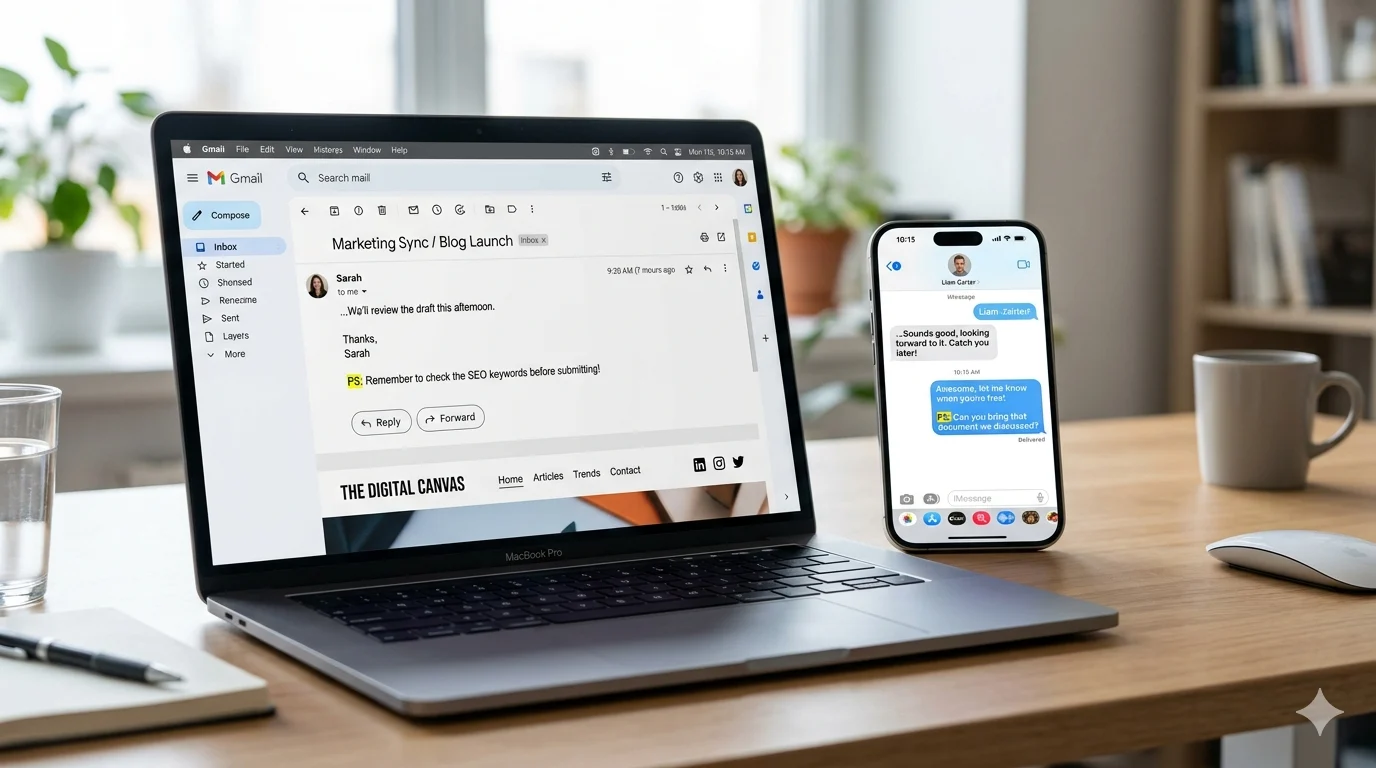
| Category | Answer |
|---|---|
| Meaning | An additional thought or note added after a message |
| Full Form | Postscript |
| Common Contexts | Texting, emails, letters, social media posts |
| Tone | Friendly, informal, professional, or informative depending on context |
If you’ve ever noticed the abbreviation PS at the end of an email, text message, social media post, or letter, you may have wondered what it actually means. Many people search for the PS meaning because the term appears in a wide variety of situations and can have different interpretations depending on the context. While it may seem like a modern internet abbreviation, PS has actually been used in written communication for centuries.
The most common meaning of PS is Postscript, which refers to an additional note added after the main message has been completed. Originally used in handwritten letters, PS allowed writers to include extra thoughts without rewriting the entire message. Today, the abbreviation remains popular in emails, text conversations, marketing messages, and social media posts. People often use it to add reminders, important details, personal comments, or even humorous afterthoughts.
However, PS does not always mean Postscript. In some contexts, it can refer to PlayStation, Personal Statement, Public School, or other terms. Understanding the intended meaning depends on where and how the abbreviation is being used. In this guide, you’ll learn what PS means, how it is used in texting and online communication, common examples, alternative meanings, and when it is appropriate to use it.
What Does PS Mean?
The most common meaning of PS is Postscript. A postscript is an additional note added after the main body of a message has been completed.
Traditionally, people wrote PS at the end of letters when they remembered something after signing their name. Instead of rewriting the entire letter, they simply added a short note beginning with “PS.”
For example:
Thank you for your help with the project.
Best regards, Sarah
PS: Don’t forget our meeting tomorrow.
Today, the same concept is used in digital communication. PS allows writers to add an afterthought, reminder, joke, or important piece of information after the main message.
What Does PS Mean in Texting, Slang, and Social Media?
In texting and social media, PS still usually means Postscript. People use it to add information they forgot to include earlier or to emphasize something important.
For example:
Friend 1: See you tonight at 8!
Friend 2: Sounds good. PS: Bring your camera.
On social media, PS often appears at the end of captions or posts.
Example:
“Had an amazing weekend at the beach. PS: The sunset was even better in person!”
Unlike many internet abbreviations, PS is not considered modern slang. Instead, it is a traditional writing abbreviation that has successfully adapted to digital communication.
Gen Z, Millennials, and older users all understand PS because it has been part of written communication for decades.
Other Meanings of PS
Although Postscript is the most common meaning, PS can stand for several other things depending on context.
PlayStation
Gamers frequently use PS as shorthand for PlayStation.
Example:
“I play most of my games on PS.”
In this case, PS refers to Sony’s gaming console rather than Postscript.
Public School
In some regions, PS may stand for Public School.
Example:
“She attended PS 118 before moving to another district.”
Photosynthesis
In educational or scientific discussions, PS can sometimes refer to Photosynthesis.
Example:
“PS is one of the most important biological processes.”
Personal Statement
Students applying to universities may use PS as an abbreviation for Personal Statement.
Example:
“I spent all weekend working on my PS for college applications.”
The correct meaning depends entirely on the conversation and context.
How PS Is Used in Real Conversations
In Personal Messages
People often use PS to add reminders, jokes, or extra thoughts.
Example:
“Have a great trip. PS: Send lots of photos!”
This feels friendly and conversational.
In Emails
Business professionals frequently use PS to highlight important information.
Example:
“Thank you for your time today.
PS: I’ve attached the updated proposal for review.”
Many marketers also use PS lines because readers often notice them even if they skim the rest of the email.
On Social Media
Creators and influencers use PS to add personal touches.
Example:
“New video drops tomorrow! PS: You won’t want to miss the surprise ending.”
This technique helps draw attention to important details.
Examples of PS in Everyday Use
Here are some natural examples of PS in different situations:
- PS: Don’t forget to bring your ID tomorrow.
- Thanks for the invitation. PS: I’ll arrive a little late.
- PS: The restaurant requires reservations.
- Had a fantastic weekend! PS: The photos are finally uploaded.
- PS: Check your inbox for the updated file.
- Great seeing everyone today. PS: Let’s do it again soon.
- PS: Your package has already been shipped.
- PS: Happy birthday once again!
These examples show how versatile the abbreviation can be.
Tone and Intent
The tone of PS depends on the message surrounding it.
Friendly Tone
Friends often use PS to add casual comments.
Example:
“PS: You’re the best!”
Informative Tone
Businesses use PS to highlight useful information.
Example:
“PS: Registration closes Friday.”
Playful Tone
People sometimes use PS for humor.
Example:
“PS: I still owe you pizza.”
Professional Tone
Professionals may use PS for reminders or follow-ups.
Example:
“PS: Please review the attached report before Monday.”
In most situations, PS carries a neutral or positive tone.
Origin and Background of PS
PS comes from the Latin phrase post scriptum, which means “written after.”
Before computers existed, people wrote letters by hand. If they forgot something after signing the letter, they added a postscript at the end rather than starting over.
For centuries, PS remained a standard part of letter writing. As communication evolved, the abbreviation moved into emails, text messages, blogs, and social media.
Interestingly, even though modern technology allows us to edit messages instantly, PS remains popular because it naturally draws attention to additional information.
Is PS Rude or Inappropriate?
No, PS is generally not rude or inappropriate.
Most people view it as a helpful way to add extra information. However, the content following the PS matters.
For example:
Polite:
“PS: Thank you again for your support.”
Less Polite:
“PS: You should have responded sooner.”
The abbreviation itself is neutral. The tone depends entirely on the message being added.
When Not to Use PS
Although PS is useful, there are situations where it may not be the best choice.
Formal Legal Documents
Legal writing should include all information within the main document.
Academic Papers
Research papers and academic assignments rarely use PS.
Official Reports
Professional reports should organize information within the main content.
Important Instructions
If information is critical, it should appear in the body of the message rather than being added as an afterthought.
Using PS appropriately helps keep communication clear and professional.
Similar and Related Terms
Several abbreviations serve similar purposes in written communication.
- PPS – Post-Postscript
- BTW – By The Way
- FYI – For Your Information
- NB – Note Well
- Note – A direct written reminder
Each abbreviation has its own purpose and tone.
PS vs Related Terms
it vs BTW
PS introduces an additional note after a completed message. BTW introduces information during an ongoing conversation.
Example:
BTW: “By the way, I saw John today.”
PS: “PS: I saw John today.”
PS vs FYI
FYI is used to share information. PS is used to add an extra thought.
Example:
FYI: “FYI, the deadline has changed.”
PS: “PS: The deadline has changed.”
PS vs PPS
PPS means “Post-Postscript,” which is an additional note after the PS.
Example:
PS: Thanks for your help.
PPS: Have a great weekend.
Comparison Table
| Term | Meaning | Usage | Key Difference |
|---|---|---|---|
| PS | Postscript | Additional note after a message | Added after the main content |
| PPS | Post-Postscript | Extra note after a PS | Follows a PS |
| BTW | By The Way | Introduce related information | Used during conversation |
| FYI | For Your Information | Share information | Focuses on informing |
| NB | Note Well | Important note | Emphasizes importance |
Common Misunderstandings About PS
Many people misunderstand PS because it appears in different contexts.
One common mistake is assuming PS always means PlayStation. While gamers often use it that way, the meaning in emails and messages is usually Postscript.
Another misconception is that PS belongs only in handwritten letters. In reality, it remains common in emails, social media posts, blogs, and marketing campaigns.
Some people also believe PS is outdated. However, businesses and individuals continue using it because it effectively highlights additional information.
Frequently Asked Questions
What does PS stand for?
PS stands for Postscript, meaning an additional note written after the main message.
What does PS mean in texting?
In texting, PS usually introduces an extra thought, reminder, or comment.
Is PS still used in emails?
Yes. Many professionals and marketers use PS to highlight important information.
What is the difference between PS and PPS?
PS is the first additional note, while PPS is a second note added after the PS.
Does PS mean PlayStation?
Sometimes. In gaming conversations, PS often refers to PlayStation.
Is PS formal or informal?
It can be both. The tone depends on the context and wording.
Can I use PS in business emails?
Yes. It is commonly used to emphasize important details or reminders.
Why do people add PS at the end of messages?
People use PS to add information they forgot to include or to draw attention to something important.
Is PS considered slang?
No. PS is a traditional writing abbreviation rather than internet slang.
Can PS be used on social media?
Absolutely. Many people use PS in captions, posts, and comments.
Final Takeaway
PS most commonly stands for Postscript, an additional note added after the main message. While it began in handwritten letters, it remains widely used in emails, text messages, social media posts, and online chats. It is a simple and effective way to add reminders, afterthoughts, jokes, or important details without changing the main content.
Although PS can sometimes mean PlayStation, Public School, Personal Statement, or Photosynthesis, the intended meaning usually becomes clear from the context. Understanding how PS works can help you communicate more effectively and avoid confusion when you encounter it online or in everyday conversations.