
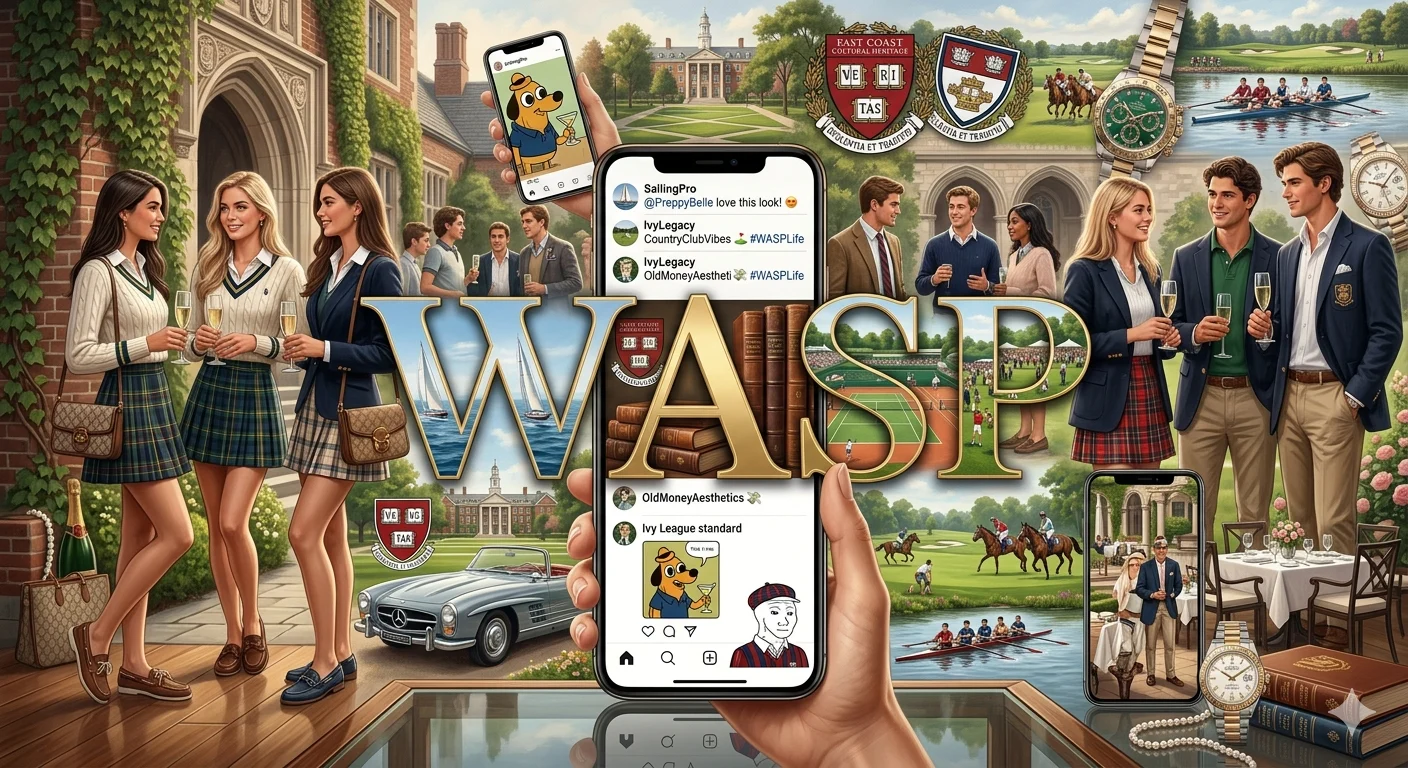
The “WASP meaning in texting” can vary depending on the conversation, but the term is most commonly known as an abbreviation for “White Anglo-Saxon Protestant.” It is often used in discussions about culture, social class, history, identity, or stereotypes in the United States. Online, the term may appear in memes, social commentary, social media debates, or casual conversations.
At the same time, “wasp” is also the name of a flying insect known for its sting. Because the word has both literal and abbreviation meanings, people can easily become confused when they see it online.
On social media platforms like TikTok, Reddit, Instagram, and X (formerly Twitter), WASP is sometimes used humorously or critically to describe certain lifestyles, fashion aesthetics, family traditions, or upper-class stereotypes.
- Meaning: White Anglo-Saxon Protestant.
- Full form: White Anglo-Saxon Protestant.
- Context: Culture, identity, social media, history.
- Tone: Neutral, descriptive, sometimes sarcastic.
If you have seen the term “WASP” online, you may have wondered what it actually means. The “WASP meaning in texting” has become more visible through social media discussions, memes, internet culture, and conversations about identity or social stereotypes. While some people immediately recognize the term, others confuse it with the insect because both meanings share the same spelling.
In most modern conversations, WASP stands for “White Anglo-Saxon Protestant.” Historically, the phrase described a social group in the United States associated with white Protestant families of English or Northern European background, especially those connected to wealth, privilege, or traditional upper-class culture.
Today, the term appears in many different contexts. Some people use it seriously in historical or sociological discussions, while others use it jokingly in memes or online commentary about fashion, lifestyle, or social behavior. For example, someone may describe a clothing style, vacation home, or elite school as having a “WASP vibe.”
Because the term can involve identity and stereotypes, understanding context is important. In some situations, WASP is used neutrally as a descriptive term and In others, it may carry sarcasm, criticism, or social commentary.
In this article, we’ll explain the meaning of WASP in texting and social media, its origins, examples, alternate meanings, emotional tone, comparisons, and common misunderstandings surrounding the term.
What does WASP mean? (Core Definition)
WASP most commonly stands for “White Anglo-Saxon Protestant.”
The phrase traditionally refers to:
- White Americans of English or Northern European ancestry
- Protestant Christian backgrounds
- Upper-class or socially influential families
- Traditional elite American culture
Historically, the term became associated with wealth, private schools, political influence, and old-money social circles in the United States.
For example:
- “The movie focuses on a wealthy WASP family.”
- “That neighborhood has a classic WASP atmosphere.”
In these examples, the word describes culture or social identity rather than religion alone.
Outside this meaning, “wasp” can also refer to the insect.
What does WASP mean in texting / slang / social media?
The “WASP meaning in texting” usually appears in conversations about lifestyle, culture, or social stereotypes.
On social media, users may use WASP to describe:
- Fashion aesthetics
- Wealthy family culture
- Preppy lifestyles
- Traditional elite behavior
- Old-money stereotypes
Examples include:
- “That outfit gives total WASP energy.”
- “This movie is peak WASP culture.”
- “The Hamptons aesthetic feels very WASP.”
In online slang, the term often appears humorously or sarcastically.
TikTok and meme culture helped popularize these lifestyle-based uses, especially among younger users discussing aesthetics and social identity online.
Other meanings of WASP
Although the cultural abbreviation is very common, WASP can also have other meanings.
Possible meanings include:
- The flying insect called a wasp
- White Anglo-Saxon Protestant
- Military or technical abbreviations
- Organization names
- Fictional or fandom references
For example:
- “A wasp flew into the kitchen.” → insect meaning
- “The article discussed WASP culture.” → social identity meaning
Context usually makes the intended meaning clear.
How WASP is used in real conversations
People use WASP in different types of conversations depending on context.
Common situations include:
- Historical discussions
- Social media commentary
- Fashion or lifestyle conversations
- Movies and TV analysis
- Meme culture
- Sociology discussions
Examples:
- “That country club has a WASP reputation.”
- “The show satirizes wealthy WASP families.”
- “This fashion trend feels very WASP-inspired.”
- “People online keep joking about WASP aesthetics.”
The tone may be serious, descriptive, humorous, or sarcastic depending on the speaker.
Examples of WASP in sentences
Here are some natural examples showing the “WASP meaning in texting” and conversation:
- “That movie focuses on a rich WASP family.”
- “Her style has a classic WASP vibe.”
- “TikTok is obsessed with old-money WASP aesthetics.”
- “The article discussed WASP influence in politics.”
- “That neighborhood feels very WASP and traditional.”
- “A wasp landed on the table during lunch.”
- “People online use WASP humor sarcastically sometimes.”
- “The show parodies upper-class WASP culture.”
These examples show both the social and literal meanings of the word.
Tone and intent of WASP
The tone of WASP changes heavily depending on context.
It may sound:
- Neutral
- Descriptive
- Historical
- Critical
- Sarcastic
- Humorous
For example:
- “WASP communities shaped parts of American history.” → neutral
- “That party had peak WASP energy 😂” → humorous or teasing
Because the term relates to social identity and stereotypes, tone matters a lot.
Origin and background of WASP
The term “WASP” became widely known in the United States during the 20th century.
It originally described:
- White
- Anglo-Saxon
- Protestant
Americans who belonged to socially influential or wealthy communities.
Over time, the term became connected to:
- Ivy League culture
- Old-money families
- Elite schools
- Traditional East Coast lifestyles
- Political influence
As internet culture evolved, WASP entered social media discussions, memes, and pop culture commentary.
Today, younger users may use the term more for aesthetic or cultural references than historical analysis.
Is WASP rude or inappropriate?
WASP is not automatically offensive, but it can become sensitive depending on tone and context.
In neutral discussions, the term is commonly used in:
- Sociology
- History
- Journalism
- Cultural analysis
However, if used mockingly or aggressively, it may feel insulting or stereotype-based.
Because the term involves identity and class discussions, respectful communication is important.
When NOT to use WASP
There are situations where using WASP may be inappropriate or misunderstood.
Avoid careless usage in:
- Sensitive identity discussions
- Arguments involving stereotypes
- Professional conversations without context
- Situations where assumptions about people may offend
Using the term casually without understanding its cultural meaning can create confusion.
Similar and related slang terms
Several online slang terms relate to culture, class, or social aesthetics similar to WASP.
Examples include:
- Prep
- Old money
- Ivy League aesthetic
- Elite culture
- Country club vibe
- East Coast prep
These phrases often overlap in internet discussions about fashion, wealth, or lifestyle.
WASP vs related terms
- WASP vs prep: Prep focuses more on fashion and school culture
- WASP vs old money: Old money focuses mainly on inherited wealth
- WASP vs elite: Elite is broader and less identity-specific
- WASP vs upper class: Upper class refers mainly to economic status
Although connected, these terms are not identical.
Comparison Table
| Term | Meaning | Usage | Key Difference |
|---|---|---|---|
| WASP | White Anglo-Saxon Protestant | Cultural/social discussions | Identity & historical context |
| Prep | Preppy culture/style | Fashion & school culture | Style-focused |
| Old Money | Inherited wealth | Lifestyle discussions | Wealth-centered |
| Elite | Social influence/status | Broad social discussions | Wider meaning |
| Upper Class | High economic status | Economic discussions | Class-focused |
Common misunderstandings
Many people misunderstand the “WASP meaning in texting” because the word has multiple interpretations.
Common confusion includes:
- Thinking it only refers to the insect
- Assuming all uses are offensive
- Confusing culture with religion alone
- Using stereotypes carelessly
- Believing the term is always negative
In reality, the meaning depends heavily on context and tone.
FAQ Section
1. What does WASP stand for?
WASP stands for White Anglo-Saxon Protestant.
2. What does WASP mean in texting?
It usually refers to a cultural or social identity discussion.
3. Is WASP slang?
It can be used as internet slang in meme or lifestyle conversations.
4. Is WASP offensive?
Not automatically, but tone and context matter.
5. What does WASP mean on social media?
It often refers to upper-class or preppy cultural stereotypes.
6. Can WASP refer to the insect?
Yes, the word also means the flying insect.
7. Is WASP still commonly used?
Yes, especially in online cultural discussions and memes.
8. Is WASP formal or informal?
It can appear in both academic and casual contexts.
conclusion
The “WASP meaning in texting” usually refers to “White Anglo-Saxon Protestant,” a term connected to culture, history, identity, and social stereotypes in the United States. While the word can also refer to the insect, online conversations often use the abbreviation in discussions about lifestyle, fashion, class, or internet aesthetics. Social media platforms have helped popularize humorous and sarcastic uses of the term, especially among younger audiences discussing “old money” or preppy culture. Because WASP can involve sensitive identity-related topics, context and tone are extremely important when using or interpreting the term online.
