
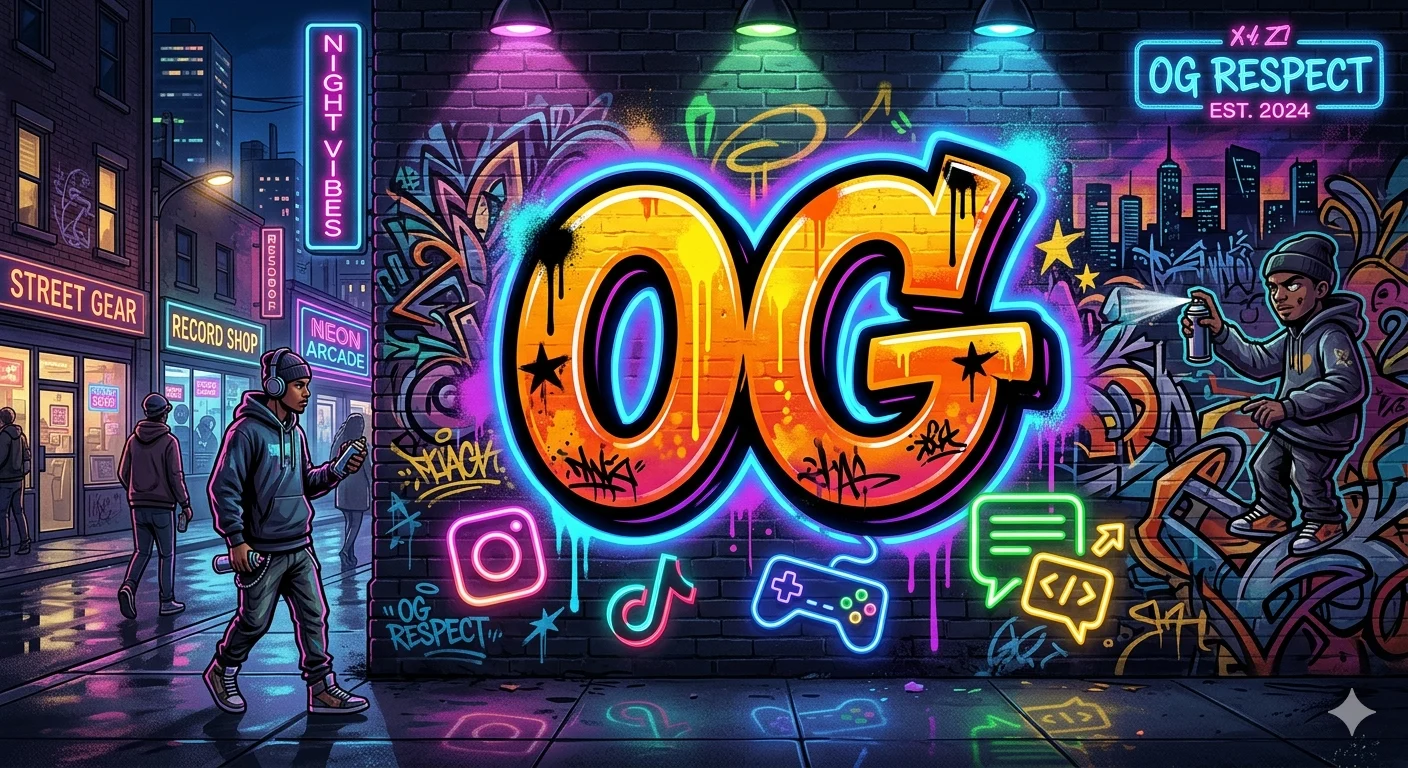
“OG” is a popular slang term used in texting, social media, and online conversations. In most cases, the “OG meaning in slang” refers to someone who is original, authentic, or has been around from the beginning. It originally came from the phrase “Original Gangster,” but over time it has evolved into a more positive and general compliment. Today, people use it to show respect for someone experienced, legendary, or truly original in what they do. You will often see it in comments, captions, gaming chats, and memes where users want to highlight someone’s status or long-standing presence.
- Meaning: Original Gangster / Original / Experienced person.
- Full form: Original Gangster.
- Context: Texting, social media, gaming, pop culture.
- Tone: Mostly positive, respectful, casual.
If you have ever seen someone called “OG” online and wondered what it means, you’re not alone. The term “OG meaning in slang” is one of the most searched internet slang phrases because it appears everywhere—from social media comments to gaming chats and memes. At first, it might sound confusing or even serious, but in modern internet culture, it is mostly a positive and respectful term.
Originally, OG comes from the phrase “Original Gangster,” which was used in street and hip-hop culture to describe someone highly respected and authentic. However, over time, its meaning has changed a lot. Today, people use OG to refer to someone who is original, experienced, or has been part of something from the beginning. It is often used as a compliment for creators, gamers, influencers, or even friends who are considered pioneers in their space.
In simple terms, OG is no longer about its strict original meaning. Instead, it has become a friendly slang word that shows respect and appreciation. In this article, we will break down the full meaning of OG, how it is used in texting and social media, real-life examples, and when you should or shouldn’t use it.
What does OG mean? (Core Definition)
The term “OG” originally stands for “Original Gangster.” It came from American street and hip-hop culture, where it referred to someone highly respected and authentic within a group. Over time, the meaning evolved beyond its original context.
In modern usage, OG simply means “original” or “a true pioneer.” It is used to describe someone who was first, best, or most authentic in a particular space. For example, someone who has been using a platform since the beginning might be called an OG user.
So today, OG meaning is less about gangs and more about respect, originality, and experience.
OG in texting, slang & social media
On platforms like Instagram, TikTok, Snapchat, and WhatsApp, OG is commonly used as a compliment. People use it to acknowledge someone’s long-term presence or skill in a certain area.
In Gen Z communication, OG is a quick and stylish way to show admiration. Instead of saying “you are an original or experienced person,” users simply say “you’re an OG.” It appears in comments like praise for influencers, gamers, creators, or even friends who have been around since the beginning of something.
It is also common in memes where someone is labeled OG for doing something first or better than others.
Other meanings of OG
Although the most popular meaning is “Original Gangster” or “original,” OG can take slightly different meanings depending on context:
- Original Gangster (historical slang origin)
- Original / pioneer / first version of something
- Veteran or experienced member in a community
- Respectful nickname in gaming or online groups
- Rarely, used as part of usernames or brand identity
In most modern online conversations, it is understood as a compliment rather than anything negative.
How OG is used in real conversations
OG is widely used in everyday online communication. You’ll often see it in:
- Social media comments praising creators
- Gaming chats referring to experienced players
- Meme culture where “old but gold” ideas are labeled OG
- Fan communities honoring early supporters or members
- Friendly conversations between friends
It is especially common in spaces where experience and originality are valued.
Examples of OG in sentences
Here are some natural ways people use OG in real life conversations:
- “He’s an OG gamer, he played this since day one.”
- “That YouTuber is an OG of the platform.”
- “Respect to the OG fans who supported from the start.”
- “She’s an OG in fashion trends.”
- “Only OG users remember this feature.”
- “You’re the real OG for helping me out.”
- “This design is OG style, classic and original.”
- “They’re OG members of the group.”
Tone and intent of OG
The tone of OG is usually positive and respectful. It is used to show admiration or recognition. In most cases, it carries a sense of honor or appreciation.
- Positive: Most common usage (respect, admiration)
- Neutral: Informal description of someone experienced
- Humorous: Sometimes used jokingly among friends
- Rare negative use: Only if used sarcastically in certain contexts
Overall, OG is considered a friendly slang term in modern internet culture.
Origin and background of OG
The term OG originated in American street culture and became widely known through hip-hop music in the 1980s and 1990s. It was originally short for “Original Gangster,” used to describe respected and authentic individuals in a community.
As hip-hop culture became global, the term spread into mainstream media and eventually into internet slang. Over time, its meaning softened and expanded. Today, it is no longer strictly tied to its original meaning and is instead used in a much broader and more positive way.
Is OG rude or inappropriate?
In modern usage, OG is not considered rude or inappropriate. It is generally seen as a compliment. When someone is called an OG, it usually means they are respected, experienced, or original.
However, context still matters. In very formal or sensitive discussions, slang terms like OG may feel too casual. But in everyday online communication, it is completely acceptable.
When NOT to use OG
Even though OG is widely used, there are situations where it is better to avoid it:
- Formal emails or professional reports
- Academic writing or essays
- Official documentation
- Serious business communication
- Situations where clarity and formality are required
In these cases, using words like “original,” “experienced,” or “veteran” is more appropriate.
Similar and related slang terms
OG is part of a larger set of slang words used to show respect or experience:
- OG vs Legend: OG emphasizes originality; legend emphasizes fame or greatness
- OG vs Veteran: Veteran focuses on experience; OG includes authenticity
- OG vs Pioneer: Pioneer focuses on being first or innovative
- OG vs Classic: Classic refers to something timeless, OG refers to original presence
These terms often overlap but carry slightly different emotional tones.
OG vs related terms
- OG vs Original: OG is slang; original is formal
- OG vs Veteran: OG includes respect + originality; veteran focuses on experience
- OG vs Legend: OG is about authenticity; legend is about reputation and fame
Understanding these differences helps use slang more accurately.
Comparison Table
| Term | Meaning | Usage | Key Difference |
|---|---|---|---|
| OG | Original / respected person | Social media, chats | Slang + respect |
| Original | First or authentic version | Formal writing | Neutral and formal |
| Veteran | Experienced person | Work, gaming | Focus on experience |
| Legend | Highly famous/respected | Pop culture | Focus on fame |
| Pioneer | First to do something | Academic, formal | Innovation focus |
Common misunderstandings
Many people misunderstand OG in different ways:
- Thinking it only means “gangster” in a negative sense
- Assuming it is always related to crime or street culture
- Using it in formal writing where it doesn’t fit
- Confusing it with usernames or branding
- Overusing it without understanding context
In reality, OG has become a positive internet slang term in most situations.
FAQ Section
1. What does OG mean in chat?
It usually means someone original, experienced, or respected.
2. Is OG a compliment?
Yes, in most cases it is used as a compliment.
3. Does OG mean old?
Not exactly. It means original or experienced, not just old.
4. Is OG slang or formal?
It is informal slang used online.
5. Where is OG used most?
On social media, gaming chats, and online communities.
6. Can OG be negative?
Rarely, but it depends on tone and context.
7. What does OG stand for originally?
Original Gangster.
8. Why do people say OG?
To show respect or highlight originality and experience.
conclusion
The “OG meaning in slang” has evolved a lot over time. While it originally stood for “Original Gangster,” today it is widely used to describe someone who is original, experienced, or highly respected in a community. It is a positive slang term commonly seen in social media, gaming, and everyday online conversations. The key to using OG correctly is understanding context—because in modern language, it is less about its original street meaning and more about appreciation and respect.
1 thought on “What “OG” Means in Texting, Slang & Internet Culture”