
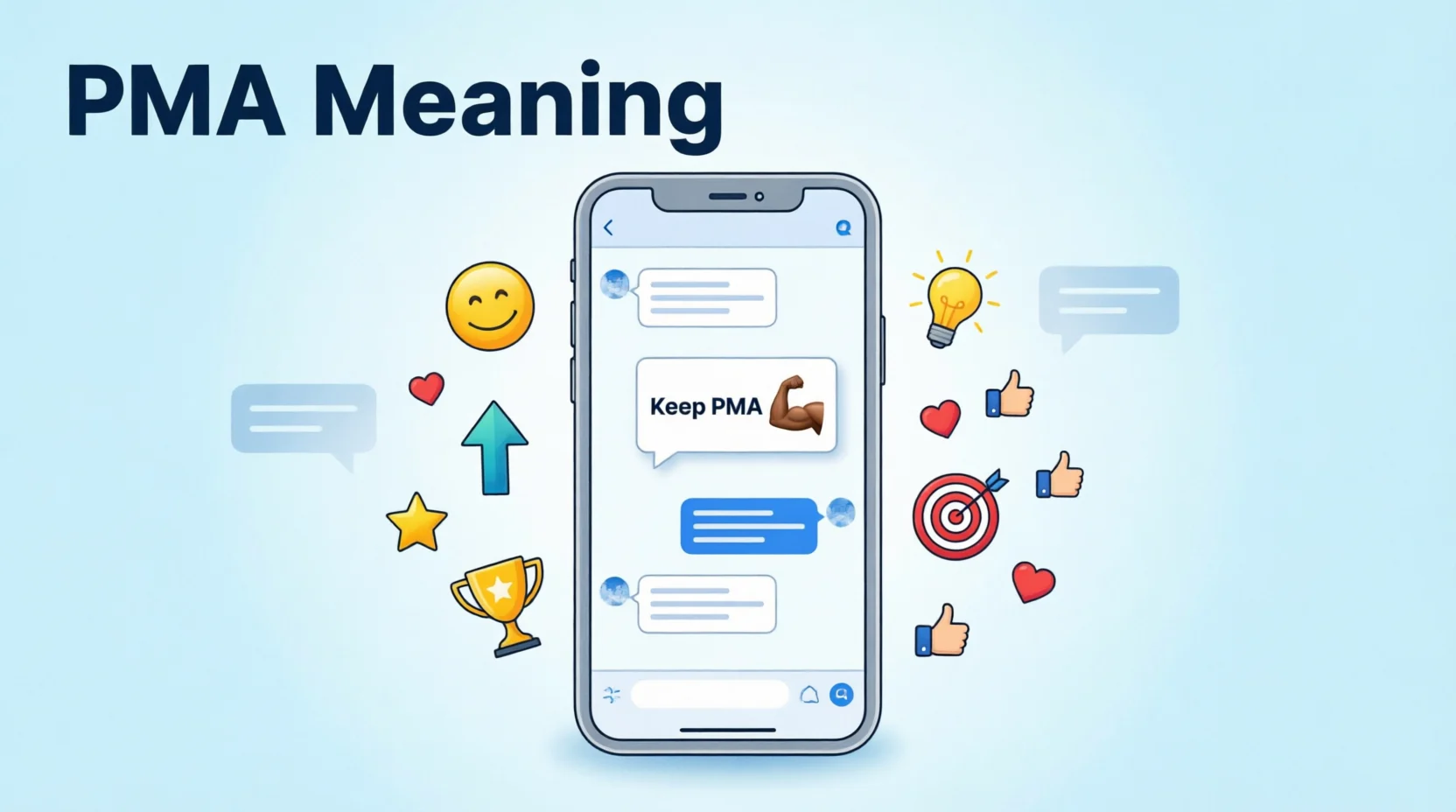
Meaning: PMA usually means Positive Mental Attitude.
Full Form: Positive Mental Attitude
Context: Used in texting, social media, motivational conversations, and online communities to describe a positive mindset or optimistic approach.
Tone: Positive, encouraging, and motivational.
If you have seen PMA in a text message, social media caption, comment, or online discussion, you may wonder what this short abbreviation means. Internet slang and texting shortcuts often create confusion because the same three letters can have different meanings depending on the situation.
In most online conversations, PMA means “Positive Mental Attitude.” People use it to describe staying hopeful, confident, and focused even when facing challenges. The phrase is commonly connected with motivation, personal growth, success mindset, and self-improvement communities.
You may see someone write “Keep PMA” or “Need more PMA today” when they are encouraging themselves or others to maintain a positive outlook. It is often used in motivational posts, fitness communities, workplace discussions, and casual chats.
However, PMA is not limited to internet slang. The abbreviation has other meanings in different fields, including business, healthcare, and technology. Understanding the surrounding conversation is important because the meaning can change depending on where you find it.
This guide explains the meaning of PMA, how people use it in texting and social media, its different meanings, examples, related terms, and common misunderstandings.
What Does PMA Mean?
Core Definition of PMA
The most common meaning of PMA is Positive Mental Attitude. It refers to having an optimistic way of thinking and approaching life with confidence, determination, and hope.
A person with a positive mental attitude does not ignore problems. Instead, they try to focus on solutions rather than only worrying about difficulties. PMA encourages people to believe they can improve situations through effort, patience, and a constructive mindset.
For example, someone who fails an exam but decides to study harder and try again is showing a positive mental attitude. They recognize the setback but do not allow it to stop their progress.
Simple Explanation of PMA
In simple words, PMA means keeping a positive mindset. It is about choosing optimism instead of negativity.
People often use PMA as a reminder to stay motivated:
- Stay confident during difficult times.
- Look for opportunities instead of only problems.
- Believe that improvement is possible.
- Maintain a hopeful attitude.
The abbreviation became popular because “Positive Mental Attitude” is a longer phrase, and internet users often shorten common expressions for faster communication.
What Does PMA Mean in Texting, Slang, and Social Media?
PMA in Chat Messages
In texting, PMA is usually used as a motivational abbreviation. Friends, teammates, coworkers, and online communities may use it when discussing challenges or encouraging someone.
Examples of texting usage include:
- “Don’t give up, keep PMA.”
- “This week has been stressful, but I’m trying to maintain PMA.”
- “PMA always helps me get through tough situations.”
In casual conversations, PMA works like other motivational phrases such as “stay positive” or “keep your head up.”
PMA in Social Media Culture
On social media platforms, PMA often appears in captions, hashtags, and motivational posts. People use it to express their attitude toward life, fitness goals, career progress, or personal development.
A person sharing a workout achievement might write:
“Small steps every day. PMA keeps me moving.”
A business owner might post:
“Challenges are part of success. Always maintain PMA.”
In these situations, PMA represents determination and a positive approach rather than simply being happy all the time.
PMA and Gen Z Usage
Among younger internet users, PMA is understood as part of the broader online culture of positivity, self-improvement, and mental wellness discussions.
However, compared with some newer slang terms, PMA is not one of the most common Gen Z abbreviations. Many younger users may recognize the meaning through motivational content, communities, or older internet culture rather than everyday texting.
Other Meanings of PMA
Although Positive Mental Attitude is the most common meaning in slang and online conversations, PMA can represent other terms in different industries.
Some alternate meanings include:
Premarket Approval:
Used in medical and regulatory fields. It refers to approval processes for certain medical devices.
Private Military Agency:
Sometimes used in discussions related to security organizations.
Product Management Association:
Used in some business and professional communities.
Personal Medical Assistant:
May appear in healthcare-related contexts.
Because PMA has multiple meanings, always check the surrounding topic. A motivational Instagram caption and a medical document will likely use PMA differently.
How PMA Is Used in Real Conversations
Everyday Situations
People use PMA in many everyday situations where encouragement or motivation is needed.
Common examples include:
During difficult situations:
Someone may use PMA to remind themselves or others to stay hopeful.
In sports and fitness:
Athletes often connect positive thinking with performance and discipline.
At work or school:
People may mention PMA when dealing with deadlines, pressure, or challenges.
During personal growth:
Self-improvement communities often promote PMA as a way to build confidence.
Platforms Where PMA Appears
PMA can appear on different online platforms, including:
- Text messages
- Instagram captions
- Facebook posts
- Reddit discussions
- Motivational forums
- Fitness communities
- Workplace chats
The meaning usually stays the same, but the style changes depending on the platform. A social media post may use PMA as inspiration, while a private message may use it as encouragement.
Examples of PMA in Conversations
Example 1:
Person A: “I failed my interview again.”
Person B: “Keep working. PMA will help you get through this.”
Meaning: Stay positive and continue trying.
Example 2:
“New month, new goals. Time to bring some PMA.”
Meaning: Starting with a positive mindset.
Example 3:
“Life is challenging right now, but I’m keeping my PMA.”
Meaning: Maintaining optimism despite problems.
Example 4:
“PMA is the secret behind long-term success.”
Meaning: A positive attitude helps achieve goals.
Example 5:
“Bad day, but no negativity. PMA.”
Meaning: Choosing positivity over complaining.
Example 6:
“Our team needs PMA before the final match.”
Meaning: The team needs confidence and motivation.
Tone and Intent Behind PMA
Emotional Meaning of PMA
The emotional message behind PMA is usually encouragement. It suggests confidence, hope, and resilience.
Someone using PMA is often expressing:
- “I believe things can improve.”
- “I will not give up.”
- “I want to focus on solutions.”
It is connected with emotional strength and a forward-thinking attitude.
Positive, Negative, or Neutral Usage
PMA is generally positive. It is rarely used in a negative way.
Positive use:
- “Keep your PMA.”
- “PMA helped me overcome challenges.”
Neutral use:
- “The group follows a PMA philosophy.”
Negative use is uncommon but possible if someone criticizes forced positivity.
For example:
“Everyone keeps talking about PMA, but they ignore the actual problem.”
Here, the person is not attacking the abbreviation itself but questioning unrealistic positivity.
Sarcasm vs Serious Meaning
Most PMA uses are serious and motivational. However, online communication sometimes uses abbreviations sarcastically.
Example:
“Lost my wallet, missed my bus, and it’s raining. Perfect PMA day!”
This could be humorous because the person is joking about a bad situation.
Context, tone, and relationship between speakers determine the meaning.
Origin and Background of PMA
The idea behind Positive Mental Attitude became popular through motivational literature and personal development movements. The phrase gained attention through success and leadership teachings that emphasized optimism, confidence, and constructive thinking.
Over time, internet culture shortened many long phrases into abbreviations. PMA became a convenient way to express the idea of staying positive without typing the full phrase.
Today, it continues to appear in motivational communities, sports groups, and online discussions focused on personal improvement.
Is PMA Rude or Inappropriate?
No, PMA is generally not rude or offensive. It is considered a positive expression.
However, using PMA in the wrong situation can sometimes seem insensitive. For example, telling someone “just have PMA” when they are dealing with a serious problem may sound like you are ignoring their feelings.
A better approach is to acknowledge the difficulty first and then offer encouragement.
Instead of:
“Stop worrying, just PMA.”
A better message:
“I know this is difficult, but keep your PMA. You’ll get through it.”
When Not to Use PMA
Formal Communication
PMA is an informal abbreviation. It may not be suitable for official emails, academic writing, or professional documents unless the audience already understands it.
In formal situations, writing “Positive Mental Attitude” is clearer.
Wrong Contexts
Avoid using PMA when:
- The audience may not understand abbreviations.
- The situation requires serious emotional support.
- The meaning could be confused with another definition.
Clear communication is more important than using short internet terms.
Similar and Related Slang Terms
Several expressions have meanings similar to PMA:
Positive vibes:
A casual phrase describing a good attitude and positive energy.
Stay positive:
A common encouragement to maintain optimism.
Good vibes only:
A social media phrase focused on avoiding negativity.
Growth mindset:
The belief that abilities can improve through learning and effort.
Keep your head up:
A supportive phrase used during difficult moments.
PMA vs Related Terms
IT vs Positive Mindset
PMA and positive mindset have almost the same meaning. PMA is simply an abbreviation for a specific phrase, while positive mindset is a broader everyday expression.
IT vs Good Vibes
Good vibes usually refers to a positive feeling or atmosphere, while PMA focuses more on personal thinking and attitude.
PMA vs Growth Mindset
A growth mindset focuses on learning and improvement. PMA focuses more on maintaining optimism and confidence.
PMA Comparison Table
| Term | Meaning | Usage | Key Difference |
|---|---|---|---|
| PMA | Positive Mental Attitude | Motivation, texting, social media | Focuses on optimistic thinking |
| Positive Mindset | A hopeful way of thinking | Everyday conversations | Broader than PMA |
| Good Vibes | Positive feelings or energy | Social media and casual speech | More about mood and atmosphere |
| Growth Mindset | Belief in improvement through effort | Education and self-development | Focuses on learning and progress |
| Stay Positive | Encouragement to remain hopeful | Common daily expression | Simple phrase, not an abbreviation |
Common Misunderstandings About PMA
One common misunderstanding is thinking PMA means ignoring problems. It does not mean pretending everything is perfect.
A positive mental attitude means facing challenges with confidence while still recognizing reality.
Another confusion happens because PMA has different meanings in professional fields. Someone reading a medical document may see PMA referring to something completely different.
The best way to understand PMA is to look at the context where it appears.
Frequently Asked Questions About PMA
What does PMA stand for in texting?
In texting, PMA usually stands for Positive Mental Attitude. It refers to staying optimistic and motivated.
Is PMA a slang word?
PMA is more of an abbreviation than traditional slang. It is commonly used in online and casual conversations.
What does “keep PMA” mean?
“Keep PMA” means maintain a positive attitude and stay hopeful during challenges.
Is PMA used on social media?
Yes, PMA appears in motivational posts, captions, and online communities focused on positivity.
Is PMA the same as positive thinking?
They are very similar. PMA specifically means Positive Mental Attitude, while positive thinking is a broader concept.
Can PMA have other meanings?
Yes. PMA can have different meanings in business, healthcare, and technical fields depending on context.
Is PMA a negative term?
No. PMA is usually positive and encouraging.
Should I use PMA in professional emails?
Usually, it is better to write the full phrase instead of using the abbreviation in formal communication.
conclusion
PMA most commonly means Positive Mental Attitude. In texting, slang, and social media, people use it to express optimism, confidence, and motivation.
The term represents the idea of staying positive while facing challenges and focusing on solutions instead of negativity. Although PMA has other meanings in professional areas, online users usually mean a positive mindset when they use it.
Understanding the context is the key to interpreting PMA correctly. Whether it appears in a motivational
post, a personal message, or an online discussion, it usually carries a message of hope, encouragement, and resilience.