
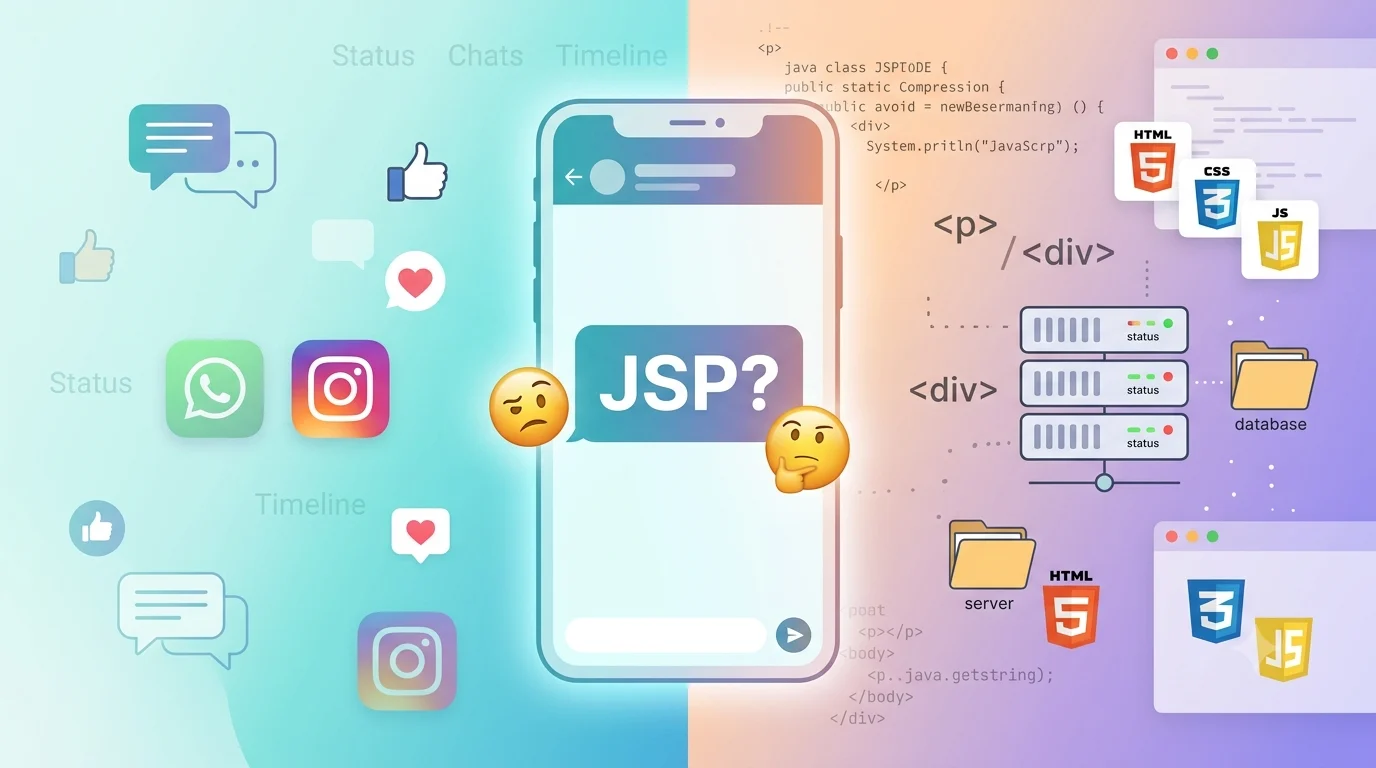
JSP is a short form that appears in different contexts online, especially in chats, social media, and technical discussions. Its meaning is not fixed because it depends on how and where it is used. In casual texting, it is often linked to slang expressions, while in technology it refers to a programming concept. Because of this dual nature, JSP can confuse users who see it in messages or online discussions.
In simple terms, JSP can either mean a casual slang abbreviation used in informal conversation or a technical term used in web development. Understanding the context is the key to interpreting it correctly.
JSP is a short form that often confuses people because it has more than one meaning. You may see it in texting, social media chats, or even in programming discussions, and each context gives it a different interpretation. In casual conversations, JSP is commonly used as a slang shortcut that means “I don’t know,” especially when people want to reply quickly without typing a full sentence.
On the other hand, in the tech world, JSP stands for JavaServer Pages, a programming technology used to create dynamic websites and web applications. Because of these two very different uses, many users struggle to understand what JSP really means when they see it online.
This guide will clearly explain both meanings of JSP, how it is used in real conversations, and how to identify the correct meaning based on context, so you never get confused again while reading chats or technical content.
What does JSP mean?
JSP has two main meanings that are widely recognized.
The first meaning comes from French slang “je sais pas,” which translates to “I don’t know.” In informal texting, people sometimes shorten this phrase to JSP when they want to respond quickly or casually.
The second meaning is technical and stands for JavaServer Pages, which is a server-side technology used in web development. It helps developers create dynamic web pages using Java.
So, JSP can either express uncertainty in casual chat or refer to a powerful programming tool, depending on the situation.
JSP meaning in texting / slang / social media
In texting and social media, JSP is usually used as a quick and informal way to say “I don’t know.” It is more common in relaxed conversations where people don’t want to type full sentences.
In Gen Z chats, abbreviations like JSP help make communication faster and more casual. It often appears in messages when someone is unsure about something, doesn’t have an answer, or is not interested in explaining further.
The tone of JSP in texting is usually neutral and informal. It does not sound aggressive, but it can sometimes feel slightly lazy or uninterested depending on the context.
Other meanings of JSP
Apart from slang use, JSP has other recognized meanings:
- JavaServer Pages: A technology used in building dynamic websites and web applications.
- In rare cases, JSP may appear as an abbreviation for organizations, projects, or local terms, but these are not widely used.
- In most online discussions, the two main meanings (slang and programming) are the only relevant ones.
Context always decides what JSP means in a conversation.
How JSP is used in real conversations
JSP is used in different ways depending on the platform.
In casual chats on WhatsApp, Instagram, or Snapchat, it appears when someone is unsure or doesn’t have information. It is usually a quick reply instead of a full sentence.
In programming forums, GitHub discussions, or technical documentation, JSP refers to JavaServer Pages and is used in discussions about backend development and web architecture.
Because of these two completely different uses, readers must carefully check the conversation type before interpreting it.
Examples of JSP in sentences
Here are some natural examples showing how JSP is used:
- “Where is Ali today?” – “JSP, maybe at home.”
- “Do you know the answer?” – “JSP, I didn’t study this part.”
- “What time is the meeting?” – “JSP, check the group.”
- “He didn’t reply?” – “JSP, he might be busy.”
- “We are learning JSP in class for web development.”
- “This project uses JSP for dynamic pages.”
- “JSP can handle server-side requests in Java applications.”
These examples show how the meaning changes completely based on context.
Tone and intent behind JSP
The tone of JSP depends on how it is used.
In texting, it usually carries a neutral or casual tone. It shows uncertainty or lack of knowledge without sounding emotional. Sometimes it can feel slightly careless if used too often.
In technical use, JSP has a serious and professional tone because it is related to programming and web development.
Overall, JSP is not emotionally strong. It is more functional than expressive.
Origin or background of JSP
The slang version of JSP comes from the French phrase “je sais pas,” which means “I don’t know.” Over time, internet users shortened it into a quick typing form for casual communication.
The technical meaning, JavaServer Pages, was developed as part of Java web technologies to help create dynamic websites. It became widely used in enterprise-level applications and server-side programming.
Both meanings evolved independently in different communities but now coexist online.
Is JSP rude or inappropriate?
JSP is not considered rude in general. In casual texting, it simply shows that someone does not know the answer.
However, depending on tone, it may sound slightly dismissive if used in a serious conversation where a full explanation is expected. In professional settings, it is better to avoid slang abbreviations like JSP.
The programming meaning is completely neutral and professional.
When NOT to use JSP
You should avoid using JSP in formal situations such as:
- Academic writing or exams
- Professional emails
- Business communication
- Situations where clarity is important
In these cases, writing full phrases like “I don’t know” or using proper technical terms is better.
Similar and related slang terms
JSP is similar to other internet abbreviations used in texting:
- IDK (I don’t know)
- BRB (be right back)
- TBH (to be honest)
- IMO (in my opinion)
These shortcuts are commonly used to make chatting faster and easier.
JSP vs related terms
JSP is often compared with other expressions:
- JSP vs IDK: Both mean “I don’t know,” but IDK is more common in English texting, while JSP comes from French slang.
- JSP vs full phrase “je sais pas”: JSP is a shortened version of the French phrase.
- JSP (slang) vs JSP (tech): One is informal chat slang, the other is a programming technology used in web development.
Comparison Table
| Term | Meaning | Usage | Key Difference |
|---|---|---|---|
| JSP (slang) | I don’t know | Casual texting | Informal chat abbreviation |
| IDK | I don’t know | English texting | More widely used globally |
| JSP (tech) | JavaServer Pages | Programming/web development | Technical server-side language |
Common misunderstandings
Many people get confused when they see JSP online.
Some think it always means programming, while others assume it is only slang. This confusion happens because both meanings are widely used in different communities.
Another misunderstanding is assuming JSP is always negative, but in reality it is usually neutral.
FAQ Section
What does JSP mean in chat?
It usually means “I don’t know” in casual texting.
Is JSP English slang?
Not exactly. It comes from French slang but is used in online chats.
What does JSP mean in coding?
It stands for JavaServer Pages, a web development technology.
Is JSP rude?
No, it is generally neutral and informal.
Where is JSP commonly used?
It is used in chats, social media, and programming discussions.
What is the full form of JSP?
In tech, it is JavaServer Pages. In slang, it comes from “je sais pas.”
Is JSP the same as IDK?
They are similar in meaning but come from different languages.
conclusion
JSP is a dual-meaning term used in both casual texting and technical programming. In chats, it usually means “I don’t know,” while in development it refers to JavaServer Pages. The correct interpretation depends entirely on context. Understanding this difference helps avoid confusion and ensures you read online messages more accurately.
