
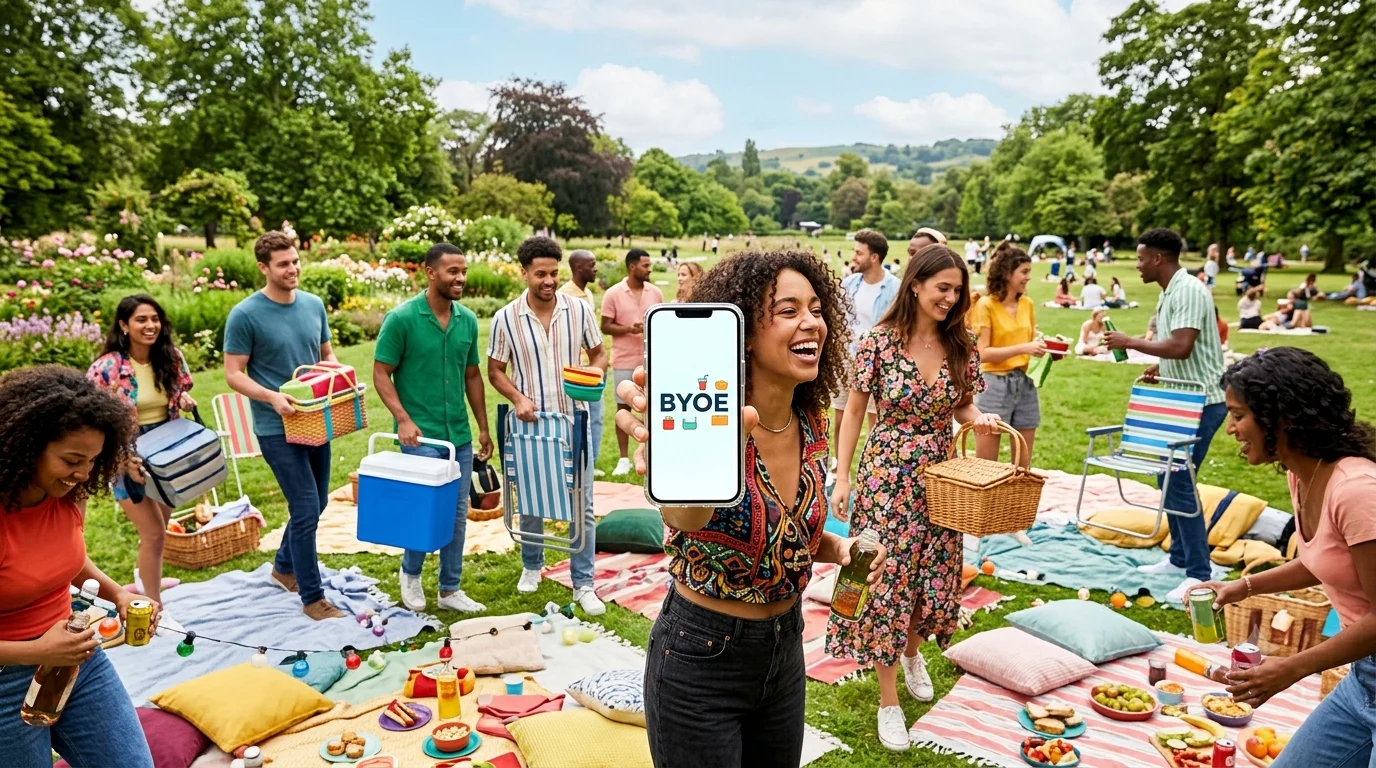
Meaning: BYOE usually means “Bring Your Own Everything” or “Bring Your Own Equipment,” depending on the situation.
Full Form: Bring Your Own Everything (most common social meaning)
Context: Texting, social media, event invitations, group chats, parties, and gatherings.
Tone: Friendly, casual, and informative.
If you’ve seen the abbreviation BYOE in a text message, social media post, online invitation, or group chat, you may be wondering what it means. Like many internet abbreviations, BYOE helps people communicate information quickly without typing a long explanation.
The term is especially common when planning events, parties, outdoor activities, or gatherings where guests are expected to bring certain items. Because different groups may use the abbreviation in slightly different ways, it can sometimes cause confusion for people seeing it for the first time.
In most situations, BYOE stands for “Bring Your Own Everything.” It tells attendees that they should not expect supplies, food, drinks, or equipment to be provided. Instead, each person is responsible for bringing what they need.
This guide explains the BYOE meaning, how it is used in texting and social media, examples of real-life usage, alternative meanings, and how it compares to similar abbreviations such as BYOB and BYOF.
What Does BYOE Mean?
BYOE most commonly stands for “Bring Your Own Everything.”
The phrase is often used when organizing informal events where participants are expected to provide their own necessities. Instead of supplying food, drinks, chairs, equipment, or personal items, the organizer asks everyone to bring what they need.
For example:
“We’re having a beach day on Saturday. BYOE!”
In this case, guests may need to bring their own food, drinks, towels, chairs, sunscreen, and other personal items.
The abbreviation is practical because it communicates expectations in just four letters.
What Does BYOE Mean in Texting, Slang, and Social Media?
In texting, BYOE is commonly used when coordinating plans with friends or family.
Someone might send a message like:
“Movie night at my place. BYOE.”
This indicates that guests should bring whatever snacks, drinks, blankets, or supplies they want.
On social media, BYOE frequently appears in event announcements, Facebook groups, Instagram stories, and community pages.
Examples include:
“Community picnic this Sunday. BYOE and join the fun!”
“Outdoor movie screening tonight. BYOE seating and snacks.”
The abbreviation fits perfectly into modern internet communication because it is short, clear, and easy to understand once you know its meaning.
Among younger users, BYOE is often viewed as a convenient way to organize casual gatherings without lengthy instructions.
Other Meanings of BYOE
Although “Bring Your Own Everything” is the most common meaning, BYOE can have other interpretations depending on the setting.
Some alternative meanings include:
- Bring Your Own Equipment
- Bring Your Own Electronics
- Bring Your Own Essentials
- Bring Your Own Experience (rare usage)
In professional or technical environments, BYOE may refer specifically to equipment rather than general supplies.
For example:
“Photography workshop. BYOE camera and accessories.”
Here, BYOE clearly refers to equipment instead of food or personal items.
This is why context is important when interpreting the abbreviation.
How BYOE Is Used in Real Conversations
BYOE appears in many real-life situations.
It is especially common when organizers want participants to be self-sufficient.
Examples include:
- Picnics
- Camping trips
- Beach outings
- Community events
- Outdoor concerts
- Gaming gatherings
- Sports activities
- Group meetings
A friend might text:
“We’re meeting at the park at noon. BYOE.”
Another example:
“Weekend camping trip. BYOE tent and sleeping bag.”
The abbreviation helps simplify event planning and reduces misunderstandings about what will be provided.
Examples of BYOE in Sentences
Here are some natural examples of BYOE in everyday conversations:
- We’re having a picnic this weekend, so BYOE.
- The community movie night is BYOE seating and snacks.
- Camping trip starts Friday. BYOE tent and gear.
- Beach party tomorrow. BYOE food and drinks.
- Photography meetup at sunset. BYOE camera equipment.
- Outdoor concert in the park. BYOE chairs and blankets.
- Game night at my house. BYOE snacks.
- Fishing trip this weekend. BYOE equipment and supplies.
These examples show how the abbreviation can apply to many different situations.
Tone and Intent
BYOE generally has a positive and practical tone.
People use it to communicate expectations rather than emotions.
Common tones include:
- Friendly
- Informative
- Casual
- Welcoming
- Organized
Unlike many internet slang terms, BYOE does not express excitement, anger, humor, or sarcasm. Instead, it serves as a useful instruction.
For example:
“Family barbecue on Saturday. BYOE.”
The message is straightforward and informative.
Occasionally, people may use BYOE playfully, but its primary purpose remains practical communication.
Origin and Background of BYOE
BYOE developed from a larger family of “Bring Your Own” abbreviations.
One of the earliest and most popular examples is BYOB, which stands for “Bring Your Own Beverage” or “Bring Your Own Bottle.”
As event planning evolved, people created variations such as:
- BYOB (Bring Your Own Beverage)
- BYOF (Bring Your Own Food)
- BYOD (Bring Your Own Device)
- BYOC (Bring Your Own Chair)
- BYOE (Bring Your Own Everything)
The rise of texting, social media, and online event invitations helped these abbreviations become more common.
Today, BYOE is widely understood in casual social settings and community gatherings.
Is BYOE Rude or Inappropriate?
No, BYOE is generally not considered rude or offensive.
However, some people may feel that asking guests to bring everything themselves can seem less hospitable depending on cultural expectations.
In most casual settings, though, BYOE is viewed as practical and reasonable.
The abbreviation itself is:
- Family-friendly
- Professional enough for informal events
- Non-offensive
- Easy to understand
The key is making sure guests clearly know what they are expected to bring.
When NOT to Use BYOE
Although BYOE is useful, it is not appropriate in every situation.
Avoid using it in:
- Formal wedding invitations
- Corporate events
- Business conferences
- Professional presentations
- Official ceremonies
- Luxury hosted events
For example:
“Annual corporate awards dinner. BYOE.”
This could appear unprofessional and confusing.
Instead, formal invitations should clearly explain event details without relying on internet abbreviations.
You should also avoid BYOE when communicating with people who may not understand internet slang.
Similar and Related Slang Terms
Several abbreviations share similarities with BYOE.
BYOB
BYOB means “Bring Your Own Beverage.”
Guests bring their own drinks.
BYOF
BYOF means “Bring Your Own Food.”
Participants provide their own meals or snacks.
BYOD
BYOD stands for “Bring Your Own Device.”
It is commonly used in workplaces, schools, and technology environments.
BYOC
BYOC means “Bring Your Own Chair.”
It often appears at outdoor events.
Potluck
A potluck is an event where each guest brings food to share with everyone.
Unlike BYOE, participants contribute collectively.
BYOE vs Related Terms
BYOE vs BYOB
BYOB focuses only on beverages.
BYOE covers everything a guest may need.
BYOE vs BYOF
BYOF refers specifically to food.
BYOE includes food plus other supplies and equipment.
BYOE vs Potluck
At a potluck, guests share contributions with the group.
With BYOE, people usually bring items for their own use.
Comparison Table
| Term | Meaning | Usage | Key Difference |
|---|---|---|---|
| BYOE | Bring Your Own Everything | Events and gatherings | Covers all personal needs |
| BYOB | Bring Your Own Beverage | Parties and social events | Drinks only |
| BYOF | Bring Your Own Food | Picnics and gatherings | Food only |
| BYOD | Bring Your Own Device | Schools and workplaces | Technology focused |
| BYOC | Bring Your Own Chair | Outdoor events | Seating only |
| Potluck | Shared food event | Community gatherings | Contributions are shared |
Common Misunderstandings
One common misunderstanding is assuming BYOE always means bringing food and drinks.
In reality, the abbreviation can refer to any supplies needed for an event.
Another mistake is confusing BYOE with BYOB.
While BYOB is limited to beverages, BYOE includes everything participants may need.
Some people also assume organizers are providing basic supplies when BYOE is listed. This can lead to confusion if expectations are not clearly explained.
Whenever you see BYOE, it is a good idea to ask for clarification if the invitation does not specify what guests should bring.
Frequently Asked Questions
What does BYOE stand for?
BYOE usually stands for “Bring Your Own Everything.”
What does BYOE mean in texting?
In texting, it typically means participants should bring whatever supplies they need for an event.
Is BYOE the same as BYOB?
No. BYOB focuses only on beverages, while BYOE includes all necessary items.
Is BYOE commonly used on social media?
Yes. It often appears in event invitations and community announcements.
Can BYOE have multiple meanings?
Yes. It may refer to equipment, essentials, electronics, or everything depending on context.
Is BYOE considered slang?
It is more accurately described as an internet abbreviation rather than traditional slang.
Can BYOE be used in business settings?
It can be used informally, but clear language is often better in professional communication.
What should I bring when someone says BYOE?
Bring the supplies, food, drinks, equipment, or personal items you may need for the event.
conclusion
BYOE is a useful abbreviation that most commonly means “Bring Your Own Everything.” It is widely used in texting, social media, event invitations, and casual conversations to let participants know they are responsible for bringing their own supplies.
The term helps simplify communication and set expectations before gatherings, picnics, camping trips, beach outings, and community events. While BYOE is generally friendly and non-offensive, understanding the context is important because the abbreviation can occasionally have alternative meanings.
If you receive an invitation containing BYOE, the safest approach is to assume you’ll need to bring everything necessary for your own comfort and participation unless the organizer specifies otherwise.