
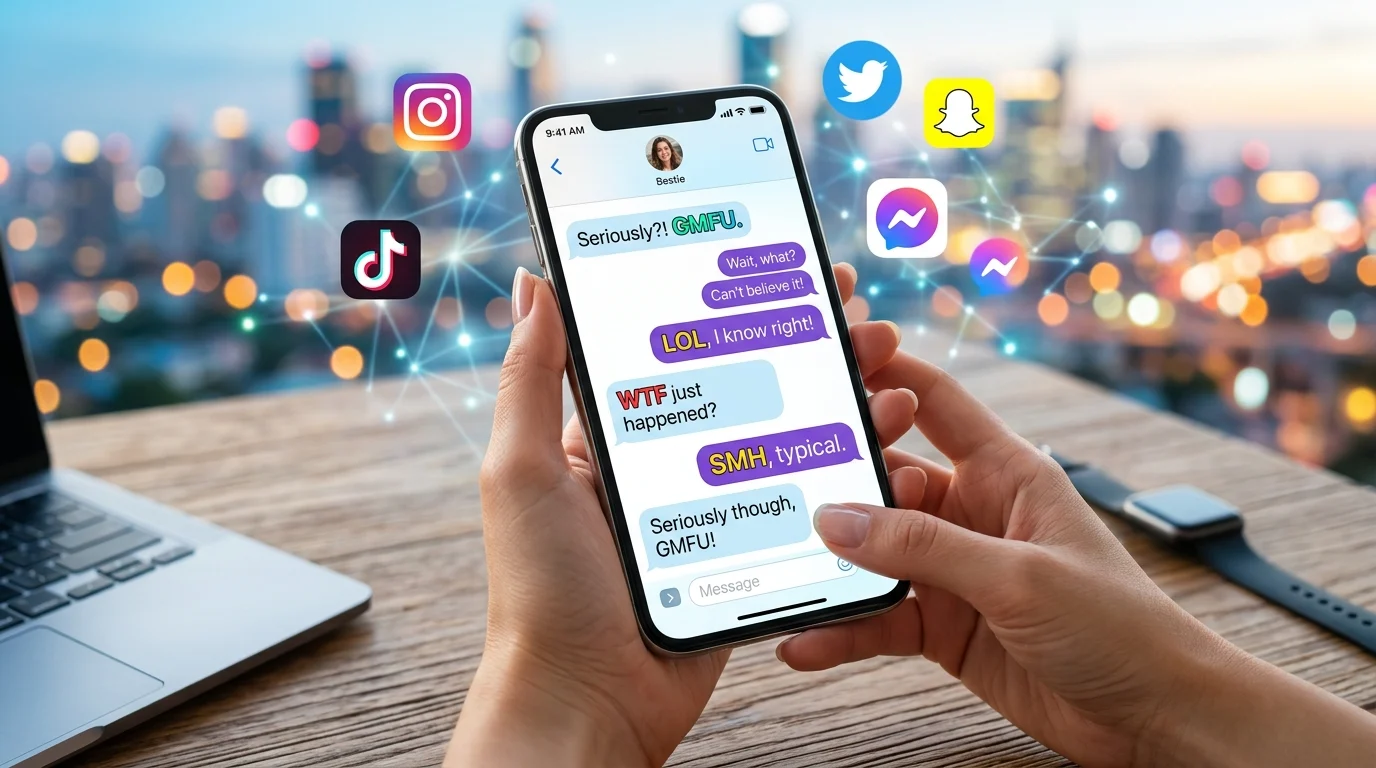
Meaning: GMFU usually means “Got Me F*cked Up.”
Full Form: Got Me F*cked Up
Context: Texting, social media, online chats, memes, and casual conversations.
Tone: Frustrated, shocked, annoyed, confused, or feeling disrespected.
If you’ve come across the term GMFU in a text message, TikTok comment, Instagram post, or online conversation, you may be wondering what it actually means. Internet slang evolves quickly, and new abbreviations appear across social media platforms every day. GMFU is one of those popular expressions that can seem confusing if you’re unfamiliar with modern texting language.
In most cases, GMFU stands for “Got Me F*cked Up,” a phrase used to express frustration, disbelief, annoyance, or shock. People often use it when reacting to something they find unreasonable, surprising, or unfair. The abbreviation has become common in texting, memes, gaming chats, and social media discussions because it allows users to communicate strong emotions with just four letters.
This guide explains the GMFU meaning, its full form, how it is used in real conversations, its tone, examples, and how it compares to other popular internet slang terms.
What Does GMFU Mean?
GMFU most commonly stands for “Got Me F*cked Up.”
People use this phrase when they feel that something is wrong, unfair, confusing, disrespectful, or completely unbelievable.
The expression is often used to communicate strong emotions. Someone might use GMFU when they think another person is treating them unfairly, expecting too much from them, or saying something that makes no sense.
For example:
“You want me to finish all that work by tonight? You got me GMFU.”
In simple terms, GMFU means:
- You’re mistaken.
- That’s unreasonable.
- I can’t believe that.
- That’s not acceptable.
- You’re confusing me.
The exact meaning depends on the situation and tone of the conversation.
What Does GMFU Mean in Texting, Slang, and Social Media?
In texting, GMFU is usually a quick way to express disbelief or frustration without writing a long explanation.
Friends often use it when reacting to surprising messages or unexpected situations.
For example:
“They changed the exam date again. GMFU.”
On social media, GMFU appears in comments, captions, reactions, and memes. Users often post it when responding to shocking news, controversial opinions, or frustrating events.
You might see comments like:
“The price went up again? GMFU.”
Among younger internet users and Gen Z communities, abbreviations help people communicate emotions quickly. GMFU fits this style because it instantly shows a strong reaction without requiring a lengthy response.
Other Meanings of GMFU
Although “Got Me F*cked Up” is the most common meaning, abbreviations can sometimes have different interpretations depending on the group using them.
Less common meanings include:
- General expressions of confusion
- Feeling disrespected
- Feeling misunderstood
- Being shocked by a situation
In nearly every case, however, the phrase communicates a negative or surprised reaction.
When you see GMFU online, always consider the surrounding conversation. Context usually makes the intended meaning obvious.
How GMFU Is Used in Real Conversations
People use GMFU in many everyday situations.
One common situation is when someone feels another person is being unreasonable.
Example:
“You think I’m paying for everyone? GMFU.”
It can also be used when someone receives surprising news.
Example:
“They canceled the concert after we bought tickets. GMFU.”
Another common use involves frustration.
Example:
“My internet stopped working during the meeting. GMFU.”
GMFU frequently appears on:
- Text messages
- Snapchat
- TikTok
- X (formerly Twitter)
- Discord
- Online gaming chats
The phrase works best in casual conversations where informal language is acceptable.
Examples of GMFU in Sentences
Here are some natural examples of how people use GMFU:
- You expect me to finish that project today? GMFU.
- They raised the rent again. GMFU.
- You really think I forgot your birthday? GMFU.
- The restaurant charged extra for water. GMFU.
- I waited two hours and they still canceled the appointment. GMFU.
- You said the movie was bad? GMFU, it was amazing.
- The game crashed right before I won. GMFU.
- They sold out all the tickets in five minutes. GMFU.
These examples show how the phrase can express annoyance, disbelief, frustration, or surprise.
Tone and Intent
The tone of GMFU is usually emotional and intense.
People often use it when they feel:
- Frustrated
- Shocked
- Disrespected
- Confused
- Annoyed
- Surprised
Most uses are negative, but some people use GMFU jokingly with friends.
For example:
“You ate the whole pizza without me? GMFU.”
In this case, the speaker may not be genuinely angry. They are simply exaggerating their reaction for humor.
Because tone can be difficult to detect in written messages, context is important.
Origin and Background of GMFU
GMFU developed as part of internet slang culture and texting abbreviations.
As mobile messaging became more popular, people started shortening common phrases to save time and type faster. Abbreviations such as LOL, BRB, SMH, and GMFU became common in online communication.
The phrase gained popularity through social media platforms, meme culture, and casual texting. Younger users especially embraced it because it quickly communicates a strong emotional reaction.
Today, GMFU is recognized across many social media platforms and online communities.
Is GMFU Rude or Inappropriate?
GMFU contains an implied profanity because the full phrase includes a swear word.
For this reason, some people consider it rude or inappropriate.
Whether it is offensive depends on:
- Your audience
- The setting
- The relationship between participants
Among close friends, it may be viewed as normal slang.
In professional or formal environments, however, many people would consider it inappropriate.
If you are unsure whether a situation allows casual language, it is safer to avoid using GMFU.
When NOT to Use GMFU
There are several situations where GMFU is not a good choice.
Avoid using it in:
- Work emails
- Business communication
- School assignments
- Academic writing
- Professional presentations
- Customer service interactions
- Formal interviews
For example, writing GMFU in an email to a manager would likely appear unprofessional.
Instead, use clear alternatives such as:
- “I disagree.”
- “I’m surprised by this decision.”
- “This seems unreasonable.”
- “I don’t understand.”
Professional communication should remain respectful and clear.
Similar and Related Slang Terms
Several slang terms communicate emotions similar to GMFU.
SMH
SMH means “Shaking My Head.”
People use it when disappointed or frustrated.
WTF
WTF expresses shock, confusion, or disbelief.
It is often stronger and more direct than GMFU.
FR
FR means “For Real.”
People use it to emphasize honesty or agreement.
NGL
NGL means “Not Gonna Lie.”
It introduces an honest opinion.
IDC
IDC stands for “I Don’t Care.”
It communicates indifference rather than frustration.
Bruh
Bruh is a reaction word often used when someone does something silly, surprising, or frustrating.
GMFU vs Related Terms
GMFU vs SMH
SMH usually expresses mild disappointment.
GMFU often shows stronger frustration or disbelief.
GMFU vs WTF
WTF focuses on confusion and shock.
GMFU often suggests feeling disrespected, frustrated, or treated unfairly.
GMFU vs NGL
NGL introduces honesty.
GMFU communicates an emotional reaction.
Although both appear in casual conversations, they serve different purposes.
Comparison Table
| Term | Meaning | Usage | Key Difference |
|---|---|---|---|
| GMFU | Got Me F*cked Up | Frustration or disbelief | Strong emotional reaction |
| SMH | Shaking My Head | Disappointment | Milder tone |
| WTF | What The F*ck | Shock or confusion | Focuses on surprise |
| NGL | Not Gonna Lie | Honest statement | Not emotional |
| FR | For Real | Emphasis or agreement | Confirms sincerity |
| IDC | I Don’t Care | Indifference | Shows lack of concern |
| Bruh | Expression of disbelief | Casual reaction | Often humorous |
Common Misunderstandings
Many people misunderstand GMFU because abbreviations can have different meanings in different communities.
One common mistake is assuming it always indicates anger.
In reality, GMFU can express:
- Surprise
- Frustration
- Humor
- Disbelief
- Mild annoyance
Another misunderstanding occurs when readers ignore context.
The same abbreviation can sound serious in one conversation and playful in another.
Understanding the surrounding message helps determine the intended meaning.
Frequently Asked Questions
What does GMFU stand for?
GMFU most commonly stands for “Got Me F*cked Up.”
Is GMFU a bad word?
The abbreviation itself is not a swear word, but it represents a phrase that contains profanity.
Can GMFU be used jokingly?
Yes. Many people use it humorously with friends.
Is GMFU popular on TikTok?
Yes. It appears frequently in TikTok comments, captions, and reactions.
Is GMFU used by Gen Z?
Yes. The term is common among younger internet users and social media communities.
What is the difference between GMFU and SMH?
SMH usually shows disappointment, while GMFU expresses stronger frustration or disbelief.
Can I use GMFU at work?
Generally, no. It is considered too informal and may appear unprofessional.
Does GMFU always mean anger?
No. It can also communicate surprise, confusion, annoyance, or playful exaggeration.
conclusion
GMFU is a popular internet slang term that most commonly means “Got Me F*cked Up.” People use it to express frustration, disbelief, shock, annoyance, or feelings of being treated unfairly. The abbreviation is widely used in texting, social media posts, memes, and online conversations.
Although GMFU is common in casual communication, it contains implied profanity and should generally be avoided in professional settings. Understanding the context is important because the phrase can be serious, sarcastic, humorous, or exaggerated depending on the conversation.
If you encounter GMFU online, the safest interpretation is that the speaker is reacting strongly to something they find surprising, unreasonable, confusing, or frustrating.