
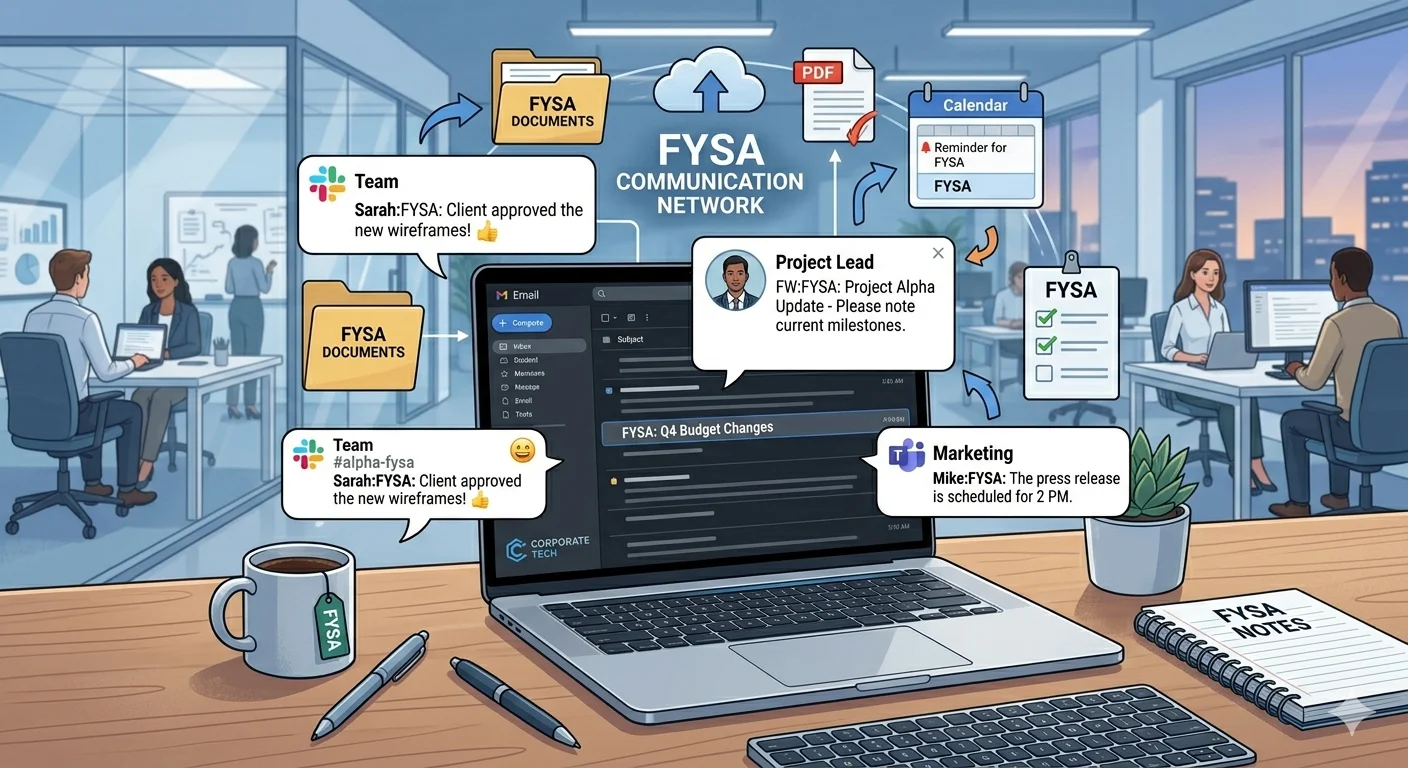
Meaning: FYSA is an acronym used to share useful or important information someone should know.
Full Form: “For Your Situational Awareness”
Context: Emails, workplace chats, professional communication, military, and office environments
Tone: Professional, informative, neutral, and sometimes slightly urgent
If you recently received an email or message containing the term “FYSA,” you may have wondered what it actually means. Unlike trendy internet slang found on TikTok or Snapchat, FYSA is more common in workplace communication, professional emails, and team messaging platforms. Many people first encounter the acronym in office environments and feel confused because the meaning is not immediately obvious.
In most situations, FYSA stands for “For Your Situational Awareness.” It is used when someone wants to share information that may be helpful, important, or relevant to another person. The phrase works similarly to saying, “Just so you know,” or “Please be aware of this.”
The acronym has become increasingly common in digital workplaces where employees rely on quick communication tools like email, Slack, and Microsoft Teams. While FYSA is mainly professional language, it can sometimes appear in casual texting among coworkers as well.
Understanding the FYSA meaning can help you communicate more confidently in professional settings and avoid confusion when reading office emails or workplace updates.
What Does FYSA Mean?
FYSA most commonly stands for “For Your Situational Awareness.” It is an informational phrase used to make someone aware of something important, useful, or relevant.
People usually add FYSA before sharing:
- Updates
- Announcements
- Changes
- Warnings
- Reminders
- Helpful information
The phrase does not usually require immediate action. Instead, it simply ensures the recipient stays informed.
For example:
- “FYSA, the meeting has been moved to 3 PM.”
In this sentence, the sender is politely making others aware of the schedule change.
In simple terms, FYSA means:
- “Just letting you know.”
- “Please be aware.”
- “Here’s some useful information.”
- “Keep this in mind.”
The acronym sounds professional and efficient, which is why it became popular in workplace communication.
What Does FYSA Mean in Texting, Slang, and Social Media?
FYSA is not traditional internet slang like LOL, BRB, or IMO. Instead, it belongs more to professional shorthand and office communication culture.
However, because work communication increasingly happens through digital messaging apps, the acronym now appears in texting and online chats between coworkers.
Chat Meaning
In workplace chats, FYSA helps people quickly introduce information without writing a long explanation.
Example:
- “FYSA, the server maintenance starts tonight.”
Coworkers often use it in:
- Slack
- Microsoft Teams
- Workplace group chats
- Internal messaging systems
Social Media Usage
FYSA is less common on social media platforms like TikTok or Instagram because it sounds formal compared to typical internet slang.
Still, you may occasionally see it on:
- Professional communities
- Industry forums
- Career-related discussions
In those spaces, it usually keeps its workplace meaning.
Professional Internet Culture
Remote work and digital communication have made acronyms like FYSA more popular. Employees often shorten phrases to save time while keeping messages professional.
That is why FYSA now appears more frequently in online communication than it did years ago.
Other Meanings of FYSA
Although “For Your Situational Awareness” is the most common definition, FYSA can sometimes have slightly different meanings depending on the industry or organization.
One alternate interpretation is:
- “For Your Safety Awareness”
This version appears more often in:
- Security industries
- Safety training
- Military settings
- Construction environments
For example:
- “FYSA, the parking lot will be closed during equipment testing.”
In most cases, though, the overall purpose stays the same: making someone aware of important information.
The context usually makes the intended meaning clear.
How FYSA Is Used in Real Conversations
FYSA is mainly used in professional communication where quick, clear information sharing matters.
Workplace Situations
People commonly use FYSA for:
- Schedule changes
- Meeting reminders
- Office announcements
- Technical issues
- Policy updates
- Security notices
- Deadline reminders
It helps messages sound concise and professional.
Platforms Where It Appears
You are most likely to see FYSA in:
- Emails
- Slack channels
- Microsoft Teams
- Zoom chat messages
- Internal company forums
- Project management systems
Because workplace communication often moves quickly, acronyms like FYSA help teams share updates efficiently.
Examples of FYSA in Sentences
Here are some realistic examples showing how FYSA is used in everyday workplace communication.
- “FYSA, tomorrow’s training session starts at 9 AM.”
- “FYSA, the office will be closed on Friday due to maintenance.”
- “FYSA, the client meeting has been postponed.”
- “FYSA, there may be delays with the system update tonight.”
- “FYSA, parking spaces near the entrance are temporarily unavailable.”
- “FYSA, HR released the updated company policy this morning.”
- “FYSA, the report deadline has been extended until Monday.”
- “FYSA, please expect slower response times during the outage.”
These examples show how the phrase introduces useful information without sounding overly dramatic.
Tone and Intent
FYSA usually carries a neutral and professional tone.
Emotional Meaning
Unlike emotional internet slang, FYSA focuses on sharing awareness rather than expressing feelings.
The phrase typically communicates:
- Information
- Preparedness
- Awareness
- Professional courtesy
Positive, Negative, or Neutral?
FYSA is mostly neutral.
However, the information attached to it may sound:
- Positive
- Urgent
- Serious
- Routine
For example:
- Positive: “FYSA, bonuses will be distributed next week.”
- Serious: “FYSA, severe weather may affect office operations tomorrow.”
Serious vs Casual Use
In formal communication, FYSA sounds professional and structured.
Among coworkers who know each other well, it can feel slightly more casual while still maintaining workplace professionalism.
Origin and Background of FYSA
FYSA developed from professional communication practices where acronyms help save time and simplify repetitive phrases.
Workplace Communication History
Business environments have long relied on abbreviations such as:
- FYI
- ASAP
- EOD
- ETA
FYSA fits naturally into that same communication style.
Military and Corporate Influence
The phrase “situational awareness” has strong connections to military and security language. In those settings, being aware of important developments is critical.
Over time, the expression moved into:
- Government communication
- Corporate workplaces
- Technical industries
- Administrative offices
Employees began shortening the phrase into FYSA for convenience.
Modern Usage
As remote work expanded, digital communication tools increased the popularity of acronyms. Typing shorter phrases became normal in fast-paced online work environments.
Today, FYSA is widely recognized in many professional settings.
Is FYSA Rude or Inappropriate?
FYSA is generally considered respectful and professional.
Professional Nature
Unlike slang terms containing profanity or sarcasm, FYSA is workplace-friendly and safe for most office environments.
It usually sounds:
- Helpful
- Informative
- Neutral
- Efficient
Potential Misunderstandings
The biggest issue with FYSA is that not everyone recognizes the acronym.
Some recipients may:
- Misunderstand it
- Confuse it with FYI
- Need clarification
Because of this, some companies prefer plain language instead of too many abbreviations.
When NOT to Use FYSA
Although FYSA works well in professional settings, it is not always the best choice.
Casual Conversations
Friends and family members may not understand the acronym, especially outside office culture.
In casual texting, saying:
- “Just so you know”
is often clearer.
Customer-Facing Communication
Avoid using FYSA with:
- Clients
- Customers
- Public audiences
Too many acronyms can make communication feel confusing or overly corporate.
Overusing Acronyms
Using excessive workplace abbreviations can make messages harder to read.
For example:
- “FYSA, the ETA for the EOD report changed ASAP.”
This sounds cluttered and difficult to follow.
Clear communication should always come first.
Similar and Related Terms
Several workplace phrases share a similar purpose with FYSA.
Related Workplace Acronyms
- FYI — For Your Information
- PSA — Public Service Announcement
- ASAP — As Soon As Possible
- Reminder — Notification of upcoming tasks
- Heads up — Informal warning or notice
Similar Communication Styles
These expressions all help:
- Share awareness
- Provide updates
- Inform others
- Prepare teams for changes
However, each phrase carries a slightly different tone.
FYSA vs Related Terms
FYSA vs FYI
FYI simply shares information. FYSA often sounds more situational or awareness-focused.
Example:
- FYI: “The report was uploaded.”
- FYSA: “FYSA, the report contains updated pricing data.”
FYSA vs PSA
PSA usually targets the public or a larger audience. FYSA often appears inside organizations or teams.
FYSA vs Heads Up
“Heads up” sounds more casual and conversational. FYSA feels more formal and workplace-oriented.
Comparison Table
| Term | Meaning | Usage | Key Difference |
|---|---|---|---|
| FYSA | For Your Situational Awareness | Workplace updates and awareness | More professional and situational |
| FYI | For Your Information | General information sharing | Broader and simpler |
| PSA | Public Service Announcement | Public notices or announcements | Meant for wider audiences |
| Heads Up | Informal warning or notice | Casual conversations | Less formal |
| Reminder | Notification about something upcoming | Tasks and deadlines | Focuses on remembering |
Common Misunderstandings
One common misunderstanding is assuming FYSA is internet slang similar to TikTok abbreviations. In reality, it is mainly professional communication shorthand.
Another confusion happens when people mix FYSA with FYI. While both share information, FYSA often emphasizes awareness and preparedness more strongly.
Some employees also assume FYSA always signals urgent news. That is not necessarily true. Sometimes the message is routine and informational rather than serious.
Finally, because the acronym is less common outside workplaces, some readers may not understand it immediately.
Frequently Asked Questions
What does FYSA stand for?
FYSA usually stands for “For Your Situational Awareness.”
Is FYSA the same as FYI?
Not exactly. FYI shares general information, while FYSA focuses more on awareness and preparedness.
Is FYSA formal?
Yes. FYSA is considered professional workplace language.
Can FYSA be used in texting?
Yes, especially between coworkers or in work-related chats.
Is FYSA military slang?
It has military and government communication roots, but it is now common in many workplaces.
What does FYSA mean in email?
In emails, FYSA introduces useful information the recipient should know about.
Is FYSA rude?
No. FYSA is generally polite and professional.
Should I use FYSA at work?
Yes, as long as your workplace commonly uses professional acronyms.
What is the difference between FYSA and PSA?
PSA targets public audiences, while FYSA is usually internal workplace communication.
Is FYSA common outside offices?
Not very. It is mostly used in professional environments.
conclusion
FYSA stands for “For Your Situational Awareness” and is commonly used in professional emails, workplace chats, and team communication. The phrase helps people share important updates, reminders, or useful information in a concise and professional way.
Unlike casual internet slang, FYSA belongs more to office and corporate communication culture. It is usually neutral, respectful, and informative rather than emotional or humorous.
If you see FYSA in an email or workplace message, the sender is simply making sure you are aware of something important. Understanding the acronym can help you communicate more confidently in modern professional environments.
