
| Term | Meaning |
|---|---|
| TFTI | “Thanks For The Invite” |
| Common Use | Texting, Snapchat, TikTok, Instagram, group chats |
| Tone | Usually sarcastic or playful |
| Main Context | Feeling left out of plans or events |
| Alternate Use | Sometimes genuine appreciation |
If you have seen “TFTI” in a text message, TikTok comment, Snapchat reply, or Instagram story reaction, you may have wondered what it actually means. Like many internet abbreviations, TFTI is short, fast, and heavily dependent on tone. That is why it often confuses people who are unfamiliar with online slang culture.
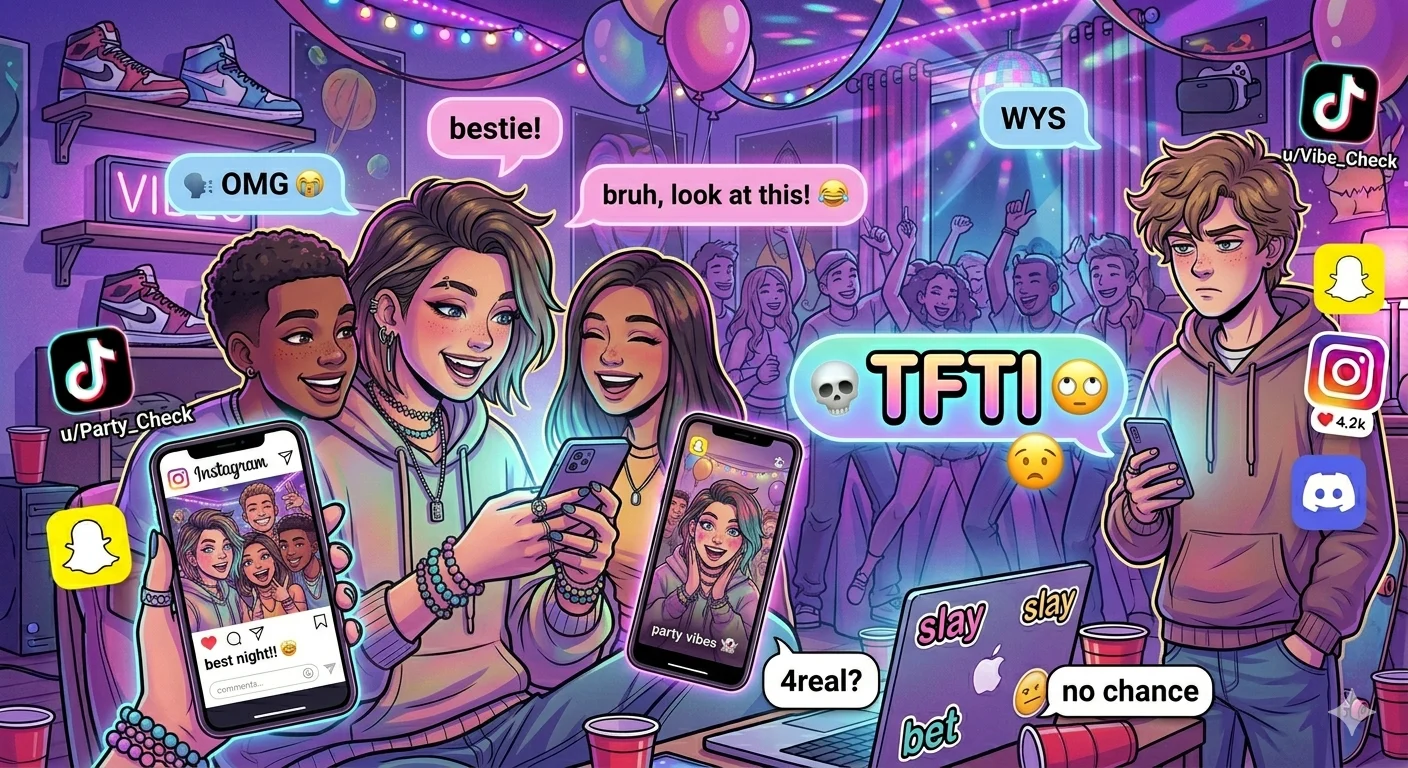
In most cases, TFTI stands for “Thanks For The Invite.” However, the phrase is usually not meant literally. Instead, people often use it sarcastically when they find out their friends hung out without them or attended an event they were not invited to.
For example, if someone posts pictures from a party and another person comments “TFTI,” they are jokingly pointing out that nobody invited them. Sometimes the message is playful and harmless. Other times it can reflect real disappointment or frustration.
Social media platforms like Snapchat, TikTok, Instagram, and Discord helped make TFTI popular because online communication often relies on quick emotional reactions and short slang phrases. Gen Z users especially use terms like TFTI as part of meme culture, sarcasm, and casual internet humor.
This guide explains the full TFTI meaning in texting, slang, and social media, including examples, tone, comparisons, and how people actually use it in real conversations.
What Does TFTI Mean?
The most common meaning of TFTI is “Thanks For The Invite.”
At first glance, it sounds polite and appreciative. However, in internet slang, TFTI is usually sarcastic. People often say it after discovering they were excluded from an event, activity, or gathering.
For example:
- “You guys went out without me? TFTI.”
In simple terms, the person really means:
- “Why didn’t you invite me?”
- “Nice of you to leave me out.”
- “I wish I had been included.”
The abbreviation became popular because texting culture favors short emotional reactions that are quick to type and easy to recognize.
What Does TFTI Mean in Texting, Slang, and Social Media?
In texting and social media slang, TFTI is commonly used when someone feels left out. The phrase may sound funny, dramatic, playful, or passive-aggressive depending on the situation.
TFTI in Texting
In private chats or group conversations, people use TFTI when:
- Friends make plans without them
- Someone posts event photos
- They hear about a gathering afterward
- A gaming group starts without them
Examples:
- “Y’all got food without me? TFTI.”
- “Looks fun. TFTI lol.”
The “lol” often softens the sarcasm and makes it feel more playful.
TFTI on Snapchat and Instagram
TFTI is especially common on Snapchat and Instagram because people constantly share:
- Party pictures
- Vacation photos
- Group selfies
- Restaurant outings
- Concert clips
When someone sees these posts after not being invited, they may reply:
- “TFTI.”
- “Wow TFTI.”
- “Crazy… TFTI.”
These reactions are often humorous but can sometimes reveal genuine disappointment.
TFTI on TikTok
On TikTok, TFTI appears in:
- Comment sections
- Funny videos
- Friendship memes
- Relationship content
Many TikTok users exaggerate emotions for humor, so TFTI often becomes part of playful online drama.
TFTI in Gen Z Slang
Gen Z internet culture heavily relies on:
- Dry humor
- Sarcasm
- Passive-aggressive jokes
- Short emotional reactions
TFTI fits perfectly into this style because it communicates disappointment in a funny and dramatic way without requiring a long explanation.
Other Meanings of TFTI
Although “Thanks For The Invite” is the main meaning, TFTI can occasionally be used differently depending on context.
Genuine Appreciation
Sometimes TFTI is actually sincere.
For example:
- “Had a great time tonight. TFTI.”
In this case, the person truly appreciates being invited.
However, this genuine meaning is less common online because most users recognize TFTI as sarcastic slang.
Gaming and Online Communities
In gaming groups or Discord servers, TFTI may appear when:
- Friends start a game without someone
- A squad forgets to invite a player
- Group activities happen unexpectedly
Example:
- “You all started ranked without me? TFTI.”
Rare Non-Slang Uses
Outside internet slang, TFTI has very limited alternate meanings. Most people immediately associate it with “Thanks For The Invite.”
How TFTI Is Used in Real Conversations
TFTI appears in many modern online interactions.
Everyday Situations
People commonly use TFTI when:
- Friends hang out without them
- Someone misses a social event
- A group forgets to invite someone
- Pictures appear online afterward
- Gaming sessions happen unexpectedly
Popular Platforms
You will commonly see TFTI used on:
- Snapchat
- TikTok
- Discord
- X (Twitter)
- Facebook Messenger
On Snapchat, it often appears as a direct reply to stories. On Instagram, it is commonly posted in comments under group photos.
Examples of TFTI in Sentences
Here are some natural examples showing how TFTI is used online.
- “You guys went bowling without me? TFTI.”
- “Looks like everyone had fun tonight. TFTI lol.”
- “You started the game already? TFTI.”
- “Nice party pics. TFTI.”
- “Y’all really got pizza and didn’t call me? TFTI.”
- “TFTI, I totally didn’t want to come anyway.”
- “You all went to the concert together? Wow, TFTI.”
- “Thanks again for dinner tonight. TFTI.”
These examples show both sarcastic and genuine uses.
Tone and Intent
The tone behind TFTI matters a lot. The same abbreviation can sound funny, rude, playful, or emotional depending on context.
Sarcastic Tone
Most commonly, TFTI is sarcastic.
Example:
- “Cool trip. TFTI.”
The person is jokingly expressing disappointment.
Playful Tone
Among close friends, TFTI is often harmless teasing.
Example:
- “TFTI bro 😂”
The emoji helps make the message feel lighthearted.
Genuine Tone
In some situations, TFTI can be sincere.
Example:
- “Had an amazing night. TFTI.”
This version expresses real gratitude.
Origin and Background of TFTI
TFTI developed during the rise of texting culture and social media communication. As internet users started shortening phrases into abbreviations, many emotional reactions became compressed into quick slang terms.
Similar abbreviations include:
- LOL
- SMH
- IDC
- BRB
- FOMO
TFTI gained popularity because social media increased awareness of social events. Before apps like Snapchat and Instagram, people often did not immediately know what their friends were doing. Now, everyone sees gatherings, parties, and hangouts in real time.
This visibility created more opportunities for playful “left out” reactions like TFTI.
Is TFTI Rude or Inappropriate?
TFTI is usually not offensive, but it can sometimes sound passive-aggressive.
Usually Harmless
Among friends, TFTI is often:
- Funny
- Casual
- Playful
- Lighthearted
When It Can Feel Rude
If someone genuinely feels excluded, TFTI may carry emotional frustration.
Example:
- “Everyone else got invited except me. TFTI.”
In this case, the phrase may express real hurt feelings.
Because text lacks facial expressions and tone of voice, misunderstandings can happen easily.
When NOT to Use TFTI
Although TFTI is common online, there are situations where it does not fit.
Formal Situations
Avoid using TFTI in:
- Business emails
- Work chats
- Professional invitations
- Academic communication
The abbreviation sounds too casual and sarcastic.
Sensitive Situations
Do not use TFTI when:
- Someone intentionally kept an event private
- A situation involves serious emotional conflict
- The relationship is already tense
In those cases, direct communication is better.
Similar and Related Slang Terms
Several internet slang expressions are similar to TFTI.
FOMO
Means “Fear Of Missing Out.”
SMH
Means “Shaking My Head.”
IDC
Means “I Don’t Care.”
Bet
Means “Okay” or “Agreed.”
WYD
Means “What You Doing?”
These phrases are all part of modern texting culture.
TFTI vs Related Terms
itvs FOMO
TFTI directly reacts to exclusion, while FOMO describes anxiety about missing experiences.
TFTI vs SMH
SMH expresses disappointment generally. TFTI specifically relates to invitations or exclusion.
TFTI vs “Nice Invite”
Both phrases express the same feeling, but TFTI is the abbreviated slang version.
Comparison Table
| Term | Meaning | Usage | Key Difference |
|---|---|---|---|
| TFTI | Thanks For The Invite | Reacting to exclusion | Invitation-related sarcasm |
| FOMO | Fear Of Missing Out | Anxiety about exclusion | Emotional feeling rather than reaction |
| SMH | Shaking My Head | Disappointment or disbelief | Broader emotional use |
| IDC | I Don’t Care | Showing disinterest | More dismissive |
| Bet | Okay / Agreed | Confirming plans | Positive agreement |
Common Misunderstandings
Thinking TFTI Is Always Serious
Many people use TFTI jokingly without real anger.
Missing the Sarcasm
Some users mistake TFTI for genuine appreciation because the phrase literally sounds polite.
Assuming TFTI Is Always Negative
Sometimes TFTI is completely sincere, especially after real invitations.
Frequently Asked Questions
What does TFTI mean in texting?
It usually means “Thanks For The Invite.”
What does TFTI mean on Snapchat?
It is commonly used sarcastically when someone feels left out.
Is TFTI always sarcastic?
No. Sometimes it is used genuinely.
Does TFTI mean someone is upset?
Not always. It may simply be playful teasing.
Can TFTI be rude?
Yes, if used aggressively or during emotional situations.
What does TFTI mean on TikTok?
TikTok users often use it jokingly in comments and memes.
Is TFTI part of Gen Z slang?
Yes. It is especially common among younger internet users.
How do you reply to TFTI?
You can respond with:
- “My bad.”
- “Next time for sure.”
- “You should’ve come.”
What is the difference between TFTI and FOMO?
TFTI is a reaction to exclusion, while FOMO is the emotional fear of missing out.
Should I use TFTI professionally?
No. It is informal internet slang.
conclusion
TFTI is a popular internet slang abbreviation meaning “Thanks For The Invite.” Most of the time, it is used sarcastically when someone feels left out of plans, events, or activities. However, depending on tone and context, it can also be playful or genuinely appreciative.
The phrase became especially popular through Snapchat, Instagram, TikTok, and texting culture because social media constantly exposes people to friends’ activities and gatherings. As a result, playful reactions like TFTI became part of everyday online communication.
Understanding the tone behind TFTI is important because the same message can sound funny, emotional, sarcastic, or sincere depending on the situation.
