
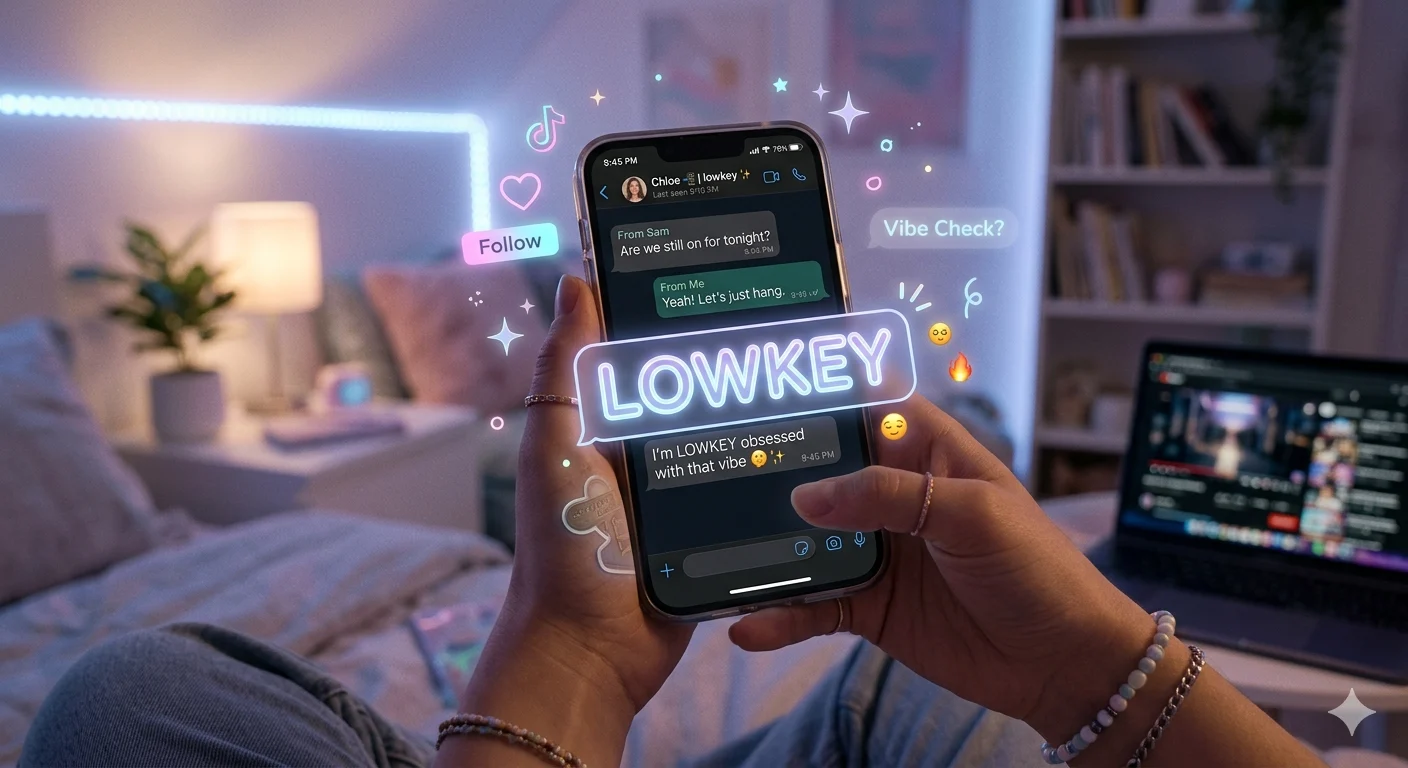
“Lowkey” is a popular internet slang term used in texting, social media, memes, and everyday online conversations. The “lowkey meaning in slang” usually refers to something subtle, quiet, slightly true, or secretly felt. People often use it when they want to express an opinion or emotion without sounding too dramatic or direct. In simple words, lowkey softens what someone is saying.
For example, instead of saying “I really like this song,” someone may say “I lowkey love this song.” This makes the statement feel more casual and relaxed. The term is extremely common on TikTok, Instagram, Snapchat, and X (formerly Twitter), especially among Gen Z users.
- Meaning: Secretly, slightly, quietly, subtly.
- Full form: Not an acronym; it’s a slang expression.
- Context: Texting, memes, social media, casual chats.
- Tone: Casual, soft, playful, indirect.
If you spend time on TikTok, Instagram, Snapchat, or online chats, chances are you’ve seen the word “lowkey” used in captions, memes, or messages. The “lowkey meaning in slang” has become extremely popular in modern internet culture, especially among Gen Z users who use it to express thoughts and emotions in a softer, more casual way. While the word may look simple, its meaning can change slightly depending on the context.
In most cases, lowkey means “slightly,” “secretly,” or “quietly.” People use it when they want to share an opinion or feeling without sounding too dramatic or serious. For example, instead of saying “I really like this song,” someone might say “I lowkey love this song.” The second version feels more relaxed and natural in online conversation.
Originally, “low-key” existed in standard English to describe something calm or subtle. Over time, internet culture transformed it into a slang term commonly used in texting and social media. Today, lowkey is part of everyday online language and appears everywhere from funny memes to emotional posts. In this article, we’ll explain the full meaning of lowkey, how people use it online, real-life examples, tone, comparisons, and when you should avoid using it.
What does lowkey mean? (Core Definition)
The core meaning of “lowkey” is “slightly,” “quietly,” “secretly,” or “in a subtle way.” It is used when someone wants to express something without sounding too strong or obvious.
For example:
- “I lowkey miss school.”
- “She lowkey wants attention.”
In both examples, the speaker is expressing a real feeling, but in a softer and more casual way.
Originally, “low-key” existed in normal English before becoming slang. It described something calm, simple, or not highly noticeable. Internet slang adapted the phrase and gave it a more emotional and conversational meaning.
Today, lowkey often signals hidden honesty. Someone may pretend they are casual about something while secretly meaning it strongly.
What does lowkey mean in texting / slang / social media?
In texting and social media, lowkey is used to make statements feel less intense. It acts like a softener for opinions, emotions, or reactions.
For example:
- “I lowkey want pizza right now.”
- “That movie was lowkey amazing.”
These phrases sound more relaxed than direct statements like “I really want pizza” or “That movie was amazing.”
On TikTok and Instagram, lowkey appears in captions and memes because it sounds relatable and natural. Gen Z especially uses it to avoid sounding overly emotional or dramatic. It creates a tone that feels chill, modern, and conversational.
Lowkey is also popular because it allows people to express feelings indirectly. Someone might say “I lowkey miss you” instead of openly admitting stronger emotions.
Other meanings of lowkey
Although the slang meaning is most common online, lowkey can still have different meanings depending on context:
- Quietly or subtly
- Secretly or privately
- Slightly or mildly
- Calm and simple (traditional English meaning)
- Relaxed personality or low-profile behavior
For example, “We kept the party low-key” uses the older meaning of calm and simple rather than internet slang.
Context helps determine whether the word is being used literally or as modern slang.
How lowkey is used in real conversations
Lowkey appears naturally in many types of conversations, especially online:
- Casual texting with friends
- Social media captions and memes
- Relationship discussions
- Gaming chats and reactions
- Funny or relatable posts
People use it when they want to sound softer, funnier, or more emotionally controlled. It also helps make opinions feel less serious or more relatable.
For example, instead of saying “I’m obsessed with this song,” someone might say “I lowkey can’t stop listening to this song.” The second version sounds more casual and modern.
Examples of lowkey in sentences
Here are some natural examples showing the lowkey meaning in slang:
- “I lowkey miss the old days.”
- “That outfit is lowkey fire.”
- “She lowkey knew the answer already.”
- “I’m lowkey tired of social media.”
- “This song is lowkey addictive.”
- “He lowkey likes her, trust me.”
- “I lowkey want to skip class today.”
- “That joke was lowkey funny.”
These examples show how flexible the slang term has become in everyday online communication.
Tone and intent of lowkey
The tone of lowkey is usually soft, casual, and indirect. It helps reduce intensity while still expressing real feelings.
- Positive: “That food was lowkey amazing.”
- Emotional: “I lowkey miss you.”
- Humorous: Used in memes and jokes
- Indirect honesty: Expressing feelings subtly
- Rarely negative: Depends on sentence context
Lowkey often creates a relatable tone because it sounds less dramatic than direct statements.
Origin and background of lowkey
The word “low-key” existed in English long before internet slang. Traditionally, it meant something calm, modest, or not highly visible.
For example:
- “We had a low-key weekend.”
- “She likes to keep things low-key.”
Over time, internet culture changed the phrase into slang. Social media users began using it to soften opinions and express emotions casually. The term spread rapidly through Twitter/X, memes, TikTok, and texting culture.
Today, lowkey is considered a core part of Gen Z and internet slang vocabulary.
Is lowkey rude or inappropriate?
No, lowkey is generally not rude or offensive. It is considered safe, casual slang used in friendly conversations.
However, because it is informal, it may not fit professional or academic settings. Also, tone matters. If someone uses lowkey sarcastically, it can sound passive-aggressive depending on the context.
Still, in normal social media or texting conversations, it is completely acceptable and common.
When NOT to use lowkey
Although lowkey is extremely popular online, there are situations where it should be avoided:
- Professional emails
- Academic essays
- Formal business communication
- Job interviews
- Serious or official documents
Using slang in these situations may make communication seem too casual or unclear.
It’s also best not to overuse lowkey in every sentence because conversations can start sounding repetitive or unnatural.
Similar and related slang terms
Lowkey belongs to a group of internet expressions used to soften emotions or opinions:
- Highkey → opposite of lowkey; openly or strongly
- Kinda → slightly or somewhat
- Secretly → hidden feelings
- Honestly → direct emotional expression
- Low-profile → quiet and private behavior
These words often overlap in casual conversations but carry slightly different emotional tones.
Lowkey vs related terms
- Lowkey vs Highkey: Lowkey is subtle; highkey is obvious and strong
- Lowkey vs Secretly: Lowkey sounds casual; secretly sounds more serious
- Lowkey vs Kinda: Kinda means somewhat; lowkey adds emotional softness
These differences help people communicate tone more naturally online.
Comparison Table
| Term | Meaning | Usage | Key Difference |
|---|---|---|---|
| Lowkey | Slightly / secretly | Social media, texting | Soft and indirect tone |
| Highkey | Strongly / openly | Online slang | More intense expression |
| Kinda | Somewhat | Casual speech | Less emotional nuance |
| Secretly | Hidden feelings | Formal + casual | More serious tone |
| Low-profile | Quiet lifestyle | General English | Not internet slang |
Common misunderstandings
Many people misunderstand the lowkey meaning in slang:
- Thinking it always means “secretly”
- Confusing slang with traditional English meaning
- Using it in formal writing
- Assuming it always expresses weak emotions
- Overusing it in every conversation
In reality, lowkey is flexible and heavily depends on tone and context.
FAQ Section
1. What does lowkey mean in texting?
It usually means slightly, secretly, or subtly.
2. Is lowkey positive or negative?
It can be either depending on the sentence.
3. What is the opposite of lowkey?
The opposite is “highkey.”
4. Is lowkey Gen Z slang?
Yes, it is very popular among Gen Z users online.
5. Can lowkey mean secretly?
Yes, in many contexts it expresses hidden feelings.
6. Is lowkey rude?
No, it is casual but not offensive.
7. Where is lowkey commonly used?
On TikTok, Instagram, Snapchat, and texting apps.
8. Why do people use lowkey?
To soften opinions or emotions in a casual way.
conclusion
The “lowkey meaning in slang” is all about expressing thoughts, emotions, or opinions in a softer and more subtle way. Whether someone says they “lowkey love a song” or “lowkey miss someone,” the phrase helps keep conversations casual, relatable, and emotionally balanced. Originally a standard English phrase meaning calm or simple, lowkey evolved into a major internet slang term through social media and texting culture. Today, it is one of the most widely used expressions in online communication, especially among Gen Z users.
