
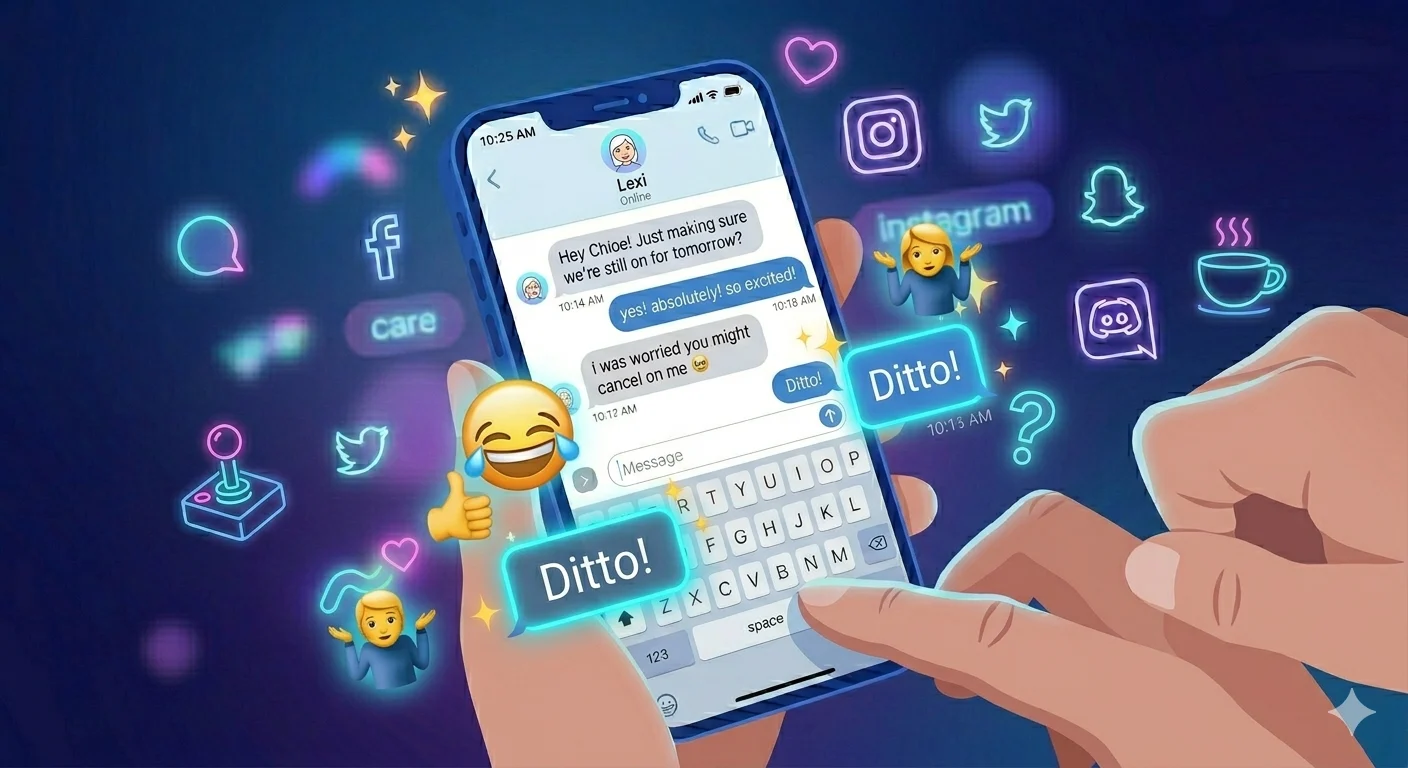
Meaning: “Ditto” means “same here” or “I agree.”
Context: Texting, casual chats, social media, daily conversation.
Tone: Friendly, casual, supportive, sometimes playful.
Used For: Repeating agreement or sharing the same feeling without saying the full sentence again.
If you spend time texting, scrolling through social media, or chatting online, you have probably seen someone reply with the word “ditto.” It is a short and simple term, but many people still wonder what it actually means and how it should be used.
In most conversations, “ditto” is used to show agreement. Instead of repeating the exact same words another person said, someone can simply reply with “ditto.” It saves time and keeps the conversation casual. You may see it in text messages, Instagram comments, online forums, gaming chats, or even real-life conversations.
The term has been around for many years, but it is still popular in modern internet culture. Some people use it seriously, while others use it in a playful or sarcastic way. Because the meaning depends on context and tone, it can sometimes confuse new users.
This guide explains everything about the word “ditto,” including its meaning in slang, texting, social media, and everyday speech. You will also learn how people use it in conversations, when not to use it, and how it compares to similar slang terms online.
What Does “Ditto” Mean?
At its core, “ditto” means:
- “The same”
- “Me too”
- “I agree”
- “Same here”
People use it when they want to repeat or support what another person already said.
For example:
Person 1: “I’m tired today.”
Person 2: “Ditto.”
In this case, the second person means they are tired too.
The word helps avoid repeating the same sentence again. Instead of writing a long response, people simply say “ditto” to show they feel the same way.
It is commonly used in:
- Casual conversations
- Texting
- Online comments
- Group chats
- Social media replies
The tone is usually friendly and relaxed.
What Does “Ditto” Mean in Texting, Slang, and Social Media?
In texting and internet slang, “ditto” works almost the same way as in normal speech. It means the person shares the same opinion, feeling, or experience.
Chat Meaning
In chats, people often use “ditto” as a quick response.
Example:
Friend: “That movie was amazing.”
You: “Ditto.”
This means you agree completely.
Social Media Usage
On platforms like TikTok, Instagram, X, Reddit, and Snapchat, users write “ditto” in comments when they relate to something.
Example:
- “I miss 2019.”
- “Ditto honestly.”
The commenter is saying they feel the same way.
Gen Z and Online Culture
Even though “ditto” is an older word, younger users still use it online because it is short and expressive. Sometimes it appears in memes or sarcastic replies.
Example:
- “I need a vacation.”
- “Ditto lol.”
The added “lol” makes it more playful.
Other Meanings of “Ditto”
While “ditto” mainly means agreement or sameness, it has a few other meanings depending on context.
Repetition in Writing
Historically, “ditto” was used in documents or lists to mean “same as above.”
Example:
| Item | Color |
|---|---|
| Shirt | Blue |
| Hat | Ditto |
This means the hat is also blue.
Pop Culture References
“Ditto” is also known as the name of a character in the Pokémon universe. The character can copy other Pokémon.
Because of this, some gamers and anime fans recognize the word from pop culture before learning its normal meaning.
Business and Office Use
In workplaces, people sometimes say “ditto” during meetings or emails to show agreement.
However, it sounds more casual than professional language.
How “Ditto” Is Used in Real Conversations
People use “ditto” in many everyday situations.
In Friend Conversations
Friends often use it casually.
Example:
- “I’m hungry.”
- “Ditto.”
In Relationships
Couples may use it affectionately.
Example:
- “I miss you.”
- “Ditto.”
In Online Communities
People use it to support opinions without writing long replies.
Example:
- “This update ruined the app.”
- “Ditto.”
In Group Chats
It works as a fast response when multiple people feel the same way.
Example:
- “Who else is stressed?”
- “Ditto.”
Examples of “Ditto” in Sentences
Here are natural examples showing how people use the term.
- “You think this class is boring? Ditto.”
- “I need coffee right now.” — “Ditto.”
- “That song is stuck in my head.” — “Ditto honestly.”
- “I’m excited for the weekend.” — “Ditto!”
- “This weather feels amazing.” — “Ditto.”
- “I can’t stop watching this show.” — “Ditto lol.”
- “I miss old games.” — “Ditto, they were better.”
- “I’m exhausted after work.” — “Ditto here.”
These examples show how flexible and simple the term is.
Tone and Intent
The meaning of “ditto” changes slightly depending on tone.
Positive Tone
Sometimes it shows excitement or agreement.
Example:
- “I love pizza.”
- “Ditto!”
Neutral Tone
Many people use it casually without strong emotion.
Example:
- “I’m tired.”
- “Ditto.”
Playful or Funny Tone
Adding emojis or slang can make it humorous.
Example:
- “I need money.”
- “Ditto 😂”
Sarcastic Tone
Sometimes people use it sarcastically.
Example:
- “Another meeting? Great.”
- “Ditto.”
The tone depends on context, punctuation, and the relationship between speakers.
Origin and Background of “Ditto”
The word “ditto” is older than many internet slang terms.
It originally came from the Italian word “detto,” meaning “said” or “the same thing.” English speakers later adopted it as a quick way to avoid repeating information in writing.
For many years, people used ditto marks (“) in lists and records to show repetition.
Over time, the word moved into casual speech and later became popular online. Even with newer slang terms appearing every year, “ditto” stayed relevant because it is easy to understand and quick to type.
The internet helped give the term a modern and more conversational feel.
Is “Ditto” Rude or Inappropriate?
Usually, no. “Ditto” is considered harmless and polite in casual conversations.
However, context matters.
When It Is Fine
- Friendly chats
- Texting friends
- Social media comments
- Casual conversations
When It May Sound Cold
If someone shares deep emotions and you only reply “ditto,” it may sound lazy or emotionally distant.
Example:
- “I’m struggling lately.”
- “Ditto.”
In serious situations, people often expect a fuller response.
Not Offensive
The term itself is not offensive, vulgar, or inappropriate.
When NOT to Use “Ditto”
Even though the word is common, it does not fit every situation.
Formal Writing
Avoid using “ditto” in professional reports, academic papers, or official communication.
Instead, repeat the information clearly.
Serious Conversations
In emotional discussions, a simple “ditto” may feel too short or uncaring.
Professional Emails
It can sound informal in workplace settings.
Instead of saying “ditto,” you could write:
- “I agree.”
- “I share the same opinion.”
- “I feel the same way.”
Similar and Related Slang Terms
Many online terms have meanings close to “ditto.”
Same
Direct agreement.
Me Too
Shows shared feelings or experiences.
Facts
Internet slang meaning strong agreement.
Fr
Short for “for real.”
Same Here
A longer version of “ditto.”
This
Used online to strongly support a comment.
Example:
- “This.”
It means the person completely agrees.
“Ditto” vs Related Terms
Although these terms are similar, they are not identical.
Ditto vs Same
“Same” is shorter and more modern online.
Ditto vs Me Too
“Me too” sounds slightly more personal and emotional.
Ditto vs Facts
“Facts” shows stronger approval and confidence.
Ditto vs This
“This” is mainly used in comment sections and forums.
Comparison Table
| Term | Meaning | Usage | Key Difference |
|---|---|---|---|
| Ditto | Same here / I agree | Casual chats | Slightly older but still common |
| Same | I relate | Social media, texting | More modern slang feel |
| Me Too | Shared feeling | Conversation | More personal |
| Facts | True / correct | Internet slang | Strong agreement |
| This | I support this comment | Online replies | Mostly used in comment sections |
| Fr | For real | Texting | Shows seriousness or honesty |
Common Misunderstandings
Many people misunderstand “ditto” because it has different uses.
Thinking It Is Only Old-Fashioned
Some users believe older people only use it. In reality, many younger internet users still say it casually.
Confusing It With Copying
“Ditto” means agreement, not plagiarism or stealing ideas.
Using It in Serious Contexts
Some people use it during emotional conversations where a deeper reply would be better.
Assuming It Is Always Funny
The word can be playful, but it is not always used as a joke.
FAQ Section
What does “ditto” mean in texting?
It means “same here” or “I agree.”
Is “ditto” slang?
It is both a regular English word and casual internet slang.
Can “ditto” be sarcastic?
Yes. Tone and context can make it sarcastic.
Is “ditto” rude?
Usually no. It is generally friendly and harmless.
What is another word for “ditto”?
“Same,” “me too,” or “I agree.”
Do young people still say “ditto”?
Yes. Many people still use it online and in texts.
Can I use “ditto” in work emails?
It is better to avoid it in formal communication.
What does “ditto lol” mean?
It means the person agrees in a playful or humorous way.
Is “ditto” positive or negative?
It can be either, depending on the conversation.
Where did the word come from?
It came from Italian and originally meant “the same thing.”
conclusion
“Ditto” is a simple but useful word that means “same here” or “I agree.” People use it in texting, social media, online comments, and everyday conversations to avoid repeating the same statement.
The term is casual, friendly, and easy to understand. It can express agreement, shared feelings, support, or even sarcasm depending on tone and context.
Although it has existed for many years, “ditto” remains popular in modern internet culture because it is short, expressive, and flexible. Whether someone says “I’m tired,” “I love this song,” or “I miss old times,” replying with “ditto” quickly shows you feel the same way.
Understanding terms like “ditto” helps make online conversations less confusing and more natural, especially when chatting with friends or scrolling through social media.