
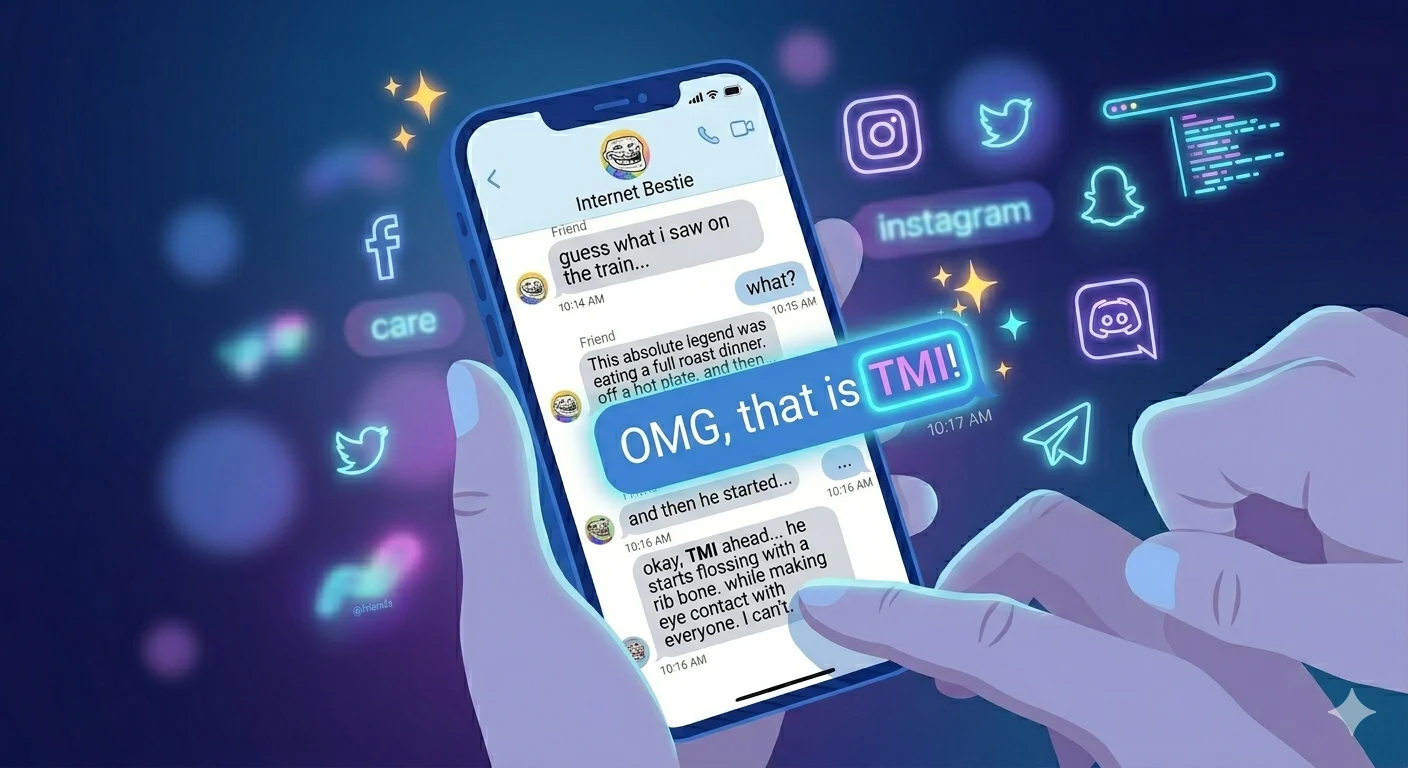
Meaning: Too Much Information.
Full Form: Too Much Information.
Context: Texting, social media, online chats, memes.
Tone: Humorous, awkward, casual, sometimes teasing.
The term “TMI” is one of the most common internet slang expressions used in texting and social media conversations. If you spend time on platforms like TikTok, Instagram, or X (Twitter), you have probably seen someone reply with “TMI” after reading an awkward or overly personal comment. Many people search for “TMI meaning” because the phrase appears often in memes, chats, captions, and online discussions.
TMI stands for “Too Much Information.” People use it when someone shares details that feel unnecessary, embarrassing, uncomfortable, or overly personal. In most situations, the term is used jokingly between friends and does not usually mean serious offense. For example, if someone explains a gross story during lunch or posts very private details online, others may respond with “TMI” as a playful reaction.
The phrase became popular through texting culture and early internet conversations, where short abbreviations helped people communicate quickly. Today, it remains one of the most recognizable slang terms online. Understanding what TMI means can help you follow modern digital conversations more naturally and avoid confusion when reading social media comments, memes, or text messages in casual online communication.
What Does TMI Mean?
TMI means “Too Much Information.” It is a slang expression people use when someone shares details that feel too personal, awkward, unnecessary, or uncomfortable.
The phrase is often used as a quick reaction during conversations. Instead of directly telling someone they overshared, people casually reply with “TMI.”
For example:
- “I didn’t need to know that. TMI!”
- “Okay… that was definitely TMI.”
The expression usually appears in relaxed conversations between friends, family members, or internet users. It is not formal language.
In simple terms, TMI is another way of saying:
- “You shared too much.”
- “That detail was unnecessary.”
- “I didn’t want to hear that.”
The phrase is usually humorous rather than aggressive.
What Does TMI Mean in Texting and Social Media?
In texting and online communication, TMI is commonly used to react to oversharing.
Someone may describe embarrassing health issues, relationship drama, or awkward personal experiences. Another person replies with “TMI” to show the information feels excessive or uncomfortable.
For example:
- “He told us every detail about his dentist appointment. Total TMI.”
- “Why would you post that online? TMI!”
On social media, the term often appears in:
- Comments
- Memes
- Reaction videos
- Story replies
- Group chats
Gen Z and younger internet users also use it jokingly in ironic or exaggerated ways. Sometimes people intentionally overshare online for humor, knowing others will respond with “TMI.”
The phrase has become part of modern digital culture because people constantly share personal updates online.
Other Meanings of TMI
Although “Too Much Information” is the main slang meaning, TMI can occasionally have other definitions depending on context.
Some less common meanings include:
- Three Mile Island (historical reference)
- Technical or business abbreviations
- Industry-specific terms
However, in texting and internet slang, TMI almost always means “Too Much Information.”
How TMI Is Used in Real Conversations
People use TMI naturally in many situations.
Everyday Conversations
Friends often use it during casual chats:
- Someone describes embarrassing symptoms
- A friend shares too many relationship details
- Someone explains gross experiences while eating
Example:
“I really didn’t need the bathroom story. TMI.”
Social Media Conversations
TMI appears regularly online when users overshare personal moments.
Common places include:
- TikTok comment sections
- Instagram stories
- Reddit discussions
- Meme pages
- Group chats
It is especially common in humorous internet culture where exaggeration is normal.
Examples of TMI in Use
Here are some natural examples of how people use TMI:
- “You didn’t have to describe that in detail. TMI.”
- “Bro, that was way too much information.”
- “She posted her entire breakup story online. TMI.”
- “TMI but I cried during that movie.”
- “Okay, TMI… but I accidentally texted my ex.”
- “That comment section is full of TMI stories.”
- “I was eating when you told me that. TMI!”
These examples show how flexible the phrase can be.
Tone and Intent of TMI
The tone of TMI depends on the conversation.
Common Emotional Tones
- Funny
- Awkward
- Playful
- Teasing
- Slightly uncomfortable
Is It Positive or Negative?
Usually neutral or humorous.
Friends often say it jokingly without bad intentions. However, if said harshly, it can sound rude or dismissive.
For example:
- Playful: “LOL TMI 😂”
- Rude: “Nobody asked. TMI.”
Tone matters a lot in online slang.
Origin and Background of TMI
The phrase “Too Much Information” existed long before internet slang became popular. However, the short form “TMI” grew during early online chatrooms, forums, and texting culture in the 1990s and early 2000s.
As texting became more common, users shortened longer phrases into abbreviations to type faster. TMI quickly became popular because it was short, funny, and easy to understand.
Social media later helped spread the term even more. Meme culture and oversharing trends made it part of everyday internet language.
Today, TMI remains one of the most recognized slang abbreviations online.
Is TMI Rude or Inappropriate?
TMI is not usually considered offensive. Most people use it casually among friends.
However, context matters.
When It Is Fine
- Friendly jokes
- Casual chats
- Meme conversations
- Light teasing
When It Can Sound Rude
- Serious emotional conversations
- Sensitive personal topics
- Professional discussions
If someone is opening up emotionally, responding with “TMI” may hurt their feelings.
When NOT to Use TMI
There are situations where using TMI is not appropriate.
Formal Situations
Avoid using it in:
- Business emails
- Workplace communication
- Academic writing
- Professional meetings
Sensitive Conversations
Do not use TMI when someone discusses:
- Health problems
- Emotional struggles
- Trauma
- Serious personal issues
In those moments, the phrase may sound insensitive.
Similar and Related Slang Terms
Several internet slang terms are related to TMI.
Related Slang
- Oversharing
- Trauma dumping
- Info dump
- Spill the tea
- Venting
Similar Texting Terms
- LOL
- OMG
- NGL
- BRB
- FYI
These terms often appear in casual online communication alongside TMI.
TMI vs Related Terms
People sometimes confuse TMI with similar internet phrases.
TMI vs Oversharing
TMI is usually the reaction. Oversharing is the behavior itself.
Example:
- Oversharing = giving too many details
- TMI = reaction to those details
TMI vs Trauma Dumping
Trauma dumping involves emotionally heavy personal problems. TMI is broader and often humorous.
TMI vs Spill the Tea
“Spill the tea” means sharing gossip or interesting drama. TMI refers to excessive or uncomfortable details.
Comparison Table
| Term | Meaning | Usage | Key Difference |
|---|---|---|---|
| TMI | Too Much Information | Reacting to oversharing | Focuses on unnecessary details |
| Oversharing | Sharing excessively | General behavior | Not necessarily slang |
| Trauma Dumping | Emotional overload | Serious emotional discussions | More intense and emotional |
| Spill the Tea | Share gossip/drama | Entertainment or gossip | Usually interesting, not uncomfortable |
| Info Dump | Giving too much information | Long explanations | Often educational or detailed |
Common Misunderstandings About TMI
Many people misunderstand how TMI works.
Common Mistakes
- Thinking it is always rude
- Using it in professional conversations
- Assuming all personal sharing is TMI
- Using it during serious emotional discussions
Confusing Situations
Sometimes people jokingly say “TMI” even when they are interested in the story. Online humor often makes tone difficult to read.
That is why emojis and context matter in digital communication.
FAQ Section
What does TMI stand for?
TMI stands for “Too Much Information.”
Is TMI slang?
Yes. It is a popular internet and texting slang abbreviation.
Is TMI rude?
Usually no, but it can sound rude depending on tone and situation.
Do people still use TMI?
Yes. It remains common on social media and in texting.
Can TMI be funny?
Definitely. Many people use it jokingly with friends.
Is TMI used on TikTok?
Yes. It appears often in comments, captions, and reaction videos.
What is the opposite of TMI?
Something vague, private, or lacking detail could be considered the opposite.
Can TMI be offensive?
It can feel insensitive if used during serious conversations.
Is TMI only used online?
No. People also say it in face-to-face conversations.
Why is TMI popular?
Because internet culture encourages fast, funny, and relatable communication.
conclusion
TMI means “Too Much Information,” and it is one of the most popular slang terms used in texting and social media culture. People use it when someone shares details that feel overly personal, awkward, or unnecessary.
Most of the time, the phrase is playful and humorous rather than rude. It commonly appears in chats, memes, comments, and casual conversations online. However, tone and context matter because the phrase can sound insensitive n serious situations.
Understanding internet slang like TMI helps you communicate more naturally in modern digital conversations and better understand online culture.